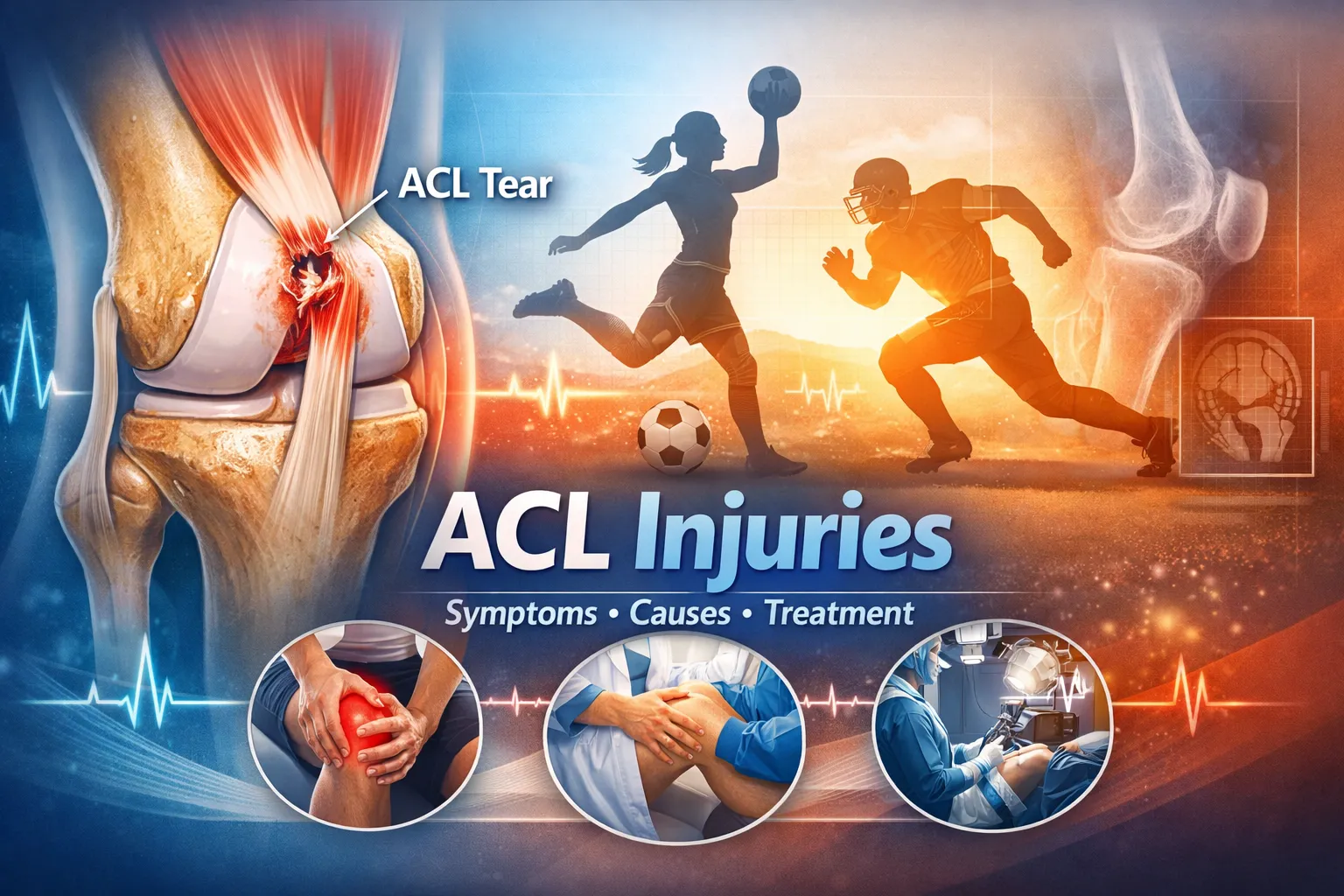
If you’ve experienced a sudden knee injury during sports or an accident, you may be wondering what’s happening inside your knee joint. The anterior cruciate ligament, commonly called an ACL, is one of the most frequently injured structures in the knee. Understanding what an ACL tear is, how it happens, and what your treatment options are will help you make informed decisions about your health and recovery.
This comprehensive guide breaks down everything you need to know about ACL injuries-from the basic anatomy of your knee to detailed information about symptoms, diagnosis, and treatment paths. Whether you’re an athlete concerned about returning to sports or someone recovering from a recent injury, this article provides the clinical expertise and compassionate guidance you deserve.
Table of Contents
What is the ACL? Understanding Knee Ligament Anatomy
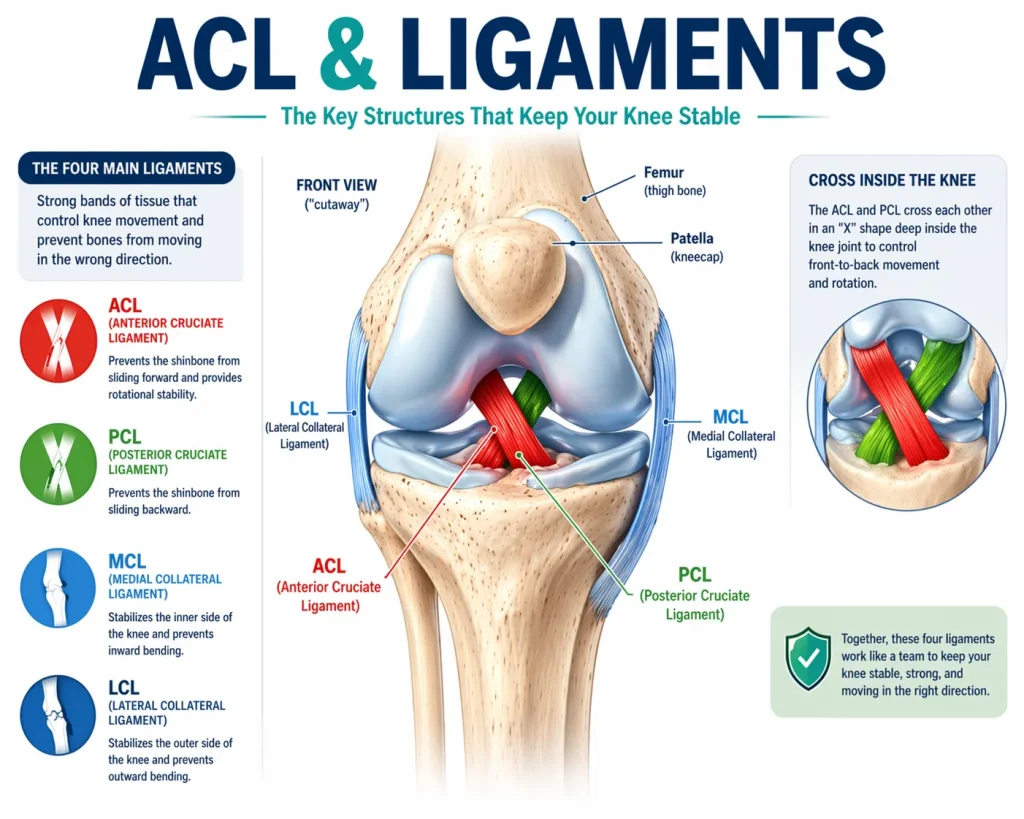
The Four Main Ligaments of Your Knee
Your knee joint is held together by four primary ligaments, strong connective tissues that act like a rope to keep your bones stable. Think of ligaments as the support system that prevents your knee from moving in ways it shouldn’t.
The two collateral ligaments are located on the sides of your knee:
- The medial collateral ligament (MCL) runs along the inside of your knee
- The lateral collateral ligament (LCL) runs along the outside of your knee
- These ligaments control side-to-side motion and prevent your knee from bending inward or outward
The two cruciate ligaments are found deep inside your knee joint, crossing each other in an X pattern:
- The anterior cruciate ligament (ACL) sits in the front
- The posterior cruciate ligament (PCL) sits in the back
- These ligaments control the front-and-back motion of your knee
What Does the Anterior Cruciate Ligament Do?
The anterior cruciate ligament has two critical jobs in your knee:
1. Prevents Forward Sliding: The ACL stops your shinbone (tibia) from sliding out in front of your thighbone (femur). When this ligament is torn, your knee loses this crucial control, making simple movements unstable.
2. Provides Rotational Stability: Your ACL helps keep your knee stable when you rotate or twist your leg. This is why athletes who need to change direction quickly are at such high risk for ACL injuries-their knees are rotating while bearing weight, putting tremendous stress on this single ligament.
The posterior cruciate ligament (PCL) is thicker and stronger than the ACL, which is why PCL injuries happen far less often. However, the ACL bears more of the load during movement, making it vulnerable to tears and sprains.
Why ACL Injuries Are So Common in Athletes
One of the most frequently asked questions is: why is the ACL injured so much? The answer lies in what activities demand from your knee. Sports that require:
- Rapid changes of direction (soccer, basketball, tennis)
- Quick deceleration or stopping (football, skiing)
- Jumping and landing (volleyball, basketball)
- Pivoting movements (American football)
all place extraordinary stress on the ACL. These are exactly the movements that can tear this ligament. About half of all ACL injuries occur with additional damage to other knee structures, including the meniscus (cartilage cushion) and other ligaments-which is why comprehensive diagnosis is so important.
How Do ACL Injuries Happen? Common Causes and Risk Factors
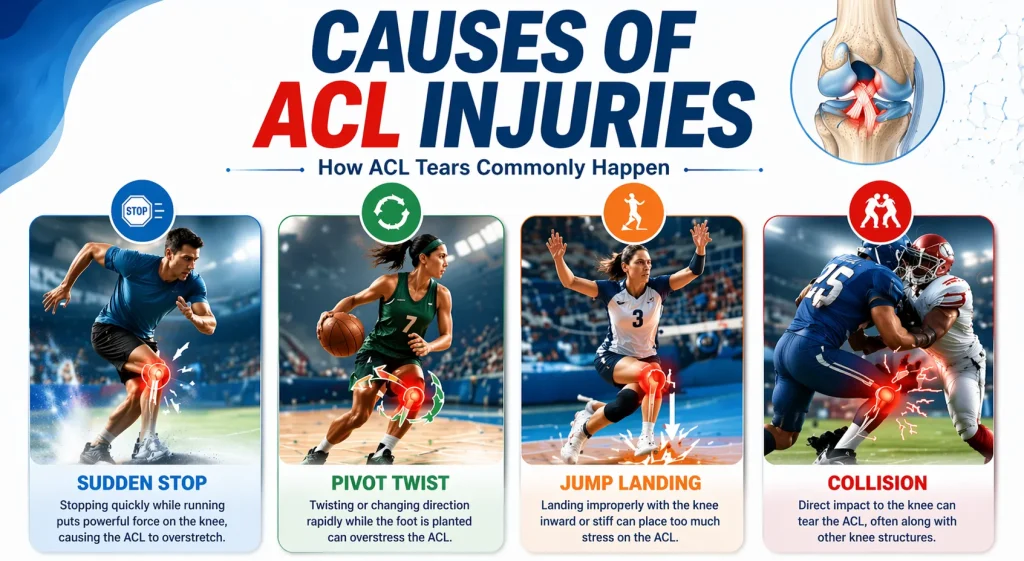
Mechanical Causes of ACL Tears
An anterior cruciate ligament tear doesn’t always happen from a hard tackle or collision. In fact, many ACL injuries occur during seemingly routine movements:
Changing Direction Rapidly: When you plant your foot and quickly change direction while running, your tibia can twist while your femur doesn’t rotate at the same speed. This difference in rotation causes the ACL to stretch beyond its limit.
Stopping Suddenly: Deceleration injuries are particularly damaging to the ACL. When you’re running forward and try to stop quickly, the forces on your knee joint can exceed what the ACL can withstand.
Slowing Down While Running: The eccentric loading (muscle lengthening under tension) during deceleration creates enormous stress on knee ligaments.
Landing from a Jump Incorrectly: Poor landing mechanics-landing with your knee in a collapsed position or your foot turning inward-can damage the ACL instantly.
Direct Contact or Collision: A direct blow to the knee, such as a football tackle, can tear the ACL along with other structures. However, contact injuries account for only a portion of ACL tears-many happen without any contact at all.
Why Female Athletes Are at Higher Risk
Research shows that female athletes have significantly higher rates of ACL injury than male athletes in sports like soccer and basketball. Why? Scientists believe several factors contribute:
- Muscle Strength Differences: Women often have less developed quadriceps and hamstring strength relative to their body weight, providing less stability around the knee
- Neuromuscular Control: Differences in how the nervous system coordinates muscle firing patterns can affect landing and cutting mechanics
- Anatomical Differences: Wider pelvic structures and differences in leg alignment may affect knee mechanics
- Hormonal Influences: Estrogen affects the properties of ligament tissue, potentially making them more prone to injury
- Conditioning Variables: Sports-specific conditioning differences between male and female athletes
The good news? These risk factors are largely modifiable through proper strength training and technique coaching.
Sports That Put You at Greater Risk for ACL Injury
Certain sports demand more from your knee ligaments than others. High-risk activities include:
- Soccer – Requires constant directional changes and pivot movements
- American Football – Combines high-speed running with sudden stops and impacts
- Basketball – Demands quick lateral movement and jumping
- Skiing – Combines speed with uneven terrain and edge control
- Tennis – Requires rapid directional changes and lateral movements
- Volleyball – Involves jumping, landing, and lateral movements
- Gymnastics – Places extreme rotational demands on the knee
Even if you don’t play competitive sports, ACL tears can happen during recreational activities, fitness training, or even everyday accidents. The key risk factor is the combination of force, direction change, and the state of your knee strength when the injury occurs.
ACL Tear Symptoms: What You Need to Know Immediately
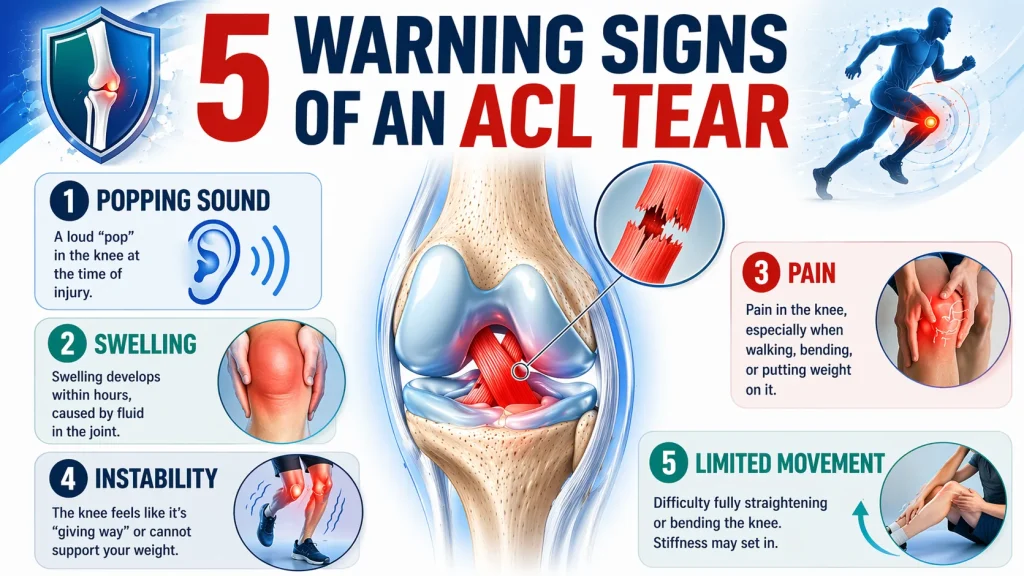
The Immediate Signs of an ACL Injury
When an anterior cruciate ligament tears, many people report hearing or feeling something distinctive. These immediate signs should never be ignored:
The Popping Sound or Sensation: Many people hear an actual “pop” when their ACL tears. This sound comes from the ligament rupturing. If you hear this distinctive pop during an athletic movement, suspect an ACL injury until proven otherwise.
Sudden Giving Way: Your knee may feel like it’s giving out from under you-a sensation of instability that happens immediately. This occurs because the ACL is no longer controlling the motion of your tibia, leaving your knee unstable.
Sharp Pain: You’ll typically feel immediate pain at the moment of injury, though the intensity varies. Some people report severe acute pain; others describe moderate discomfort that worsens in the following hours.
Early Swelling and Pain After an ACL Tear
Within 24 hours of an ACL tear, significant swelling usually develops. This is important to understand:
Why Swelling Occurs: When a ligament tears, blood vessels within and around the ligament rupture, causing internal bleeding (hemarthrosis). Your body responds with inflammation and swelling as part of the healing response.
The Danger of Ignoring Swelling: If you ignore a swollen knee and attempt to return to sports, you risk causing additional damage to other structures. The unstable knee is more likely to turn or twist again, potentially damaging the meniscus (cartilage cushion) or other ligaments.
Other Symptoms That Develop:
- Loss of full range of motion-your knee won’t straighten completely or bend as far
- Tenderness along the joint line where the ligament is located
- Discomfort or difficulty while walking, especially on uneven surfaces
- Continuing instability-a feeling that your knee might give way again
How Complete vs. Partial Tears Present Differently
Not all ACL injuries are the same. The severity affects how you feel and how you should be treated:
Complete ACL Tears:
- Usually produces the distinctive popping sensation
- Cause immediate, significant instability
- Result in marked swelling within hours
- Require prompt medical evaluation
Partial ACL Tears (less common than complete tears):
- May cause less dramatic symptoms
- Sometimes leave some residual stability
- Can feel like a simple knee sprain initially
- Still requires imaging to diagnose accurately
The important point: don’t try to self-diagnose based on symptom severity. Both partial and complete tears require professional evaluation to determine the best course of action.
Grading ACL Injuries: Understanding Severity Levels
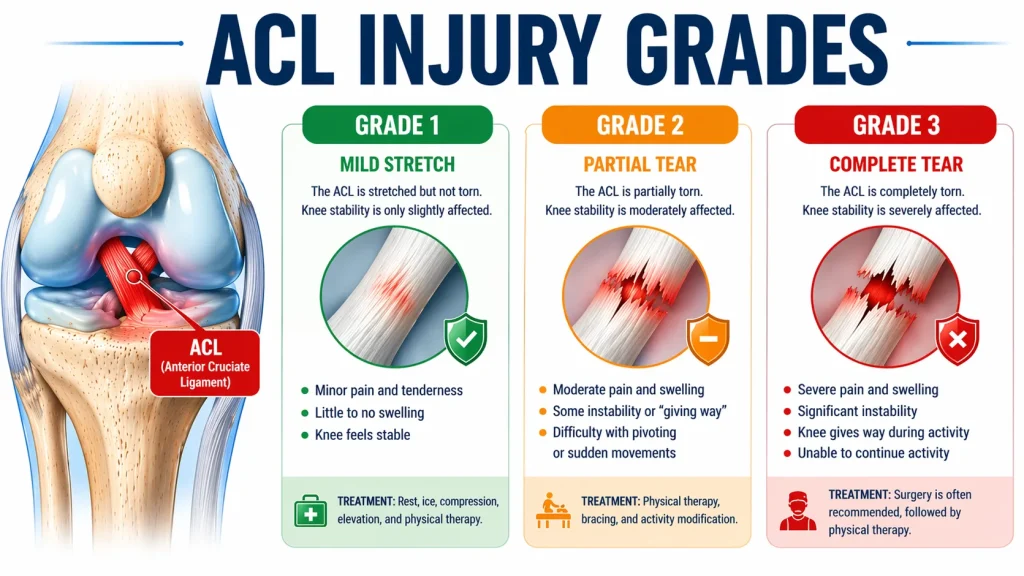
When doctors describe ligament injuries, they use a grading system that helps explain the severity. Understanding these grades helps you grasp what’s happened to your knee.
Grade 1 Sprain: Mild Stretch With Stability
In a Grade 1 ACL sprain, the ligament fibers are slightly stretched or micro-torn, but the ligament remains largely intact.
What This Means:
- The ligament is mildly damaged
- Despite the injury, it can still help stabilize your knee
- You’ll have some pain and swelling, but your knee remains relatively stable
- When doctors test your knee (using special physical examination techniques), the tibia doesn’t slide abnormally
Typical Symptoms:
- Mild to moderate pain
- Some swelling within 24 hours
- Mild stiffness or discomfort with activity
- No sensation of the knee giving way
Recovery Outlook: Grade 1 sprains often heal with conservative treatment, rest, ice, compression, elevation, and rehabilitation exercises. Most people recover without surgery, though it may take several weeks to months to return to full activity.
Grade 2 Sprain: Partial Tear and Looseness
A Grade 2 sprain is more serious-the ligament is stretched significantly and partially torn, creating what’s often called a “partial tear of the anterior cruciate ligament.”
What This Means:
- The ligament fibers are partially torn, creating a gap within the tissue
- The knee has noticeably more looseness or laxity
- During physical examination, doctors can detect abnormal movement of the tibia
- Some ligament function is preserved, but stability is compromised
Typical Symptoms:
- Moderate to significant pain
- Noticeable swelling within 24 hours
- Loss of some range of motion
- Occasional feeling of instability, especially with certain movements
- Difficulty with activities requiring rotational movements
Recovery Outlook: Treatment depends on your activity level. Some Grade 2 tears heal adequately with rehabilitation, while active individuals may benefit from surgical reconstruction to prevent future instability.
Grade 3 Sprain: Complete Tear and Instability
A Grade 3 sprain, commonly called a “complete anterior cruciate ligament tear,” is the most severe. The ligament is completely torn, either separated into two pieces or pulled off the bone.
What This Means:
- The ligament is essentially non-functional
- Your knee joint is unstable
- The tibia slides abnormally when doctors perform physical examination tests
- Your knee cannot provide the rotational stability needed for athletic movements or demanding activities
Typical Symptoms:
- Significant immediate pain (though some people report less pain than with Grade 2, which seems counterintuitive)
- Rapid, marked swelling within hours
- Loss of range of motion
- Definite sensation of the knee giving way or being unstable
- Difficulty with walking, especially on uneven surfaces or with changes of direction
Recovery Outlook: Grade 3 tears almost always require surgical reconstruction for anyone who wants to return to sports or demanding physical activities. Without surgery, the knee remains unstable, and repeated episodes of the knee giving way can cause additional damage to cartilage and other structures.
How Doctors Diagnose an ACL Injury
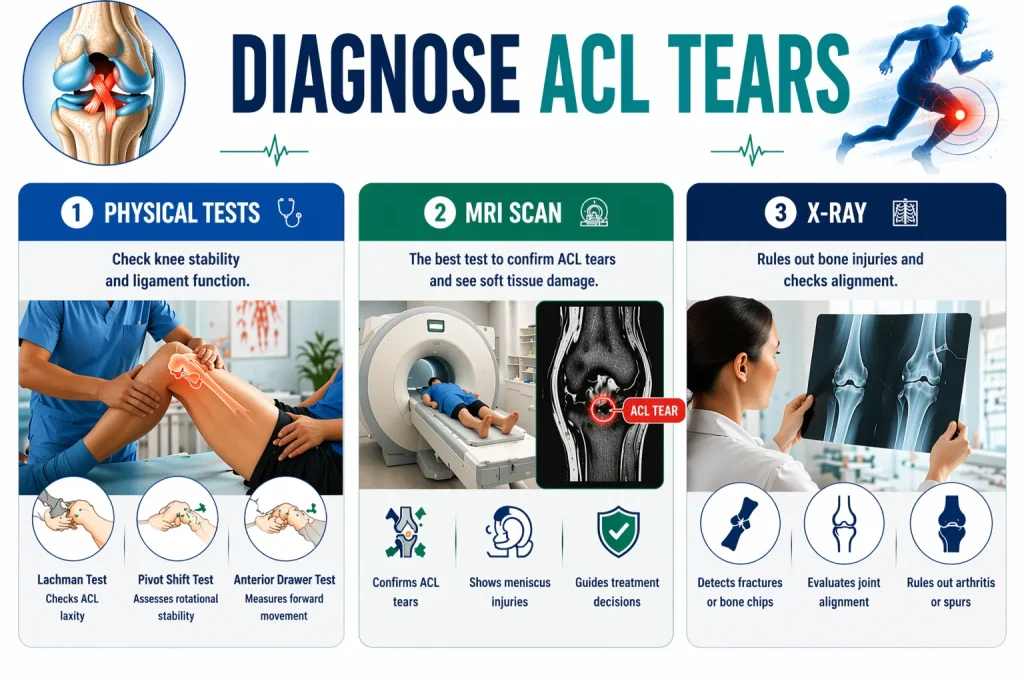
Proper diagnosis of an anterior cruciate ligament injury combines clinical examination with imaging tests. Here’s what to expect when you see a doctor about your knee injury.
Physical Examination and Your Medical History
Your appointment will begin with your doctor gathering information:
Your History:
- How did the injury happen? Can you describe the exact moment?
- Did you hear a pop or feel a tear?
- When did swelling begin?
- Have you injured this knee before?
- What activities cause the most difficulty?
The Physical Examination:
Your doctor will compare your injured knee to your non-injured knee. Importantly, doctors can diagnose most ACL tears through skilled physical examination without requiring imaging tests. Your doctor will:
- Assess range of motion: how far your knee bends and straightens
- Check for swelling and its location
- Palpate (feel) structures around your knee
- Perform specific tests, including:
- Lachman test: Checking tibia movement with the knee slightly bent
- Anterior drawer test: Checking if the tibia slides forward excessively
- Pivot shift test: Checking for rotational instability
These tests have been refined over decades and are highly accurate when performed by experienced physicians. Many ACL injuries are diagnosed with confidence during the physical exam alone.
Imaging Tests: X-rays and MRI Scans
X-rays:
- Will not show the ACL itself (it’s a soft tissue that doesn’t appear on X-rays)
- Are used to rule out bone fractures that might accompany the ACL tear
- Help identify whether the bone has been avulsed (pulled off) at the ligament attachment site
MRI (Magnetic Resonance Imaging):
- Creates detailed images of soft tissues, including the ACL
- Allows doctors to see the complete tear and its exact location
- Helps identify injuries to other structures: meniscus (cartilage), cartilage surfaces, and other ligaments
- Is often ordered when treatment decisions are being made, especially if surgery is considered
Why Not All ACL Injuries Require Imaging
Many people are surprised to learn that imaging isn’t always necessary for diagnosis. Here’s why:
- A thorough physical examination by an experienced doctor is highly accurate for diagnosing complete ACL tears
- Imaging primarily helps with treatment planning by identifying associated injuries
- Not all associated injuries change treatment recommendations
- Imaging adds cost and may delay treatment
Your doctor will recommend imaging based on your specific situation, particularly if surgery is being considered or if they need to assess damage to other structures.
ACL Injury Treatment Options: Surgery vs. Non-Surgical Approaches
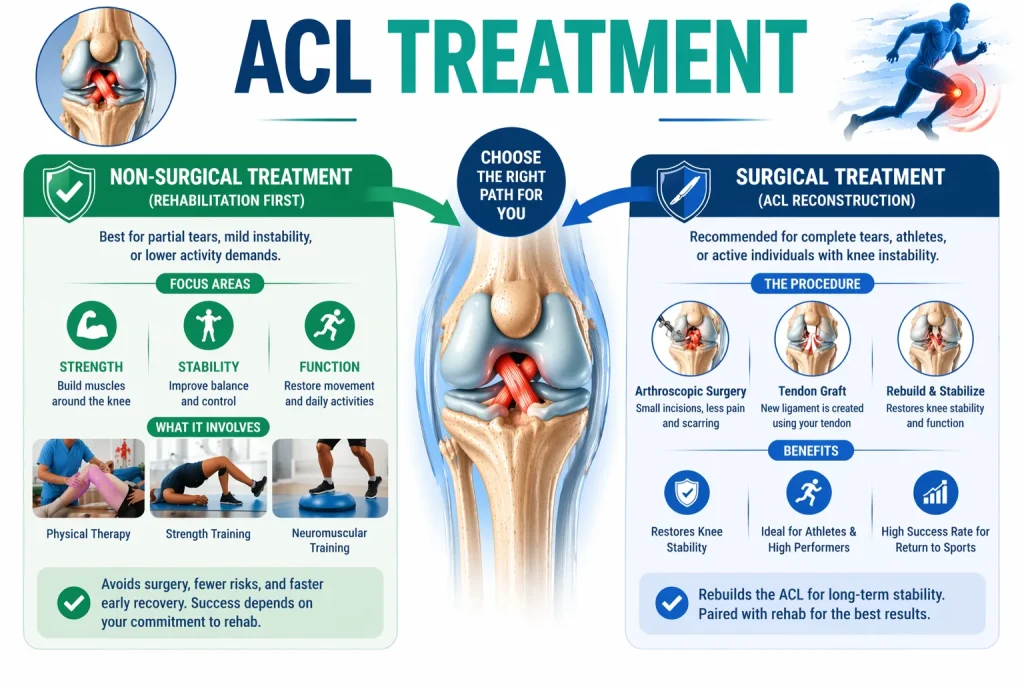
The most important thing to understand about ACL injury treatment is this: there’s no single “right” answer for everyone. Your best treatment path depends on several factors specific to your situation.
Non-Surgical Treatment for Mild ACL Sprains
Not every person with an ACL injury requires surgery. For some injuries and some individuals, conservative treatment is appropriate.
When Non-Surgical Treatment May Be Suitable:
- Grade 1 sprains with maintained stability
- Some Grade 2 sprains in less active individuals
- People are willing to modify their activity level
- Those without other associated knee injuries
What Non-Surgical Treatment Includes:
Immediate Care (First Few Days):
- Rest: Avoid activities that stress the knee
- Ice: Apply ice for 15-20 minutes, several times daily
- Compression: Elastic bandage or sleeve to reduce swelling
- Elevation: Keep your leg raised to minimize swelling
- Pain management: Over-the-counter anti-inflammatory medication
Rehabilitation Program:
- Physical therapy to restore the range of motion
- Strengthening exercises for quadriceps and hamstrings
- Balance and proprioception training
- Gradual return to functional activities
- Sport-specific training is appropriate
Ongoing Management:
- Knee brace for support during activity
- Activity modification-avoiding sports requiring cutting and pivoting
- Maintenance exercises to preserve strength
- Regular follow-up with your doctor
Success Rates: Many Grade 1 sprains resolve completely with conservative care. Some Grade 2 injuries also recover adequately, though residual looseness may persist.
When ACL Reconstruction Surgery Becomes Necessary
ACL reconstruction is a surgical procedure where the torn ligament is replaced with a graft, typically using tissue from your own body (autograft) or donor tissue (allograft).
Strong Indications for Surgery:
- Complete anterior cruciate ligament tears (Grade 3) in anyone wanting to return to sports
- Grade 2 or 3 tears in athletes
- Persistent instability after conservative treatment
- Active individuals unable to tolerate activity limitations
- Injuries with associated meniscus or cartilage damage
- Cases where your occupation requires knee stability
What ACL Reconstruction Involves:
- Arthroscopic surgery (minimally invasive with small incisions)
- Removal of torn ligament debris
- Placement of a graft (often from hamstring tendon, patellar tendon, or quadriceps tendon)
- Securing the graft with screws or buttons
- The procedure typically takes 1-2 hours
Recovery After Surgery:
- Hospital discharge same day or next day
- Crutches for 1-2 weeks
- Rehabilitation program starting immediately
- Gradual return to full activities over 6-12 months
- Return to competitive sports typically 9-12 months after surgery
Factors That Determine Your Best Treatment Path
Your individual situation involves multiple considerations:
Your Age and Activity Level:
- Young athletes almost always benefit from surgery
- Older, less active individuals may do well without surgery
- Your goals matter. Do you want to return to sports?
The Severity of Your Injury:
- Associated injuries to the meniscus, cartilage, or other ligaments change the recommendation
- Multiple ligament injuries often require surgery
Associated Injuries:
- About 50% of ACL injuries occur with meniscus or cartilage damage
- If these structures are damaged, surgery becomes more likely
Your Occupation:
- Jobs requiring physical demands may necessitate surgery
- Desk-bound work might allow conservative management
Your Willingness to Modify Activity:
- Non-surgical treatment requires accepting limitations
- You may need to avoid certain sports or activities permanently
- This isn’t right for everyone, and that’s okay
Your Access to Quality Rehabilitation:
- Excellent outcomes depend on dedicated physical therapy
- If you can’t commit to rehabilitation, outcomes suffer
- Your surgeon should discuss rehabilitation expectations clearly
Your Doctor’s Recommendation:
- Your orthopedic surgeon’s experience and judgment matter
- Ask questions and ensure you understand the reasoning
- A good doctor will help you weigh your specific options
ACL Recovery and Rehabilitation: What to Expect
Recovery from an ACL injury-whether treated surgically or conservatively-is a marathon, not a sprint. Understanding the recovery timeline helps you set realistic expectations and stay motivated.
Immediate Care: RICE Protocol and Pain Management
The first few days after an ACL injury are critical for minimizing swelling and pain.
RICE Protocol (Rest, Ice, Compression, Elevation):
Rest: Immediately stop the activity that caused injury. Continuing to use an unstable knee risks additional damage to cartilage and other structures.
Ice: Apply ice for 15-20 minutes, 3-4 times daily for the first 48-72 hours. Ice reduces swelling and pain by decreasing inflammation and reducing blood flow to the injured area. Protect your skin with a towel to prevent ice burns.
Compression: Apply an elastic bandage or compression sleeve to reduce swelling. This gentle pressure helps prevent fluid accumulation in the joint. Loosen the bandage if it causes tingling or numbness.
Elevation: Keep your knee elevated above your heart level when sitting or resting. This uses gravity to help reduce swelling, particularly important in the first 48 hours.
Pain Management:
- Over-the-counter anti-inflammatory medications (ibuprofen, naproxen) reduce both pain and inflammation
- Take medication with food to prevent stomach upset
- Your doctor may recommend stronger pain relief if needed
- Avoid prolonged immobilization; gentle motion within the pain-free range helps recovery
Rehabilitation Exercises for ACL Recovery
Physical therapy is the cornerstone of recovery. Whether you have surgery or not, rehabilitation exercises are essential. The progression typically moves through phases:
Early Phase (Weeks 1-4):
- Restoration of full knee extension and early flexion
- Quad and hamstring isometric exercises (muscle contractions without movement)
- Straight leg raises
- Gentle range-of-motion exercises
- Partial weight-bearing with crutches
Middle Phase (Weeks 4-12):
- Progressive strengthening of the quadriceps and hamstrings
- Hamstring curls and leg presses
- Balance and proprioception training (teaching your knee to sense position and movement)
- Stationary bike for cardiovascular fitness
- Pool walking or swimming, if approved
Late Phase (Months 3-6):
- Advanced strengthening exercises
- Sport-specific movements
- Agility drills and directional changes
- Running progression
- Sport-specific training
Return-to-Sport Phase (Months 6-12):
- Sport-specific skill work
- Return-to-sport testing to ensure adequate strength and balance
- Gradual increase in practice and competitive activity
- Ongoing strengthening maintenance
Your physical therapist will customize this program based on your specific injury, surgery type (if applicable), and recovery progress.
Timeline: From Injury to Return to Sports
After Non-Surgical Treatment:
- 2-4 weeks: Pain and swelling decrease significantly
- 6-8 weeks: Most people can return to light activity
- 3-6 months: Many return to non-demanding sports
- 6+ months: Full return to demanding sports, if stable
After ACL Reconstruction Surgery:
- 1-2 weeks: Basic movement restored; still using crutches
- 4-6 weeks: Walking without crutches; beginning stronger exercises
- 3-4 months: Return to low-impact activities like swimming, cycling
- 6-9 months: Gradual return to running and sport-specific training
- 9-12 months: Return to competitive sports (for most athletes)
These timelines are approximate. Individual recovery varies based on:
- Age and overall fitness level
- Surgical technique used
- Dedication to rehabilitation
- Associated injuries
- Individual healing rates
Your surgeon and physical therapist will provide specific timelines for your situation.
Preventing ACL Injuries: Tips for Athletes and Active People
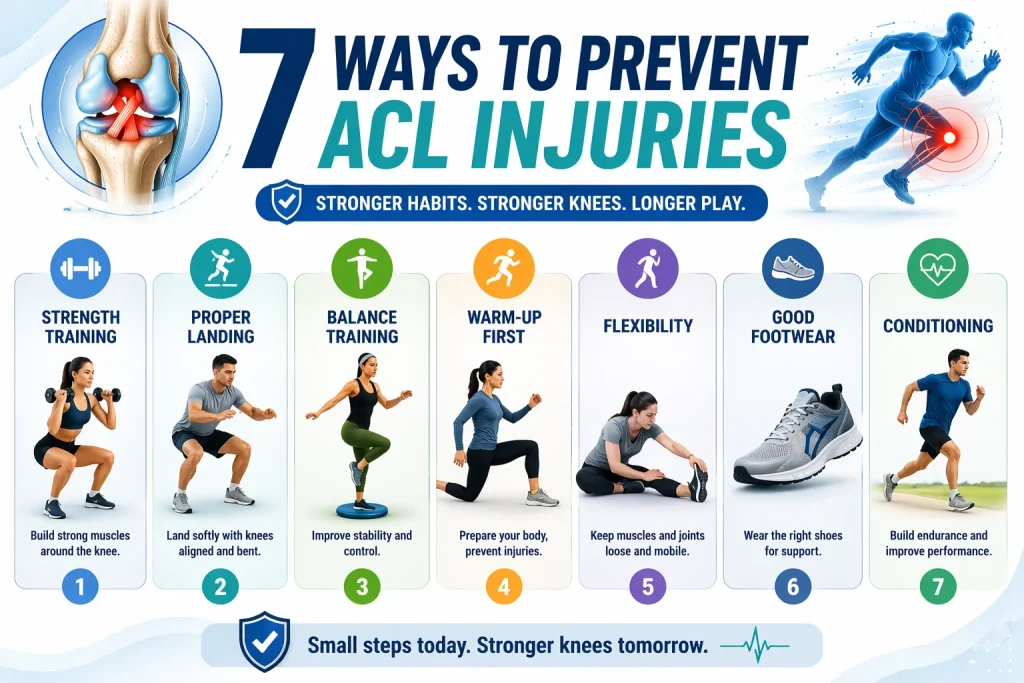
The best treatment for an ACL tear is prevention. While you can’t eliminate all injury risk, substantial evidence shows that specific interventions reduce ACL injury risk significantly.
Strength Training to Protect Your Knees
Stronger muscles provide dynamic stability around the knee joint. Importantly, both quadriceps and hamstring strength matter.
Quadriceps Strengthening:
- Leg presses
- Squats (proper form essential)
- Lunges
- Step-ups
- Straight leg raises
Hamstring Strengthening (particularly important for ACL prevention):
- Hamstring curls
- Nordic hamstring curls
- Good mornings
- Bridge exercises
- Single-leg deadlifts
Why Hamstring Strength Matters for ACL Prevention: The hamstring muscles actually help protect the ACL during athletic movements. Research consistently shows that athletes with balanced quad-to-hamstring strength ratios have lower ACL injury rates. Ideally, hamstring strength should be 60-80% of quadriceps strength.
Training Guidelines:
- Strength training 2-3 times weekly
- Adequate recovery between sessions
- Progressive increase in resistance
- Proper form is more important than heavyweight
- Year-round training, not just during season
Proper Technique in Sports and Exercise
How you move matters tremendously for knee safety.
Proper Landing Mechanics (essential for jumpers and athletes):
- Land with knees slightly bent, not locked straight
- Keep your knee aligned over your foot, not caving inward
- Distribute weight through your whole foot, not just toes
- Land on both feet when possible, not one leg
- Absorb landing force through leg muscles, not just ligaments
Cutting and Pivoting Techniques:
- Plant your foot firmly before cutting
- Don’t twist your upper body without your lower body following
- Maintain proper knee alignment during direction changes
- Slow down before making sharp changes of direction
- Practice directional changes at controlled speeds before high speeds
Deceleration Control:
- Slowing down is as important as speeding up
- Use muscle control, not just ligament tension
- Gradually reduce speed rather than abrupt stops
- Practice stopping skills
Why Conditioning Matters for ACL Prevention
Fatigue is a significant risk factor for ACL injury. When muscles are tired, they don’t function optimally, leaving ligaments to bear more load.
Conditioning Components:
- Cardiovascular fitness: Maintain aerobic capacity throughout the season
- Muscular endurance: Train muscles to maintain force output when fatigued
- Flexibility: Full range of motion reduces abnormal forces on joints
- Sport-specific conditioning: Train for the specific demands of your sport
Practical Prevention Programs: Research confirms that comprehensive injury prevention programs reduce ACL injury risk by 30-50%. These programs typically include:
- Neuromuscular training (technique and balance work)
- Strength training
- Flexibility work
- Sport-specific conditioning
- Education about proper movement
Athletes in team sports that implement these programs show substantially lower injury rates.
When to See a Doctor for Knee Pain
Not every knee injury is an ACL injury, but certain warning signs warrant immediate medical evaluation.
Red Flags That Require Immediate Medical Attention
Seek immediate medical care if you experience:
- A popping sensation or sound in your knee
- Sudden inability to bear weight on the leg
- Rapid swelling within hours of injury
- Severe pain (9-10 on a 1-10 scale)
- Visible deformity of the knee
- Feeling that the knee is unstable or “giving out.”
- Signs of infection (increasing warmth, redness, or fever after injection)
- Numbness or tingling in your foot
These symptoms suggest a more serious injury requiring prompt evaluation.
Schedule an appointment with your doctor if:
- Mild to moderate knee pain persists beyond a few days
- Swelling doesn’t resolve within a week
- You have difficulty with everyday activities
- You’re uncertain about the severity
Don’t wait for pain to disappear. Early diagnosis and treatment typically lead to better outcomes than delayed evaluation.
Finding the Right Orthopedic Specialist
What to Look For:
- Board certification in orthopedic surgery
- Experience specifically with knee and ACL injuries (ask about their volume)
- Willingness to spend time explaining your condition
- Clear discussion of both surgical and non-surgical options
- Availability for follow-up care
Questions to Ask:
- How many ACL reconstructions have you performed?
- What surgical technique do you prefer and why?
- What’s your approach to non-surgical treatment?
- What rehabilitation program will I follow?
- What’s your expected timeline for return to sports?
Second Opinions Are Appropriate: If you’re considering surgery, getting a second opinion is reasonable and professional. Most orthopedic surgeons expect this and don’t take offense.
Conclusion: Moving Forward with Confidence
An ACL injury is serious, but it’s also a very manageable condition when approached with proper medical guidance and commitment to rehabilitation. Understanding what happened to your knee, how doctors evaluate it, and what your treatment options are empowers you to make informed decisions about your recovery.
Whether you choose non-surgical rehabilitation or surgical reconstruction, remember that your outcome depends significantly on your dedication to the process. The initial pain and swelling will resolve, strength and stability will return, and the vast majority of people with ACL injuries successfully return to their desired activities.
If you’re experiencing knee pain or have recently injured your knee, don’t delay seeking medical evaluation. Your orthopedic specialist can provide a definitive diagnosis and guide you toward the best path for your specific situation. With proper treatment and rehabilitation, your knee can be strong and stable again.
Read: Knee Injections for Pain Relief: Types, Cost, Safety
FAQs
What is the full form of ACL in medical terms?
ACL stands for Anterior Cruciate Ligament. “Anterior” means front, “cruciate” refers to the X-shaped crossing pattern of the cruciate ligaments, and “ligament” is connective tissue binding bones together.
What does an ACL tear mean exactly?
An ACL tear means the anterior cruciate ligament fibers are partially or completely separated. Complete tears are most common. Your knee becomes unstable, particularly during rotational movements and cutting activities.
Can a partial tear of the anterior cruciate ligament heal on its own?
Some partial ACL tears heal partially with conservative treatment, especially Grade 1 sprains. However, recovery is often incomplete, leaving residual looseness. Active individuals frequently require surgery for functional stability.
How long does ACL tear recovery typically take?
Non-surgical recovery takes 3-6 months for basic function. Surgical recovery takes 9-12 months for full return to sports. Individual timelines vary based on injury severity, surgery type, and rehabilitation dedication.
Do all ACL injuries require surgery?
No. Grade 1 sprains and some Grade 2 injuries in less active individuals may recover adequately without surgery. However, anyone wanting to return to cutting-and-pivoting sports typically needs surgical reconstruction for stability.
What is the difference between ACL and PCL injuries?
The ACL (anterior) prevents forward sliding of the tibia and provides rotational stability. The PCL (posterior) prevents backward sliding. The PCL is thicker and stronger, so PCL injuries are much rarer. ACL injuries are far more common and typically more functionally limiting.
Can you have both ACL and meniscus injuries simultaneously?
Yes. About 50% of ACL injuries occur with meniscus (cartilage) or other ligament damage. The combination affects treatment recommendations and recovery timeline. MRI helps identify these associated injuries.
What causes complete tears of the anterior cruciate ligament to happen suddenly?
Complete tears occur when forces exceed what the ligament can withstand. Rapid direction changes, deceleration, incorrect landing mechanics, and direct contact create these excessive forces. The exact mechanism varies between individual injuries.
What grade of ACL tear is most serious?
Grade 3 tears (complete tears) are most severe, causing complete instability. However, the most “serious” injury depends on your goals-a Grade 2 tear in an athlete wanting to return to sports might functionally be more serious than a Grade 3 tear in a sedentary person.
Can physical therapy alone fix an ACL tear?
Physical therapy alone can successfully treat Grade 1 sprains and some Grade 2 injuries, particularly in less active individuals. Grade 3 complete tears and injuries in active individuals almost always require surgical reconstruction for functional stability and prevention of further damage.