What is Bone Transport Treatment?
Bone transport is a surgical method based on the principle of distraction osteogenesis, where new bone is generated by gradually moving a healthy segment of bone across a defect. Instead of filling the gap with bone grafts, the patient’s own bone is slowly transported to bridge the missing segment, allowing new bone to form naturally behind it.
Unlike conventional bone grafting, which has limitations in large defects, bone transport enables reconstruction of extensive bone loss while maintaining blood supply and soft tissue health. This makes it particularly effective in cases complicated by infection or previous surgical failure.
When is Bone Transport Treatment Required?
Bone transport treatment is usually recommended when bone loss is significant and cannot heal on its own. Common indications include:
- Chronic bone infection (osteomyelitis) with segmental bone loss
- Infected non-union where fracture healing has failed
- Post-traumatic bone defects after high-energy injuries
- Bone loss following tumor excision
- Failed bone grafting or multiple previous surgeries
This technique is often chosen when the bone defect exceeds 4–5 cm, as traditional grafting methods have a higher risk of failure in such cases.
How Bone Transport Treatment Works
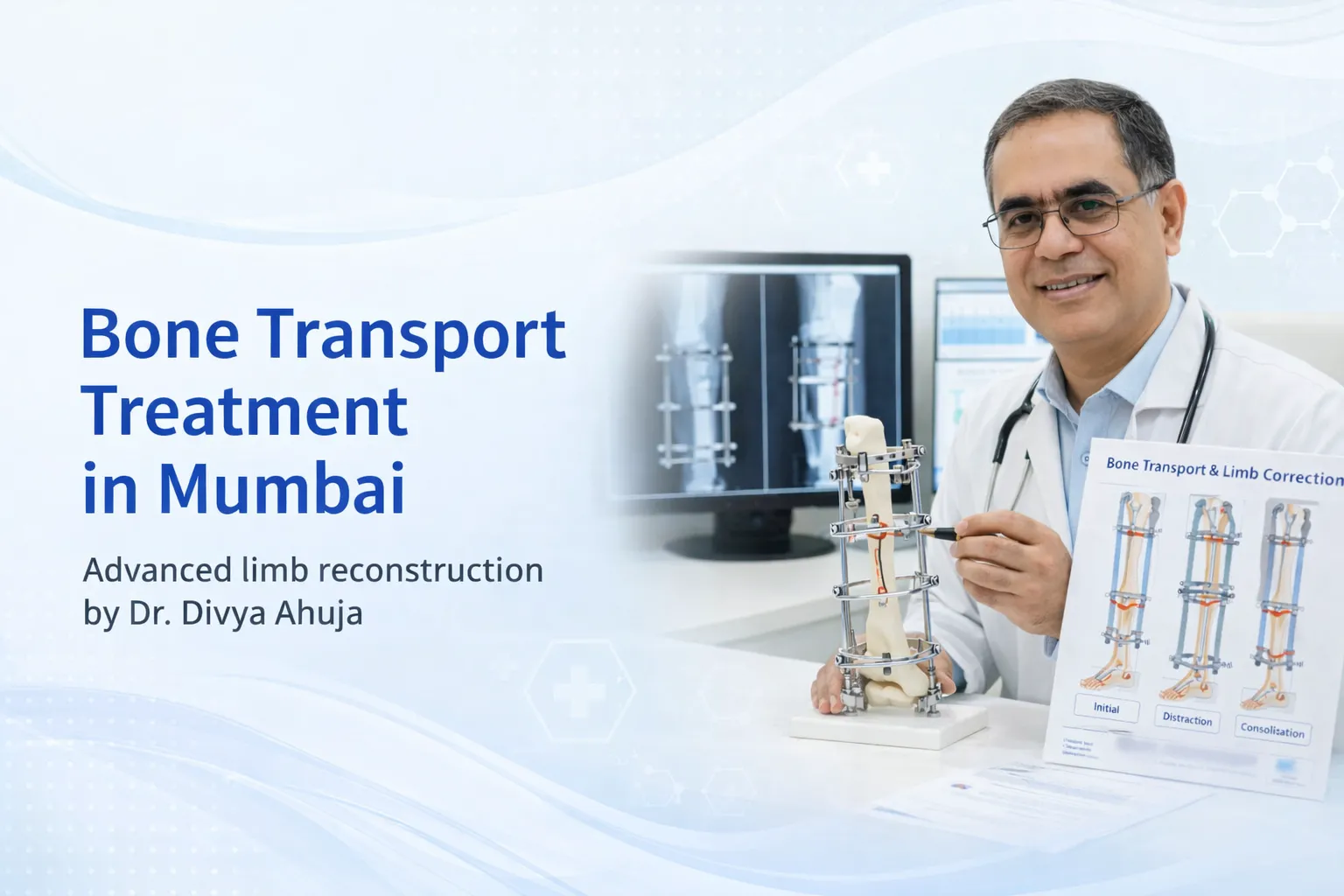
Bone transport follows a structured, step-by-step approach to ensure safe and predictable bone regeneration.
1. Removal of Infected or Dead Bone
All infected, non-viable bone and unhealthy tissue are surgically removed until healthy bone margins are reached. This step is critical, especially in infection-related cases.
2. Application of External Fixator
A circular external fixation system is applied to stabilize the limb and guide bone movement throughout the treatment.
3. Corticotomy
A controlled, low-energy bone cut (corticotomy) is performed in a healthy part of the bone away from the defect to preserve blood supply and healing potential.
4. Gradual Bone Transport
After a short waiting period, the bone segment is gradually moved at a controlled rate, usually about 1 mm per day, allowing new bone to form in the gap.
5. Docking and Consolidation
Once the transported bone reaches the defect site, compression is applied to achieve union. The newly formed bone is then allowed to mature and harden before fixator removal.
Types of Bone Transport Techniques
Bone transport techniques are selected based on defect size, bone involved, and patient factors.
Monofocal Bone Transport
A single corticotomy site is used. Suitable for smaller defects.
Bifocal Bone Transport
Two active sites are created, reducing overall treatment time for moderate defects.
Trifocal Bone Transport
Used for very large bone defects, allowing faster reconstruction through multiple regeneration zones.
Advanced or hybrid techniques may be used in select cases to optimize healing and alignment.
Bone Transport Treatment in Mumbai – Advanced Reconstruction Care
Bone transport treatment in Mumbai involves meticulous planning, regular monitoring, and coordinated rehabilitation. Advanced external fixation systems allow precise control over alignment, length, and stability during treatment.
This method is particularly valuable in patients with:
- Bone loss associated with infection
- Poor soft tissue conditions
- Multiple failed surgeries
- Limb length discrepancy combined with bone defects
The goal is not just bone healing, but restoration of limb function, alignment, and durability.
Why Specialist Care is Crucial for Bone Transport
Bone transport is one of the most technically demanding procedures in orthopedic reconstruction. It requires a deep understanding of bone biology, deformity correction principles, and long-term rehabilitation planning. Treatment under Dr. Divya Ahuja, a leading specialist in limb reconstruction and deformity correction, ensures a comprehensive and structured approach to care.
Her experience in managing complex bone defects, infected non-unions, and post-traumatic reconstruction allows for the precise execution of bone transport while minimizing complications. Patients receive continuity of care across established centers, including Mangal Anand Hospital, Chembur; Heal Well Speciality Clinic, Thane West; Broadway Healthcare, Dadar East; and Sweet Clinics, Vashi, Navi Mumbai.
Specialist-led care helps ensure:
- Accurate infection control when present
- Stable and well-aligned bone regeneration
- Reduced risk of complications
- Better functional and long-term outcomes
Recovery, Healing & Rehabilitation After Bone Transport
Recovery after bone transport is gradual and requires active patient participation. The overall duration depends on defect size, bone involved, and healing response.
Key aspects of recovery include:
- Controlled weight-bearing as advised
- Regular follow-ups with imaging
- Physiotherapy to maintain joint movement and muscle strength
- Continuous monitoring of bone regeneration quality
In many cases, early mobilization and partial weight-bearing are encouraged, as they stimulate bone healing. While treatment may take several months, structured rehabilitation significantly improves functional recovery and limb strength.
Bone Transport Treatment Cost in Mumbai
The cost of bone transport treatment in Mumbai varies depending on the complexity of the condition and the duration of treatment. Since bone transport is highly individualized, costs differ from patient to patient.
Factors Affecting Bone Transport Treatment Cost
| Cost Factor | Impact on Cost |
| Size of bone defect | Larger defects require longer treatment |
| Presence of infection | Increases treatment complexity |
| Type of transport technique | Advanced methods affect the overall cost |
| Duration of treatment | Longer consolidation increases follow-up |
| Hospital stay & rehabilitation | Influences total expense |
A detailed clinical and radiological evaluation is essential to determine an accurate and transparent treatment estimate.
Bone Transport Success Rates & Outcomes
When performed by experienced specialists, bone transport shows high success rates in limb reconstruction. Clinical studies report:
- High bone union rates
- Effective control of infection
- Restoration of limb length and alignment
- Good functional recovery with rehabilitation
Patient compliance with follow-up, physiotherapy, and frame care plays a key role in achieving optimal outcomes.
Consult for Bone Transport Treatment in Mumbai
Bone transport treatment offers a powerful solution for patients with complex bone defects who wish to preserve limb function and avoid amputation. Early specialist evaluation plays a crucial role in planning successful reconstruction and preventing long-term complications.
Under the care of Dr. Divya Ahuja, patients receive advanced bone transport treatment in Mumbai focused on precision, safety, and long-term functional recovery.