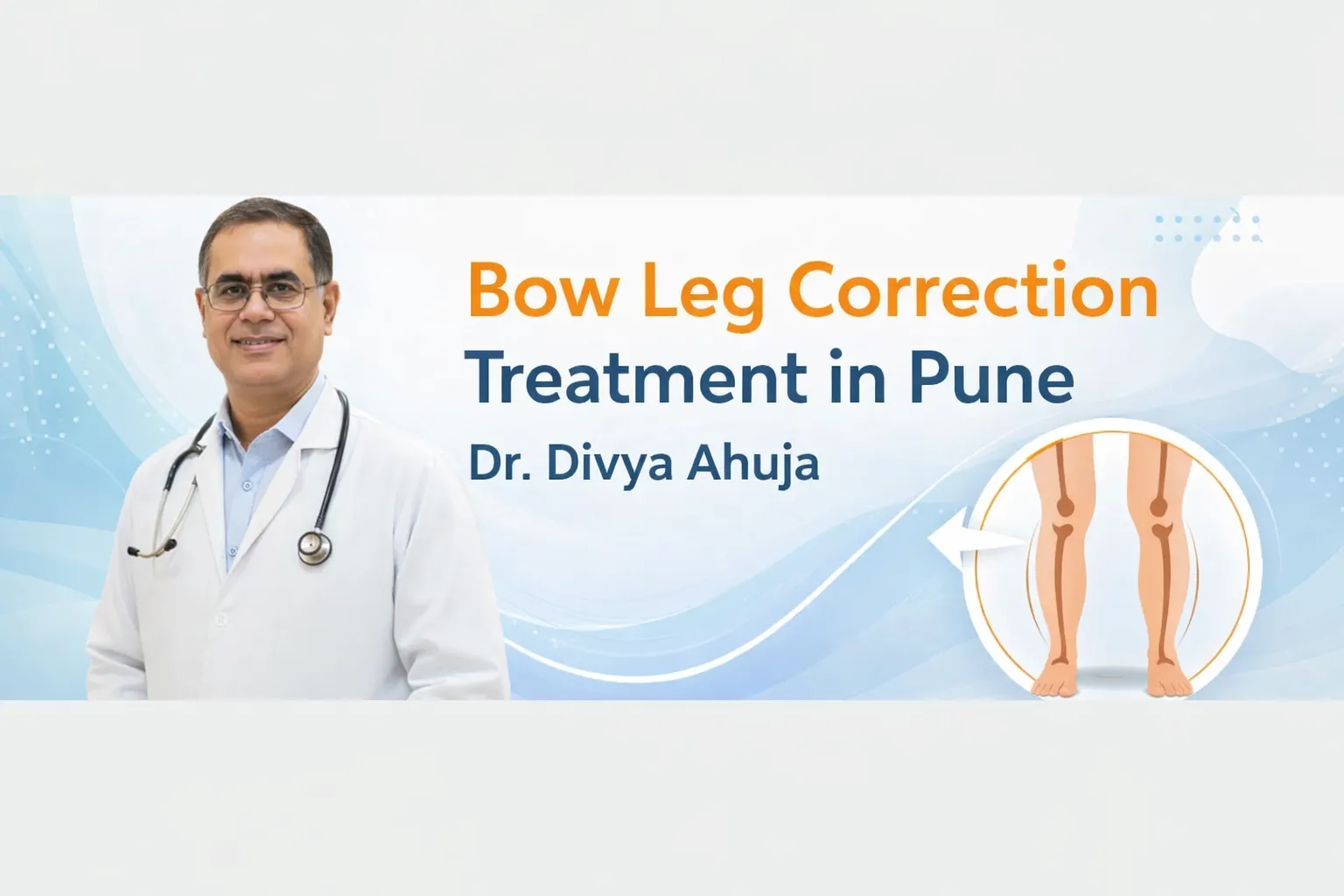
Orthopedic Bow Leg Conditions Treated for Patients from Pune
Bow legs can appear differently in each individual. Some cases involve mild curvature without symptoms, while others lead to significant mechanical stress on the knee joint.
Dr. Divya Ahuja evaluates and treats different forms of genu varum deformity using modern orthopedic assessment and alignment planning techniques.
Bow Legs (Genu Varum) in Children from Pune
Bow legs are commonly seen during early childhood growth. In many cases, mild bowing corrects naturally as the child grows.
However, medical evaluation becomes important if:
- The curvature appears severe
- One leg is more curved than the other
- The condition worsens with growth
- The child experiences pain or limping
- Walking posture appears abnormal
Underlying causes may include growth plate imbalance, nutritional deficiencies, developmental bone conditions, or congenital limb deformities. Early assessment allows doctors to monitor the condition and intervene if required.
Bow Leg Correction in Teenagers from Pune
Adolescence is a stage when bow legs may become more noticeable. Rapid growth and increased physical activity can reveal alignment problems that were previously mild.
Untreated genu varum during teenage years can result in:
- persistent inner knee pain
- Reduced running or sports performance
- uneven weight distribution in the knee joint
- increased risk of early cartilage damage
Detailed deformity analysis helps determine whether the bowing originates from the femur, tibia, or both bones, and whether growth-guided correction or surgical treatment is appropriate.
Bow Leg Correction Treatment in Adults from Pune
In adults, bow legs may develop due to:
- untreated childhood deformity
- Fracture healing in incorrect alignment
- ligament imbalance or post-traumatic deformity
- progressive knee arthritis
Adult genu varum frequently causes inner knee joint overload, resulting in pain, stiffness, and difficulty walking long distances.
Treatment focuses on:
- restoring proper limb alignment
- reducing joint stress and pain
- improving walking mechanics
- preventing early knee degeneration
Why Bow Leg Correction Is Important for Knee Health
Bow legs may initially appear as a cosmetic concern, but alignment affects how the knee joint carries body weight during daily movement.
If left untreated, severe genu varum may lead to:
- uneven pressure on the inner knee compartment
- gradual cartilage wear
- ligament strain and joint instability
- early osteoarthritis development
- reduced mobility and walking comfort
Correcting the alignment restores normal biomechanics and helps protect the knee joint from long-term damage.
Treatment Options for Bow Leg Correction in Pune
Treatment depends on the severity of deformity, age, symptoms, and X-ray alignment findings.
Dr. Ahuja follows a structured evaluation process to determine the safest and most effective treatment strategy.
Non-Surgical Bow Leg Management
Mild bow leg deformity in children or early stages may be managed with:
- observation and periodic follow-ups
- nutritional correction when required
- Physiotherapy for strengthening and gait improvement
- orthotic support, or bracing in selected cases
The aim is to monitor growth and intervene only when necessary.
Corrective Osteotomy Surgery for Bow Legs
Moderate to severe bow leg deformities are often corrected with osteotomy surgery, where the bone is carefully cut and realigned to restore the normal mechanical axis of the leg.
Benefits of osteotomy correction include:
- improved leg alignment
- reduced knee pain
- Better load distribution across the joint
- delayed progression of knee arthritis
The procedure is carefully planned using alignment imaging and biomechanical analysis.
Ilizarov Fixation & Complex Limb Reconstruction
In complex cases, such as severe multi-level deformity or combined limb length discrepancy, Ilizarov external fixation may be recommended.
This technique allows gradual correction of alignment and is particularly useful for:
- severe genu varum deformities
- multiplanar deformity correction
- post-traumatic deformities
- previous failed surgeries
Why Patients from Pune Choose Dr. Divya Ahuja
Patients consult Dr. Ahuja for bow leg correction because of:
- extensive experience in limb reconstruction and deformity correction
- expertise in osteotomy planning and Ilizarov techniques
- personalised treatment planning based on alignment analysis
- ethical decision-making between surgical and non-surgical care
- structured rehabilitation and long-term follow-up
His goal is not only cosmetic improvement but also long-term knee joint protection and stable functional outcomes.
When Should You Consult a Bow Leg Specialist?
Consult an orthopedic specialist if you notice:
- increasing outward curvature of the legs
- persistent inner knee pain
- difficulty walking or running
- uneven shoe wear patterns
- visible leg alignment changes
- bow legs persisting beyond childhood growth
Early consultation often provides more treatment options and better outcomes.
Bow Leg Consultation for Patients from Pune – What to Expect
During consultation, Dr. Ahuja will:
- review medical history and symptoms
- Examine leg alignment and gait pattern
- Evaluate knee joint movement and stability
- Recommend X-rays or alignment scans when necessary
- explain treatment options and recovery expectations
This systematic evaluation helps patients make informed decisions about their treatment.
Serving Patients from Pune
Dr. Divya Ahuja regularly consults patients from Pune and nearby regions who seek expert evaluation for:
- bow leg deformity correction
- knee alignment problems
- Early arthritis caused by genu varum
- limb reconstruction and osteotomy surgery
Patients often travel from Pune for specialised orthopedic care and deformity correction expertise.
Book an Appointment for Bow Leg Correction Treatment in Pune
If you are experiencing knee pain, alignment problems, or cosmetic concerns related to bow legs, consult Dr. Divya Ahuja for expert bow leg correction treatment in Pune.
Early diagnosis and personalised treatment planning can help:
- improve walking comfort
- reduce knee pain
- correct alignment safely
- protect knee joints from long-term damage