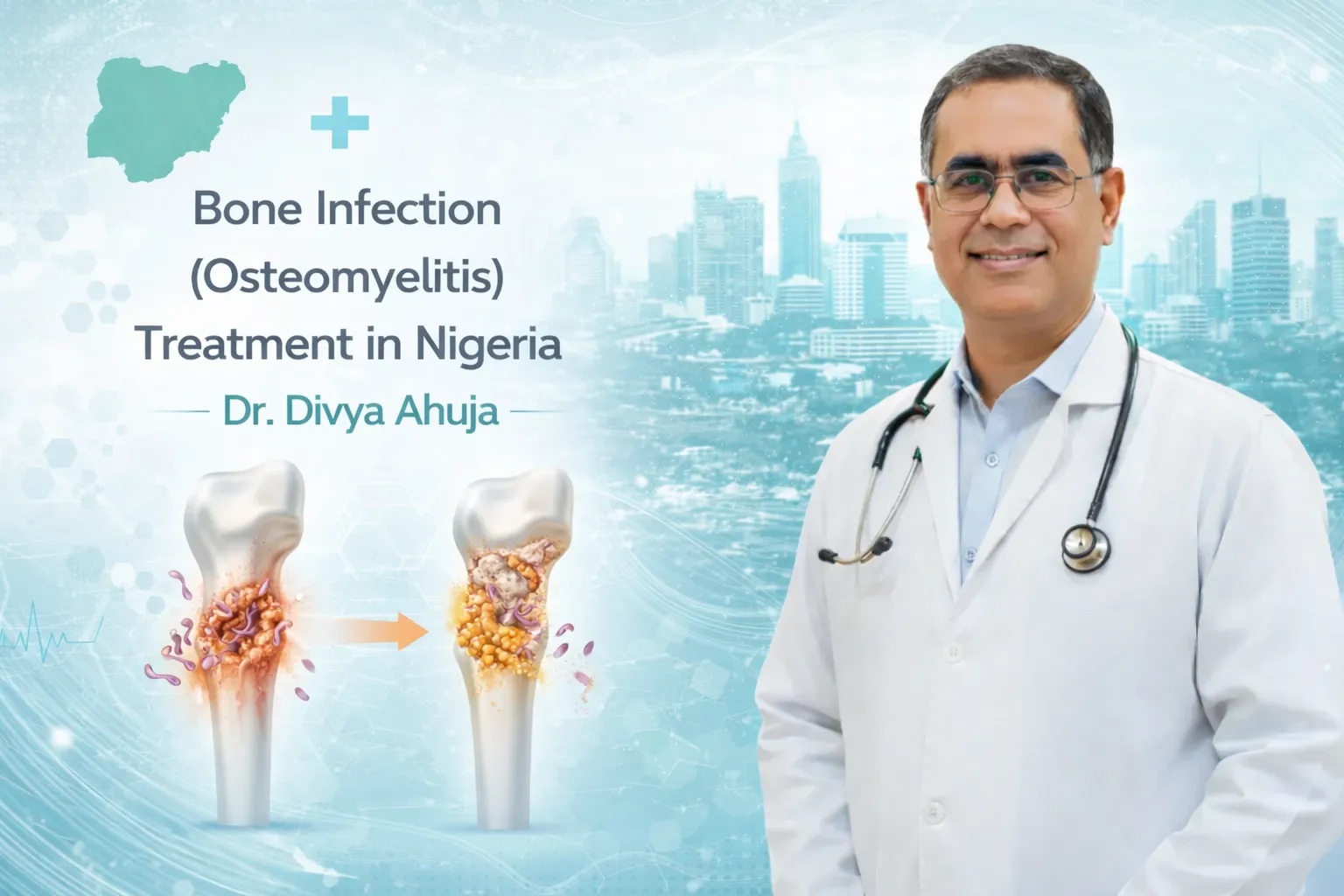
Why Bone Infection (Osteomyelitis) Needs Proper Treatment
A bone infection is not like a normal skin infection. Once bacteria enter the bone, it becomes harder for the body to clear them completely, especially if:
- The blood supply is poor
- There is dead bone tissue
- There is an implant (plate, nail, screws)
- A wound keeps reopening
- diabetes or immunity issues exist
Think of it like rust inside a metal pipe.
Cleaning the outside helps, but the real issue is deep inside. That is why bone infections often need a planned and step-by-step approach, not just random antibiotics.
If left untreated, osteomyelitis may cause:
- bone destruction and weakness
- Repeated pus discharge and skin breakdown
- chronic pain and stiffness
- delayed fracture healing or non-union
- implant loosening or failure
deformity and difficulty walking
infection spreads to nearby joints orthe bloodstream
Early and correct treatment reduces long-term damage and improves the chance of full recovery.
Types of Bone Infections Treated for Patients from Nigeria
As an orthopedic specialist experienced in complex musculoskeletal conditions, Dr. Divya Ahuja treats multiple forms of osteomyelitis using modern diagnostic protocols and evidence-based planning.
1) Acute Bone Infection (Early-Stage Osteomyelitis)
Acute osteomyelitis can develop suddenly when bacteria enter the bone through:
- the bloodstream
- an open wound or cut
- fracture trauma
- surgery or injection-related infection
Symptoms may worsen quickly if not treated early.
Common symptoms include
- sudden deep bone pain
- fever or chills
- redness and swelling in the area
- warmth and tenderness
- difficulty walking or using the limb
Early treatment matters because infection control at this stage can often prevent long-term bone damage and reduce the risk of chronic osteomyelitis.
2) Chronic Bone Infection (Long-Term Osteomyelitis)
Chronic osteomyelitis usually develops when infection is not fully eliminated or keeps returning. It may last for months or even years.
This often happens when there is:
- dead bone tissue (sequestrum)
- poor blood supply
- repeated trauma or surgery
- implant infection
- delayed treatment
- uncontrolled diabetes
Signs of chronic osteomyelitis may include
- persistent pain and swelling
- recurrent pus discharge
- sinus tract formation (small opening with discharge)
- non-healing wound near bone
- stiffness and reduced limb function
- weak bone structure and fracture risk
Dr. Ahuja treats chronic infection with a carefully planned approach aimed at complete infection clearance, followed by stable reconstruction, so the limb remains functional long-term.
| Feature | Acute Osteomyelitis | Chronic Osteomyelitis |
|---|---|---|
| Onset | Sudden | Long-standing |
| Pain | Severe, rapid | Persistent, dull |
| Pus discharge | Rare early | Common |
| Dead bone | Usually absent | Often present |
| Treatment | Antibiotics ± surgery | Surgery + antibiotics |
| Recurrence risk | Low if early | Higher without surgery |
3) Bone Infection After Fracture or Trauma
Bone infections are more likely after:
- open fractures (compound fractures)
- road traffic accidents
- deep wounds with contamination
- delayed fracture healing
- multiple surgeries
Infection in these cases can cause:
- delayed union or non-union
- implant failure
- deformity due to weak bone
- long-term pain and stiffness
Dr. Ahuja provides advanced care for infected fractures and trauma-related osteomyelitis to restore:
- alignment
- bone healing
- walking ability
- long-term stability
Many patients searching for a fracture doctor in Abuja or complex trauma care in Nigeria seek expert evaluation when infection disrupts healing and recovery.
4) Bone Infection After Surgery or Implant (Post-Operative Infection)
Post-operative bone infection can occur after orthopedic surgeries, such as:
- plate and screw fixation
- Intramedullary nail surgery
- external fixator procedures
- joint replacement surgery
Patients may notice:
- persistent wound discharge
- Redness and swelling near the scar
- increasing pain
- fever
- loosening sensation in the limb
- delayed wound healing
Dr. Ahuja’s treatment focuses on infection control without compromising stability, because both infection clearance and mechanical support are important for recovery.
For many patients, this is the stage where temporary antibiotics stop working, and a more structured plan becomes necessary.
5) Bone Infection With Non-Healing Wounds or Sinus Discharge
Some patients develop a small opening near the bone that continues to discharge pus. This is called a sinus tract.
This often indicates deep infection and may be linked with:
- infected bone cavity
- sequestrum (dead bone piece)
- implant-related infection
- chronic osteomyelitis
Dr. Ahuja treats such cases through:
- detailed infection assessment
- imaging to map the infected bone
- surgical debridement (cleaning) when needed
- Reconstruction planning to rebuild healthy bone and soft tissue
This approach helps reduce recurrence and prevent long-term disability.
Diagnosis and Investigation for Bone Infection
Bone infection treatment should never be based on guessing. The correct plan depends on finding the exact infection pattern and organism.
During evaluation, Dr. Ahuja may recommend:
- detailed clinical examination
- blood tests to check infection markers
- X-rays to identify bone changes
- MRI or CT scan for deeper infection mapping
- pus/wound culture tests
- antibiotic sensitivity tests
The goal is to design targeted treatment, instead of prolonged trial-based medication that may hide symptoms without clearing the infection completely.
Treatment Options for Bone Infection in Nigeria (Medical Tourism in Mumbai)
Dr. Divya Ahuja follows a structured treatment approach based on:
- infection type (acute or chronic)
- severity and spread
- location of infection
- implant involvement
- bone stability and the healing stage
- patient health factors (diabetes, immunity)
1) Antibiotic Therapy for Bone Infection
Antibiotics are important, especially in early-stage infection. However, antibiotics alone may not be enough in chronic cases, especially when dead bone tissue is present.
Dr. Ahuja plans antibiotics based on:
- culture and sensitivity reports
- stage of osteomyelitis
- need for oral vs IV antibiotics
- patient’s overall health condition
This improves success rates and helps avoid unnecessary long-term antibiotic overuse.
2) Surgical Debridement (Cleaning the Infection)
For many moderate to severe cases, surgery becomes a key step.
Debridement means removing:
- infected tissue
- pus collections
- unhealthy bone
- dead bone fragments
Debridement is commonly needed when there is:
- chronic infection with sinus discharge
- sequestrum (dead bone)
- implant infection
- Repeated recurrence despite antibiotics
The goal is simple: remove the infection source completely, so healthy tissue can heal again.
3) Bone Reconstruction and Limb Preservation Procedures
Sometimes an infection causes bone loss or makes the limb unstable. In such cases, reconstruction becomes important.
Depending on the case, Dr. Ahuja may plan:
- external fixation support
- staged reconstruction
- bone transport techniques (in complex cases)
- limb reconstruction planning
- correction of deformity caused by infection
This approach is especially helpful in infected non-union and difficult healing cases, where the focus is on limb salvage and functional walking recovery.
4) Rehabilitation and Recovery Planning
Bone infection recovery is not only about killing germs. Recovery also depends on restoring strength, movement, and normal function.
Dr. Ahuja’s recovery planning focuses on:
- pain control and safe mobilisation
- monitoring bone healing progression
- ensuring infection does not return
- improving movement and flexibility
- gradual strength restoration
Proper rehabilitation reduces stiffness and supports long-term mobility improvement.
Why Dr. Divya Ahuja is a Preferred Choice for Bone Infection Treatment for Nigerian Patients
Patients consult Dr. Ahuja because of:
- high diagnostic accuracy in complex infection cases
- strong experience in trauma and limb reconstruction
- ethical and evidence-based decision-making
- balanced use of medical and surgical treatment
- expertise in infected fractures and difficult non-union cases
- long-term focus on limb preservation and stability
The goal is not only short-term relief.
The aim is complete infection clearance, stable bone healing, and recurrence prevention.
When Should You See an Orthopedic Surgeon for Bone Infection?
You should consult an orthopedic specialist if you experience:
- persistent bone pain and swelling
- fever with limb pain
- Repeated pus discharge or sinus opening
- wound not healing after fracture or surgery
- Redness and warmth near a previous injury site
- fracture that is not healing properly
- implant pain or loosening symptoms
- difficulty walking due to deep bone pain
Early evaluation reduces complications and improves long-term outcomes.
Bone Infection Consultation for Nigerian Patients: What to Expect
During consultation, Dr. Ahuja:
- reviews symptoms, injury history, and past treatments
- performs a detailed orthopedic examination
- recommends investigations only when required
- explains the infection stage in simple language
- creates a personalised treatment and recovery plan
This structured process gives clarity on:
- treatment steps
- expected timelines
- surgery needed (if required)
- recovery outcomes
- long-term prevention plan
Serving Nigerian Patients (Medical Tourism Support in Mumbai)
Dr. Divya Ahuja is frequently consulted by patients from Nigeria dealing with complex orthopedic infection cases, such as:
- chronic osteomyelitis
- post-surgical implant infection
- infected non-union
- wound breakdown after fracture surgery
- Recurring sinus discharge
Many patients are searching for:
- orthopedic hospital in Lagos
- orthopedic surgeon in Lagos Island / Ikeja
- fracture doctor in Abuja
- best bone doctor in Nigeria
Also look for advanced guidance when infection affects healing and mobility.
Dr. Ahuja supports step-by-step planning for medical tourism so patients receive clarity from evaluation to treatment and rehabilitation.
Book an Appointment for Bone Infection Treatment for Nigerian Patients
If you need reliable and advanced bone infection treatment and are exploring medical tourism, consult Dr. Divya Ahuja for a structured diagnosis and expert treatment plan.
Depending on your infection severity, treatment may include:
- targeted antibiotics
- surgical debridement
- implant infection management
- reconstruction for stability
- structured follow-up and rehab support
The goal remains focused on:
- eliminate infection
- relieve pain and swelling
- restore bone healing
- prevent recurrence
- preserve limb function and mobility
Early treatment improves outcomes and reduces the risk of permanent complications.