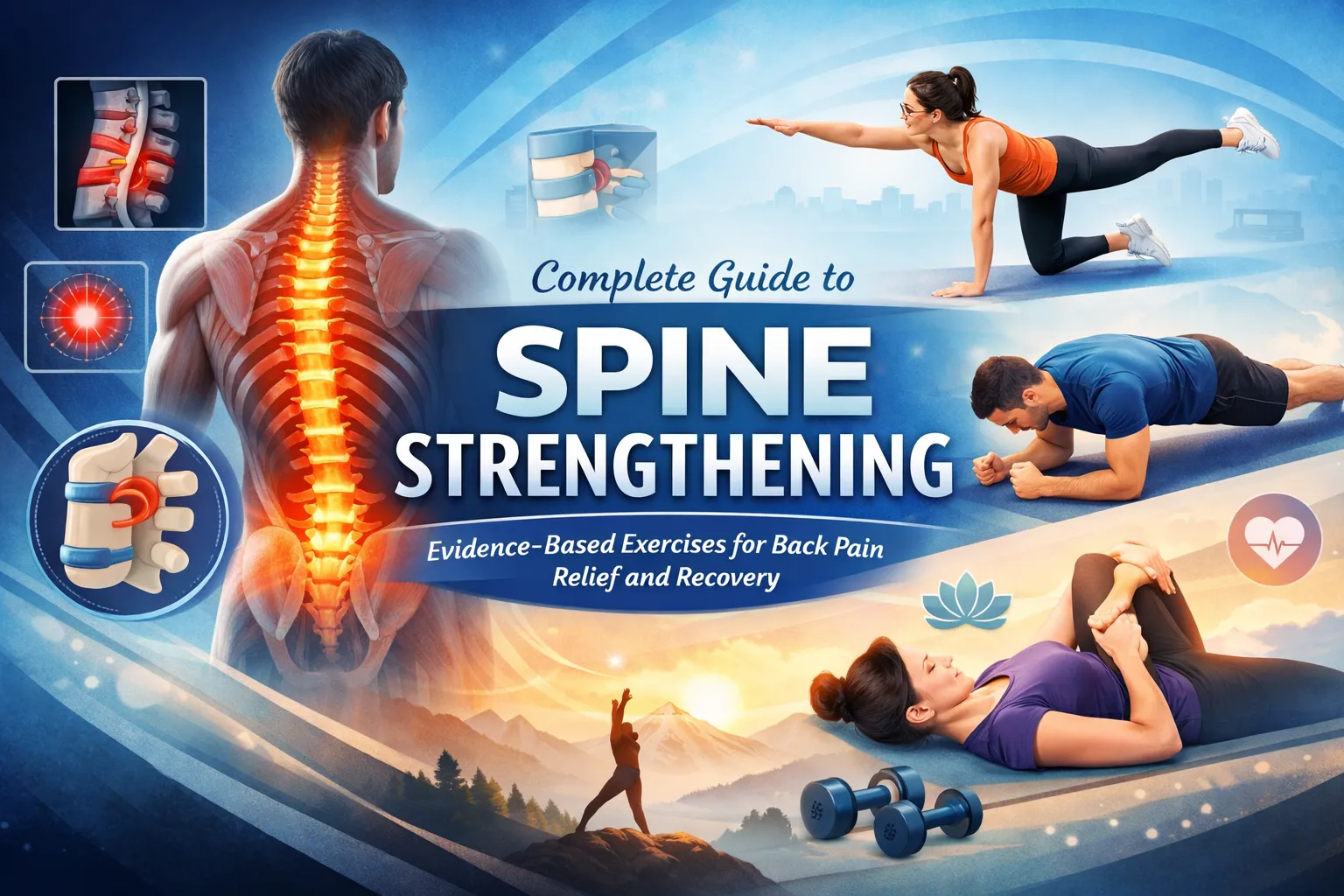
Back pain affects millions of people worldwide, limiting daily activities and reducing quality of life. Whether you’re recovering from an injury, managing chronic discomfort, or seeking to prevent future problems, a comprehensive spine conditioning program can transform your back health. This guide provides medically-backed exercises designed to spine strengthening, improve flexibility, and deliver lasting pain relief.
Table of Contents
Understanding Your Spine: Why Strengthening Matters
Your spine is a complex structure requiring balanced muscle support to function properly. When these supporting muscles weaken, your spine becomes vulnerable to injury, pain, and degenerative conditions.
The Anatomy of Spine Support Muscles
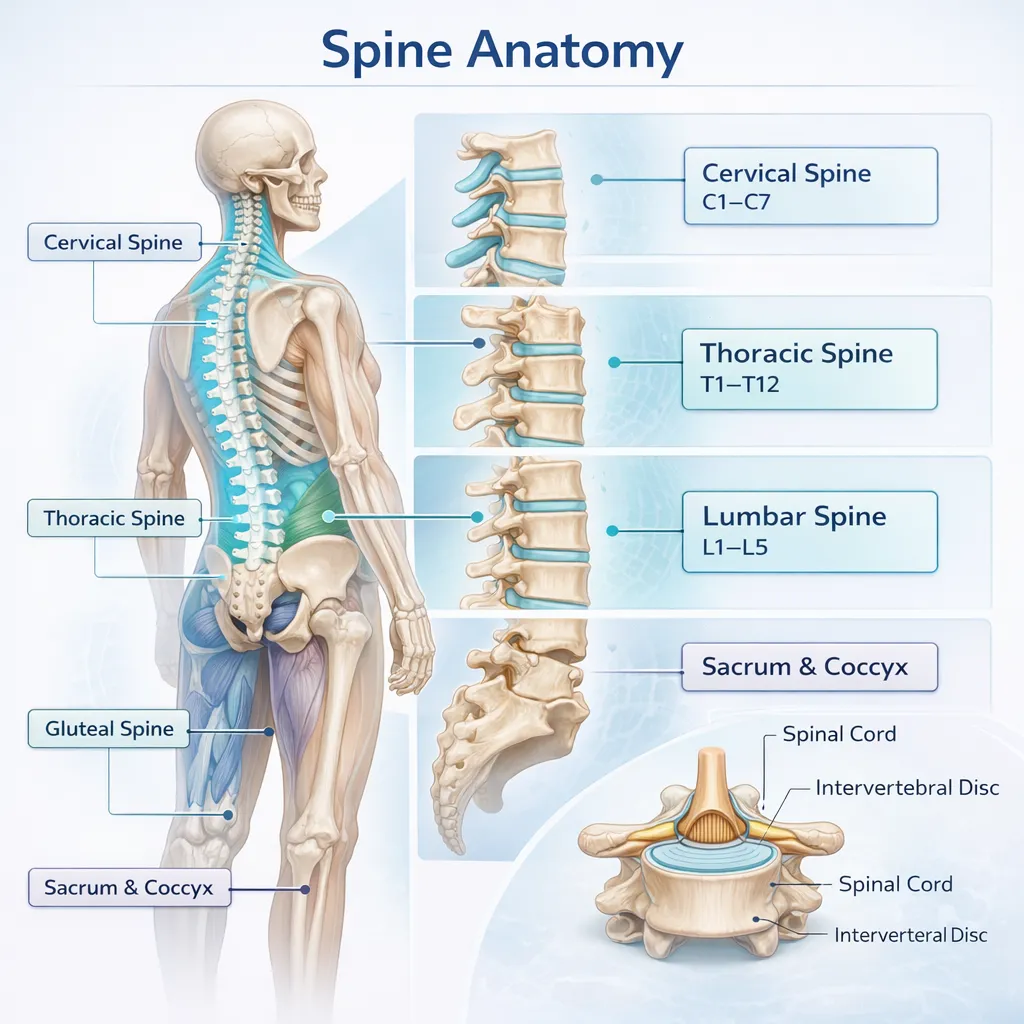
Your spine relies on several key muscle groups working together:
Cervical Spine Muscles support your neck and upper back, including the trapezius muscles that run from your neck to your shoulders. Weakness here often leads to neck pain and tension headaches.
Thoracic muscles in your middle back, including the latissimus dorsi along your sides, help maintain upright posture and enable twisting movements.
The lumbar support system consists of your lower back extensors, erector spinae muscles running along your spine, and the quadratus lumborum muscles on each side of your lower back. These muscles bear a significant load during daily activities.
Core Musculature includes your abdominal muscles and oblique rotators (both internal and external). These aren’t just for appearance-they’re essential for spinal stability and preventing lower back pain.
Hip and Buttock Muscles like the gluteus maximus, gluteus medius, piriformis, and hamstrings directly impact spine alignment and load distribution.
Common Causes of Back Pain
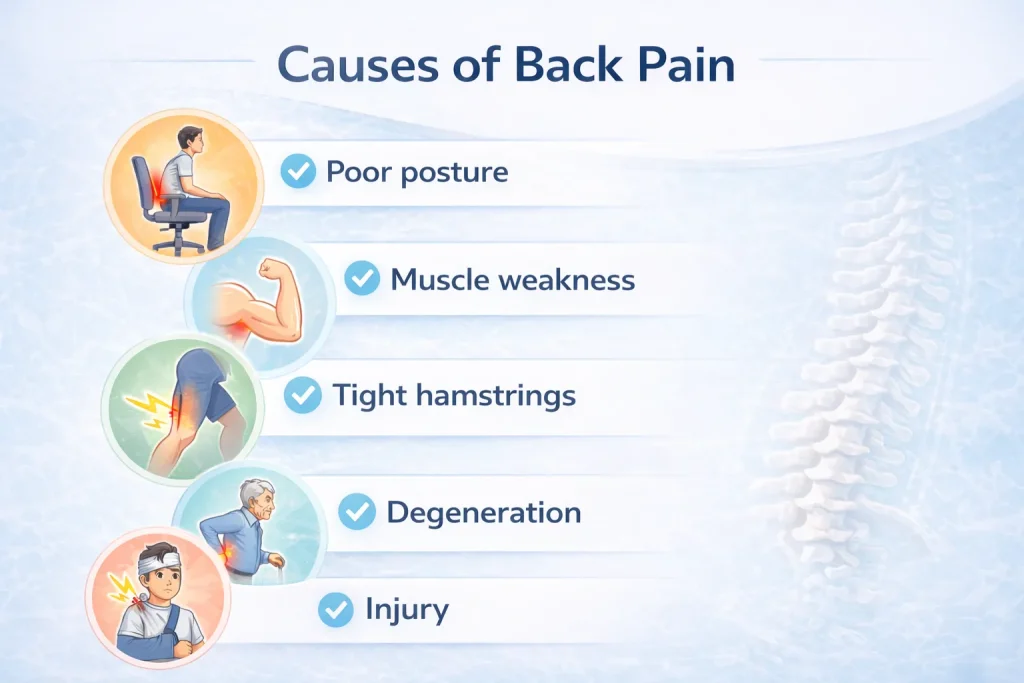
Understanding what triggers back pain helps you address the root cause:
- Muscle Weakness: Insufficient strength in back extensors and core muscles forces your spine to compensate, leading to strain
- Poor Flexibility: Tight hamstrings, hip flexors, and back muscles limit range of motion and create abnormal stress patterns
- Postural Dysfunction: Hours of sitting with rounded shoulders and forward head position strain cervical and thoracic muscles
- Previous Injury: Incomplete rehabilitation after injury leaves muscles imbalanced and vulnerable
- Degenerative Conditions: Cervical spondylosis, lumbar spondylosis, and disc issues require targeted strengthening to manage symptoms
Benefits of a Structured Spine Conditioning Program
A well-designed back-strengthening routine delivers multiple benefits beyond simple pain relief.
Pain Relief and Prevention
Strengthening the muscles that support your spine directly addresses mechanical low back pain-the most common type of back discomfort. Strong, balanced muscles reduce stress on spinal joints, discs, and nerves. Many people experience significant pain reduction within 4-6 weeks of regular exercise.
Improved Posture and Mobility
Targeted spine stretching exercises restore natural spinal curves and range of motion. Cervical spine exercises combat forward head posture, while lumbar stretches counteract the effects of prolonged sitting. Better spinal mobility means easier movement during daily activities.
Enhanced Core Stability
Core strengthening exercises for lower back pain create a natural “belt” of muscular support around your midsection. This stability protects your spine during lifting, twisting, and bending movements that would otherwise cause injury.
Essential Guidelines Before Starting Your Back Exercise Routine
Safety should always be your priority when beginning any exercise program for back pain.
Safety Precautions and When to Consult a Doctor
Always consult your physician or physical therapist before starting spine exercises, especially if you:
- Recently had back surgery or a spinal injury
- Experience numbness, tingling, or weakness in your legs
- Have severe pain that doesn’t improve with rest
- Notice pain that radiates down your leg (possible sciatica or radiculopathy)
- Have been diagnosed with conditions like spondylolisthesis or spinal stenosis
These exercises should enhance recovery, not cause additional harm. Professional guidance ensures you’re performing movements correctly and choosing appropriate exercises for your specific condition.
Proper Warm-Up Techniques
Never skip your warm-up. Cold muscles are more prone to strain and injury. Spend 5-10 minutes on low-impact activities:
- Walking at a comfortable pace
- Gentle stationary cycling
- Arm circles and shoulder rolls
- Light marching in place
This increases blood flow to your muscles, elevates your core temperature, and prepares your nervous system for movement.
Understanding the Pain vs. Discomfort Difference
During back strengthening exercises, you should feel:
Normal sensations:
- Mild muscle fatigue or burning during the exercise
- Gentle stretching sensation at the end of your range of motion
- Muscle soreness 24-48 hours after exercise (similar to post-workout soreness)
Warning signs to stop immediately:
- Sharp, shooting pain
- Pain that radiates into your arms or legs
- Numbness or tingling
- Pain that worsens during or after the exercise
- Dizziness or loss of balance
Listen to your body. Exercise should be challenging but never painful. The “no pain, no gain” mentality does not apply to rehabilitation exercises.
The Complete Spine Stretching Exercise Routine
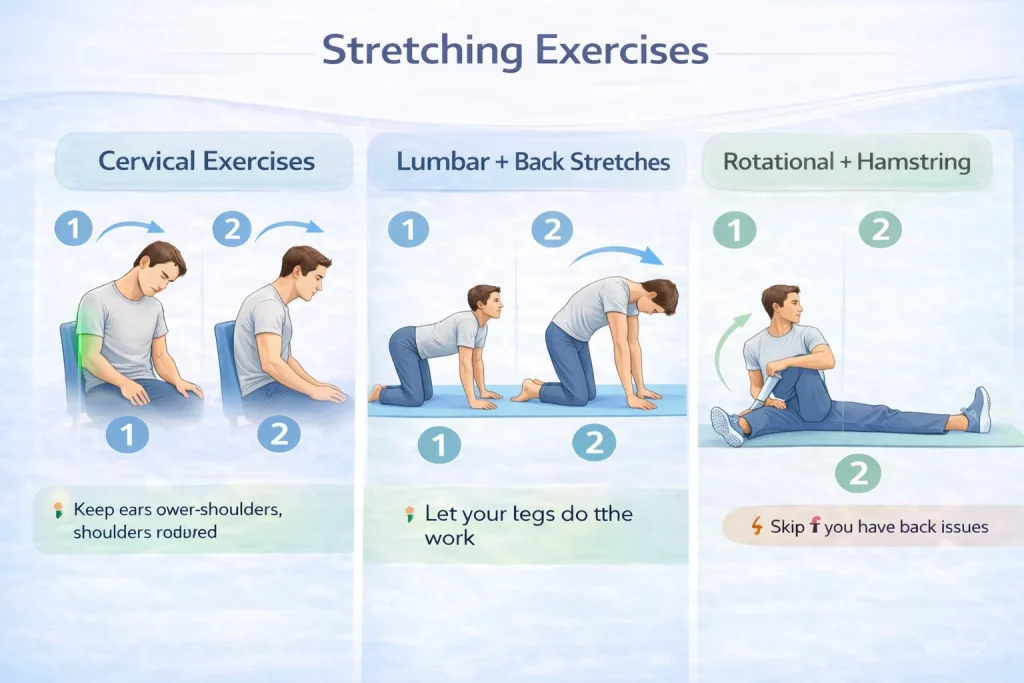
Stretching forms the foundation of any effective spine conditioning program. These movements improve flexibility, reduce muscle tension, and prepare your body for strengthening work.
Cervical Spine Stretches for Neck Pain Relief
Gentle Neck Mobilization
Cervical pain exercises begin with controlled, gentle movements that restore neck mobility without straining delicate structures.
Start in a comfortable seated position with your weight evenly distributed. Slowly bring your chin toward your chest, feeling a gentle stretch along the back of your neck. Hold for 5 seconds. Next, roll your head to the right, bringing your ear toward your shoulder-don’t lift your shoulder to meet your ear. Hold this position for 5 seconds, then roll through the center to the left side.
After completing these side-to-side movements, perform slow, controlled circular rotations. Move clockwise three times, then reverse direction for three counterclockwise circles. These neck exercises help combat cervical spondylosis symptoms and relieve tension from prolonged desk work.
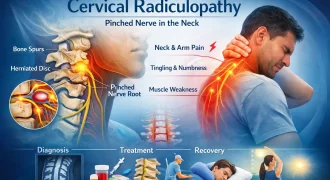
Important Note: Never force your neck into painful ranges. If you have cervical radiculopathy (nerve compression), consult your physical therapist about modifications.
Lumbar Spine Stretches for Lower Back Flexibility
Dynamic Back Extension Movement
This physiotherapy exercise targets the quadratus lumborum and erector spinae muscles that commonly tighten in people with lower back pain.
Begin on your hands and knees with your shoulders directly over your hands. Rock forward onto your arms while rounding your shoulders and allowing your lower back to gently drop toward the floor. Hold this position for 5 seconds, breathing deeply. Then rock backward, sitting your buttocks as close to your heels as possible while extending your arms forward. You should feel a comfortable stretch through your entire back. Hold for 5 seconds.
Perform 10 repetitions, moving smoothly between positions. This exercise improves lumbar spine extension and flexion while gently decompressing spinal joints.
Knee to Chest Stretch
This simple yet effective movement relieves lower back tightness and stretches hip flexors.
Lie on your back with both legs extended. Lift one leg and bring your knee toward your chest, grasping behind your knee or shin. Pull your leg in as comfortably as possible while tightening your abdominal muscles and pressing your lower back flat against the floor. Hold for 5 seconds, then repeat with the other leg. Finally, pull both knees to your chest simultaneously.
Complete this sequence 10 times. This exercise particularly benefits those with lumbar lordosis or sciatica symptoms.
Rotational Stretches for Spinal Mobility
Seated Spinal Twist
Rotational movements are crucial for maintaining functional spine mobility and preventing stiffness in the oblique muscles.
Sit on the floor with both legs straight in front of you. Cross your right leg over your left, planting your right foot on the floor outside your left knee. Slowly twist your torso to the right, placing your right hand behind you for support. Position your left arm on the outside of your right thigh and use it to deepen the twist gently. Look over your right shoulder and hold for 30 seconds, breathing normally.
Return to the center and repeat on the opposite side. Perform this sequence 4 times. This stretch targets the piriformis muscle, external and internal oblique rotators, and helps relieve tension that contributes to sciatica.
Modified Hamstring and Back Stretch
Tight hamstrings significantly contribute to lower back pain by limiting pelvic mobility.
Sit on the floor with one leg extended to the side and the other leg bent. Keeping your back straight, hinge from your hips and reach toward the foot of your extended leg. Hold for 5 seconds. Then round your spine and bring your hands to your shin or ankle, lowering your head toward your knee. Hold this deeper stretch for 30 seconds, then relax for 30 seconds.
Repeat on the other side and complete the entire sequence 10 times. This movement stretches your hamstrings, erector spinae, and extensor muscles while teaching proper hip hinge mechanics that protect your spine during daily activities.
Core Strengthening Exercises for Lower Back Pain
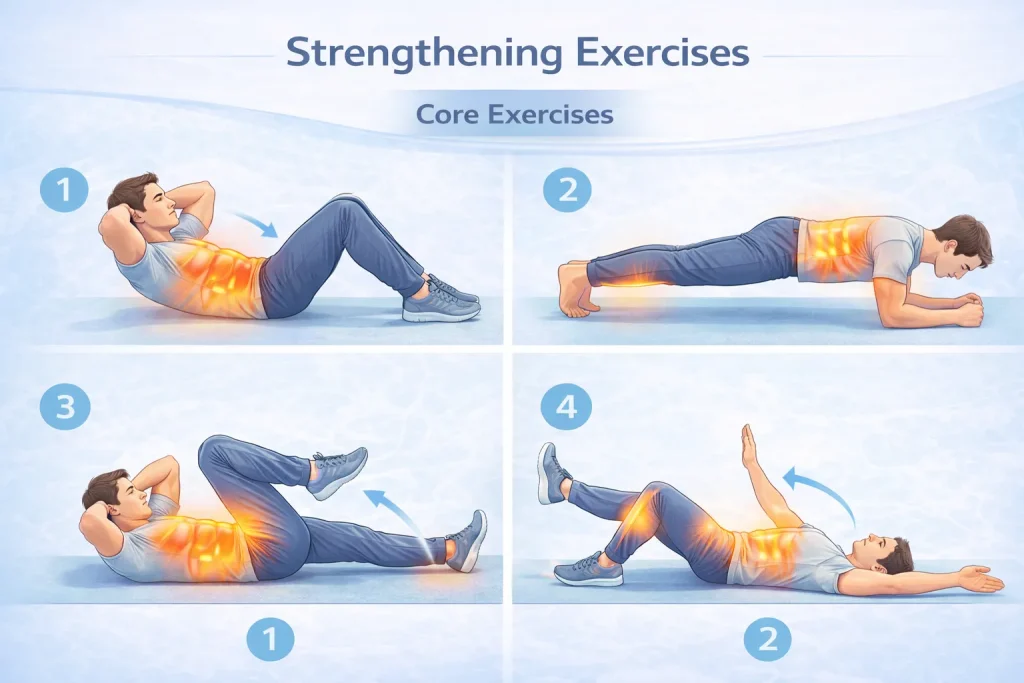
After stretching, progress to strengthening exercises that build the muscular endurance and stability your spine needs for long-term health.
Foundational Stability Exercises
Quadruped Arm and Leg Raise (Bird Dog)
This fundamental exercise strengthens your back extensors, erector spinae, and gluteal muscles while teaching spinal stability.
Start on your hands and knees with shoulders over hands and hips over knees. Tighten your abdominal muscles to create a stable core. Raise one arm straight out to shoulder height, ensuring it’s level with your body. Once balanced, slowly lift and extend the opposite leg straight back from your hip. Squeeze your buttock and thigh muscles and hold this position for 15 seconds.
The key is maintaining a flat back throughout the movement-don’t let your hips rotate or your lower back arch. Return to the starting position and repeat with the opposite arm and leg. Perform 5 repetitions on each side.
This exercise is excellent for building the neuromuscular control necessary for spine protection during daily activities.
Forearm Plank Hold
Plank exercises work multiple muscle groups simultaneously, including back extensors, erector spinae, quadratus lumborum, and abdominal muscles.
Lie face down with your forearms on the floor and elbows directly below your shoulders. Tighten your abdominal muscles and lift your hips off the floor. Squeeze your gluteal muscles and lift your knees, creating a straight line from head to heels. Hold this position for 30 seconds while breathing normally.
If you cannot maintain proper form for 30 seconds, modify by keeping your knees on the floor while lifting only your hips. Gradually build endurance until you can perform the full plank.
Return to the starting position and rest for 30 seconds between repetitions. Complete 5 repetitions. This exercise builds incredible core strength and addresses multiple back pain causes simultaneously.
Advanced Back Strengthening Movements
Lateral Stability Training
The modified side plank targets the quadratus lumborum and oblique rotators-muscles critical for preventing side-to-side spine instability.
Lie on your side with your bottom leg slightly bent and top leg straight. Position your elbow directly under your shoulder with your forearm extended on the floor. Tighten your core and raise your hip off the floor. Advanced practitioners can straighten the bottom leg and lift the knee off the floor.
Keep your body in a straight line and hold for 15 seconds. Focus on maintaining neutral neck alignment-don’t shrug your shoulders toward your ear. Return to the starting position and repeat on the opposite side. Complete 5 repetitions per side.
Hip Bridge for Posterior Chain Strength
This movement strengthens the lower back extensors, erector spinae, gluteal muscles, and hamstrings-the entire posterior chain that supports your spine.
Lie on your back with arms at your sides, knees bent, and feet flat on the floor. Tighten your abdominal and gluteal muscles simultaneously, then lift your pelvis to create a straight line from shoulders to knees. Center your weight over your shoulder blades without tensing your neck.
Hold for 15 seconds, focusing on squeezing your glutes throughout the hold. Lower slowly and repeat 5 times. This exercise effectively addresses weak gluteal muscles that often contribute to lower back pain.
Abdominal Strengthening for Spine Support
Abdominal Bracing Technique
Before performing dynamic abdominal exercises, master the bracing technique that protects your spine.
Lie on your back with knees bent and arms at your sides. Tighten your abdominal muscles as if preparing for someone to poke your stomach. Your stomach should pull away from your waistband, and your lower back should flatten into the floor. Hold this contraction for 15 seconds while breathing normally; don’t hold your breath.
Perform 5 repetitions. This isometric exercise teaches you to engage your core protective mechanism that you’ll use during all lifting and movement activities.
Controlled Abdominal Crunch
Once you’ve mastered bracing, progress to controlled crunches that build abdominal strength without straining your neck.
Lie on your back with knees bent and hands positioned at the back of your head with elbows wide. Tighten your abdominal muscles and lift only your head and shoulder blades off the floor-your lower back should remain flat on the ground. Hold the top position for 2 seconds, then lower slowly.
Keep your neck relaxed throughout the movement. Your hands support your head’s weight but don’t pull on it. Perform 2 sets of 10 repetitions.
Creating Your Personalized 4-6 Week Spine Rehabilitation Program
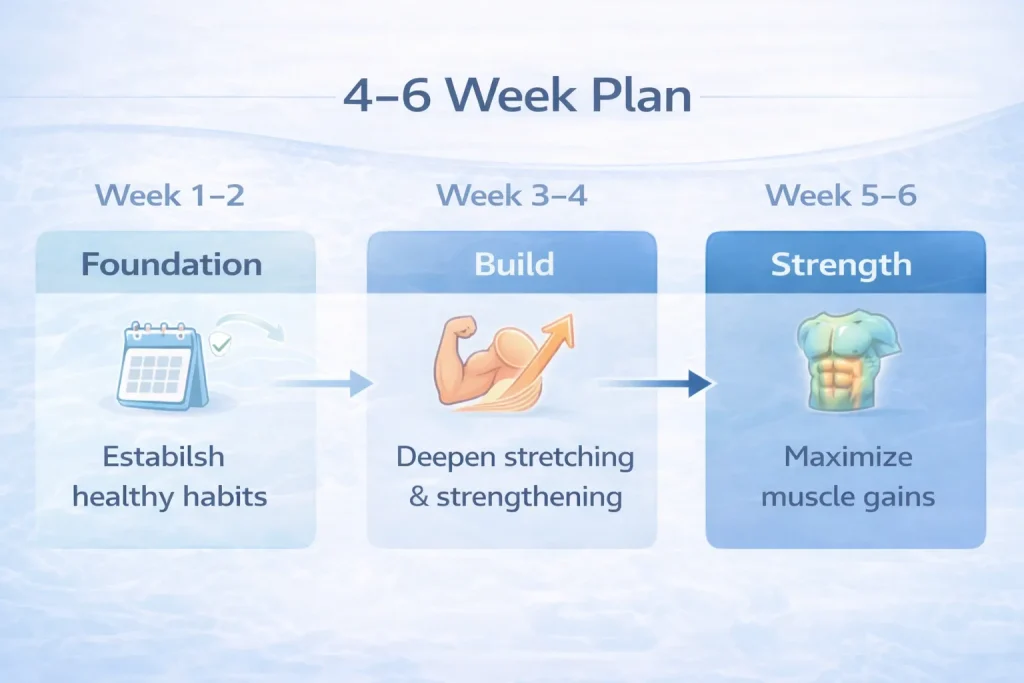
Consistency and progression are key to achieving lasting results from your back exercise routine.
Week-by-Week Progression Guide
Weeks 1-2: Establishing the Foundation
Focus on learning proper form and building basic endurance. Perform all stretching exercises daily and begin with the foundational strengthening movements (bird dog, basic plank with knee modification if needed, hip bridge, and abdominal bracing). Don’t rush. Perfect form prevents injury and maximizes results.
Weeks 3-4: Increasing Intensity
Add hold times to your strengthening exercises and progress to the full plank position if you’ve been using the modified version. Introduce the modified side plank and controlled crunches. You should notice reduced pain and improved mobility during this phase.
Weeks 5-6: Solidifying Gains
Focus on quality repetitions and maintaining perfect form throughout all exercises. Many people experience significant improvement by this point. Consider whether you’re ready to transition to a maintenance program or need to continue the rehabilitation phase.
How Often Should You Exercise
For optimal results during the rehabilitation phase, perform the complete program daily. This includes both stretching and strengthening exercises. The entire routine takes approximately 30-40 minutes.
Once you’ve completed the initial 4-6 week program and achieved your goals, transition to a maintenance schedule of 2-3 times per week. This frequency maintains the strength and flexibility gains you’ve built while preventing future back pain episodes.
Tracking Your Progress
Monitor these key indicators:
- Pain levels: Rate your pain on a 0-10 scale daily
- Range of motion: Note improvements in how far you can stretch
- Exercise tolerance: Track how long you can hold positions like planks
- Daily function: Record activities that become easier (bending, lifting, sitting duration)
- Sleep quality: Back pain often improves sleep; note any changes
Consider photographing your posture from the side every two weeks. Visual progress can be motivating and helps you see postural improvements you might not feel immediately.
Special Considerations for Specific Spine Conditions
While the general spine conditioning program benefits most people, certain conditions require modifications or additional focus.
Exercises for Cervical Spondylosis
Cervical spondylosis involves age-related changes to the neck vertebrae and discs. Focus heavily on the neck mobility exercises while avoiding excessive extension (tilting your head back). Strengthen your deep neck flexor muscles to support proper alignment.
Add isometric neck strengthening: Place your hand against your forehead and press your head forward into your hand without allowing movement. Hold for 5 seconds. Repeat on each side and the back of your head. This builds neck muscle strength without moving compromised joints.
Lumbar Spondylosis Exercise Modifications
Lumbar spondylosis benefits from exercises that maintain neutral spine position while building strength. Focus especially on the hip bridge, plank variations, and abdominal bracing.
Avoid deep forward bending exercises if they increase pain. Instead, emphasize gentle stretching and strengthening in neutral positions. The bird dog exercise is particularly valuable for lumbar spondylosis because it builds stability without excessive spinal movement.
Sciatica Pain Management Through Movement
Sciatica results from irritation of the sciatic nerve, often from disc herniation or piriformis muscle tightness. The knee-to-chest stretch and sitting rotation stretch specifically target areas that contribute to sciatica symptoms.
Add a specific piriformis stretch: Lie on your back and cross one ankle over the opposite knee. Grasp behind the uncrossed leg’s thigh and pull both legs toward your chest. Hold for 30 seconds. This directly stretches the piriformis muscle that can compress the sciatic nerve.
Nerve gliding exercises may also help. Consult a physical therapist about incorporating these specialized movements if sciatica persists.
Common Mistakes to Avoid During Back Exercises
Even with the best intentions, these common errors can undermine your progress or cause injury.
Rushing Through Repetitions: Quality always trumps quantity. Slow, controlled movements with proper form deliver better results than fast, sloppy repetitions.
Skipping the Warm-Up: Cold muscles are vulnerable to strain. Always dedicate 5-10 minutes to gentle warm-up activities.
Ignoring Pain Signals: Muscle fatigue is normal; pain is not. Stop immediately if you experience sharp pain, numbness, or tingling.
Inconsistent Practice: Sporadic exercise won’t build the strength and flexibility necessary for lasting improvement. Commit to the daily routine during the rehabilitation phase.
Holding Your Breath: Many people unconsciously hold their breath during difficult exercises. This raises blood pressure and reduces performance. Breathe normally throughout all movements.
Neglecting Stretching: Some people focus only on strengthening while skipping flexibility work. Both components are essential for comprehensive spine health.
Poor Posture During Exercises: Allowing your back to arch excessively during planks or rounding your spine during stretches defeats the exercise’s purpose. Maintain neutral alignment unless the exercise specifically requires spinal movement.
Conclusion: Your Path to a Stronger, Pain-Free Spine
A healthy spine is fundamental to enjoying an active, pain-free life. This comprehensive conditioning program provides the tools you need to strengthen supporting muscles, improve flexibility, and address the root causes of back pain. Whether you’re recovering from injury, managing a chronic condition like lumbar spondylosis, or preventing future problems, regular exercise delivers remarkable results.
Remember these key takeaways:
- Consistency matters more than intensity: Daily practice of proper exercises beats occasional intense workouts
- Balance stretching and strengthening: Both flexibility and strength are essential for optimal spine health
- Listen to your body: Pain is a warning signal, not something to push through
- Seek professional guidance when needed: Working with a physical therapist ensures safe, effective progression
- Make it a lifestyle: Transition to maintenance exercise 2-3 times weekly for lifelong spine protection
Start today with the gentle stretching exercises, master proper form, then gradually progress to strengthening movements. Your spine supports you through every activity. Invest in its health through this proven conditioning program. With patience and dedication, you can build a stronger back and reclaim the active lifestyle you deserve.
Frequently Asked Questions
How long before I see results from spine strengthening exercises?
Most people notice improved flexibility within 1-2 weeks and reduced pain within 3-4 weeks of consistent practice. Significant strength gains typically appear after 4-6 weeks. However, individual results vary based on your starting condition, consistency, and specific diagnosis.
Can I do these exercises if I have a herniated disc?
Many exercises in this program are appropriate for herniated disc conditions, but some modifications may be necessary. Avoid exercises causing radiating leg pain and focus on core stabilisation movements. Consult your doctor or physical therapist for personalised guidance.
What’s the difference between stretching and strengthening for back pain?
Stretching improves flexibility and range of motion, reducing muscle tightness and stiffness. Strengthening builds muscle capacity to support your spine and prevent future injury. Both are essential-flexibility without strength leaves you vulnerable, while strength without flexibility limits movement and increases injury risk.
Should I exercise through muscle soreness?
Mild muscle soreness 24-48 hours after exercise is normal and safe to exercise through using gentle movement. However, sharp pain, joint pain, or symptoms that worsen with activity require rest and possibly medical evaluation. Learn to distinguish between productive muscle work and harmful pain signals.
How do I know if my form is correct?
Correct form feels controlled and stable. You should feel the targeted muscles working without strain in unintended areas. Common signs of poor form include neck tension during abdominal work, lower back arching during planks, or inability to maintain position. Working with a physical therapist initially helps ensure proper technique.
Can these exercises prevent future back problems?
Regular spine conditioning significantly reduces risk of future injury by building supportive muscle strength, maintaining flexibility, and improving movement patterns. However, no exercise program guarantees complete prevention. Combine exercise with proper body mechanics, healthy weight, and ergonomic workstation setup for comprehensive spine protection.