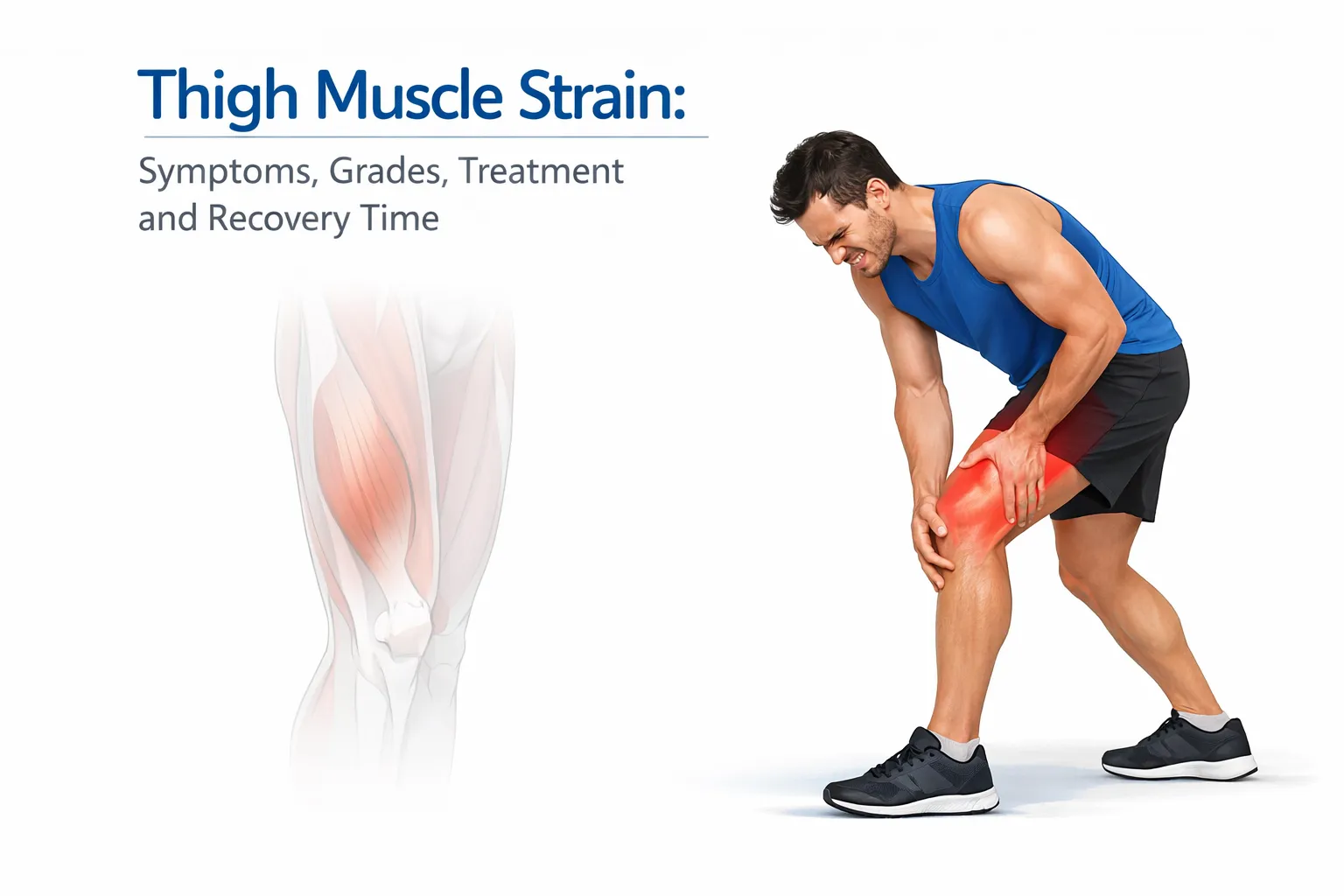
You were running, playing football, or maybe just stepping off a kerb at an odd angle – and then a sharp, tearing pain shot through your thigh. Sometimes there is a popping sound. Sometimes your leg just gives out.
That moment is almost always a thigh muscle strain.
It is one of the most common muscle injuries seen in orthopaedic clinics across India. Athletes, recreational runners, gym-goers, and even people who sit for long hours and then suddenly exert themselves are all at risk. Yet despite how common it is, it remains one of the most mismanaged injuries – with people either pushing through the pain and making it worse, or resting too long and losing precious recovery time.
This guide gives you clear, clinically grounded answers. You will learn what a thigh muscle strain actually is, how to identify it, how serious it might be, and exactly what to do – from the day of injury to full recovery.
Table of Contents
What is a Thigh Muscle Strain?
A thigh muscle strain – also called a pulled muscle in the thigh, a muscle pull, or in severe cases a muscle tear – is an injury where the muscle fibres are stretched beyond their limit and begin to tear.
The tear most commonly happens at the musculotendinous junction, which is the point where the muscle meets its tendon. This zone is under the most mechanical stress during movement, which is why it is also the most vulnerable.
A muscle strain is not the same as a thigh ligament strain. A thigh ligament injury involves the connective tissue that joins bones together, while a muscle strain involves the muscle and its tendon. Both cause pain and swelling, but they require different treatment approaches.
Once a thigh muscle has been strained, it becomes significantly more vulnerable to reinjury. This is one of the most clinically important facts about muscle strain – and the primary reason why full rehabilitation before returning to activity is not optional.
Your Thigh Muscles: The Three Groups That Get Strained
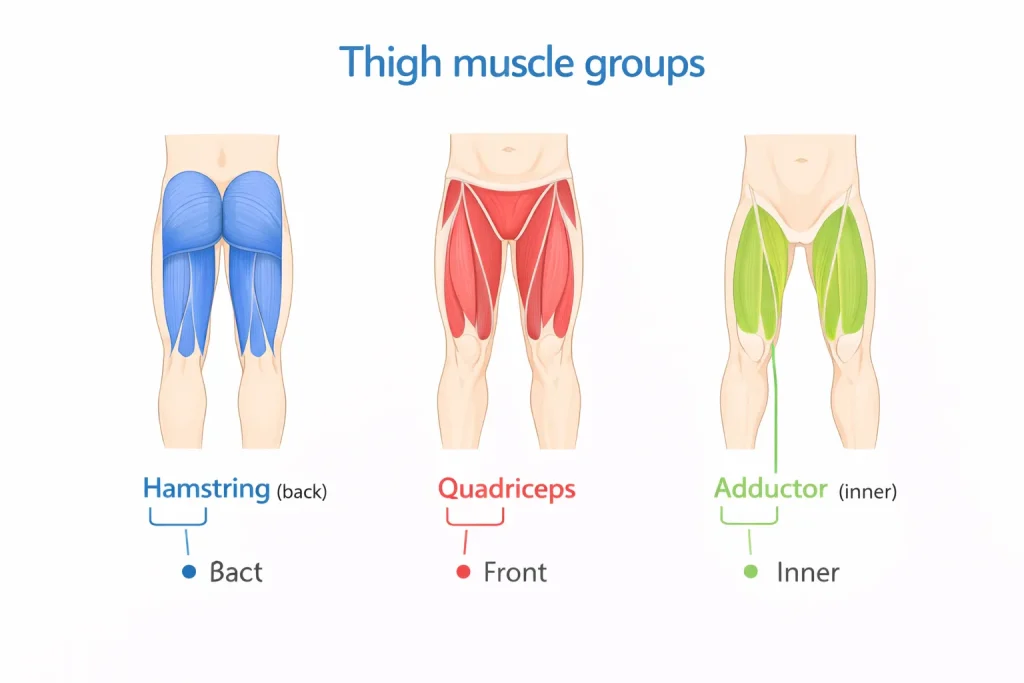
To understand the injury, you first need to understand the structure of the thigh. There are three major muscle groups in the thigh, and a strain can affect any one of them.
Hamstring Muscles – Back of the Thigh
The hamstrings are a group of muscles running along the back of the thigh. They originate at the ischial tuberosity – the bony base of your pelvis that you sit on – and extend down to the back of the knee.
Their primary function is to bend the knee and extend the hip. During sprinting, the hamstrings work under enormous load, especially at the point of foot strike. This makes them the most frequently strained thigh muscle – and the one most prone to becoming a recurring problem if not fully rehabilitated.
Back thigh muscle pain from a hamstring injury is typically a deep, burning, or tearing sensation. Straightening the leg fully usually aggravates the pain significantly.
Quadriceps Muscles – Front of the Thigh
The quadriceps – commonly called the quads – sit along the front of the thigh and are made up of four muscles. The front thigh muscle most commonly referred to is the rectus femoris, which runs vertically down the centre of the thigh. The others are the vastus lateralis, vastus medialis, and vastus intermedius.
The quads straighten the knee. They absorb enormous force during kicking, jumping, and sudden acceleration. Quadriceps strain and quad pain are particularly common in football, cricket, basketball, and any sport requiring explosive leg power.
Vastus lateralis pain – felt along the outer thigh – is one specific presentation that athletes often mistake for a knee problem.
Adductor Muscles – Inner Thigh
The adductors run along the inside of the thigh and pull the legs toward each other. Inner thigh muscle pain from an adductor strain is especially common in sports with sharp lateral movement – football, tennis, hockey, and martial arts.
An inner thigh muscle tear typically causes a sharp pain near the groin that worsens during side-to-side movement or when pressing the legs together. Left untreated, adductor strains have a high rate of progression to more serious thigh ligament tears or muscle rupture.
How Does a Thigh Muscle Strain Happen?
Thigh muscle strains occur in two main ways.
The first is overstretching. The muscle is rapidly elongated under load – for example, during a sprint start, a sudden change of direction, or a high kick. The muscle is asked to lengthen too far, too fast, and the fibres tear. This is the classic mechanism behind a hamstring strain or anterior thigh pain from a quad injury.
The second is direct impact. A blow to the thigh – common in contact sports like rugby, football, or kabaddi – crushes the muscle against the underlying thigh bone. This can cause a thigh contusion or internal muscle tear even without overstretching.
High-speed activities carry the highest overall risk. Track sprinting, hurdles, long jump, and competitive football account for a large proportion of all thigh muscle tear cases seen in sports orthopaedics. However, even ordinary physical activity – a sudden lunge, slipping on a wet floor, or stepping awkwardly – can cause leg strain in people who are not regularly active.
Thigh Muscle Strain Symptoms: What to Look For
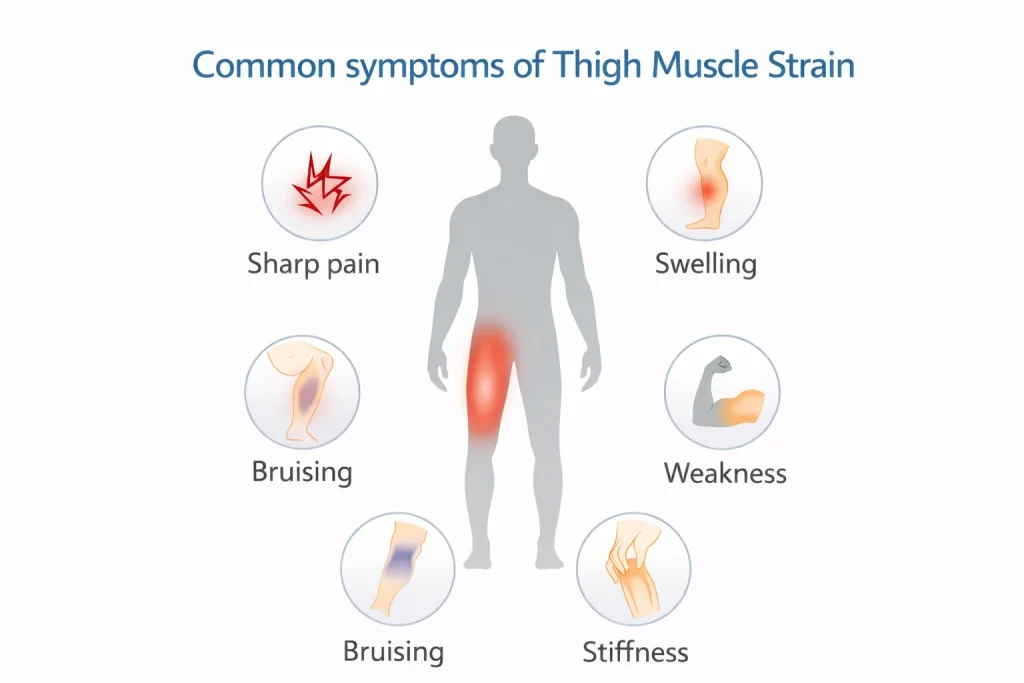
Recognising a thigh muscle strain early allows you to act quickly and limit further damage. The key pulled muscle in the thigh symptoms include:
- Sudden, sharp thigh pain at the moment of injury – often described as a stabbing or burning sensation
- A popping or snapping sensation as the muscle tears, felt or sometimes audible
- Localised tenderness when pressing on the injured area
- Swelling in the thigh muscle that develops within a few hours of injury
- Bruising that appears black and blue, often tracking downward toward the calf or ankle, within 1 to 2 days due to gravity
- Weakness when trying to bend or straighten the knee or hip
- Muscle stiffness, particularly after sitting still, thigh pain while sitting, is one of the most consistent complaints
One clinical point worth understanding: the bruising does not always appear where the actual tear occurred. Blood from a torn thigh muscle tracks along tissue planes under gravity and can appear around the knee or ankle a day or two after injury. Patients often assume this means a separate injury lower in the leg. It does not. It is the same injury, and identifying the true source requires a proper clinical examination.
In severe cases, torn thigh muscle symptoms may also include a visible depression or gap in the muscle belly, extreme pain in the thigh muscle with any movement, and complete inability to bear weight on the affected leg.
Grades of a Thigh Muscle Strain: How Serious Is It?
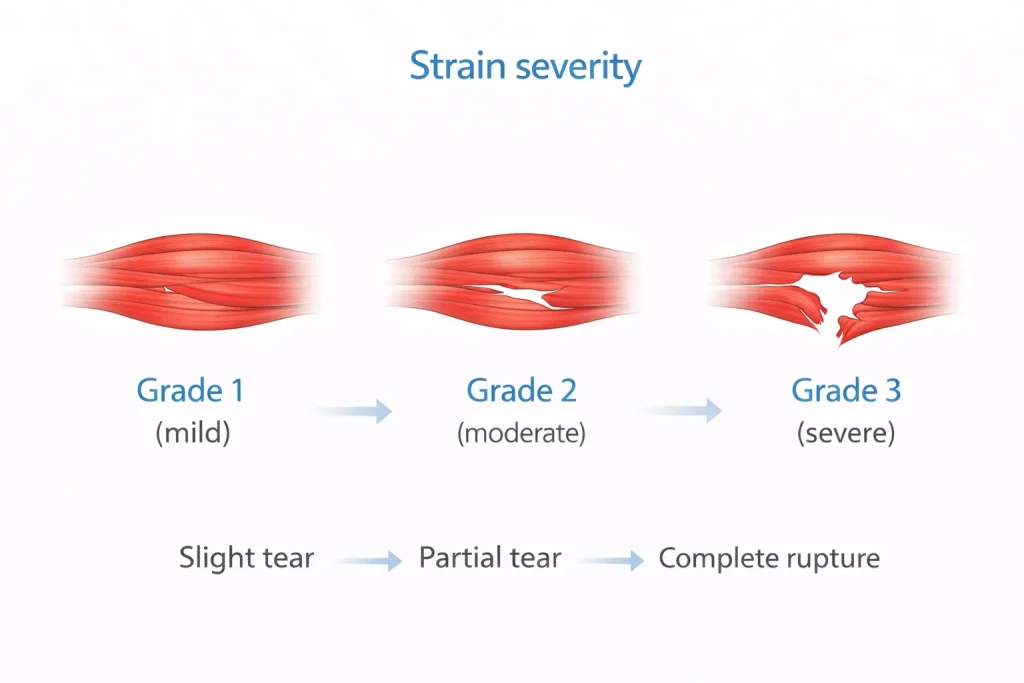
Orthopaedic surgeons classify thigh strains into three grades based on how many muscle fibres are torn and how much function is lost. This grading determines your entire treatment plan, your thigh muscle tear recovery time, and whether surgical intervention will be needed.
Grade 1 – Mild Strain
A small number of muscle fibres are torn, typically less than 10 per cent of the total. You can still walk, though with some discomfort. There is mild soreness and possibly slight swelling. Thigh strain recovery time at this grade is usually 10 days to 3 weeks with proper rest and care.
Grade 2 – Moderate Strain
A larger portion of the muscle fibres is partially torn. You will likely limp, experience noticeable swelling, and have visible bruising spreading down the leg. Muscle strength and range of motion are both reduced. This is what most people mean when they describe a torn muscle in the thigh. Recovery time at this grade is typically 3 to 6 weeks.
Grade 3 – Severe Strain
This is a complete or near-complete rupture of the muscle or its tendon attachment. The pain is extreme. Swelling and bruising are significant. You may be unable to bear weight at all, and in some cases, you can feel or see a gap in the muscle belly. Thigh injury recovery time at this severity ranges from 3 to 6 months, and surgery may be necessary to repair the damage.
The grade of your injury cannot be reliably self-assessed. An MRI scan is the standard investigation for accurately determining the extent of a muscle tear, particularly for Grade 2 and Grade 3 injuries.
How Doctors Diagnose a Thigh Muscle Strain
When you visit an orthopaedic specialist, diagnosis follows a structured process.
Your doctor will first take a detailed history – how the injury happened, exactly where the pain is located, what movements aggravate it, and whether you heard or felt anything snap at the moment of injury. This context helps narrow down which muscle is involved and provides a first clinical impression of severity.
Next comes the physical examination. The doctor will assess your thigh for localised tenderness, swelling, bruising patterns, and whether there is a palpable gap in the muscle belly. You will be asked to flex and extend your knee and hip against gentle resistance so the doctor can identify which muscle group is affected and how much strength has been lost.
Imaging is then ordered based on clinical findings.
- X-ray is performed when a bone fracture or bony avulsion is suspected – for instance, after a direct blow to the thigh or in a younger patient where the growth plate might be at risk.
- MRI scan is the gold standard for soft tissue injuries. It clearly identifies the precise location of the tear, how many fibres are affected, whether the tendon insertion is involved, and whether a thigh hematoma has formed beneath the muscle. MRI is essential for any Grade 2 or Grade 3 strain and is strongly recommended whenever the extent of injury is in doubt.
Thigh Muscle Strain Treatment
The RICE Protocol
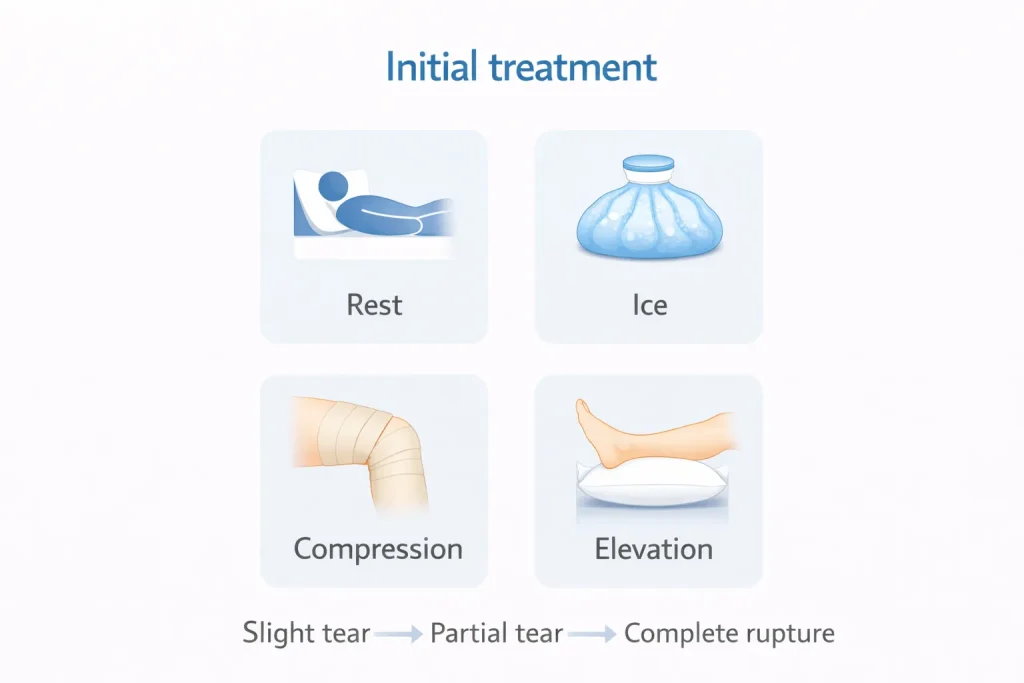
For most Grade 1 and Grade 2 thigh strains, the immediate treatment is the RICE protocol. It should be started as soon as possible after injury – ideally within the first 30 to 60 minutes – and continued for 48 to 72 hours.
Rest. Stop the activity immediately. Do not try to push through the pain. Continuing to load a strained muscle can convert a manageable tear into a far more serious injury. Your doctor may advise the use of crutches to keep weight off the leg in the initial days.
Ice. Apply a cold pack to the injured thigh for 20 minutes at a time, several times a day. Never place ice directly on the skin – wrap it in a cloth or thin towel to prevent cold burns. Ice reduces blood flow to the injured area, limits swelling, and helps control early inflammation in thigh tissue.
Compression. Wrap the thigh lightly with a compression bandage to limit swelling and provide gentle support to the injured muscle. Do not wrap too tightly. If you notice numbness, tingling, or increasing pain below the bandage, loosen it immediately.
Elevation. Raise your leg above the level of your heart as much as possible during the first 48 hours. Propping the leg on pillows while lying down makes a real difference in reducing swelling. This is a simple and consistently underused step in early thigh sprain treatment.
Medications and Physical Therapy
Non-steroidal anti-inflammatory drugs (NSAIDs) such as ibuprofen are commonly recommended to manage thigh muscle pain and reduce early inflammation. These should always be used under medical supervision, particularly if you have any stomach, kidney, or cardiovascular conditions.
Once acute pain and swelling begin to settle – typically within a few days for milder injuries – structured physiotherapy is the next and most important step. Leg strain treatment at this stage involves progressive range-of-motion exercises, targeted muscle strengthening, and eventually sport-specific conditioning. Thigh stretching exercises are introduced carefully and advanced in stages as the muscle heals.
The muscle must be at full strength and completely pain-free before returning to sport or heavy physical activity. Returning too early is the single most common reason for a more serious reinjury – and for chronic thigh muscle pain that never fully resolves.
Thigh Strain Recovery Time: What to Realistically Expect
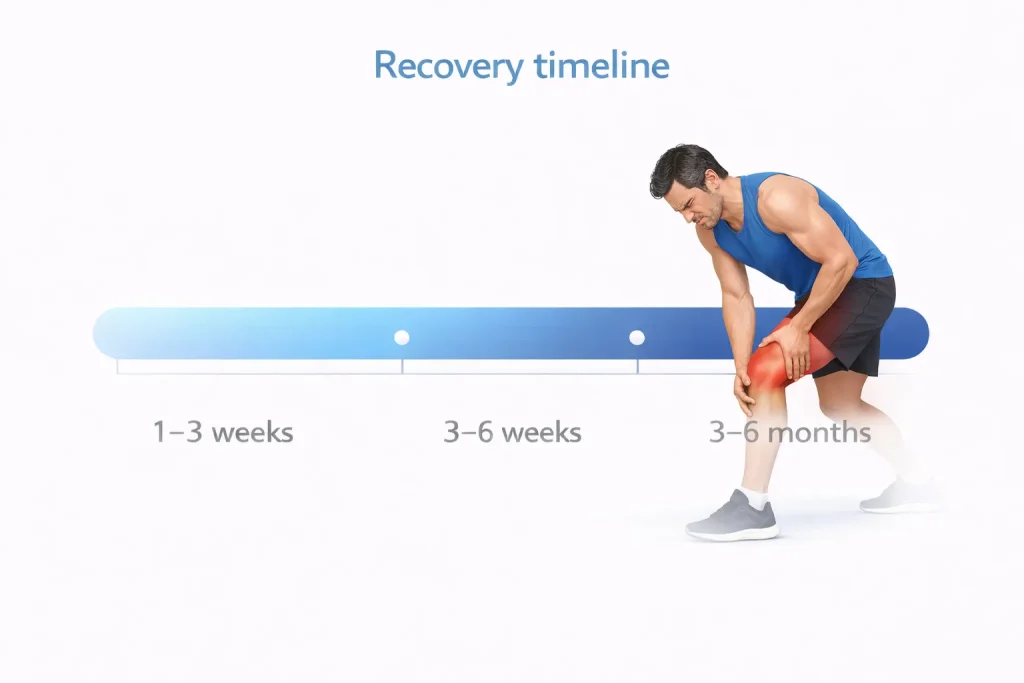
Recovery time depends entirely on the grade and location of the injury.
- Grade 1 (Mild): 10 days to 3 weeks. Light activity and gentle thigh stretching can often begin within a few days if pain allows.
- Grade 2 (Moderate): 3 to 6 weeks. Return to sport requires demonstrated strength symmetry between both legs – not just absence of pain.
- Grade 3 (Severe): 3 to 6 months. If surgical repair is required, particularly for a proximal hamstring tendon rupture, rehabilitation extends significantly beyond this range.
The biggest reason people experience slow or failed recovery is premature return to activity. A muscle can feel functional well before it has fully healed structurally. Tissue repair and strength restoration take time that cannot be shortened through willpower or pain tolerance.
Use the objective function as your return marker – not just how the leg feels. Your orthopaedic specialist or physiotherapist will assess strength ratios, range of motion, and sport-specific movement patterns before clearing you to return. This is the correct, evidence-based approach to thigh injury recovery time.
When a Thigh Strain Is More Serious Than It Looks
This is the section most general health articles skip over – and it carries the most clinical weight.
A proximal hamstring tear – where the hamstring tendon completely detaches from the ischial tuberosity (the sitting bone at the base of your pelvis) – can present almost identically to a standard hamstring strain. The bruising pattern looks the same. The pain location is similar. But these are fundamentally different injuries requiring entirely different management.
A complete hamstring tendon rupture is often a time-sensitive surgical case. The longer the tendon remains unrepaired, the further the muscle retracts into the thigh, and the more complex the eventual surgical reconstruction becomes.
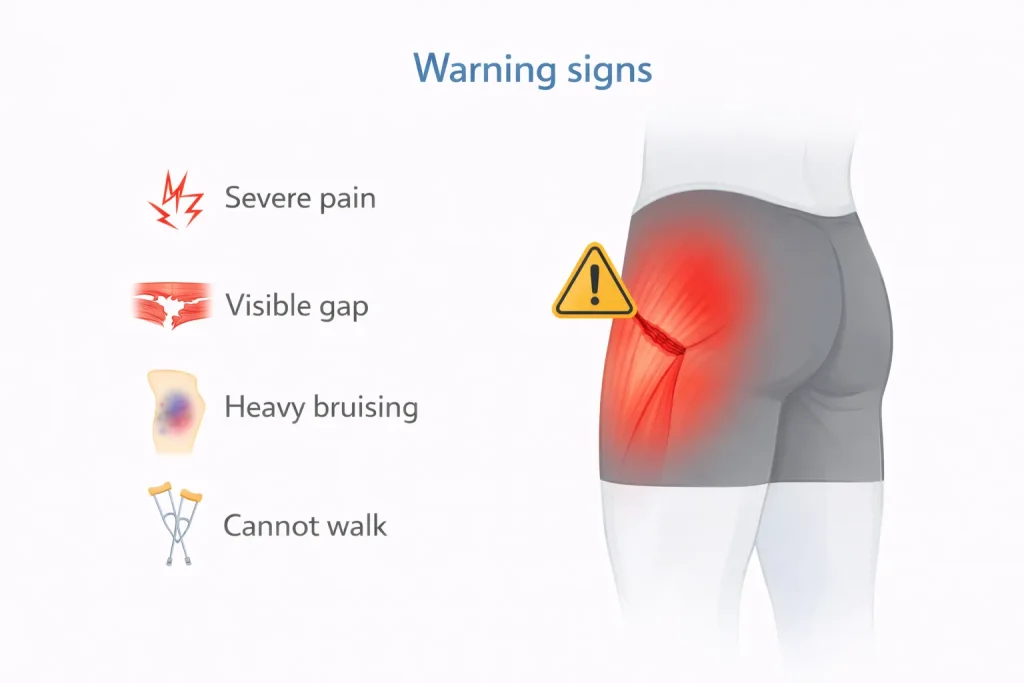
Warning signs that suggest a tendon rupture rather than a simple strain:
- Pain is located specifically near the base of the buttock or sitting bone – not mid-thigh
- A visible or palpable gap or depression in the muscle is present
- Severe weakness when attempting to bend the knee
- Heavy bruising concentrated at the upper hamstring or buttock region immediately after injury
If your thigh pain after injury is located primarily near the bottom of your pelvis rather than in the belly of the muscle, seek urgent orthopaedic evaluation. This is not a situation to manage conservatively at home.
Risk Factors: Why Some People Keep Getting Thigh Injuries
Certain individuals are significantly more vulnerable to thigh muscle strains. Understanding these risk factors matters both for prevention and for explaining why the same injury keeps recurring.
- Muscle tightness. Chronically tight muscles have less elasticity and tear far more easily under sudden load. Stiff thighs – particularly in people who sit for extended periods without regular stretching – are one of the most common precursors to acute thigh injury.
- Muscle imbalance. When one muscle group is significantly stronger than its opposing counterpart – for example, the quadriceps being far stronger than the hamstrings – the weaker muscle is placed under disproportionate strain during movement. This imbalance is a leading cause of back thigh muscle pain in athletes.
- Poor conditioning. Muscles that are not regularly trained have a reduced capacity to absorb force. Injury risk is highest at the beginning of a new season, after a long break from training, or when training load increases too rapidly without adequate adaptation time.
- Muscle fatigue. As muscles tire, their ability to absorb energy drops sharply. A significant proportion of hamstring strains in competitive sport occur in the second half of matches – when accumulated fatigue has compromised the muscle’s protective capacity.
- Previous thigh injury. Once a thigh muscle has been strained and incompletely rehabilitated, scar tissue forms at the injury site. This scar tissue is less elastic than healthy muscle, creating a focal point of weakness that predisposes the muscle to repeat injury.
How to Prevent a Thigh Muscle Strain
Prevention is where most patients fail – not through ignorance, but through habits that accumulate gradually. These steps make a clinically meaningful difference to your long-term thigh health.
- Maintain year-round conditioning. Do not train hard only during your season and then stop entirely. Muscles that are consistently exercised throughout the year are significantly more resistant to strain.
- Always warm up before physical activity. A proper warm-up raises muscle temperature, increases blood flow, and improves elasticity – all of which reduce injury risk substantially. Cold muscles tear far more easily than warm ones.
- Stretch consistently. Thigh stretching exercises – particularly for the hamstrings and quadriceps – should be part of every training session and every cooldown. Hold each stretch for a minimum of 30 seconds, breathe steadily, and do not bounce.
- Cool down properly. Do not stop exercising suddenly. Gradual cooldown with slow, sustained stretching helps the muscle return to its resting length and removes metabolic waste that contributes to next-day stiffness.
- Address muscle imbalances proactively. If your quadriceps are significantly stronger than your hamstrings, or your left thigh is stronger than your right, targeted strengthening of the weaker side reduces your overall injury risk considerably.
- Respect recovery. After any thigh injury, do not return to sport before your strength and flexibility have genuinely returned to pre-injury levels. Thigh injury recovery time exists for a biological reason – not as a conservative estimate to be ignored.
Conclusion
A thigh muscle strain is a painful and disruptive injury – but it heals well when managed correctly and completely. The patients who recover without recurring problems are those who understood their injury, respected the recovery process, and did not rush back before they were genuinely ready.
Know your symptoms. Distinguish between a mild pull and something that needs urgent evaluation. Apply the RICE protocol immediately after injury. Get a proper clinical assessment – especially when pain is severe, swelling is significant, or the injury occurred near the sitting bone at the base of the pelvis. Follow your physiotherapy programme to completion before returning to sport.
If you are dealing with thigh pain after a muscle injury and are uncertain about its severity or how to manage it, the most important step is an accurate diagnosis. That single step determines everything that follows – treatment approach, recovery timeline, and whether surgical intervention might be needed.
At Deformity, our orthopaedic team brings clinical precision and compassionate care to every patient. Whether you are managing a fresh thigh strain, a recurring muscle injury, or a thigh condition that never quite healed properly, we are here to give you the answers – and the clear, structured path forward – that you deserve.
FAQs
What is the difference between a thigh muscle strain and a thigh sprain?
A muscle strain involves the tearing of the muscle fibres or tendons. A sprain involves ligament damage between bones. Both cause pain and swelling but require different clinical assessment and treatment approaches.
How do I know if my thigh muscle is torn or just strained?
Mild strains allow near-normal walking with some discomfort. A significant muscle tear causes marked weakness, visible bruising, swelling, and often the inability to bear full weight. MRI confirms the diagnosis accurately.
Can I walk on a pulled muscle in my thigh?
With Grade 1 strains, walking is usually possible with some discomfort. Grade 2 causes a noticeable limp. Grade 3 injuries often make weight-bearing very difficult or impossible without external support such as crutches.
What causes muscle strain in the thigh specifically?
Rapid overstretching during sprinting, jumping, or kicking is the most common cause. Direct impact to the thigh during contact sport is the second most frequent mechanism, causing a thigh contusion or internal tear.
What is the thigh strain recovery time for competitive athletes?
Grade 1 injuries heal in 10 days to 3 weeks. Grade 2 takes 3 to 6 weeks. Severe Grade 3 tears can require 3 to 6 months, particularly if surgical repair of a tendon rupture is performed.
Is heat or ice better for thigh muscle pain?
Ice is preferred in the first 48 to 72 hours to reduce swelling and control inflammation. Heat is introduced later in recovery – typically after 72 hours – to increase blood flow and support the tissue healing process.
What does muscle tear meaning actually refer to medically?
A muscle tear is the partial or complete rupture of muscle fibres, also called a muscle strain. It is graded 1 to 3 based on the proportion of fibres damaged and the resulting loss of strength and function.
Can a thigh ligament tear heal without surgery?
Partial thigh ligament injuries often respond well to conservative treatment. Complete ruptures – particularly of the proximal hamstring tendon at its bony attachment – frequently require surgical reattachment for full functional recovery.
What medicine is recommended for thigh muscle pain relief?
NSAIDs such as ibuprofen or diclofenac are commonly prescribed for short-term thigh muscle pain relief and inflammation control. Always use under medical guidance and avoid prolonged self-medication beyond a few days.
Why does my thigh muscle pain return after it seems to have healed?
Recurrence almost always means the muscle was not fully rehabilitated before returning to activity. Residual scar tissue reduces flexibility, and if strength was not fully restored, the muscle remains structurally vulnerable to repeat injury.