

You wake up one morning and cannot turn your head. Or you were in a minor road accident, and the back of your neck hurts with every movement. Maybe you twisted your neck suddenly during exercise and felt something pull. Whatever the cause, neck sprain is one of the most common musculoskeletal injuries in the world. And yet most people have no idea what it actually means, how serious it can be or what they should do about it.
This guide explains everything clearly. From what the neck sprain meaning actually is, to how it differs from a neck strain, what causes it, what symptoms to watch for and how to treat it – this is a complete resource for anyone dealing with neck pain after an injury.
Table of Contents
What is a Neck Sprain?
Neck Sprain Meaning in Simple Words
A neck sprain is an injury to the ligaments in your neck. Ligaments are strong, fibrous bands of tissue that connect bones. In your neck, the cervical ligaments connect the seven bones of the spine – called cervical vertebrae – and hold them in position during movement.
When a sudden or extreme movement forces the neck beyond its normal range, these ligaments get stretched or torn. This causes pain, stiffness, and sometimes swelling in the neck area. The injury may not feel bad right away. In fact, one of the most common features of a neck sprain is that the pain gets worse hours later – sometimes not peaking until the next day. This is why doctors recommend getting a check-up after any neck injury, even if you feel okay at the time.
Neck Sprain vs Strain – What Is the Difference?
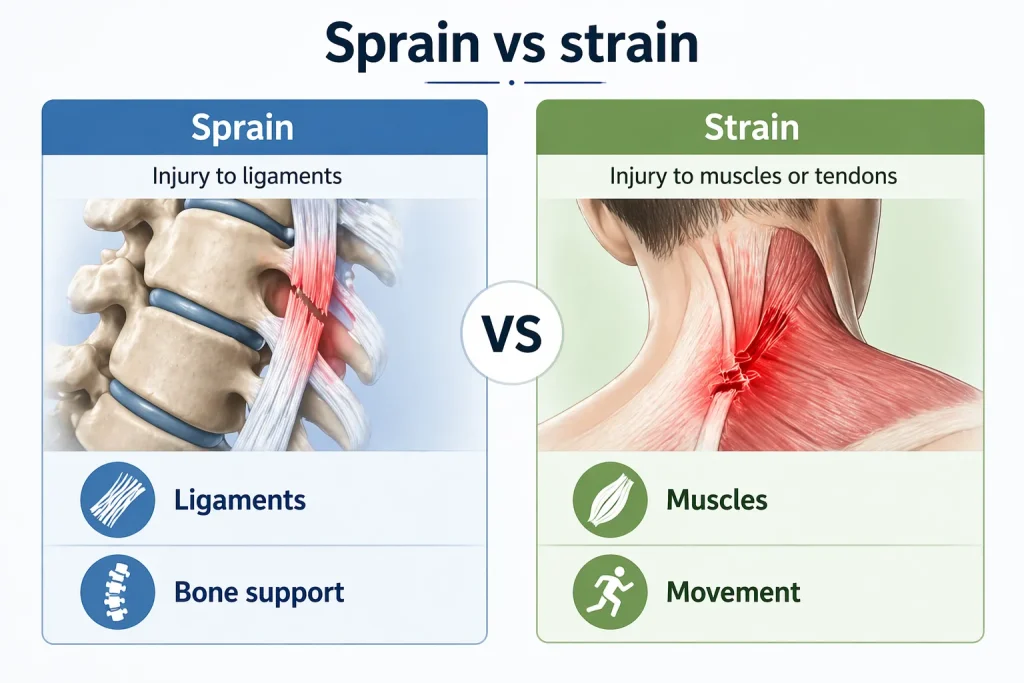
People often use these two terms together, but they describe injuries to different tissues.
– A neck sprain is damage to the ligaments. These are the bands that hold bones together.
– A neck strain is damage to the muscles or tendons. These are the tissues that move the neck and keep it supported.
In real life, both injuries often happen at the same time. That is why doctors frequently refer to them together as neck sprains and strains. Both produce similar symptoms – pain, stiffness and limited movement – and both are managed in largely the same way. The distinction matters mainly for diagnosis, to ensure nothing more serious is missed such as a fracture or disc damage.
Anatomy of the Neck – Why It Gets Injured So Easily
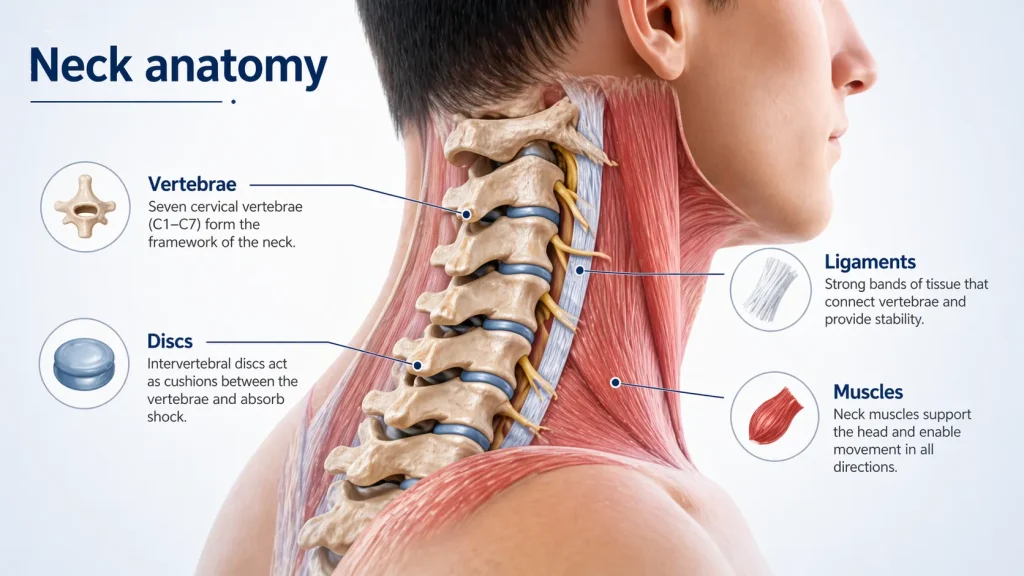
The neck, which doctors call the cervical spine, does two things at once that most body parts do not. It carries the full weight of your head – which weighs around 4.5 to 5.5 kilograms – while also allowing a wide range of movement in every direction. This combination of load and mobility is exactly what makes it vulnerable to injury.
The cervical spine has seven vertebrae, named C1 through C7. Around and between these bones are several important structures.
– The cervical ligaments connect the vertebrae and prevent excessive movement. One of the most important is the nuchal ligament, which runs along the back of the neck and provides stability during forward bending.
– The intervertebral discs sit between each pair of vertebrae and act as shock absorbers, cushioning the spine with every movement.
– The neck muscles and tendons drive all head movement and provide active support to the cervical spine.
– The collar muscles – particularly the trapezius and sternocleidomastoid muscles – control a large proportion of head and neck movement and are very commonly affected alongside ligament injuries.
Because the nerves and blood vessels that supply the arms, shoulders and head all pass through the cervical spine, a neck sprain can produce a surprisingly wide range of symptoms – from headaches to arm tingling – that may seem unrelated at first.
What Causes a Neck Sprain?
Common Neck Sprain Causes
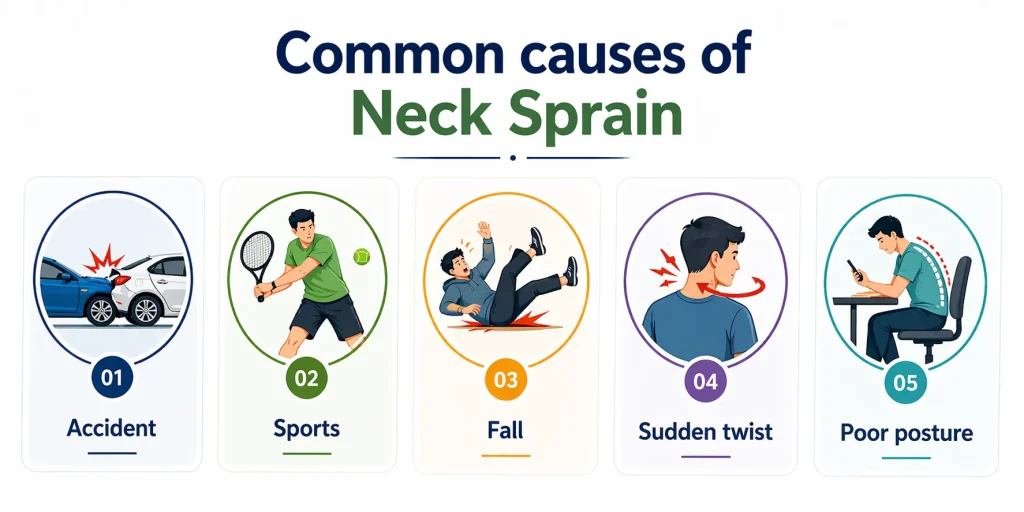
A neck sprain happens when the neck is forced into an extreme or abnormal position. The most common neck sprain causes include the following.
– Road traffic accidents, especially rear-end collisions. In these incidents, the head is thrown rapidly backward and then forward in a whipping motion. This is called whiplash. It is one of the most well-known causes of cervical sprain and can overstretch multiple ligaments and collar muscles at once.
– Sports injuries. Contact sports like rugby, wrestling and football frequently cause sudden sideways bending or twisting of the neck. Even non-contact sports can result in a twisted neck if a fall is involved.
– Hard falls. Falling from a height, slipping on a wet floor or falling from a bicycle or motorbike can drive significant force through the cervical spine and tear the cervical ligaments.
– Sudden jerky movements. Any unexpected movement that takes the neck beyond its comfortable range – such as turning sharply to avoid something – can cause a sprain, especially if the neck muscles are not prepared for the force.
– Heavy lifting with poor posture. Lifting a heavy load while the neck is bent forward or to the side places abnormal stress on the cervical ligaments and can cause a muscle strain in the neck, alongside ligament damage.
Neck Sprain While Sleeping
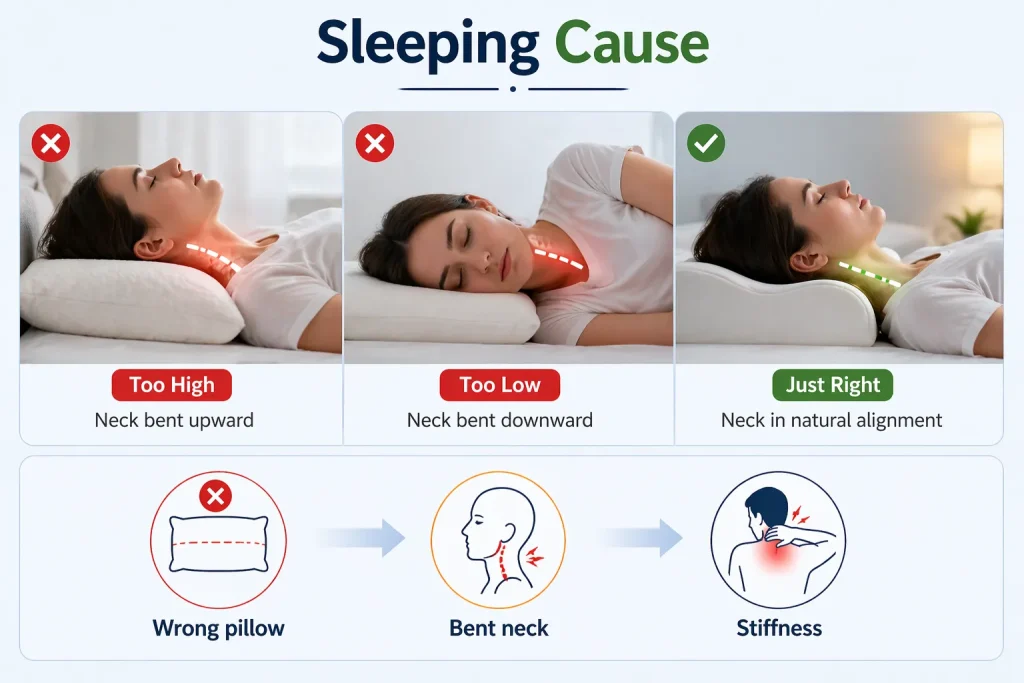
Many people are surprised to learn that not all neck sprains come from accidents or sport. A significant number happen simply from sleeping in the wrong position. This is sometimes called a crick in the neck.
When you sleep with your neck bent too far to one side or rotated at an odd angle, the cervical ligaments and collar muscles remain under sustained tension for hours. By morning, the result is stiffness, soreness and a painful, limited range of movement.
Using a pillow that is too high, too flat or too firm is the most common cause of this type of neck sprain during sleep. The good news is that sleeping-related neck sprains are usually mild and resolve within two to three days with gentle movement, heat and rest.
Neck Hyperextension Injuries
Neck hyperextension happens when the head is forced backwards beyond its normal anatomical limit. This overstretches the ligaments and muscles along the front of the neck. The most common cause is whiplash in a rear-end collision, but it can also happen after a direct blow to the face or forehead that snaps the head backwards.
Hyperextension injuries can be more complex than a simple sprain. They may involve the intervertebral discs or irritate the nerve roots that exit the cervical spine. This is why a medical evaluation is always recommended after any high-energy neck injury – not just to treat the sprain but to make sure nothing more serious has been missed.
Neck Sprain Symptoms – What You Will Feel
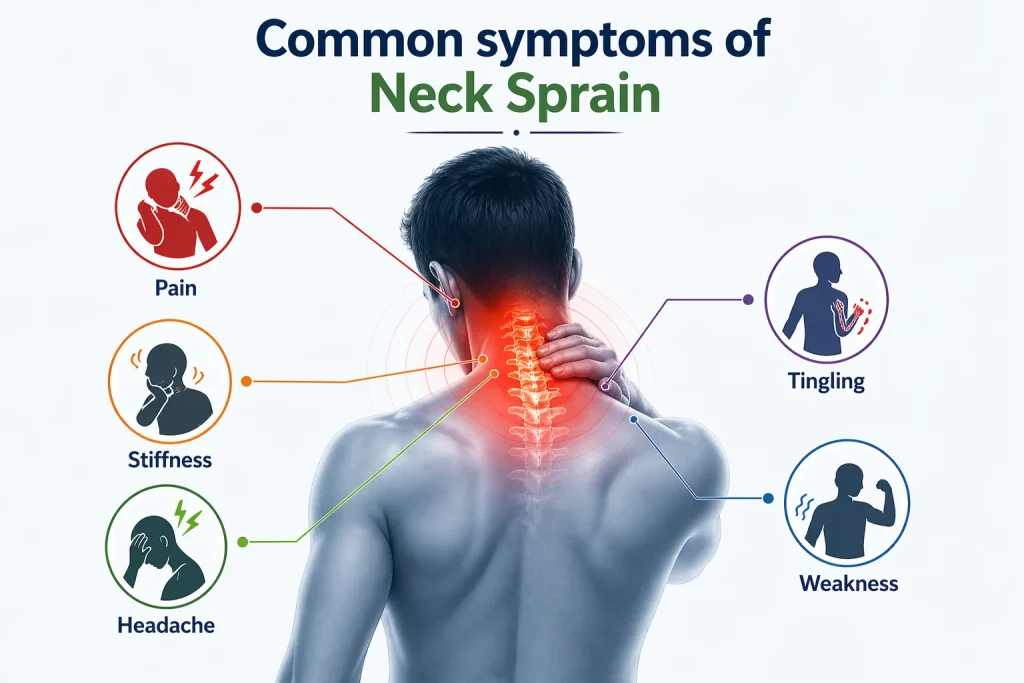
Neck sprain symptoms range from mild to severe, depending on how much the ligaments have been stretched or torn and which other structures are involved. Here are the most common symptoms you may experience.
– Pain at the back of the neck that gets worse with movement. This is the most consistent and reliable neck sprain symptom. The pain is often felt along the back side of the neck, between the shoulder blades and into the upper shoulder.
– Delayed pain that peaks 24 to 48 hours after the injury, rather than immediately. This delayed onset is a hallmark of cervical sprains and is one reason many people underestimate the injury at first.
– Muscle spasms and soreness that spread into the upper shoulder and collar muscles. The trapezius in particular is commonly involved, creating a broad band of pain across the upper back and neck.
– Neck stiffness and reduced range of motion. You may find it difficult or painful to turn your head side to side, tilt it up or down, or make circular movements.
– Headache at the back of the head. This is caused by tension in the muscles and ligaments at the base of the skull and is a very common feature of cervical sprains.
– Tingling or weakness in the arms. This suggests that the nerves exiting the cervical spine are being irritated, either by inflammation or by swelling around the ligaments.
– Numbness in the arm or hand. More significant nerve involvement can cause a loss of normal sensation in the hand or fingers.
– Fatigue, irritability, difficulty sleeping and trouble concentrating. These are secondary effects of living with persistent pain and disrupted rest. They are common in people who have not received adequate treatment.
– Tenderness at the nape of the neck. Pressing gently along the back of the neck will often produce a localised area of soreness that confirms the ligament involvement.
Warning Signs That Need Immediate Medical Attention
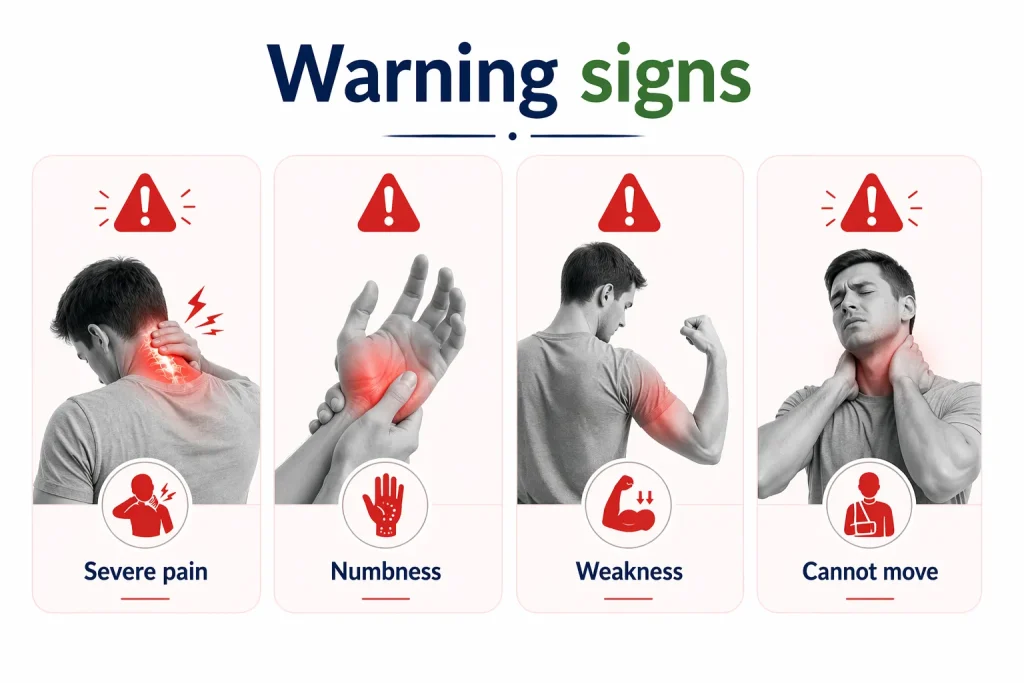
Most neck sprains are not dangerous. But some symptoms alongside neck pain can indicate a more serious injury – such as a cervical fracture, nerve compression or spinal cord damage. Go to a doctor or emergency department immediately if you experience any of the following.
– Pain that is constant and does not ease at all over time
– Severe pain that is not reduced by over-the-counter pain medication
– Pain that shoots down both arms or travels into the legs
– Headache combined with numbness, tingling or weakness in the arms or legs
– Neck fracture symptoms, such as extreme localised tenderness over a specific vertebra or complete inability to move the neck
– Loss of bladder or bowel control – this is a medical emergency
When in doubt after a neck injury, always get checked. The risk of missing a serious injury far outweighs the inconvenience of a medical visit.
How Do Doctors Diagnose a Cervical Sprain?
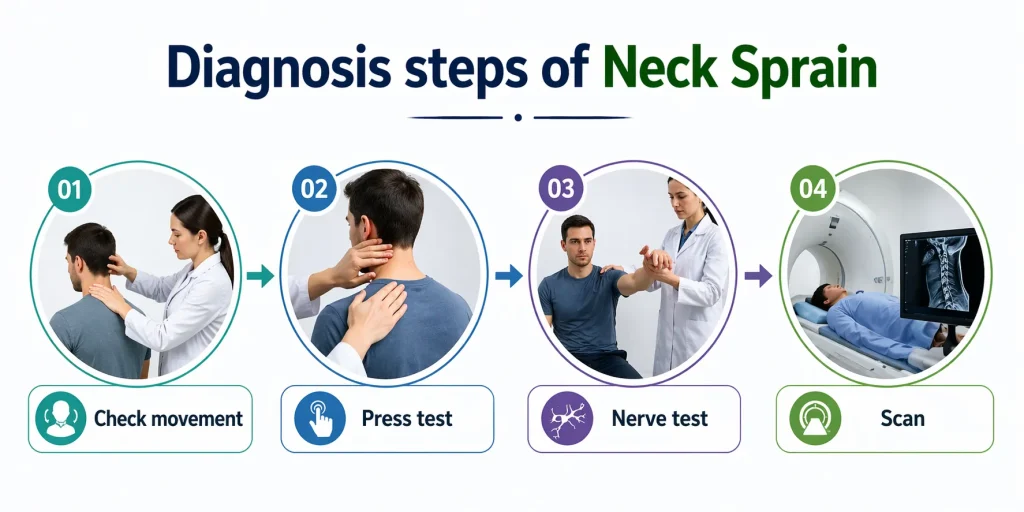
Physical Examination
When you see a doctor after a neck injury, the first step is a conversation about how the injury happened, what your symptoms are and when they started. This history helps the doctor understand the likely severity and which tissues may be involved.
The physical examination will then cover the following areas.
– Cervical range of motion. The doctor will ask you to move your neck in different directions to assess how far you can move and which movements cause pain.
– Palpation. The doctor will gently press along the back and sides of the neck to identify specific points of tenderness, particularly over the cervical ligaments and paraspinal muscles.
– Neurological testing. This checks the strength, sensation and reflexes in your arms and hands to detect any nerve involvement coming from the cervical spine.
– Shoulder and upper back assessment. Because neck injuries so often cause referred pain and muscle spasm in the trapezius and collar muscles, these areas are also examined.
Imaging Tests – X-Ray, CT Scan and MRI
Imaging is not always needed for a neck sprain, but it is used selectively based on the clinical examination.
– X-rays cannot show soft tissue damage like a ligament tear. However, they are used to rule out bony injuries such as a cervical fracture, dislocation or signs of arthritis in the neck. An X-ray is commonly taken after any significant trauma to the neck.
– CT scan provides much more detailed images of the bones and is used when a fracture is suspected but not clearly visible on X-ray.
– MRI scan is the best tool for assessing soft tissue structures. It can directly show cervical ligament damage, disc herniation and any compression of the spinal cord or nerve roots. MRI is ordered when there are neurological symptoms or when pain does not improve as expected with standard treatment.
For a straightforward neck sprain with no nerve symptoms and a clear low-energy mechanism, imaging may not be required immediately. Your doctor will judge based on your clinical picture.
Neck Sprain Treatment – What Works and When
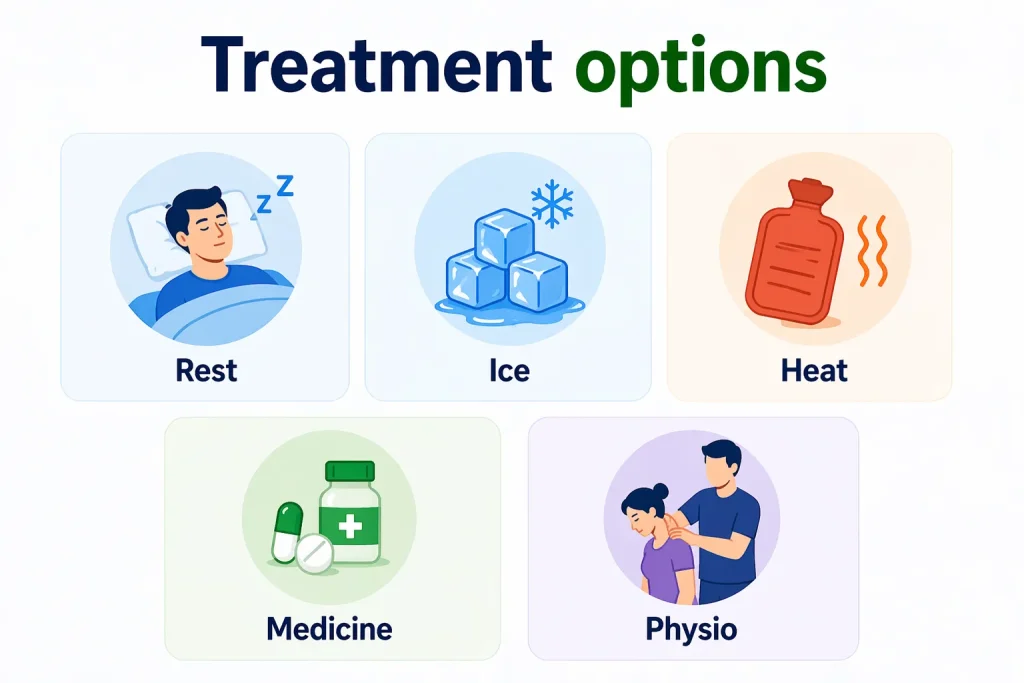
Neck Sprain Treatment at Home
Most neck sprains can be managed effectively at home, at least in the early stages. The most important steps are as follows.
Rest. Reduce any activities that make the pain worse, especially those involving heavy lifting or rapid neck movements. However, complete rest for days on end is not ideal. Light movement helps prevent stiffness and supports the healing process.
Ice. For the first 48 to 72 hours after the injury, apply an ice pack wrapped in a cloth to the painful area for 15 to 30 minutes at a time, several times a day. Ice reduces inflammation and numbs pain. Always wrap the ice – never apply it directly to the skin as it can cause burns.
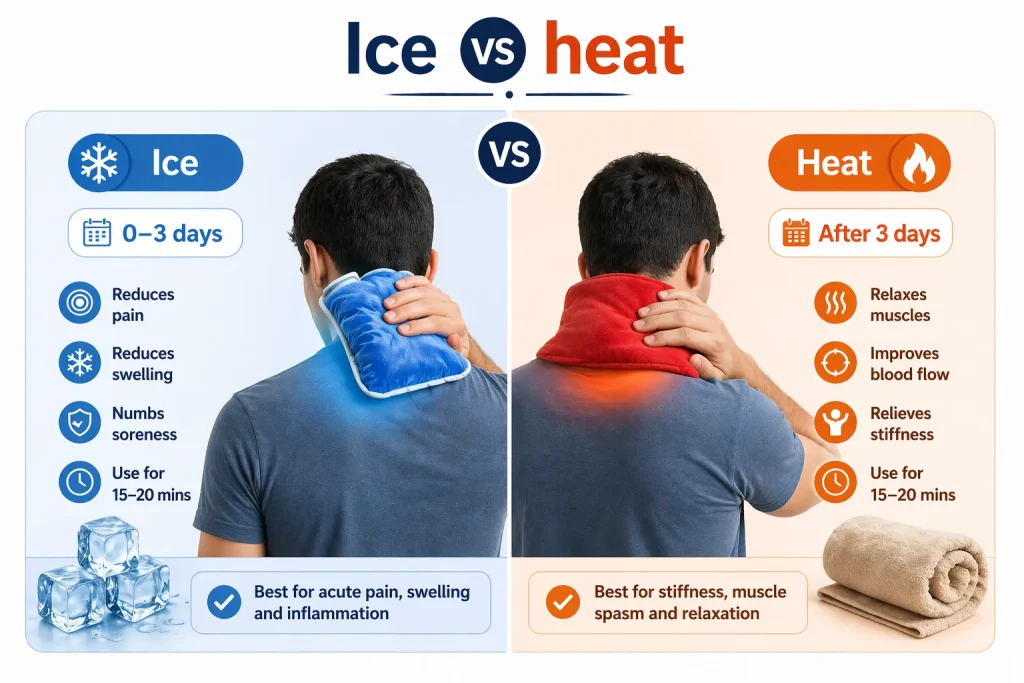
Heat. After the first two to three days, when the initial inflammation has settled, gentle heat works better than ice. Apply a warm cloth or use a warm shower directed at the back of the neck for no more than 20 minutes at a time. Heat relaxes the collar muscles, improves circulation and eases stiffness.
Soft cervical collar. A soft foam collar worn around the neck gives temporary support to the head, takes pressure off the cervical ligaments and provides some pain relief. Use it for short periods during the acute phase. Avoid wearing it continuously for days, as this weakens the neck muscles over time.
Sleeping position. Try to sleep on a pillow that keeps the neck in a neutral, comfortable alignment – not bent too far forward or sideways. Avoid sleeping on your stomach, which forces the neck into a rotated position for hours at a time.
Medicine for Neck Sprain
Over-the-counter pain relief plays an important role in managing neck sprain, particularly in the first week. The main options are as follows.
– Paracetamol reduces pain effectively and is suitable for most adults. It does not reduce inflammation but provides reliable symptom relief.
– NSAIDs such as ibuprofen or naproxen reduce both pain and inflammation, making them particularly useful in the acute phase of a sprain. Always take with food and follow the recommended dose.
– Topical anti-inflammatory gels applied directly to the skin over the painful area can provide localised relief without the stomach side effects of oral NSAIDs.
– Muscle relaxants may be prescribed by a doctor when severe muscle spasm is present. These are short-term medications and not suitable for prolonged use.
Never exceed the recommended dose of any medicine for neck sprain and do not continue self-medicating beyond the advised duration. If your pain is severe or not responding to standard medication, go back to your doctor.
Clinical and Professional Treatments
For moderate to severe neck sprains or for injuries that do not improve with home management, a doctor may recommend one or more of the following.
– Physiotherapy. A physiotherapist will design a personalised rehabilitation programme that includes manual therapy to reduce pain and improve movement, postural correction to relieve ongoing strain on the cervical spine, and a progressive exercise programme to rebuild strength and stability in the neck muscles.
– Ultrasound therapy. Therapeutic ultrasound uses sound wave energy to promote tissue healing and reduce pain and swelling in the injured ligaments and muscles.
– Cervical traction. This is a technique in which the neck is gently stretched to decompress the cervical joints and relieve pressure on the nerve roots. It is performed under the supervision of a trained therapist.
– Aerobic and isometric exercises. Once acute pain settles, low-impact aerobic activity – such as walking – and isometric strengthening exercises help the muscles recover without putting stress on the healing ligaments.
– Injections. In persistent cases, a doctor may consider corticosteroid or local anaesthetic injections into specific muscle trigger points to break the cycle of pain and spasm.
Neck Sprain Exercises for Recovery
Exercise is one of the most important parts of recovering from a neck sprain. The right exercises, done at the right time, rebuild muscle strength, restore flexibility and prevent the injury from becoming a long-term problem. Always start these exercises gently and stop immediately if any movement causes sharp pain, numbness or tingling.
Gentle range-of-motion exercises. Slowly and carefully turn your head from side to side, as far as is comfortable without forcing. Then gently tilt your chin toward your chest and back. These movements stop the neck from stiffening up during recovery.
Chin tucks. Sit or stand with your back straight. Gently pull your chin straight backward without tilting your head up or down. Hold for five seconds and then relax. Repeat ten times. This activates the deep cervical muscles and corrects forward head posture.
Cervical isometric strengthening. Place the palm of your hand against the side of your head. Press your head gently into your hand while using your hand to resist the movement. Hold for five seconds. Do the same pressing forward, backward and to each side. This builds neck muscle strength without moving the cervical joints and stressing the healing ligaments.
Scapular retractions. Sit up straight and gently squeeze your shoulder blades together. Hold for five seconds and release. This reduces tension in the trapezius and upper shoulder muscles, which are almost always involved in neck sprains.
Gentle neck stretches. Slowly tilt your head toward your right shoulder and hold for 20 to 30 seconds. Repeat on the left side. Then gently rotate your chin toward each shoulder and hold. These stretches progressively restore the full range of motion to the cervical spine.
Begin these exercises only after the first 48 to 72 hours, when the sharpest acute pain has started to settle. Ideally, have your physiotherapist guide you through them in person to ensure you are performing them correctly and safely.
Neck Sprain Recovery Timeline – How Long Does It Take?
One of the first questions people ask after a neck sprain is: how long will this last?
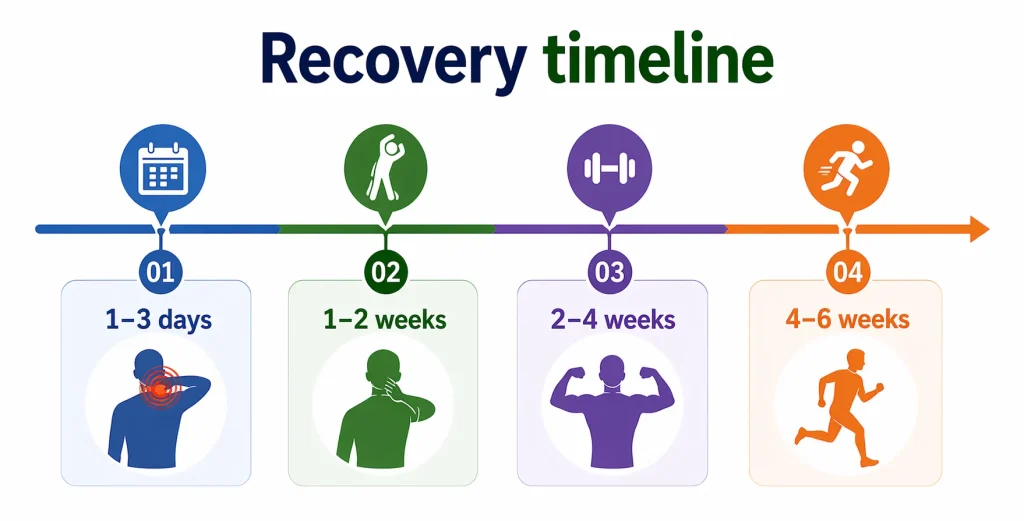
For most people with a mild to moderate neck sprain, recovery takes between four and six weeks with the right treatment. Here is how that typically looks.
Days 1 to 3 – Acute Phase. This is when pain and stiffness are at their worst. The priority is rest, ice, pain relief and avoiding any movements that aggravate the injury.
Days 4 to 14 – Sub-Acute Phase. The pain begins to ease. Gentle range-of-motion exercises can be introduced. Heat replaces ice for comfort. A soft collar may be used during activities.
Weeks 2 to 4 – Rehabilitation Phase. Progressive strengthening and flexibility exercises are introduced. Physiotherapy is most valuable during this window. Most people see significant improvement in this phase.
Weeks 4 to 6 – Recovery Phase. The majority of symptoms have resolved. Return to normal activities is gradual and guided by how the neck feels.
Severe injuries – particularly those involving significant cervical ligament tears or associated disc damage – can take several months to heal completely. If you play contact sports, you must not return until all symptoms have fully resolved and you have received formal clearance from your doctor.
Can a Neck Sprain Become a Chronic Problem?
The good news is that most neck sprains heal fully with proper management. However, a small number of people go on to develop chronic neck pain – defined as pain that persists for more than 12 weeks.
The following factors increase the risk of this happening.
– High-energy injuries such as whiplash from a road traffic accident
– Pre-existing cervical spondylosis or weak neck muscles before the injury
– Psychological factors such as anxiety, depression or post-traumatic stress following the incident
– Poor rehabilitation – especially failing to complete the strengthening exercises that rebuild the muscular support around the cervical spine
– Returning to full activity too quickly before the ligaments have healed
If your pain has not improved meaningfully after six weeks, go back to your doctor. A specialist orthopaedic or spinal review may be needed to check for an underlying ligament tear that has not healed, a developing disc herniation or nerve root involvement. Catching these complications early leads to much better outcomes.
How to Prevent a Neck Sprain
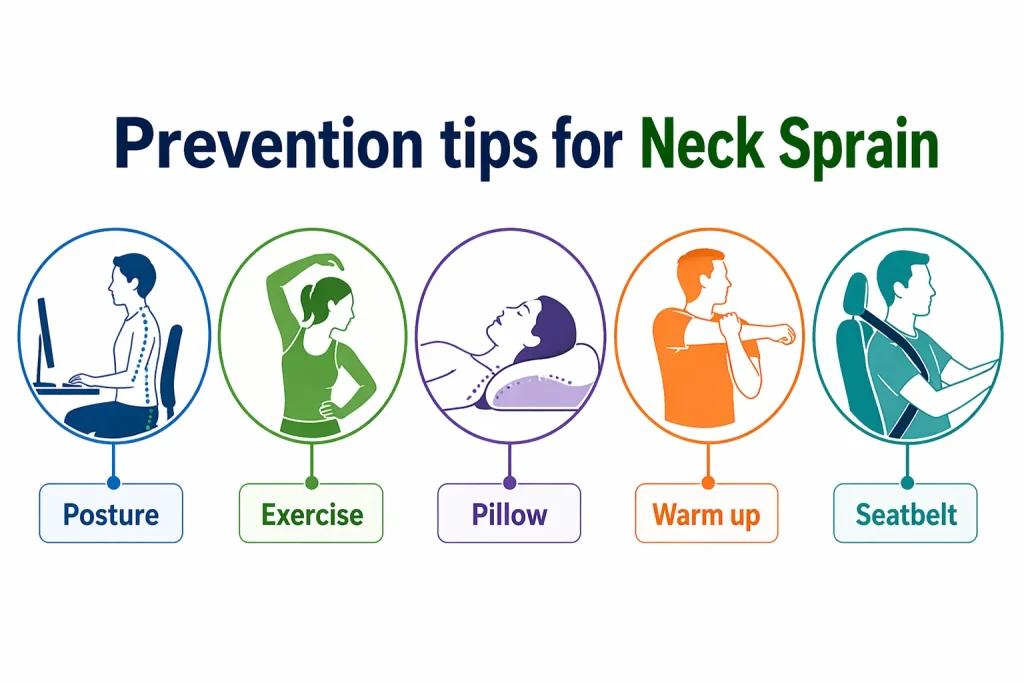
You cannot prevent every accident. But there are practical steps you can take every day to significantly reduce the risk of a neck sprain and protect your cervical spine.
Build strong neck and upper back muscles. Regular targeted exercises for the neck and upper back create a protective layer of strength around the cervical spine. Strong muscles absorb shock and reduce the load placed on the cervical ligaments during sudden movements.
Maintain good posture. Sitting at a desk with the head pushed forward puts enormous stress on the cervical ligaments over time. Keep your screen at eye level. Sit with your back supported. Take regular breaks to move the neck.
Use a supportive pillow. Your sleeping position affects your cervical spine for six to eight hours every night. A pillow that is too high, too flat or too firm forces the neck into an abnormal position for hours. Choose a pillow that supports the natural curve of the neck.
Wear your seatbelt correctly. A properly fitted seatbelt combined with a correctly adjusted headrest significantly reduces the severity of whiplash injuries in rear-end collisions.
Warm up before sport. Never go straight into high-intensity activity without a proper warm-up. Prepare the collar muscles and cervical spine before placing heavy demands on them.
Avoid sudden uncontrolled movements when tired. Muscle response time slows when you are fatigued. Be mindful of this during long workdays or late training sessions when the neck is less protected by active muscle support.
If you have had a previous cervical strain or you know your neck muscles are weak, speak to a physiotherapist about building a long-term conditioning programme tailored to your lifestyle and activity level.
Conclusion
Neck sprain is a common injury but one that is easily misunderstood and often undertreated. At its core it is a stretch or tear of the cervical ligaments – the bands of tissue that hold the bones of your neck together. It can range from a mild stiffness that fades in a few days to a more significant injury that needs weeks of structured rehabilitation.
Here are the most important things to remember.
– Neck sprain symptoms including pain, stiffness, headache and arm tingling may not appear until hours after the injury. Always get checked after a neck injury even if you feel fine at first.
– Most neck sprains respond well to a combination of rest, appropriate pain relief, physiotherapy and a progressive exercise programme.
– Warning signs such as severe persistent pain, neurological symptoms in the arms or legs, or loss of bladder and bowel control need immediate medical attention.
– Recovery usually takes four to six weeks for mild to moderate sprains, but only if the right exercises are done at the right time.
– Prevention through posture, strengthening and sensible protective habits is always the most effective long-term strategy.
If you are unsure about how serious your neck injury is, the safest and smartest step is to consult a qualified orthopaedic specialist. Early diagnosis and a clear treatment plan make a significant difference to how well and how quickly you recover.
FAQs
What is the difference between a neck sprain and a neck strain?
A neck sprain is damage to the ligaments that connect the cervical vertebrae. A neck strain is damage to the muscles or tendons. Both cause similar symptoms and are often treated the same way, but they involve different tissues in the neck.
How long does a neck sprain take to heal?
Mild to moderate neck sprains generally heal within four to six weeks with rest, pain relief and physiotherapy. Severe injuries involving significant ligament damage may take several months to heal fully and may require specialist-supervised rehabilitation.
What is the best medicine for neck sprain?
NSAIDs such as ibuprofen or naproxen are the most effective over-the-counter options as they reduce both pain and inflammation. Paracetamol is useful for pain alone. A doctor may prescribe short-term muscle relaxants if significant muscle spasm is present alongside the sprain.
Can a neck sprain heal on its own without treatment?
Mild cases often resolve with basic rest and home care. However, without proper rehabilitation – especially strengthening exercises – the recovery may be incomplete. Moderate to severe sprains or those with neurological symptoms should always be assessed by a doctor.
Can neck pain be a sign of something serious?
Yes. Neck pain accompanied by severe persistent pain, numbness or weakness in the arms or legs, or loss of bladder and bowel control may indicate a cervical fracture, disc herniation or spinal cord compression. These require urgent specialist assessment.
What is the neck sprain treatment at home?
Home treatment includes rest, ice for the first 48 to 72 hours, heat after the acute phase, NSAIDs for pain and inflammation, gentle range-of-motion exercises once the sharp pain eases and a soft cervical collar for short-term support during activities.
Is it normal for neck sprain symptoms to get worse the next day?
Yes. This is one of the most characteristic features of a cervical sprain. Symptoms including pain, stiffness and muscle spasm often peak 24 to 48 hours after the initial injury. This is why getting checked after a neck injury is always recommended even if you feel okay immediately.
What is whiplash and how is it connected to neck sprain?
Whiplash is a neck sprain caused by the head being thrown rapidly forward and backward, most commonly in rear-end road collisions. It overstretches the cervical ligaments and collar muscles at the same time. It is one of the most common and well-recognised forms of cervical sprain.
Can I do exercises with a neck sprain?
Gentle range-of-motion and isometric exercises can be started once the initial acute pain begins to settle, usually after the first 48 to 72 hours. Avoid high-impact or contact activities until fully recovered. Always work with a physiotherapist to make sure you are doing the right exercises correctly.
When should I see a doctor for a neck sprain?
See a doctor immediately if your pain is severe, does not improve with rest and over-the-counter medication, or is accompanied by numbness, weakness or tingling in the arms or legs. Seek emergency care if you suspect a cervical fracture or experience any loss of bladder or bowel control after a neck injury.