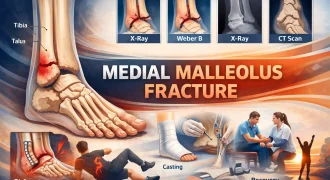
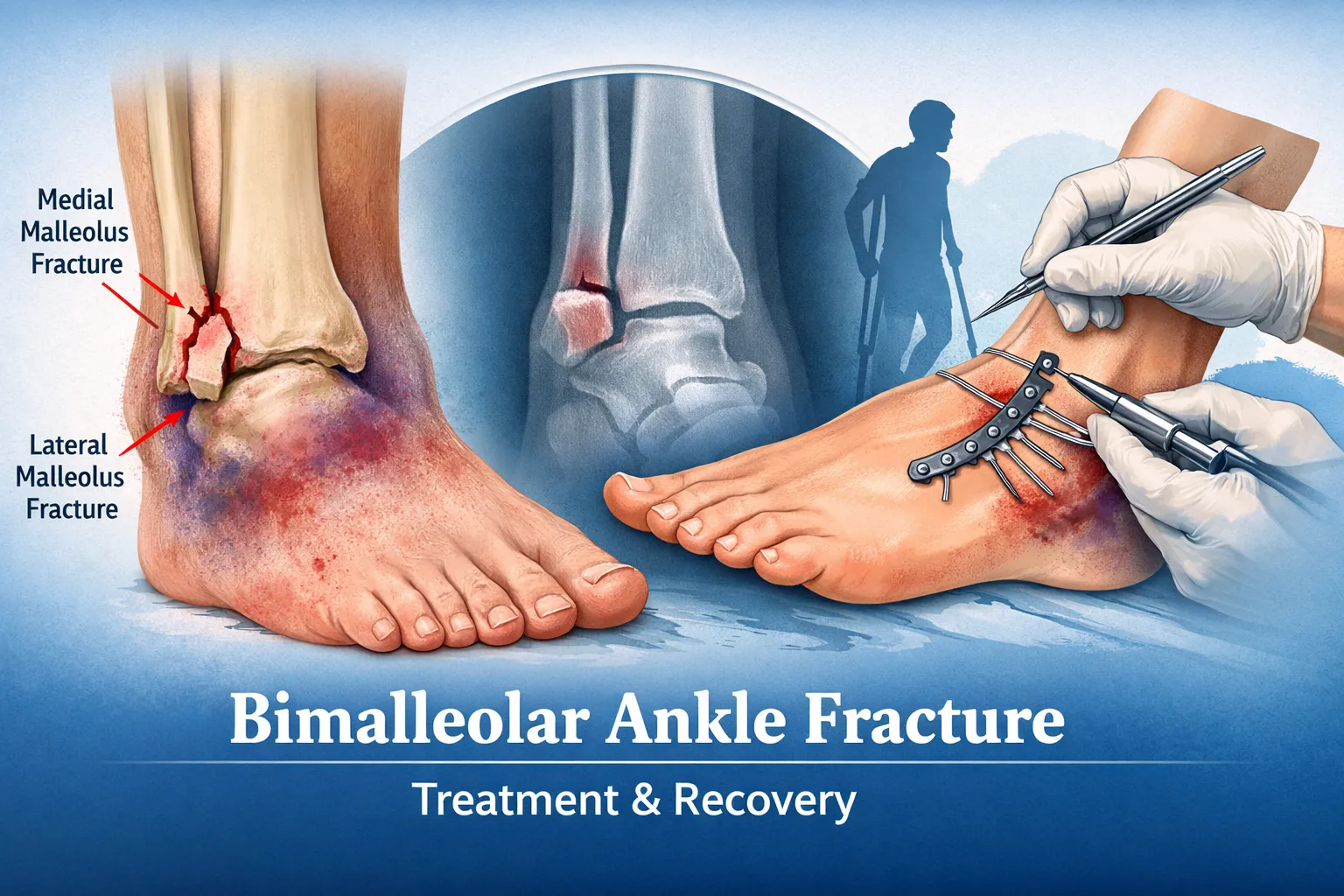
A bimalleolar ankle fracture is a serious injury in which both sides of the ankle joint break – the medial malleolus (inner ankle) and lateral malleolus (outer ankle). Because two stabilizing bones are fractured, the ankle joint becomes unstable and usually requires surgical fixation to restore proper alignment and prevent long-term complications such as arthritis, stiffness, or chronic instability.
This comprehensive guide explains everything about bimalleolar fractures – causes, symptoms, imaging, surgery, fixation methods, recovery timeline, and global treatment options. The article is written for both patients and medical readers and optimized for international search visibility.
Table of Contents
What is a Bimalleolar Fracture?
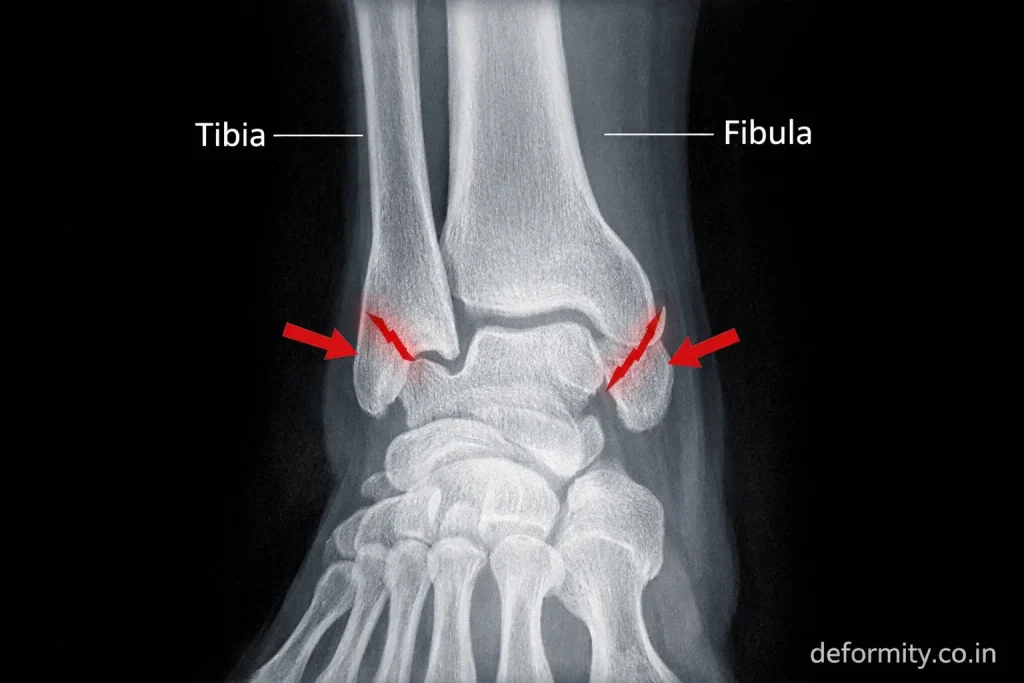
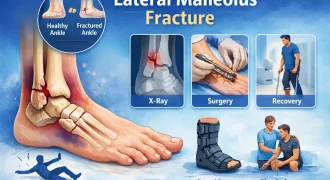
A bimalleolar fracture refers to a break in both malleoli of the ankle:
- Medial malleolus (distal tibia)
- Lateral malleolus (distal fibula)
These two bones form the ankle mortise, which stabilizes the talus and allows smooth movement during walking. When both sides fracture, the ankle joint becomes unstable and cannot properly support body weight.
Key characteristics:
- Involves both inner and outer ankle bones
- Often associated with ligament injury
- Frequently requires surgical fixation
- May occur with ankle dislocation
Because the ankle loses structural stability, early orthopedic evaluation and proper treatment are essential.
Anatomy of the Ankle in Bimalleolar Fracture
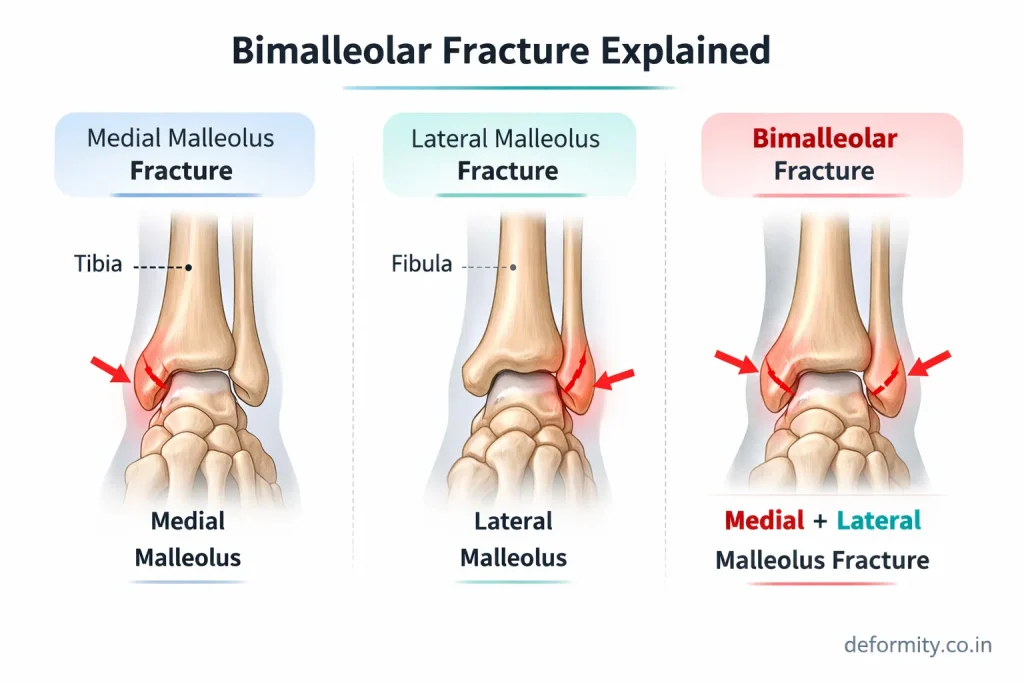
The ankle joint consists of:
- Tibia
- Fibula
- Talus
- Medial malleolus
- Lateral malleolus
Together, these structures form a stable socket that supports body weight. Ligaments surrounding the ankle – particularly the deltoid ligament and syndesmotic ligaments – help maintain alignment.
In a bimalleolar fracture:
- Both stabilizing bones are broken
- Joint alignment is disrupted
- Ligaments may be injured
- Weight-bearing becomes difficult or impossible
Without proper fixation, the talus can shift, leading to long-term joint damage.
Causes of Bimalleolar Ankle Fracture
Bimalleolar fractures typically result from high-energy trauma or severe twisting injuries.
Common causes include:
- Road traffic accidents
- Sports injuries
- Severe ankle twisting
- Falls from height
- Slip and fall accidents
- Osteoporosis-related fractures
Athletes, accident victims, and elderly individuals are at higher risk. In older adults, even minor falls may cause bimalleolar fractures due to reduced bone density.
Mechanism of Injury
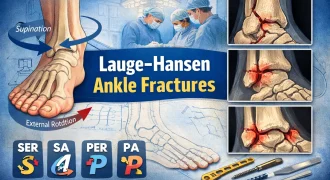
Most bimalleolar fractures occur due to rotational forces applied to the ankle.
Typical mechanisms:
- External rotation of the foot
- Supination injury
- Pronation injury
- Twisting with planted foot
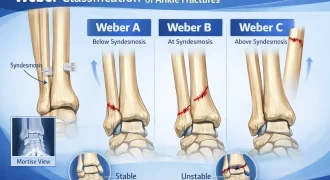
These forces can break both malleoli and sometimes damage ligaments. Classification systems like Weber and Lauge-Hansen help determine fracture pattern and stability.
Symptoms of Bimalleolar Fracture
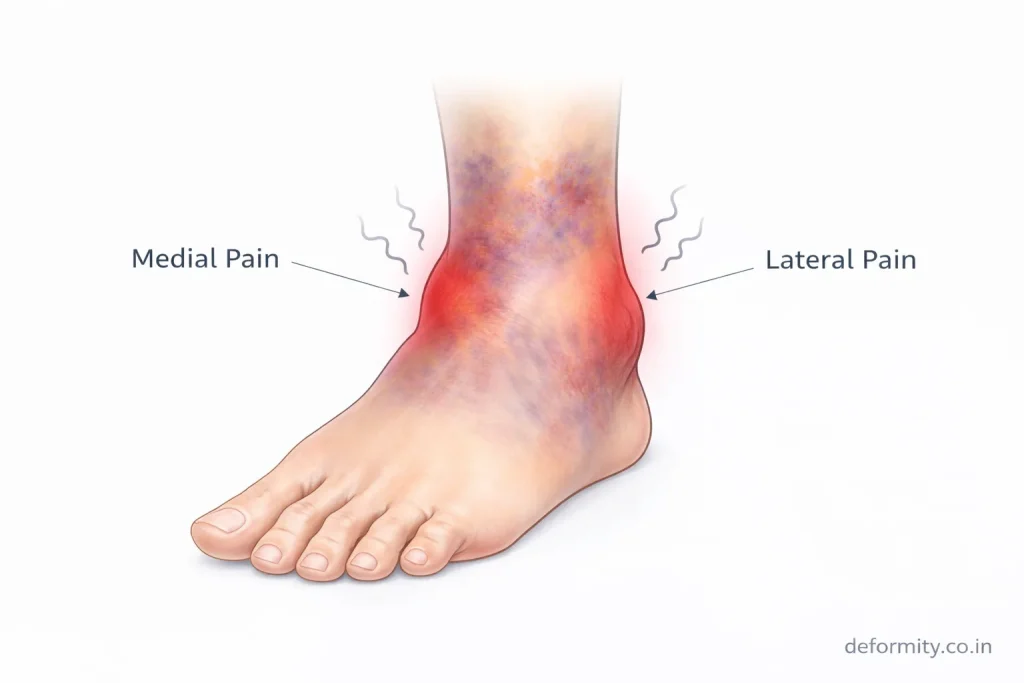
Symptoms are usually severe and immediate.
Common signs include:
- Severe ankle pain
- Swelling
- Bruising
- Visible deformity
- Inability to bear weight
- Reduced ankle movement
In some cases, the ankle may appear misaligned or dislocated. Because this injury affects joint stability, walking is usually not possible.
Diagnosis
Early diagnosis is critical to prevent complications.
Physical Examination
An orthopedic specialist evaluates:
- Swelling
- Bone tenderness
- Deformity
- Stability
- Neurovascular status
X-ray Imaging
X-rays confirm the diagnosis and show the fracture pattern.
Standard views:
- AP view
- Lateral view
- Mortise view
These help determine displacement and joint alignment.
CT Scan
A CT scan may be required when:
- Fracture pattern is complex
- Posterior malleolus involved
- Surgical planning needed
Advanced imaging helps assess joint congruity and fixation requirements.
Is a Bimalleolar Fracture Stable?
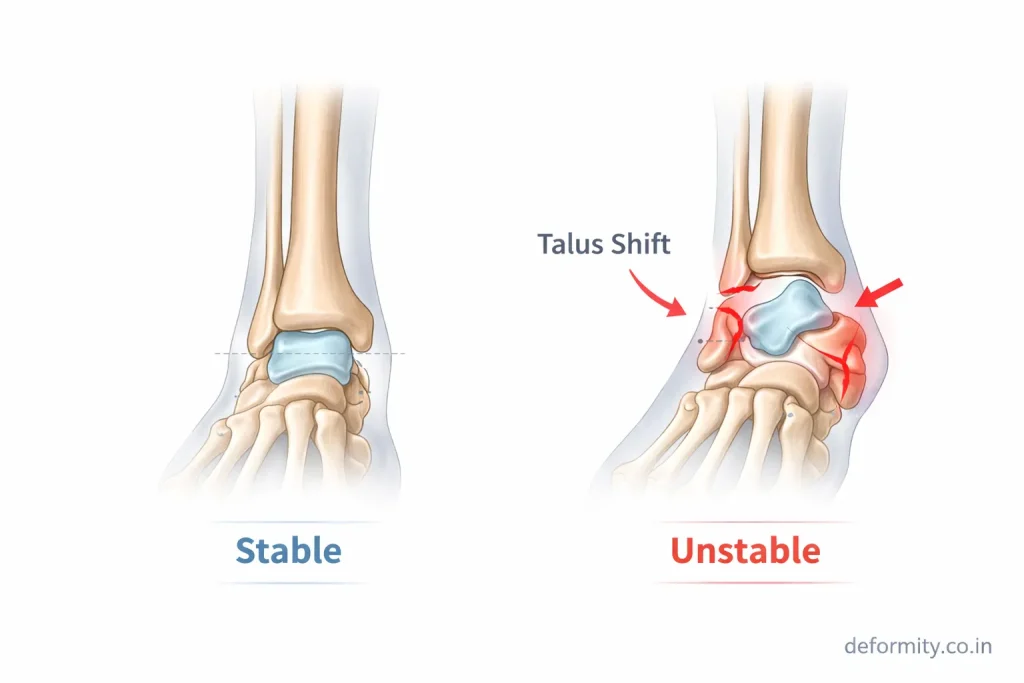
A bimalleolar fracture is almost always unstable because both sides of the ankle joint are broken.
Features of instability:
- Joint misalignment
- Ligament injury
- Talar shift
- Inability to bear weight
Because of this instability, most cases require surgical fixation to restore proper alignment and allow healing.
Treatment of Bimalleolar Fracture
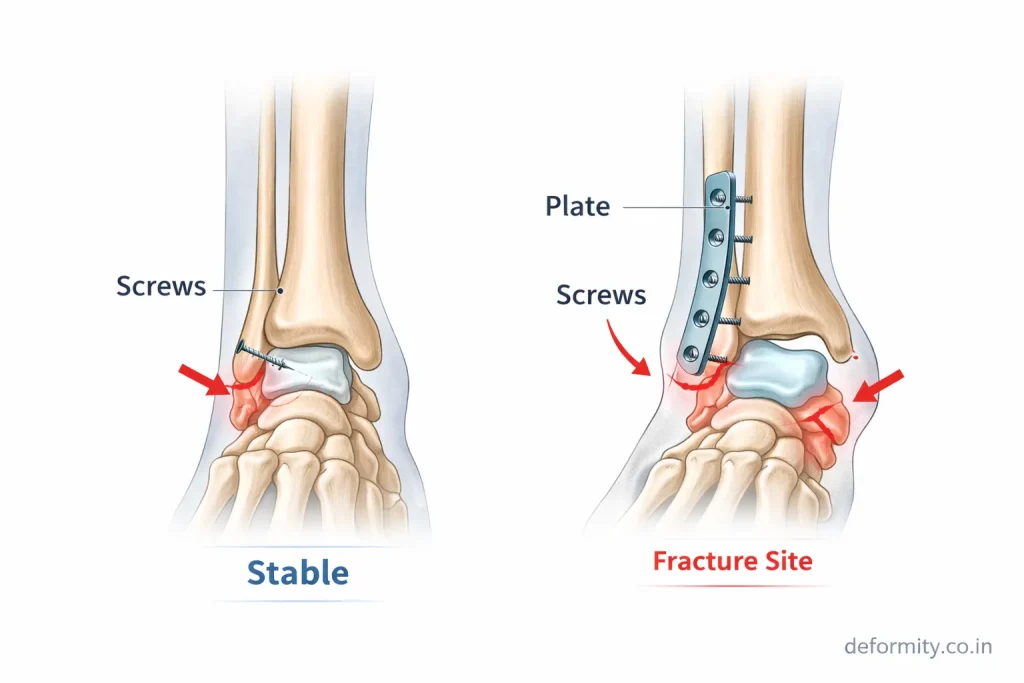
Treatment depends on fracture displacement, patient health, and associated injuries.
Emergency Management
Initial treatment includes:
- Splint immobilization
- Elevation
- Ice therapy
- Pain management
- Urgent orthopedic evaluation
In cases of severe swelling or dislocation, temporary reduction may be required before surgery.
Surgical Treatment (ORIF)
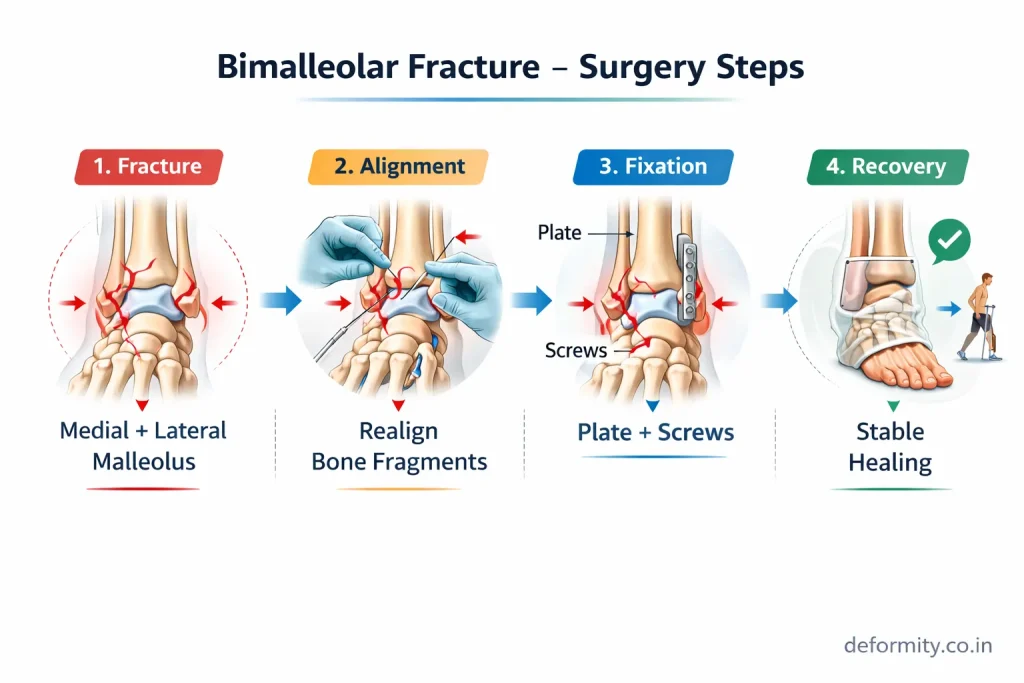
Most bimalleolar fractures require Open Reduction and Internal Fixation (ORIF).
The procedure involves:
- Realigning bone fragments
- Fixing the medial malleolus with screws
- Fixing the lateral malleolus with a plate and screws
- Stabilizing the syndesmosis if needed
Goals of surgery:
- Restore joint alignment
- Maintain ankle stability
- Prevent arthritis
- Enable early rehabilitation
Dr Divya Ahuja uses advanced fixation techniques to achieve anatomical alignment and faster functional recovery.
Non-Surgical Treatment (Rare)
Non-surgical treatment may be considered when:
- Fracture not displaced
- Patient is medically unfit for surgery
- Low functional demand
Management includes casting and strict immobilization, but outcomes are generally better with surgical fixation.
Recovery Time After Bimalleolar Fracture
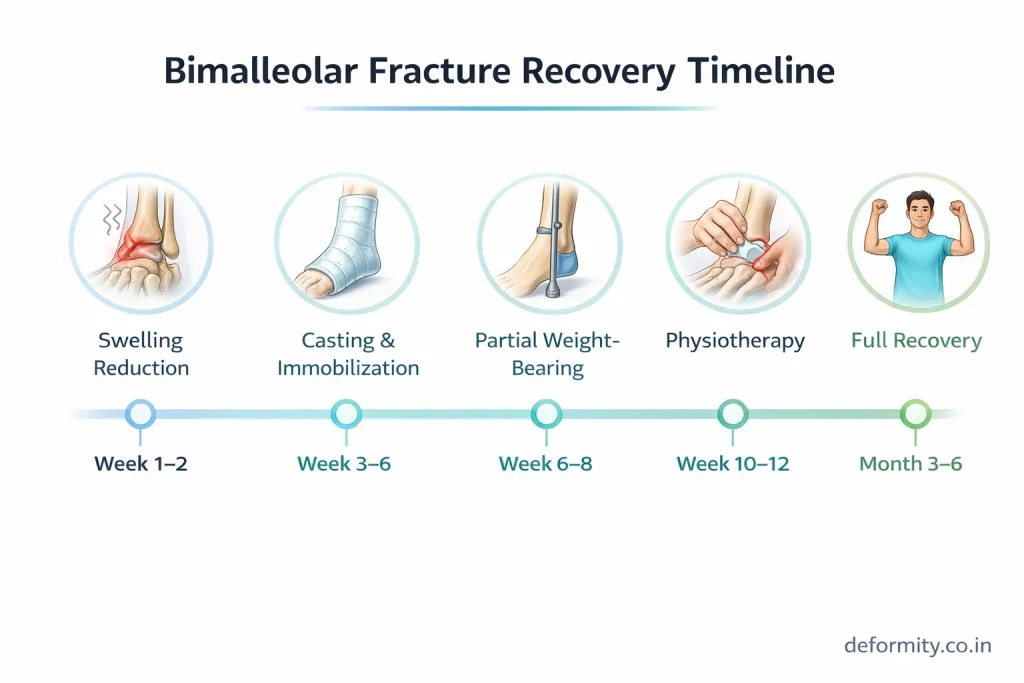
Recovery varies depending on severity and treatment.
| Phase | Timeline |
|---|---|
| Immobilization | 6 weeks |
| Partial weight-bearing | 6–8 weeks |
| Walking without support | 10–12 weeks |
| Full recovery | 3–6 months |
Recovery stages include:
- Swelling reduction
- Bone healing
- Physiotherapy
- Strength rebuilding
- Return to activity
Most patients regain good mobility with proper rehabilitation.
Rehabilitation & Physiotherapy
Rehabilitation is essential for restoring function.
Key components:
- Range of motion exercises
- Strength training
- Balance exercises
- Gait training
- Functional movement training
Skipping physiotherapy can result in stiffness and weakness.
Complications
If not treated properly, complications may occur.
Possible complications include:
- Post-traumatic arthritis
- Malunion
- Nonunion
- Infection
- Chronic stiffness
- Hardware irritation
Early surgery and rehabilitation reduce these risks significantly.
Right vs Left Bimalleolar Fracture
Both right and left bimalleolar fractures require similar treatment, but daily activities may differ.
A right ankle fracture may affect:
- Driving
- Work requiring pedals
Left ankle fracture may affect:
- Walking balance
- Weight-bearing
The recovery timeline is similar for both sides.
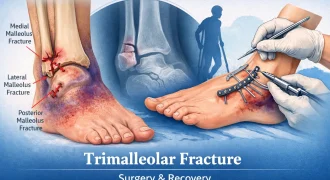
Bimalleolar vs Trimalleolar Fracture
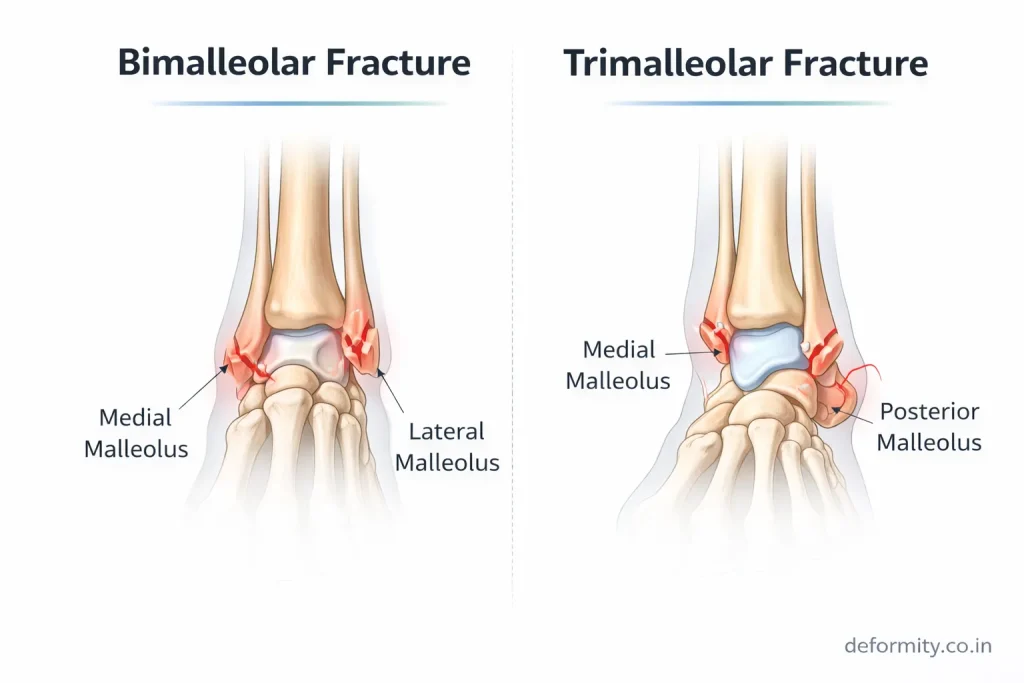
A trimalleolar fracture involves an additional posterior malleolus fracture and is more complex.
Comparison:
- Bimalleolar → two bones fractured
- Trimalleolar → three bones fractured
- Trimalleolar injuries are often more severe
Internal linking between pages improves SEO authority.
When to See an Orthopedic Specialist
Seek urgent care if:
- Severe ankle pain
- Visible deformity
- Cannot bear weight
- Swelling increasing
- Injury after a fall or accident
Early treatment improves outcomes and reduces long-term complications.
Treatment in India & International Consultation
Many global patients choose India for ankle fracture surgery due to advanced orthopedic care and cost advantages.
Dr Divya Ahuja provides specialized treatment for:
- Bimalleolar fractures
- Complex ankle injuries
- Revision surgeries
- Sports trauma
International patients can access:
- Online consultation
- Treatment planning
- Affordable surgery
- Rehabilitation guidance
Early expert treatment ensures proper healing and long-term ankle stability.
Conclusion
A bimalleolar ankle fracture is a serious injury that affects joint stability and mobility. Proper diagnosis, timely surgical fixation, and structured rehabilitation are essential for full recovery. With modern orthopedic techniques and physiotherapy, most patients regain good function and return to daily activities without long-term problems.
Read: Complete Guide to Ankle Fractures: Types, Classification, Treatment & Recovery
FAQs
How long does a bimalleolar fracture take to heal?
Most bimalleolar fractures heal in 6–8 weeks, but full recovery, including strength and mobility, may take 3–6 months, depending on surgery and rehabilitation.
Does a bimalleolar fracture always need surgery?
Most cases require surgery because the ankle becomes unstable when both malleoli are fractured. Stable, non-displaced fractures may occasionally be treated conservatively.
Can you walk after bimalleolar fracture surgery?
Walking usually begins gradually after 6–8 weeks once bone healing is confirmed. Full weight-bearing depends on the surgeon’s advice and recovery progress.
What is bimalleolar fracture fixation?
Fixation involves surgically aligning the broken bones and stabilizing them using plates and screws. This restores joint alignment and allows proper healing.
Is a bimalleolar fracture serious?
Yes. Because both sides of the ankle are broken, the joint becomes unstable and requires proper treatment to prevent long-term complications.