You wake up one morning, and your neck feels stiff. Over the next few days, a sharp, burning pain starts traveling from your neck down into your shoulder and arm. Your fingers tingle. You can’t quite lift things the way you used to. And no matter how you adjust your pillow or your posture, nothing seems to help.
If this sounds familiar, you may be dealing with cervical radiculopathy – the medical term for what most people simply call a pinched nerve in the neck.
The good news? This condition is extremely common, and the vast majority of people recover fully, many without surgery. In this guide, you’ll learn:
- Exactly what cervical radiculopathy is and why it happens
- Which symptoms are warning signs versus normal
- Your real treatment options – from home care to surgery
- Expert tips that actually make a difference in recovery
Table of Contents
What is Cervical Radiculopathy?
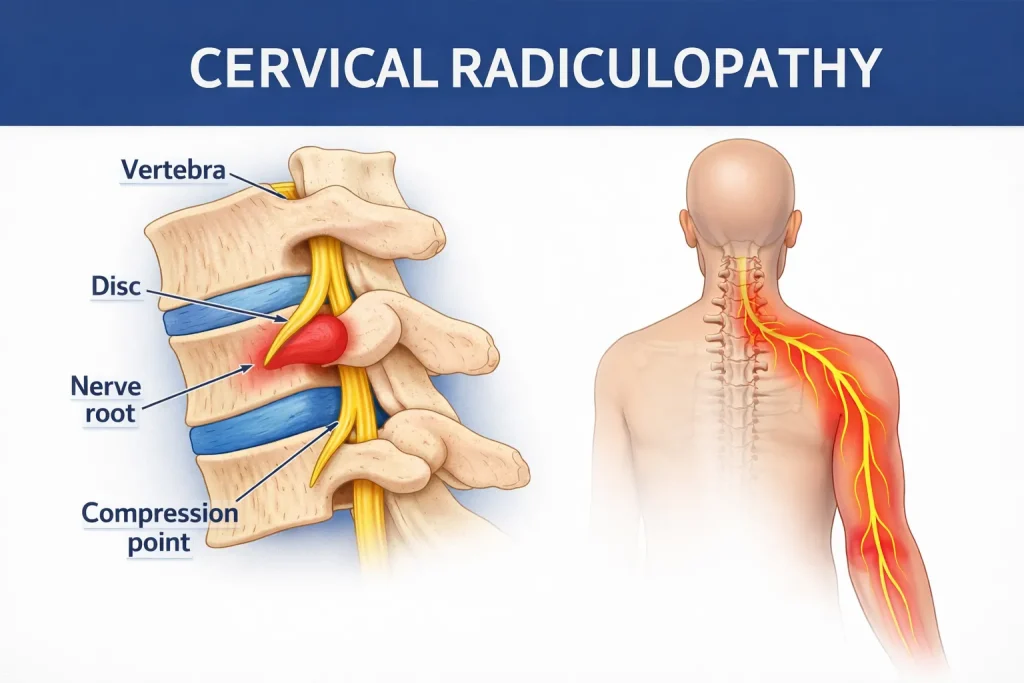
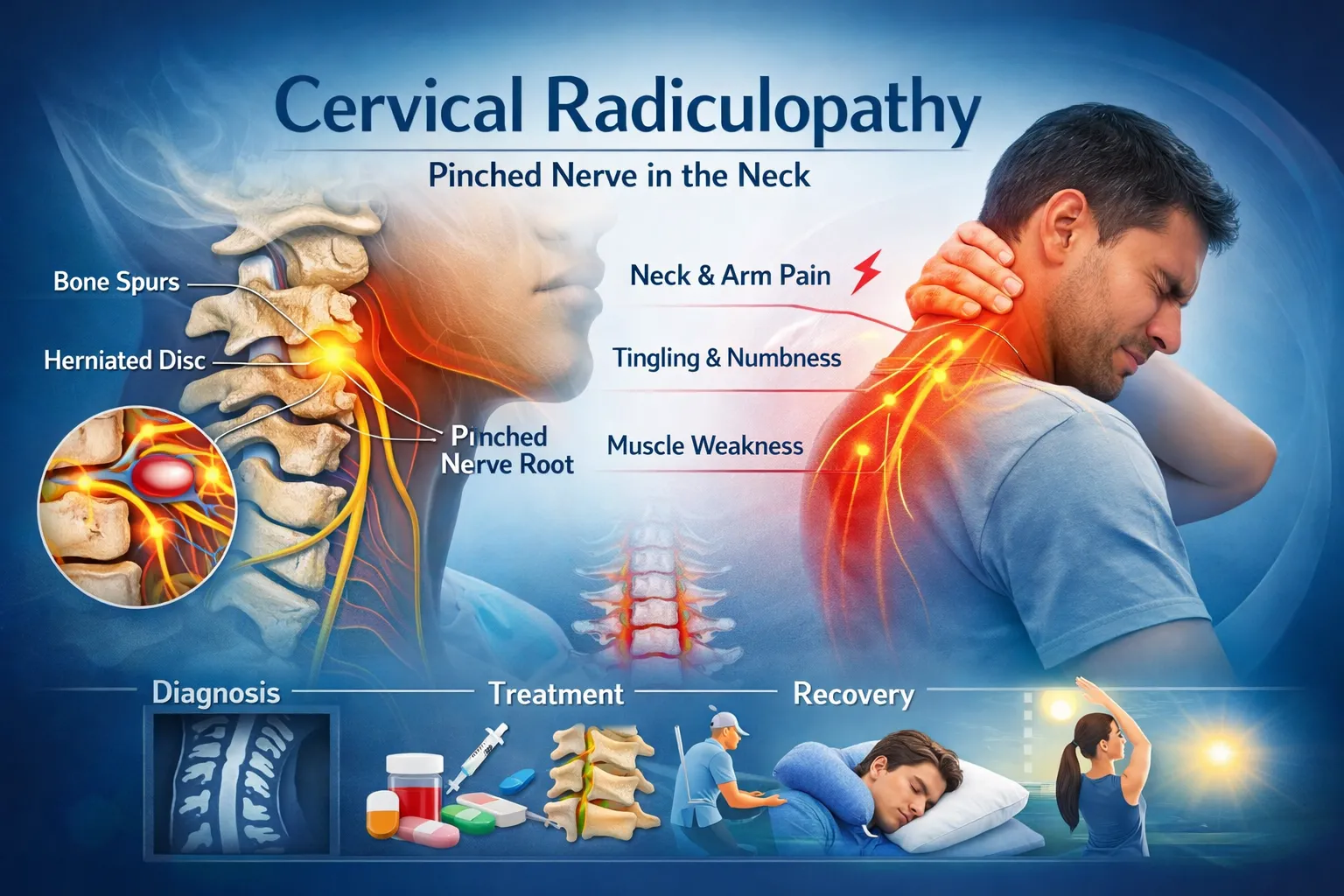
Cervical radiculopathy happens when one of the nerve roots in your cervical spine – the seven vertebrae in your neck – gets compressed, irritated, or pinched as it exits the spinal cord.
When a nerve is under pressure, it sends pain signals along its entire pathway. That’s why you can feel pain, numbness, or tingling all the way down into your arm, hand, or fingers – even though the root cause is in your neck.
Key facts to know:
- “Cervical” refers to the neck region of the spine
- “Radiculopathy” comes from the Latin for “root,” meaning the issue is at the nerve root itself
- Nearly half of middle-aged and older adults have degenerative cervical disc changes that cause no symptoms at all
- Most people with this condition recover fully without surgery
Common Causes of Cervical Radiculopathy
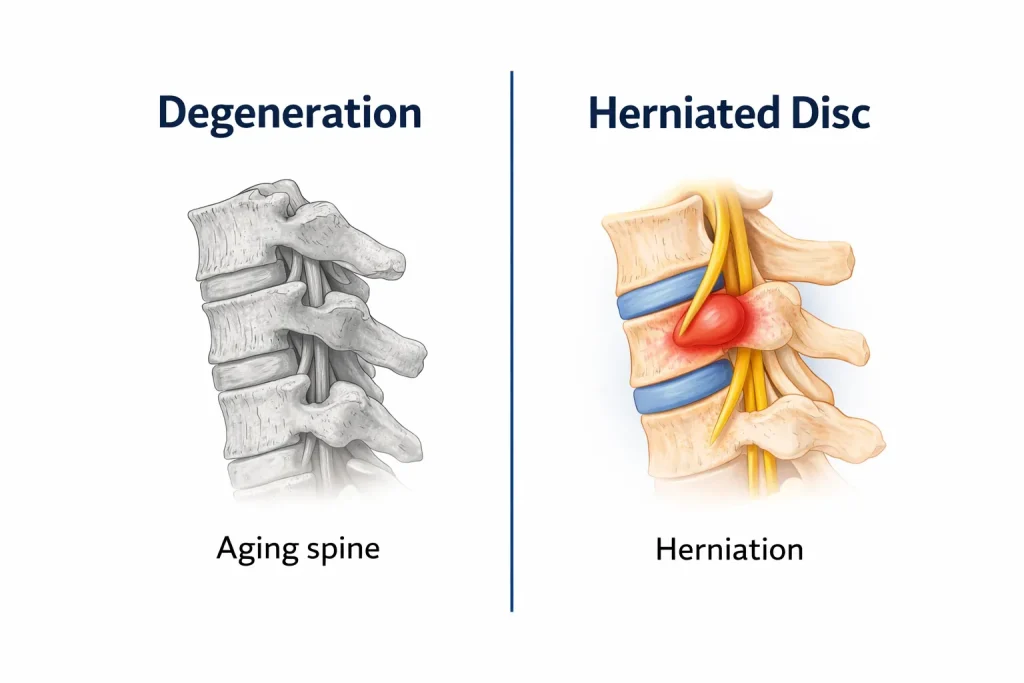
Understanding the cause helps you understand your treatment options. There are two main reasons nerve roots in the neck get pinched.
1. Degenerative Changes (Wear and Tear)
As we age, the intervertebral discs in the neck naturally break down. Here’s what happens step by step:
- Discs lose moisture and height over time
- Vertebrae above and below the disc move closer together
- The body forms bone spurs to stabilize the weakened area
- These bone spurs narrow the foramina – the small openings where nerve roots exit the spine
- The nerve root gets pinched or irritated
This process is also called cervical spondylosis – a form of arthritis of the neck. It’s the most common cause of cervical radiculopathy in people over 40.
2. Herniated Disc
Each intervertebral disc has two parts:
- Annulus fibrosus – the tough, flexible outer ring
- Nucleus pulposus – the soft, gel-like center
When the disc is worn, injured, or placed under sudden pressure, the soft center pushes through the outer ring and presses directly on a nearby nerve root. This is called a herniated disc.
- More common in younger people
- Often triggered by lifting, twisting, or a sudden impact
- Common levels affected: C5-C6 and C6-C7
- Sometimes there’s no clear trigger – it just happens
Recognizing the Symptoms
Symptoms depend on which nerve root is affected and how severely. Here’s what to look for:
Pain
- Starts at the neck and radiates down the arm
- Often described as sharp, burning, or electric – called neuropathic pain
- Turning or extending the neck may worsen it
- Abduction relief sign: Placing your hand on top of your head may temporarily reduce pain by relieving nerve pressure
Tingling and Numbness
- “Pins and needles” sensation in the fingers or hand (paresthesia)
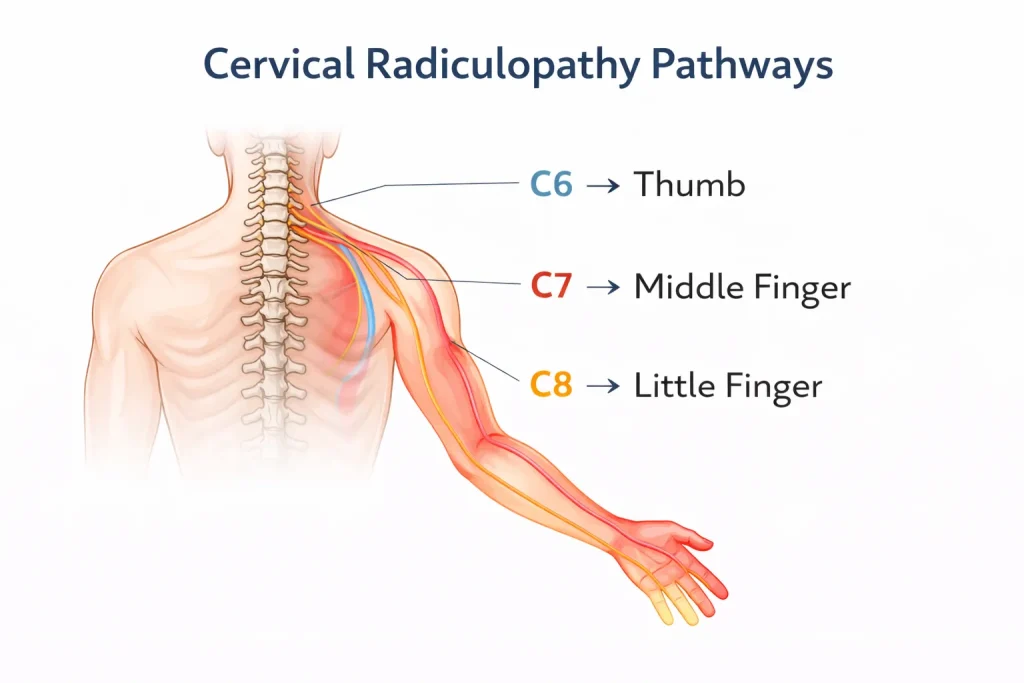
- Follows the specific nerve pathway:
- C6 compression → tingling into the thumb and index finger
- C7 compression → tingling into the middle finger
- C8 compression → tingling into the ring and little finger
Muscle Weakness
- Difficulty gripping objects
- Trouble lifting the arm
- Weakness in fine motor tasks
- In severe cases, noticeable loss of muscle tone
Neck and Shoulder Blade Pain
- Dull aching around the neck, shoulder, and shoulder blade
- Often mistaken for a muscle strain or pulled neck muscle
- Unlike a muscle strain, it won’t fully resolve with massage or stretching alone
How is It Diagnosed?
Your doctor will take a full history and perform a physical exam – checking reflexes, muscle strength, and sensation. The diagnostic tools used include:
- X-rays – show spinal alignment, narrowed disc spaces, and bone spurs
- CT scans – provide detailed images of bony structures around the foramina
- MRI scans – the gold standard; show soft tissues, including herniated discs and nerve compression areas
- EMG / Nerve Conduction Studies – test the electrical activity of muscles and confirm whether a nerve is functioning normally; useful when the diagnosis is uncertain
Conditions That Can Mimic Cervical Radiculopathy
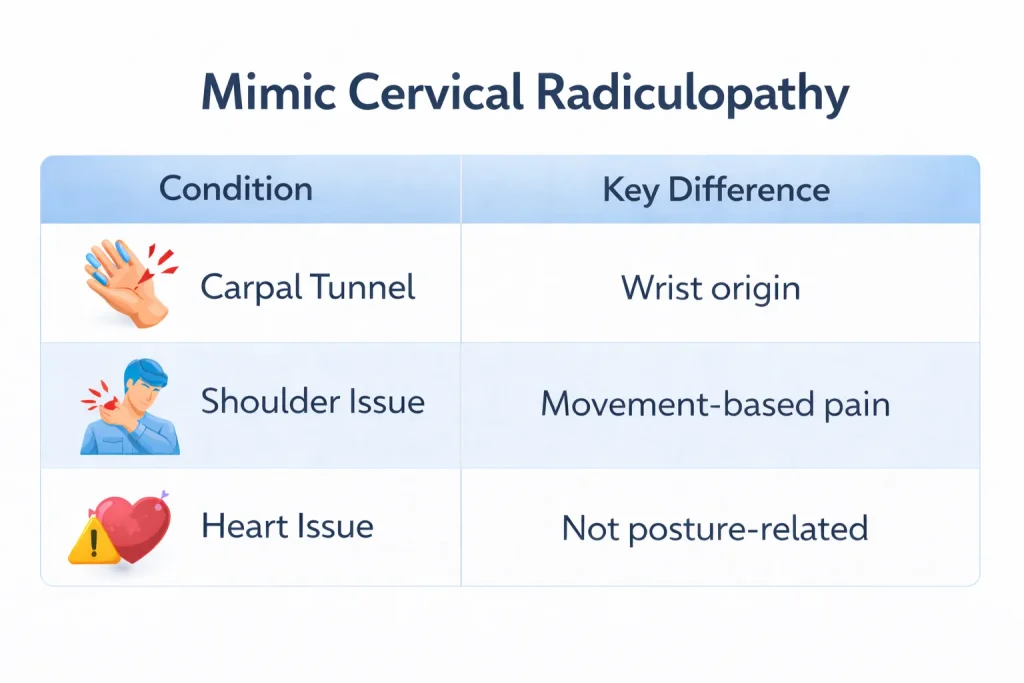
Not all neck and arm pain comes from the cervical spine. Several other conditions produce very similar symptoms:
- Shoulder conditions: thoracic outlet syndrome, AC joint arthritis, suprascapular nerve compression
- Carpal tunnel syndrome: causes hand and finger numbness similar to cervical nerve compression
- Cubital tunnel syndrome: ulnar nerve entrapment at the elbow mimics C8 radiculopathy
- Heart disease: can present with left arm and shoulder pain
- Scapular dyskinesis and other shoulder blade conditions
This overlap is exactly why proper diagnosis – not just self-diagnosis – really matters before starting treatment.
Treatment Options: From Conservative to Surgical
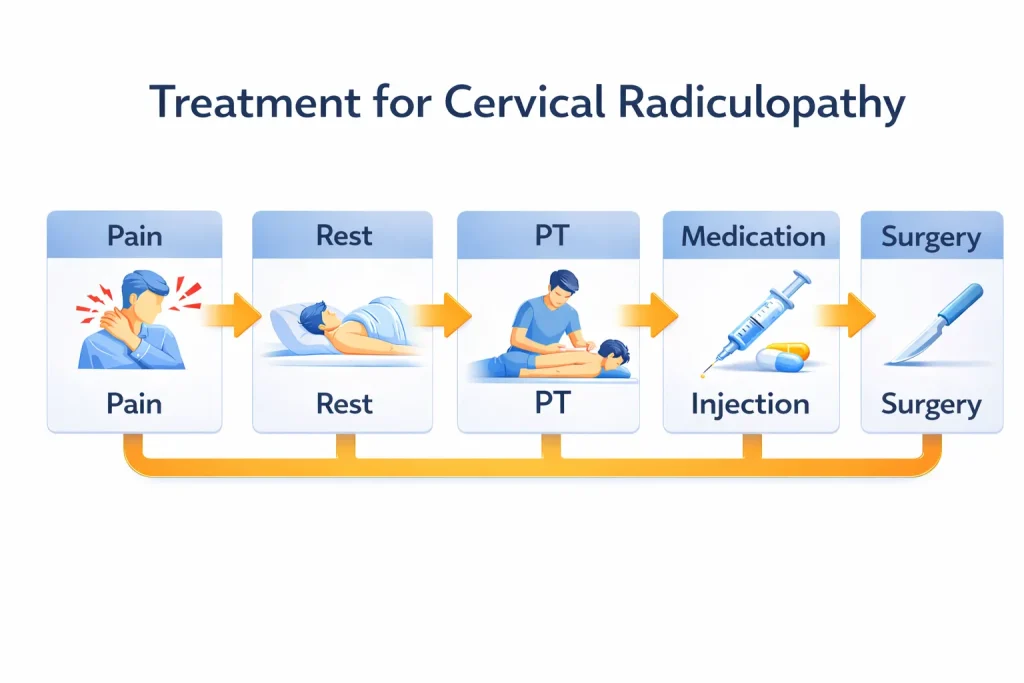
The great news: cervical radiculopathy responds very well to conservative treatment in most cases, with symptoms improving over weeks to months.
Rest and Activity Modification
- Avoid overhead work, heavy lifting, and craning the neck forward
- A soft cervical collar can limit neck movement in the acute phase
- Only wear a collar for the short term; long-term use weakens neck muscles
Physical Therapy
Physical therapy is one of the most effective treatments available. A therapist can:
- Guide you through targeted neck and shoulder strengthening exercises
- Correct posture and movement habits
- Use cervical traction to gently relieve pressure on nerve roots
- Improve the overall range of motion progressively
Medications
- NSAIDs (ibuprofen, naproxen, aspirin) – reduce nerve inflammation and pain
- Oral corticosteroids – short course for significant swelling
- Narcotics/opioids – reserved for severe, unmanageable pain; used cautiously and short-term only due to addiction risk
Steroid Injections
When oral medications aren’t enough, targeted steroid injections near the affected nerve root can:
- Significantly reduce local inflammation
- Provide enough pain relief to allow active rehabilitation
- Be placed epidurally, in the foramen (selective nerve injection), or into the facet joint
Note: injections don’t fix the structural problem, but they create a valuable window for the nerve to heal.
Surgery
Surgery is considered when:
- Conservative treatment has been tried consistently for several months without improvement
- There is significant or rapidly worsening muscle weakness
- There are signs of spinal cord compression (myelopathy)
- Daily function is severely impacted
Surgical options include:
- Anterior cervical discectomy and fusion (ACDF) – most common
- Posterior cervical foraminotomy – for specific types of compression
- Cervical disc replacement – an alternative to fusion in suitable candidates
Expert Tips for Managing Cervical Radiculopathy
These practical insights make a real difference in recovery – and most people never hear them:
- Fix your workstation first. Screen at eye level, elbows supported, lower back supported. “Tech neck” – neck flexed forward for hours – is a major aggravating factor.
- Don’t skip exercises. Complete rest leads to muscle weakness, which puts more pressure on the nerve. Gentle, consistent movement is better than total inactivity.
- Use ice first, then heat. Ice reduces acute inflammation in the first 48-72 hours. After that, heat relaxes tight cervical muscles. Alternating both gives good temporary relief.
- Sleep position matters. Sleep on your back with a cervical pillow, or on your side with a properly sized pillow. Avoid sleeping on your stomach – it forces your neck into prolonged rotation.
- Be patient with nerve healing. Nerves heal slowly. Real improvement often takes 6 to 12 weeks of consistent treatment. Many people improve sooner, but expecting overnight results leads to frustration and early return to aggravating activities.
- Stay hydrated. Intervertebral discs are largely water. Staying well hydrated supports disc health over the long term.
When to See a Doctor Urgently
Most cervical radiculopathy can be managed gradually, but some symptoms require prompt medical attention:
- Sudden, severe loss of strength in the arm or hand
- Rapidly worsening weakness or numbness
- Loss of bladder or bowel control (possible spinal cord compression – not just nerve root)
- Pain following major trauma, such as a car accident or fall
- Symptoms in both arms simultaneously
Do not manage these situations at home. Seek medical evaluation without delay.
Conclusion
Cervical radiculopathy – a pinched nerve in the neck – is one of the most common causes of neck, shoulder, and arm pain. While it can feel alarming when pain radiates into your arm or your fingers go numb, the outlook for most people is genuinely positive.
Key takeaways from this article:
- Most cervical radiculopathy gets better without surgery – time and conservative care are your best allies
- Physical therapy and posture correction are your most powerful long-term tools
- Correct diagnosis matters – carpal tunnel, shoulder conditions, and heart disease can all mimic cervical radiculopathy
- Worsening arm weakness, bilateral symptoms, or loss of bladder/bowel control need urgent medical evaluation
- Nerve healing is slow – stay consistent with treatment and be patient with your progress
Understanding what’s happening in your cervical spine empowers you to make informed decisions. Work with your doctor or physiotherapist, stay consistent, take care of your posture, and give your nervous system the time it needs to heal.
Explore all our all fractures related blogs
| Topic | Link |
| Cervical Radiculopathy | Click here |
| Distal Radius Fracture | Click here |
| Proximal Humerus Fracture | Click here |
| Lauge-Hansen Classification of Ankle Fractures | Click here |
| Weber Classification of Ankle Fractures | Click here |
| Trimalleolar Fracture | Click here |
| Bimalleolar Ankle Fracture | Click here |
| Lateral Malleolus Fracture | Click here |
| Medial Malleolus Fracture | Click here |
| Complete Guide to Ankle Fractures | Click here |
FAQs
What is cervical radiculopathy?
Cervical radiculopathy is a condition where a nerve root in the neck becomes compressed or irritated. This leads to symptoms like pain, numbness, or weakness that travel from the neck to the shoulder, arm, and fingers. It is commonly referred to as a pinched nerve in the neck and often requires proper care to prevent worsening.
What are the symptoms of a pinched nerve in the neck?
The symptoms include neck pain radiating to the arm, tingling or pins-and-needles sensation, numbness in the fingers, and muscle weakness. These symptoms may vary depending on which nerve is affected and can worsen with movement or poor posture over time.
What causes cervical nerve compression?
Cervical nerve compression can be caused by herniated discs, aging-related changes like cervical spondylosis, bone spurs, or poor posture. Long hours of screen use and lack of proper neck support are also major contributing factors in today’s lifestyle.
Can a pinched nerve in the neck heal on its own?
Yes, many cases of a pinched nerve improve with rest, posture correction, and simple treatments like physical therapy. However, if symptoms persist for a long time or worsen, it is important to seek medical advice for proper diagnosis and treatment.
What is the best treatment for cervical radiculopathy?
The best treatment usually includes a combination of medication, physical therapy, posture correction, and exercises. In more severe cases, doctors may recommend injections or surgical options depending on the condition.
How long does cervical radiculopathy take to heal?
Recovery time depends on the severity of the condition, but many people start seeing improvement within a few weeks. With consistent treatment and care, most cases recover within a few months without requiring surgery.