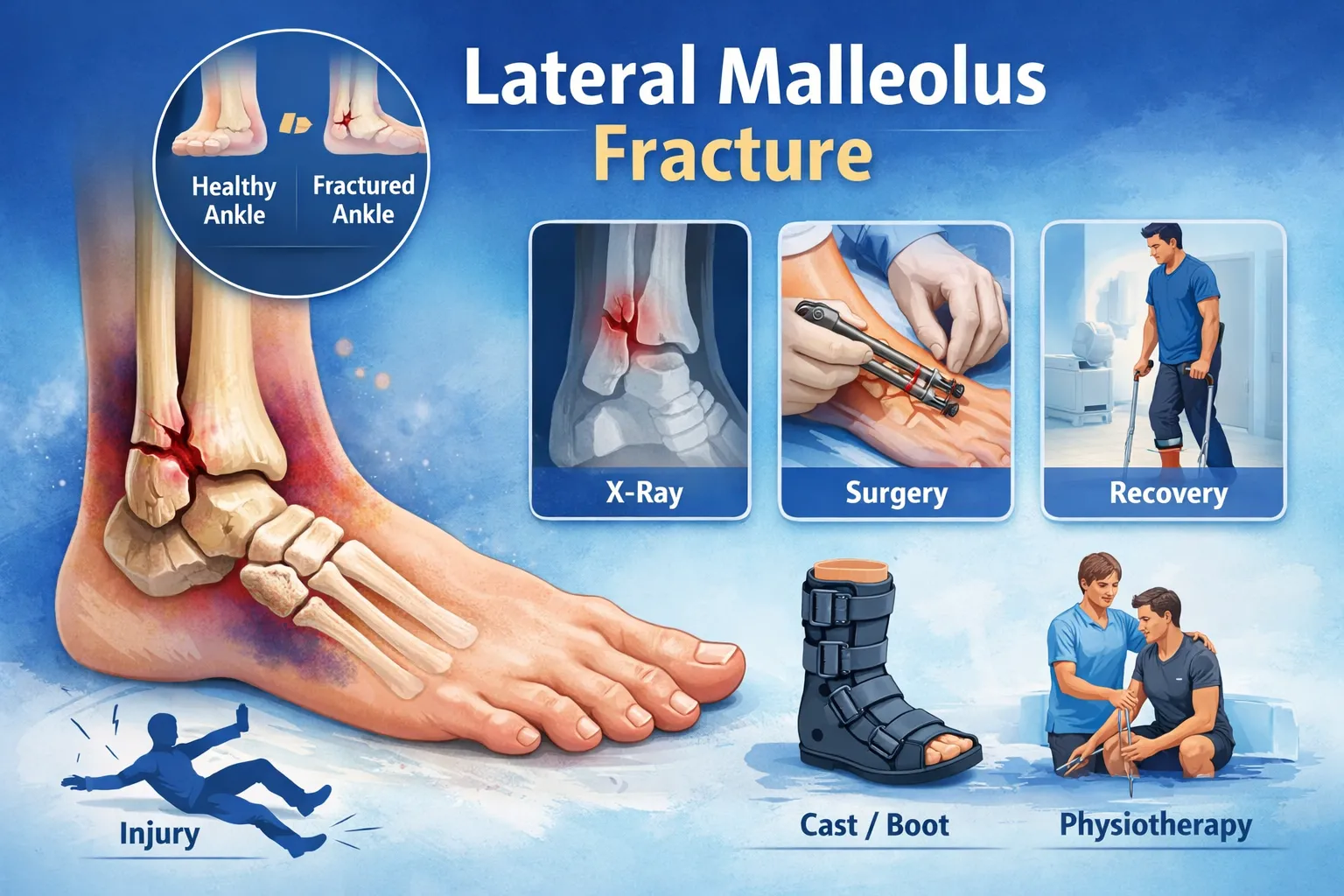
A lateral malleolus fracture is one of the most common ankle injuries worldwide. It involves a break in the outer part of the ankle, specifically the lower end of the fibula (distal fibula). While many lateral malleolus fractures are stable and heal with a cast or walking boot, others can destabilize the ankle joint and require surgical fixation to restore proper alignment and prevent long-term complications like arthritis or chronic instability.
This detailed guide explains everything about lateral malleolus fractures – causes, types, diagnosis, treatment options, recovery timeline, and when surgery is needed. The content is designed for both patients and medical readers globally.
Table of Contents
What is a Lateral Malleolus Fracture?
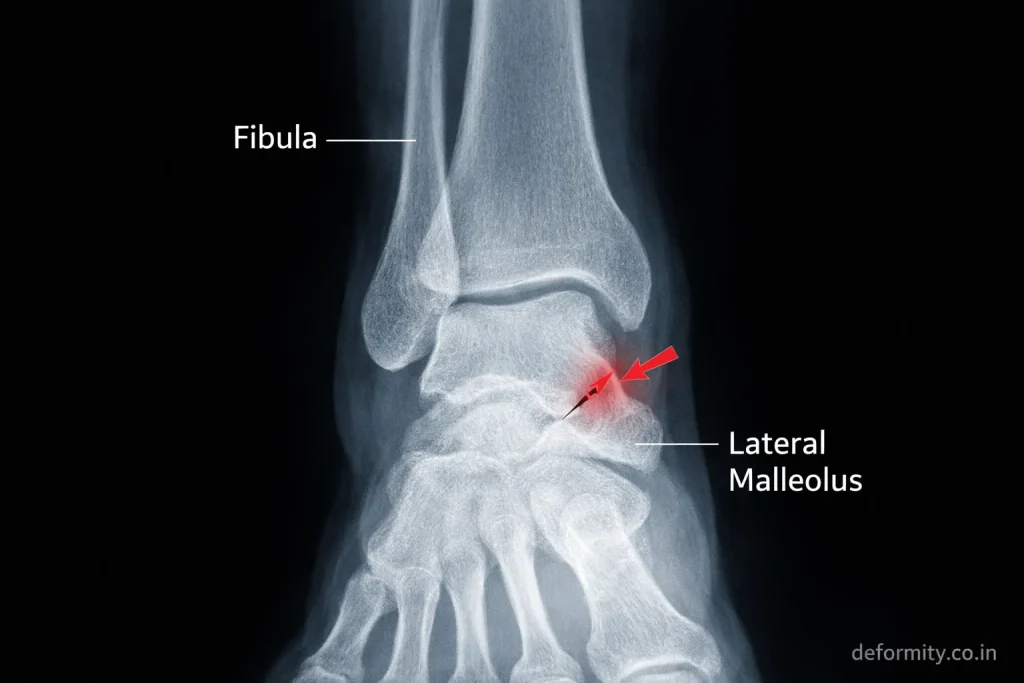
The lateral malleolus is the bony prominence on the outer side of your ankle. It is the lower end of the fibula and plays a crucial role in stabilizing the ankle joint. A fracture here is often referred to as a distal fibula fracture or outer ankle fracture.
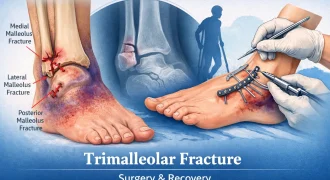
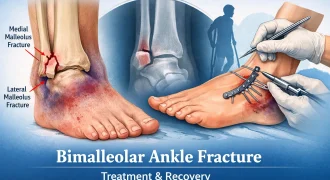
This injury can occur in isolation or along with other ankle fractures, such as medial malleolus or posterior malleolus fractures. The severity depends on whether the fracture affects ankle stability or involves ligament damage.
Key points:
- The most common type of ankle fracture
- Often caused by twisting injuries
- May be stable or unstable
- Stability determines treatment approach
Even a small displacement in the fibula can disrupt ankle mechanics and lead to long-term problems if not treated properly.
Anatomy of the Lateral Malleolus
The lateral malleolus is part of the distal fibula and forms the outer boundary of the ankle joint. It works together with the tibia and talus to create the ankle mortise, which allows smooth movement and weight-bearing.
Important structures attached here include:
- Anterior talofibular ligament (ATFL)
- Calcaneofibular ligament (CFL)
- Syndesmotic ligaments
- Peroneal tendons
Functions of the lateral malleolus:
- Maintains ankle alignment
- Prevents outward shift of the talus
- Provides ligament support
- Stabilizes the ankle during walking and running
Because of its stabilizing role, fractures here must be evaluated carefully to determine whether the ankle joint remains stable.
Causes of Lateral Malleolus Fracture
Lateral malleolus fractures commonly result from twisting or rotational forces applied to the ankle. These injuries are seen across all age groups.
Common causes include:
- Sudden ankle inversion (rolling ankle outward)
- Sports injuries
- Slip and fall accidents
- Road traffic accidents
- Fall from height
- Osteoporosis-related fractures in the elderly
Athletes often sustain these injuries during sudden direction changes, while older adults may fracture the distal fibula after minor falls due to weaker bones.
Mechanism of Injury
Understanding the mechanism helps determine fracture severity and treatment.
Most lateral malleolus fractures occur due to:
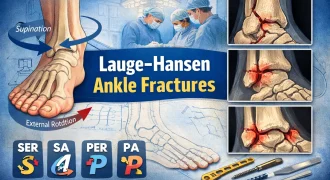
- Supination-external rotation injury
- Inversion injury
- Twisting motion while the foot is planted
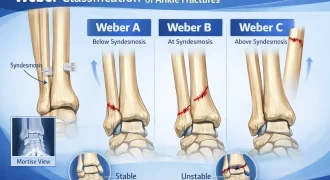
These forces can cause a fracture at different levels of the fibula, which is why classification systems like the Weber classification are important.
Types of Lateral Malleolus Fractures
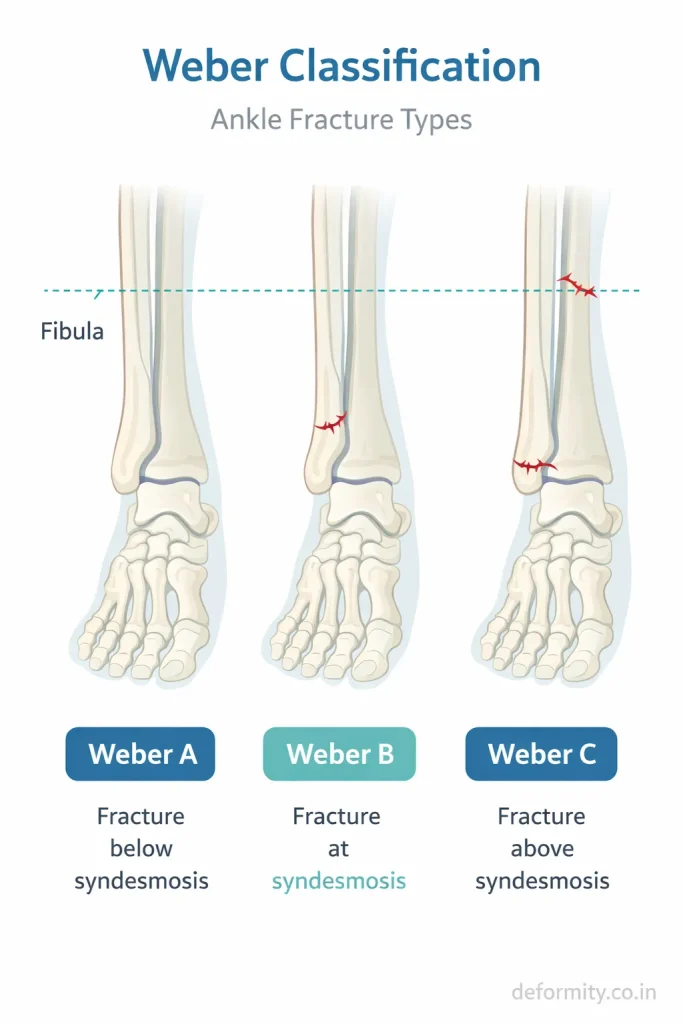
Lateral malleolus fractures vary in pattern and stability. The treatment depends heavily on the fracture type.
Avulsion Fracture
A small fragment of bone is pulled off by a ligament. Often stable and may heal with conservative treatment.
Weber A Fracture
Fracture below the syndesmosis. Usually stable and treated without surgery.
Weber B Fracture
Fracture at the level of the syndesmosis. Stability varies and requires careful assessment. Some cases need surgery.
Weber C Fracture
Fracture above the syndesmosis. Usually unstable and associated with ligament injury. Surgery is often required.
Comminuted Fracture
The bone breaks into multiple fragments. Often unstable and requires surgical fixation.
Spiral Fracture
Caused by twisting force. May be stable or unstable depending on the displacement.
Symptoms of Lateral Malleolus Fracture
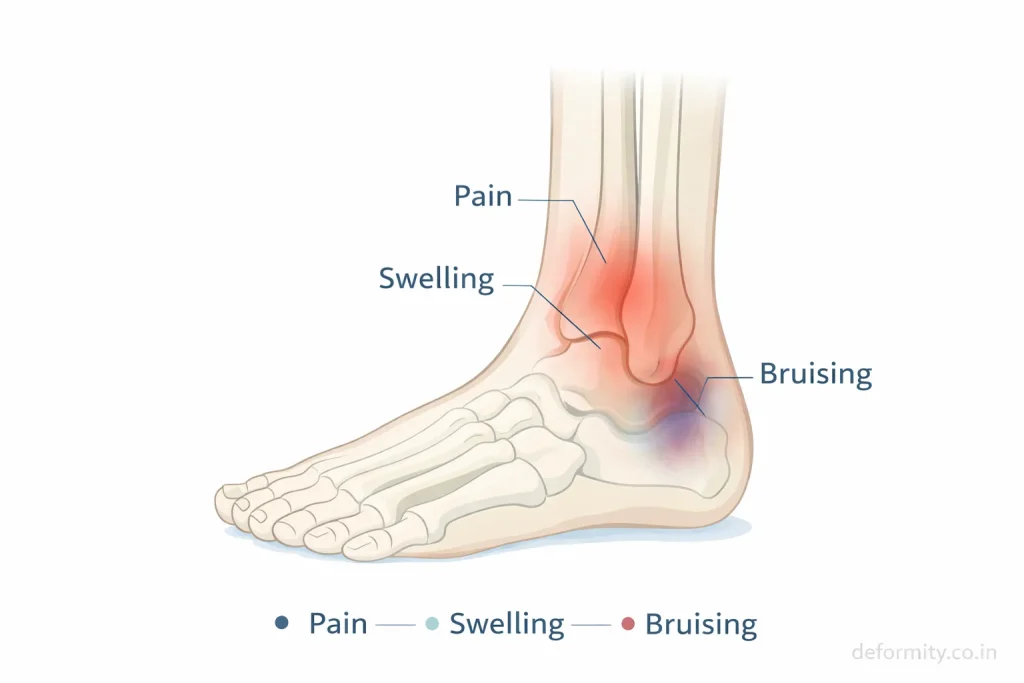
Symptoms vary depending on severity and displacement.
Common symptoms include:
- Pain on the outer side of the ankle
- Swelling around the ankle
- Bruising
- Difficulty bearing weight
- Tenderness over the fibula
- Reduced ankle movement
Severe fractures may cause deformity or inability to stand. Persistent pain after ankle injury should always be evaluated with imaging.
Diagnosis
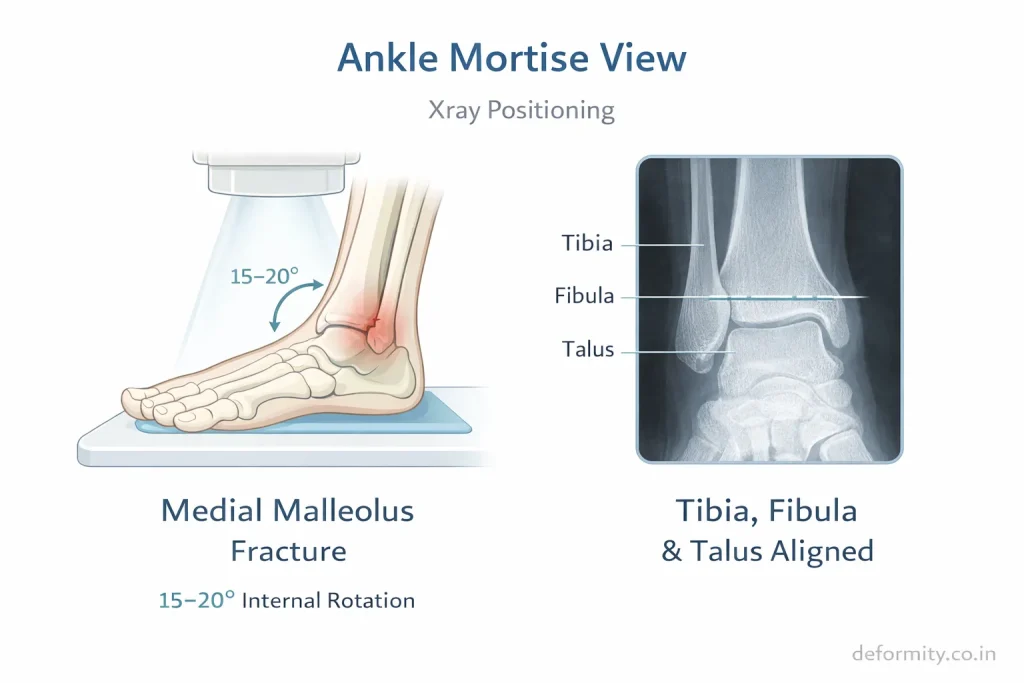
Accurate diagnosis is essential for determining stability and treatment.
Physical Examination
An orthopedic specialist assesses:
- Tenderness over the fibula
- Swelling
- Deformity
- Ability to bear weight
- Ligament stability
X-ray Imaging
X-rays are the primary diagnostic tool. Standard views include:
- AP view
- Lateral view
- Mortise view
These help identify fracture pattern and displacement.
CT Scan
A CT scan may be needed when:
- Fracture pattern is complex
- Posterior malleolus involved
- Surgical planning required
Advanced imaging helps determine whether surgery is needed.
Stable vs Unstable Lateral Malleolus Fracture
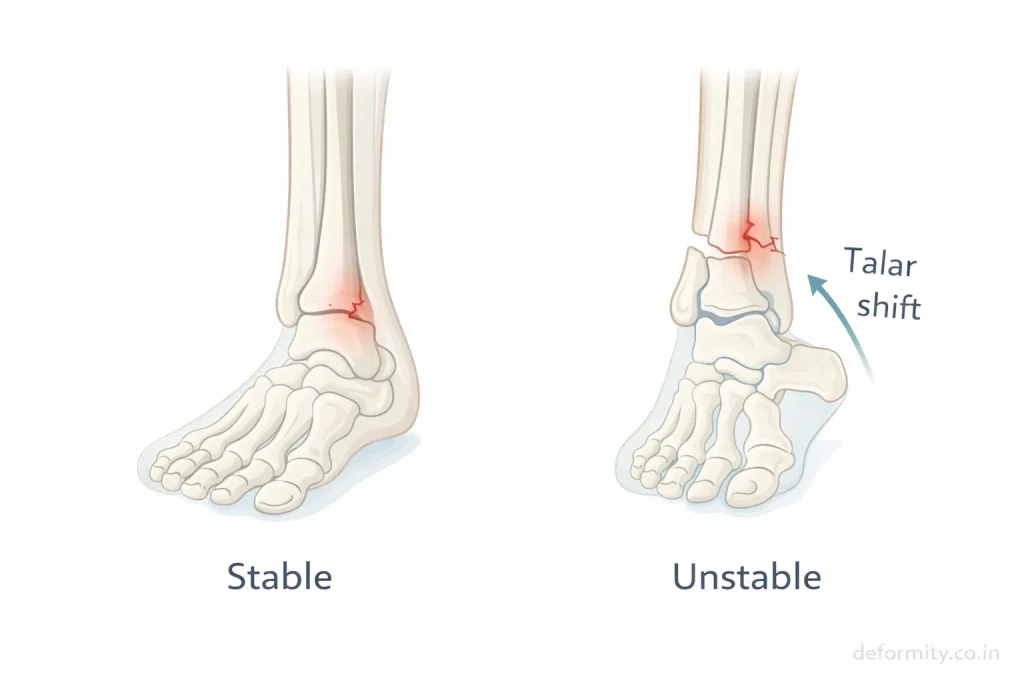
The most important factor in treatment planning is stability.
A fracture is stable if:
- Bone alignment maintained
- No talar shift
- Ligaments intact
A fracture is unstable if:
- Bone displaced
- Syndesmotic injury present
- Associated medial malleolus fracture
- Joint misalignment
Stable fractures can heal with casting or boot immobilization, while unstable fractures usually require surgical fixation.
Treatment of Lateral Malleolus Fracture
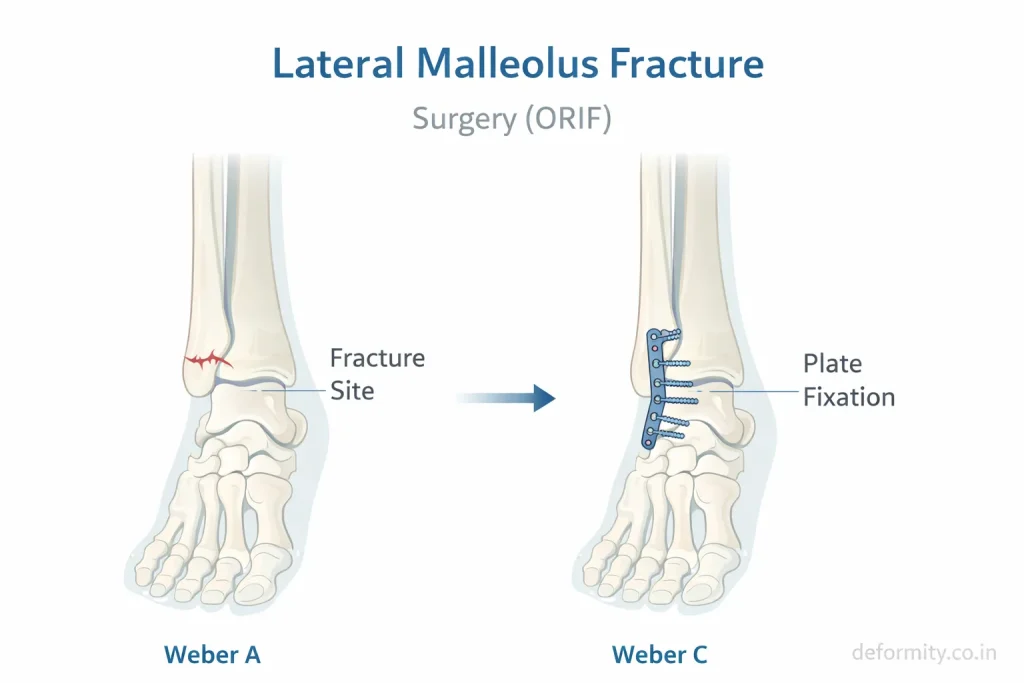
Treatment depends on fracture type, stability, and patient activity level.
Non-Surgical Treatment
Stable fractures can be treated conservatively.
Treatment includes:
- Walking boot or cast
- Rest and elevation
- Ice therapy
- Pain medication
- Follow-up X-rays
- Gradual weight-bearing
Many isolated distal fibula fractures heal well without surgery.
Surgical Treatment (ORIF)
Surgery is recommended when:
- Fracture displaced
- Joint unstable
- Syndesmotic injury present
- Associated fractures exist
The procedure involves:
- Realigning bone
- Plate and screw fixation
- Restoring joint alignment
Surgery helps maintain ankle stability and reduces the risk of arthritis.
Dr Divya Ahuja specializes in advanced fixation techniques designed to restore ankle mechanics and enable early rehabilitation.
Recovery Time After Lateral Malleolus Fracture
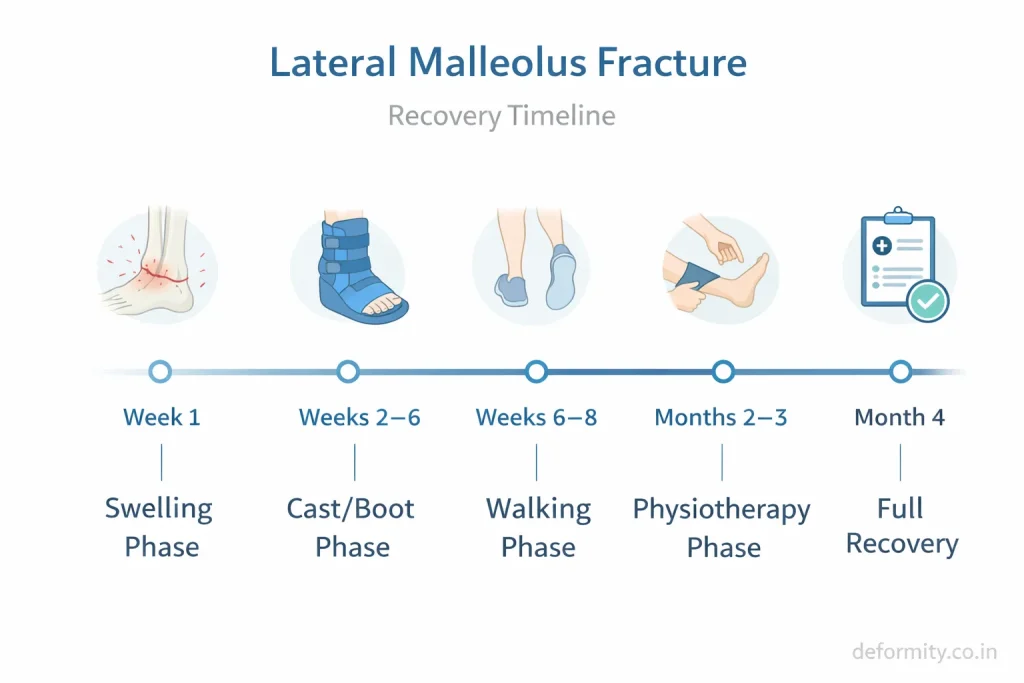
Recovery varies based on severity and treatment.
| Fracture Type | Weight Bearing | Full Recovery |
|---|---|---|
| Stable fracture | 4–6 weeks | 8–10 weeks |
| Surgical fixation | 6–8 weeks | 3–4 months |
| Complex fracture | 8–10 weeks | 4–6 months |
Recovery stages include:
- Swelling reduction
- Bone healing
- Physiotherapy
- Strength rebuilding
- Return to activity
Swelling may persist for several months even after bone healing.
Rehabilitation & Physiotherapy
Rehabilitation is essential for restoring strength and mobility.
Key components include:
- Range of motion exercises
- Strength training
- Balance exercises
- Gait training
- Return-to-sport conditioning
Skipping physiotherapy may result in stiffness and weakness.
Complications
If not treated properly, complications may occur.
Possible complications include:
- Malunion
- Nonunion
- Chronic ankle instability
- Post-traumatic arthritis
- Stiffness
- Hardware irritation
Proper alignment and rehabilitation reduce long-term risks.
Lateral vs Medial Malleolus Fracture
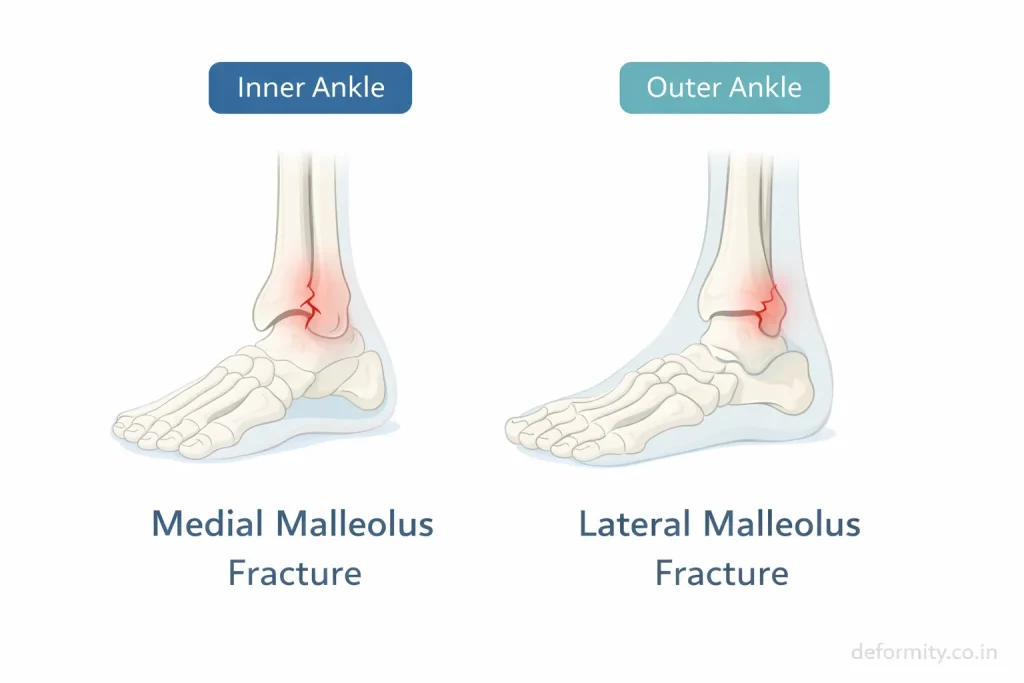
Both fractures affect ankle stability but differ in location and treatment approach.
- Lateral malleolus fracture → outer ankle
- Medial malleolus fracture → inner ankle
- Combined fractures → often unstable
Know more about: Medial Malleolus Fracture
When to See an Orthopedic Surgeon
Seek medical attention if:
- Severe ankle pain persists
- Swelling worsens
- Cannot bear weight
- Deformity visible
- Injury after a fall or twist
Early diagnosis improves healing outcomes.
Treatment in India & International Consultation
Many global patients seek ankle fracture treatment in India due to high-quality care and affordability.
Dr Divya Ahuja provides advanced care for:
- Distal fibula fractures
- Complex ankle injuries
- Sports trauma
- Revision surgeries
International patients benefit from:
- Online consultation
- Treatment planning
- Affordable surgery
- Post-operative rehabilitation
Early expert care ensures better alignment, faster recovery, and long-term joint health.
Conclusion
A lateral malleolus fracture is one of the most common ankle injuries, but it should never be underestimated. Proper evaluation, accurate diagnosis, and appropriate treatment are essential for restoring ankle stability and preventing long-term complications. With timely care and structured rehabilitation, most patients recover well and return to normal activities.
Read: Complete Guide to Ankle Fractures: Types, Classification, Treatment & Recovery
FAQs
How long does a lateral malleolus fracture take to heal?
A lateral malleolus fracture typically heals in 6–8 weeks if stable and treated conservatively. However, full recovery, including strength and mobility, may take 3–4 months, especially if surgery is required or if the fracture is unstable.
Can you walk on a lateral malleolus fracture?
Walking depends on fracture stability. Stable fractures may allow protected weight-bearing in a boot, while unstable fractures require immobilization or surgery. Walking too early without medical advice can worsen displacement and delay healing.
What is the recovery time for a distal fibula fracture?
Recovery from a distal fibula fracture usually takes 8–12 weeks for basic healing. Patients who undergo surgery may require 3–4 months before returning to full activity, depending on rehabilitation progress and fracture severity.
Does a Weber B fracture always need surgery?
Not all Weber B fractures require surgery. If the fracture is stable and there is no talar shift or ligament injury, conservative treatment may be sufficient. Unstable Weber B fractures often need surgical fixation to restore alignment.
How long does swelling last after a lateral malleolus fracture?
Swelling usually improves within 2–3 weeks, but mild swelling may persist for several months. Elevation, compression, and physiotherapy help reduce swelling and improve circulation during the healing process.
Can a lateral malleolus fracture heal without a cast?
Some stable fractures can be managed with a removable walking boot instead of a traditional cast. However, immobilization is still required to ensure proper bone healing and prevent displacement.
When can I drive after a lateral malleolus fracture?
Driving is generally safe once full weight-bearing is possible and reaction time is normal, usually around 6–8 weeks after injury. Right-sided fractures may require a longer recovery before driving is recommended.
What happens if a lateral malleolus fracture is left untreated?
Untreated fractures may heal improperly, leading to ankle instability, chronic pain, or early arthritis. Proper diagnosis and alignment are essential to maintain long-term joint function.
Is surgery painful for distal fibula fractures?
Surgery is performed under anesthesia, so patients do not feel pain during the procedure. Postoperative discomfort is manageable with medication, and most patients report gradual pain reduction within weeks.
How soon can I return to sports after a lateral malleolus fracture?
Return to sports typically occurs 3–6 months after injury, depending on fracture severity and rehabilitation progress. Full strength, balance, and range of motion must be restored before resuming athletic activity.