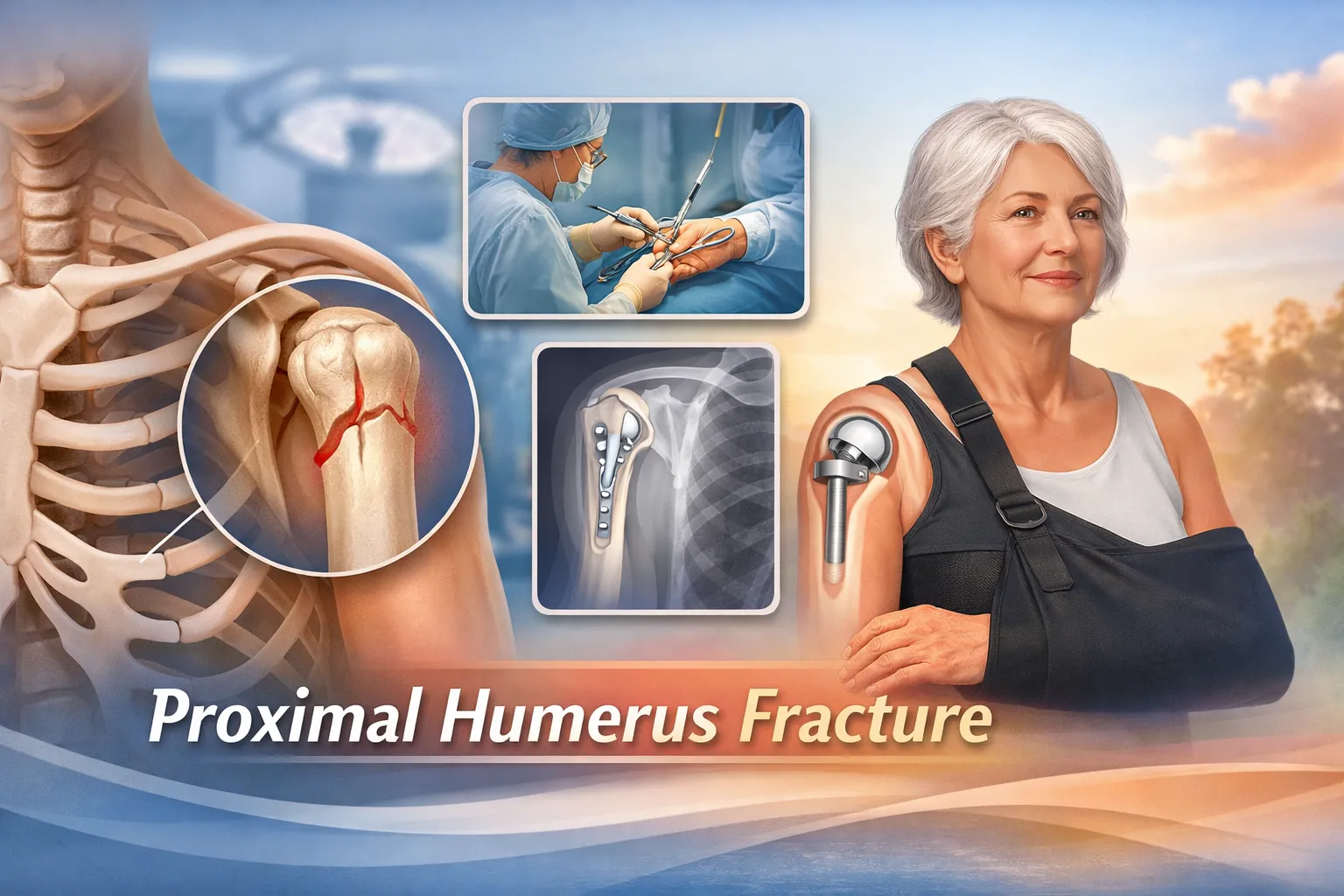
A proximal humerus fracture is a break in the upper portion of the humerus bone near the shoulder joint. This injury can significantly affect shoulder movement and arm function because the proximal humerus forms a major part of the shoulder joint.
Proximal humerus fractures are among the most common fractures of the upper limb, particularly in elderly individuals with osteoporosis. These injuries usually occur after a fall onto the shoulder or an outstretched arm, but they can also result from high-energy trauma such as road accidents or sports injuries.
Although many proximal humerus fractures heal successfully with conservative treatment, severe fractures may require surgical intervention to restore normal anatomy and shoulder function.
This comprehensive guide provides an in-depth explanation of everything you need to know about proximal humerus fractures, including causes, symptoms, classification systems, diagnosis, treatment options, surgical procedures, recovery timelines, and rehabilitation strategies.
Table of Contents
What is a Proximal Humerus Fracture?
The humerus is the long bone of the upper arm that connects the shoulder to the elbow. The proximal portion refers to the upper end of the bone near the shoulder joint.
A proximal humerus fracture occurs when this part of the bone breaks due to trauma or excessive force.
These fractures may involve different parts of the proximal humerus, including:
- the humeral head
- the greater tuberosity
- the lesser tuberosity
- the surgical neck
The severity of the fracture depends on factors such as displacement, number of fragments, and involvement of the shoulder joint surface.
Proximal humerus fractures can range from minor cracks in the bone to complex multi-fragment fractures that disrupt the entire shoulder joint.
Anatomy of the Proximal Humerus
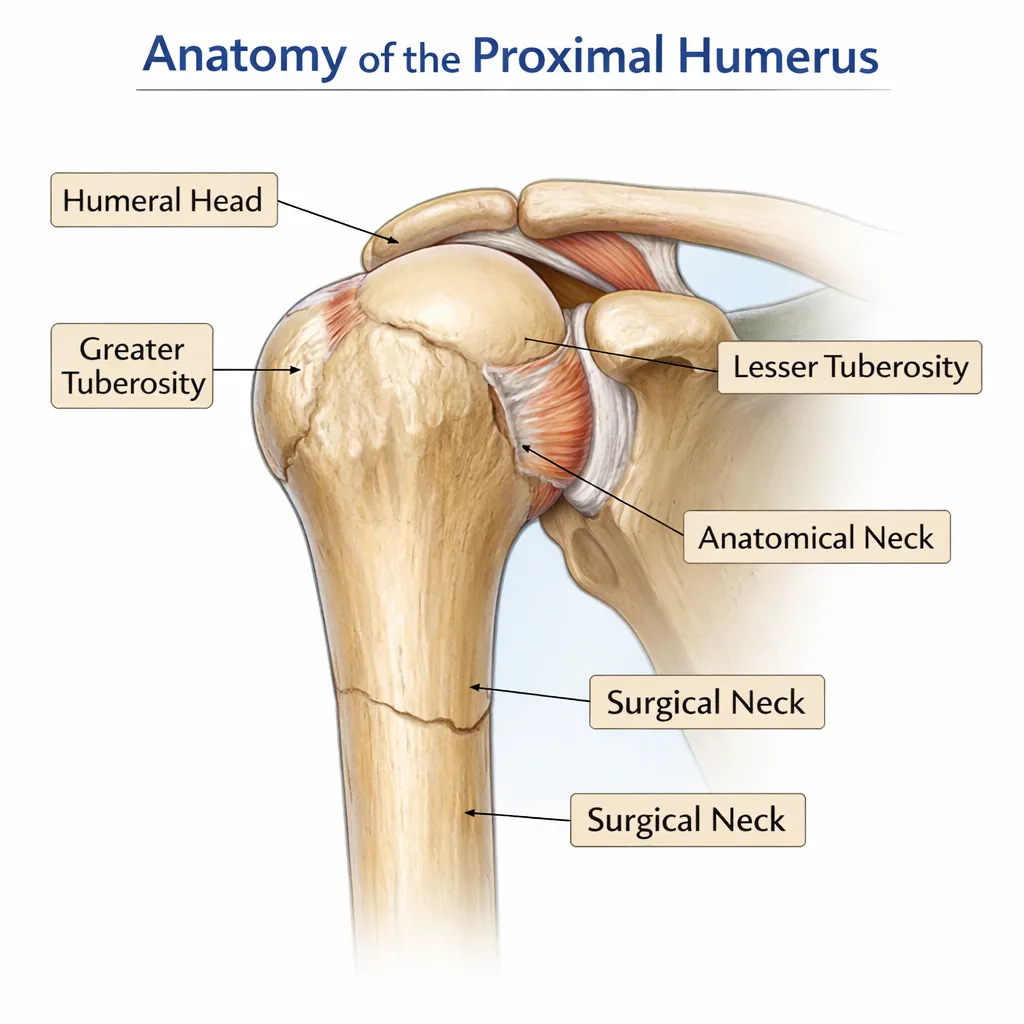
Understanding the anatomy of the proximal humerus is crucial for comprehending how fractures occur and their impact on shoulder movement.
The proximal humerus consists of several key structures:
Humeral Head
The rounded head of the humerus forms the ball portion of the shoulder joint and articulates with the glenoid cavity of the scapula.
Greater Tuberosity
The greater tuberosity is a bony prominence where several rotator cuff muscles attach.
Lesser Tuberosity
The lesser tuberosity provides attachment for the subscapularis muscle.
Surgical Neck
The surgical neck is located below the tuberosities and is a common fracture site.
Anatomical Neck
This region separates the humeral head from the tuberosities.
Damage to any of these structures can affect shoulder stability and movement.
Causes of Proximal Humerus Fractures
Proximal humerus fractures usually occur due to trauma or excessive stress on the shoulder.
Falls
The most common cause is a fall onto the shoulder or outstretched hand.
Older adults with osteoporosis are particularly vulnerable to this type of injury.
Sports Injuries
Athletes involved in contact sports or activities such as skiing, cycling, or skateboarding may suffer shoulder fractures after falls or collisions.
Road Traffic Accidents
High-energy trauma from car or motorcycle accidents can cause complex proximal humerus fractures.
Osteoporosis
Weak bones caused by osteoporosis increase the risk of fractures even after minor trauma.
Direct Impact
A direct blow to the shoulder can also cause fractures.
Types of Proximal Humerus Fractures
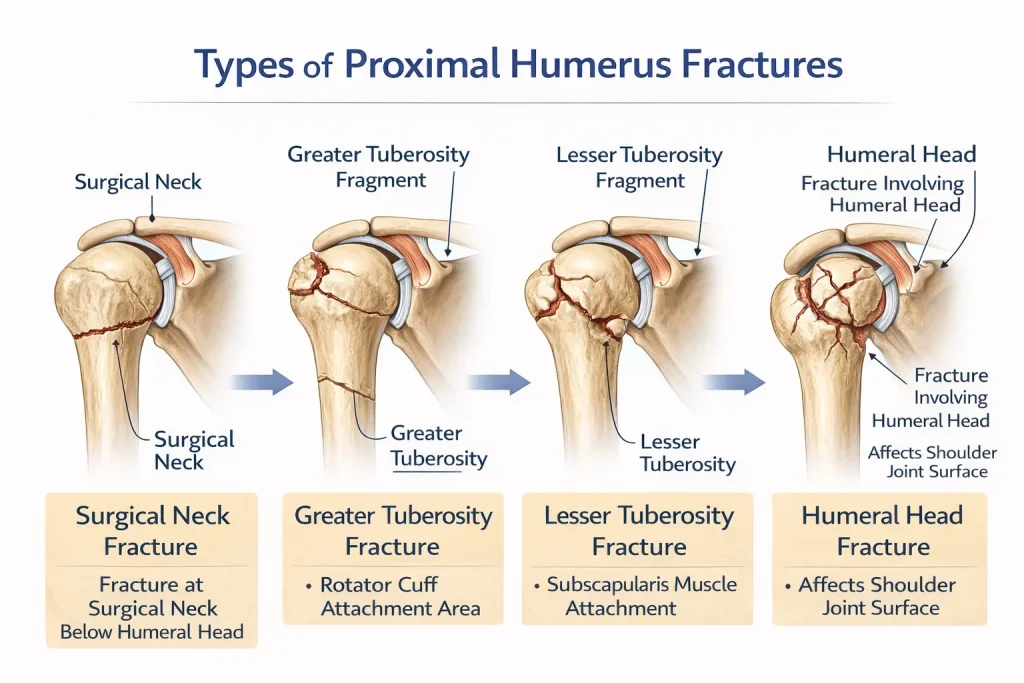
Different fracture patterns can occur depending on the mechanism of injury and the structures involved.
Surgical Neck Fracture
This is the most common type of proximal humerus fracture.
The break occurs below the humeral head and tuberosities.
Greater Tuberosity Fracture
These fractures involve the greater tuberosity and often occur due to rotator cuff muscle traction or shoulder dislocation.
Lesser Tuberosity Fracture
This type is less common and usually occurs with shoulder dislocations.
Humeral Head Fracture
These fractures involve the articular surface of the humeral head and may affect joint movement.
Multi-Fragment Fracture
In severe injuries, the bone may break into multiple fragments.
Neer Classification of Proximal Humerus Fractures
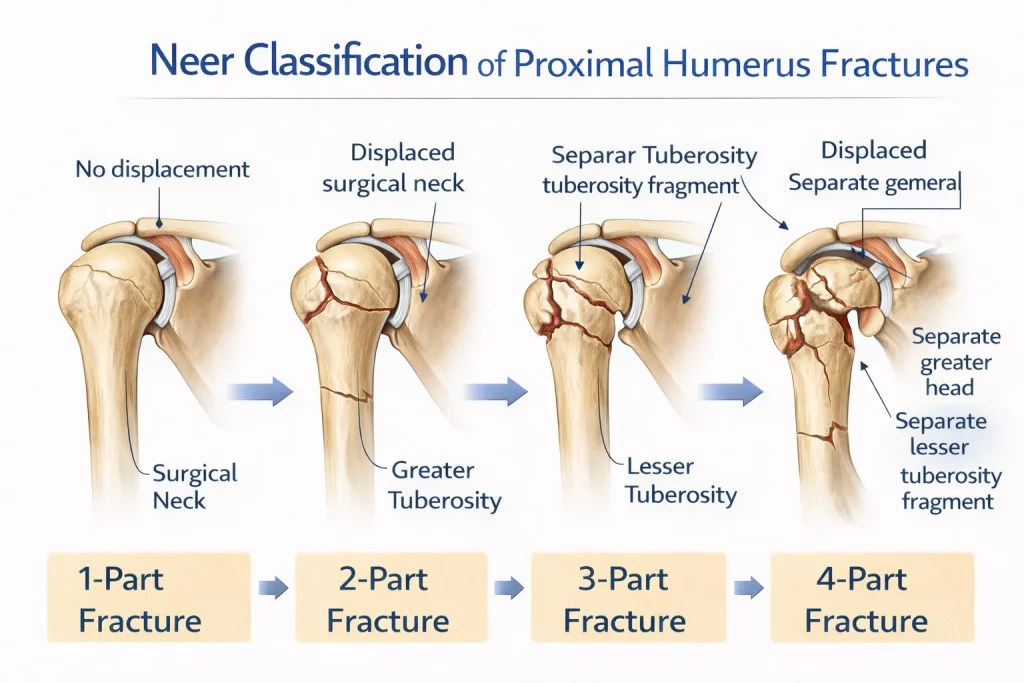
The Neer classification is the most widely used system for describing proximal humerus fractures.
It categorizes fractures based on the number of displaced fragments.
One-Part Fracture
All fragments remain in place with minimal displacement.
These fractures are usually treated without surgery.
Two-Part Fracture
One segment of the bone is displaced.
Common examples include surgical neck fractures.
Three-Part Fracture
Two fragments are displaced in addition to the humeral head.
These fractures may require surgical treatment.
Four-Part Fracture
All four segments are displaced.
These injuries are severe and often require surgical intervention.
Symptoms of a Proximal Humerus Fracture
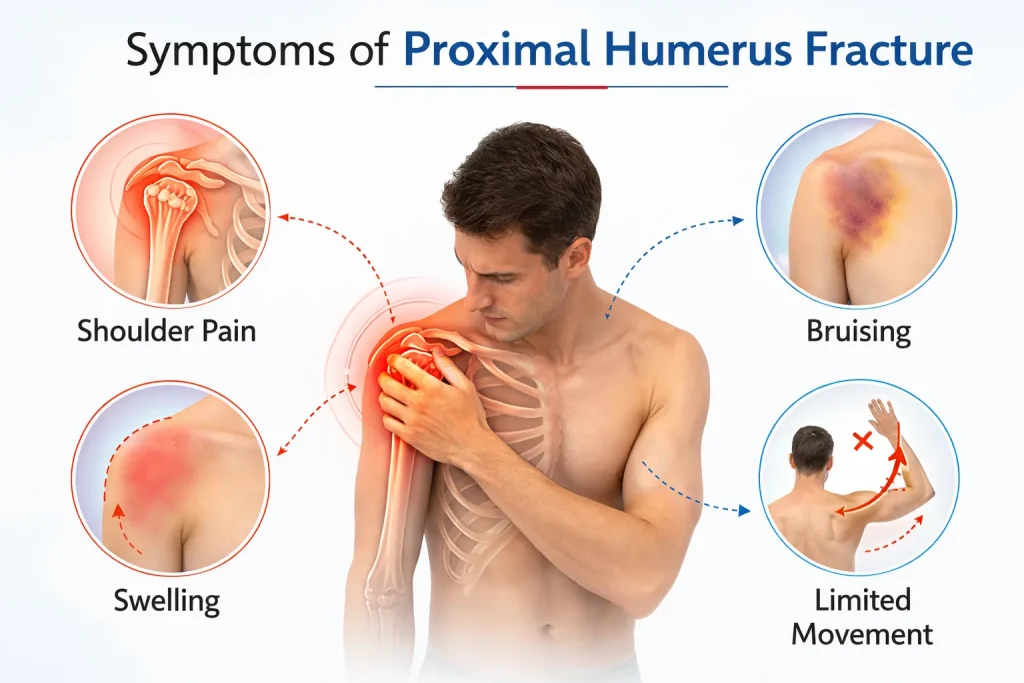
Symptoms typically appear immediately after injury.
Common symptoms include:
- severe shoulder pain
- swelling around the shoulder
- bruising
- difficulty lifting the arm
- limited shoulder movement
- tenderness near the shoulder joint
In severe cases, the shoulder may appear deformed or misaligned.
Patients may also experience numbness or weakness if nearby nerves are affected.
Diagnosis of Proximal Humerus Fractures
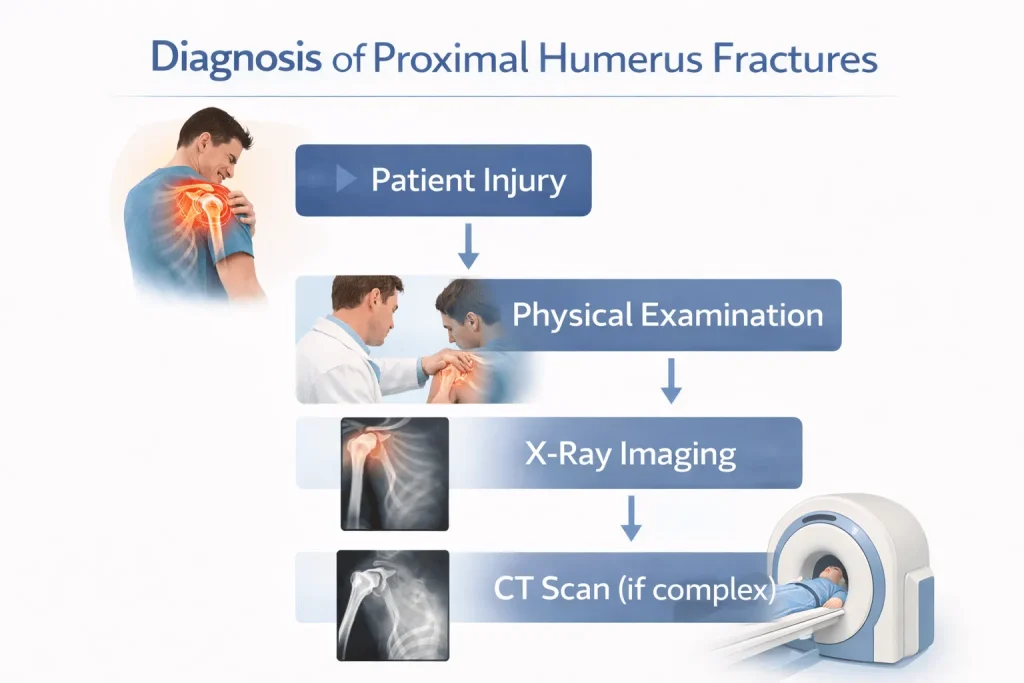
Proper diagnosis is essential for determining the best treatment approach.
Physical Examination
Doctors evaluate:
- pain and swelling
- deformity
- shoulder range of motion
- nerve and blood vessel function
X-Ray Imaging
X-rays are the primary diagnostic tool for detecting proximal humerus fractures.
Common X-ray views include:
- anteroposterior (AP) view
- lateral view
- axillary view
These images reveal fracture location and displacement.
CT Scan
CT scans may be recommended when fractures are complex or involve the joint surface.
CT imaging provides detailed 3-dimensional views that help surgeons plan treatment.
Treatment of Proximal Humerus Fractures
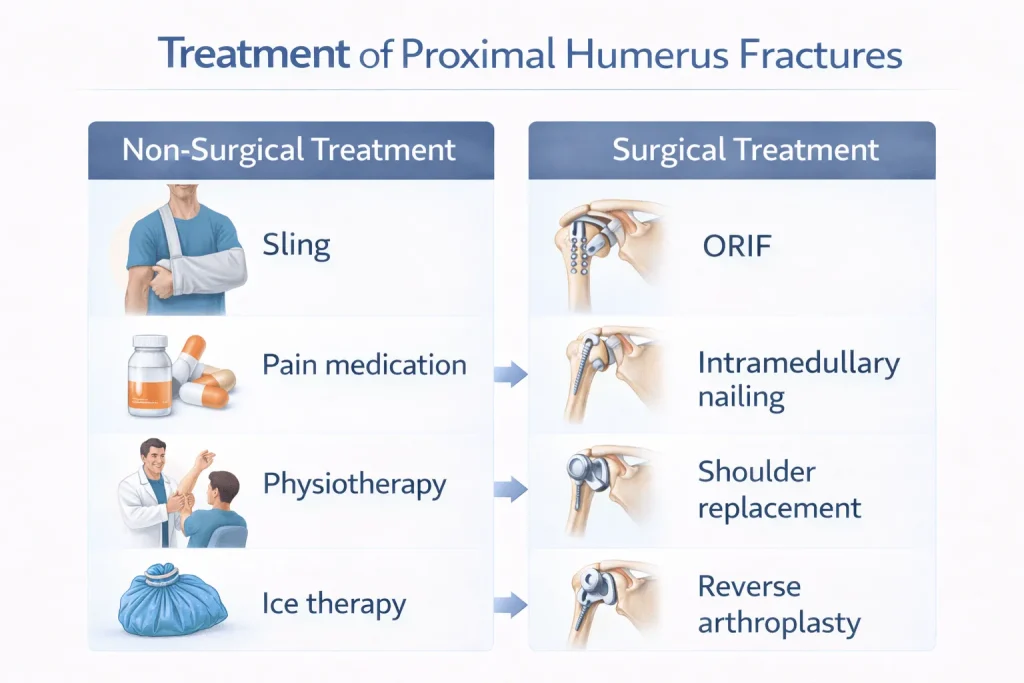
Treatment depends on several factors, including fracture type, patient age, and functional demands.
Non-Surgical Treatment
Many proximal humerus fractures can be treated without surgery.
Conservative treatment includes:
- sling immobilization
- pain medication
- ice and elevation
- early physiotherapy
Immobilization usually lasts for about 2 to 4 weeks.
Early rehabilitation helps prevent stiffness.
Most minimally displaced fractures heal successfully with this approach.
Surgical Treatment
Surgery may be required when fractures are displaced or unstable.
Common surgical procedures include:
Open Reduction and Internal Fixation (ORIF)
In this procedure, the surgeon realigns the fractured bone and stabilizes it using plates and screws.
Intramedullary Nailing
A metal rod is inserted into the bone to hold fragments in place.
Shoulder Replacement
In severe fractures, especially in elderly patients, partial or total shoulder replacement may be necessary.
Reverse Shoulder Arthroplasty
This advanced procedure is used when rotator cuff damage is present.
Recovery Timeline After Proximal Humerus Fracture
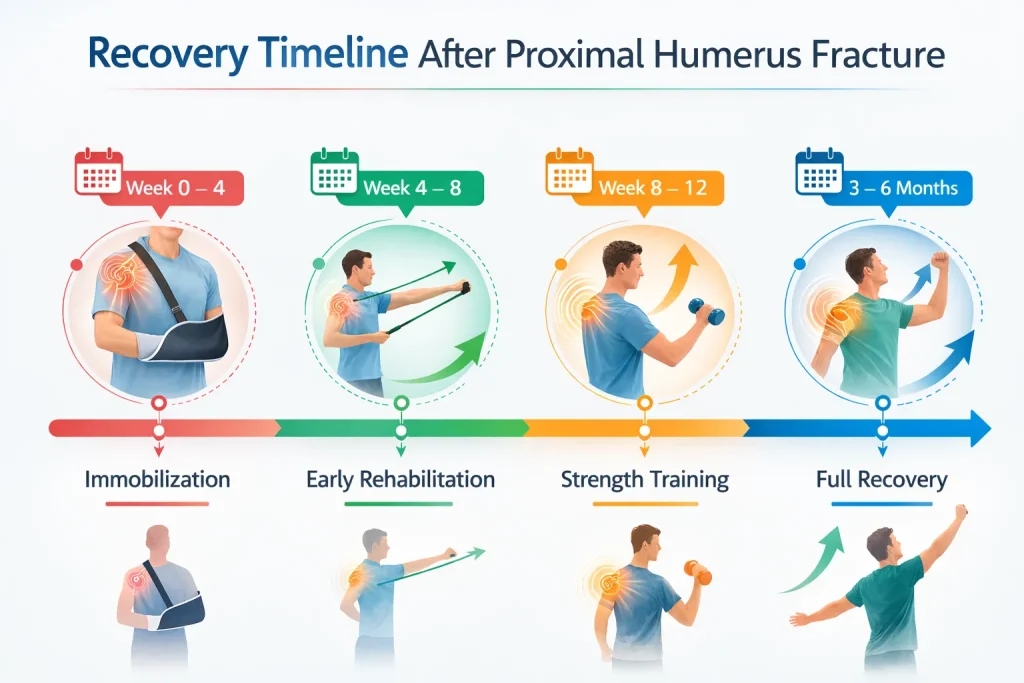
Healing time depends on fracture severity and treatment type.
Typical recovery stages include:
| Recovery Phase | Time |
|---|---|
| Immobilization | 2–4 weeks |
| Early rehabilitation | 4–8 weeks |
| Strength recovery | 8–12 weeks |
| Full recovery | 3–6 months |
Complex fractures may require longer recovery periods.
Rehabilitation and Physiotherapy

Physiotherapy plays a vital role in restoring shoulder function.
Rehabilitation typically includes:
Range of Motion Exercises
These exercises help restore shoulder mobility.
Strengthening Exercises
Strength training improves muscle function and stability.
Rotator Cuff Rehabilitation
Strengthening the rotator cuff muscles supports shoulder movement.
Gradual Activity Progression
Patients slowly return to normal activities under medical supervision.
Consistent physiotherapy significantly improves recovery outcomes.
Complications of Proximal Humerus Fractures
Although many fractures heal successfully, complications may occur.
Possible complications include:
- shoulder stiffness
- malunion or nonunion
- Avascular necrosis of the humeral head
- nerve injury
- arthritis
Proper treatment and rehabilitation reduce the risk of long-term complications.
Proximal Humerus Fracture vs Shoulder Dislocation
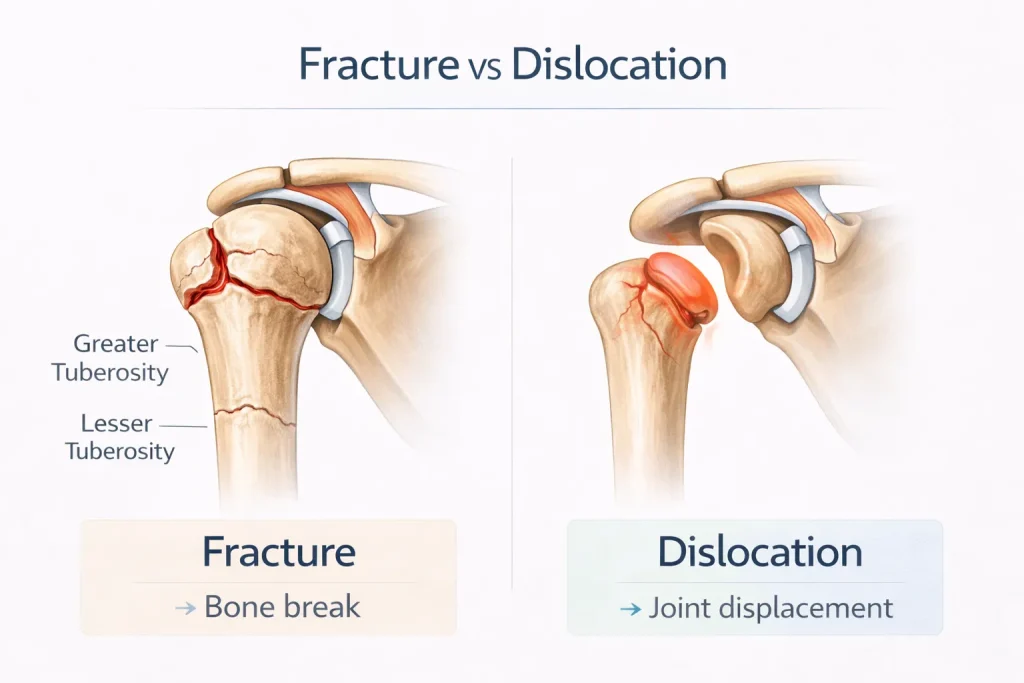
These injuries are sometimes confused because both cause shoulder pain.
Key differences include:
| Feature | Fracture | Dislocation |
|---|---|---|
| Bone break | Yes | No |
| Joint displacement | Sometimes | Yes |
| Treatment | Cast or surgery | Reduction and immobilization |
Medical imaging helps distinguish between the two.
When to See a Doctor
You should seek medical attention if you experience:
- severe shoulder pain after a fall
- swelling or bruising around the shoulder
- inability to move the arm
- shoulder deformity
- numbness in the hand
Prompt diagnosis helps prevent complications.
Prevention Tips

Although not all injuries can be prevented, some measures reduce fracture risk.
Helpful strategies include:
- maintaining strong bones through calcium and vitamin D
- performing strength and balance exercises
- using protective gear during sports
- preventing falls at home
- Treating osteoporosis early
These steps help maintain bone health and reduce fracture risk.
Conclusion
Proximal humerus fractures are common shoulder injuries that can significantly affect arm movement and daily activities. While many fractures heal successfully with non-surgical treatment, severe injuries may require surgical intervention to restore proper shoulder function.
Early diagnosis, appropriate treatment, and consistent rehabilitation are essential for optimal recovery. With proper care, most patients regain shoulder mobility and return to their normal activities within a few months.
Understanding the causes, symptoms, and treatment options for proximal humerus fractures empowers patients to seek timely medical care and achieve the best possible outcomes.
Read: Complete Guide to Ankle Fractures: Types, Classification, Treatment & Recovery
FAQs
What is the most common proximal humerus fracture?
The most common type is a surgical neck fracture, which occurs just below the humeral head. These fractures are often caused by falls and are frequently treated without surgery.
How long does a proximal humerus fracture take to heal?
Most proximal humerus fractures heal within 6 to 12 weeks, although full shoulder strength and mobility may take several months with rehabilitation.
Do proximal humerus fractures always require surgery?
No. Many fractures are minimally displaced and can be treated with sling immobilization and physiotherapy. Surgery is typically reserved for displaced or unstable fractures.
Can you move your arm with a proximal humerus fracture?
Movement is usually limited due to pain and swelling. Attempting to move the arm excessively can worsen the injury, so immobilization is recommended until medical evaluation.
What are the long-term effects of a proximal humerus fracture?
Possible long-term effects include shoulder stiffness, reduced range of motion, or arthritis. Proper treatment and rehabilitation significantly reduce these risks.
What is the recovery time after proximal humerus fracture surgery?
Recovery after proximal humerus fracture surgery typically takes 3 to 6 months, depending on fracture severity and rehabilitation progress. Bone healing usually occurs within 6–8 weeks, but restoring full shoulder strength and range of motion may require extended physiotherapy and gradual activity progression.
Can a proximal humerus fracture heal without surgery?
Yes, many proximal humerus fractures can heal without surgery if the bone fragments remain properly aligned. Treatment usually involves sling immobilization for several weeks followed by physiotherapy to restore shoulder mobility and strength.
What exercises help with recovery after a proximal humerus fracture?
Recovery exercises usually include pendulum exercises, gentle shoulder range-of-motion movements, rotator cuff strengthening, and resistance training. These exercises help restore shoulder flexibility, improve muscle strength, and prevent stiffness after immobilization.
What are the symptoms of a proximal humerus fracture after a fall?
Common symptoms include severe shoulder pain, swelling, bruising, limited arm movement, and tenderness around the shoulder joint. Some patients may also experience deformity or difficulty lifting the arm following the injury.
When can you start physiotherapy after a proximal humerus fracture?
Physiotherapy usually begins 1–3 weeks after injury, depending on fracture stability and treatment method. Early rehabilitation focuses on gentle motion exercises to prevent stiffness while allowing the bone to heal safely.