
A tibia fracture – commonly called a shinbone fracture or leg bone fracture – is one of the most serious and frequent injuries seen in orthopedic practice. The tibia is the larger of the two lower leg bones, sitting between the knee and the ankle. It carries most of your body weight with every step, which is why when it breaks, the impact on daily life is significant.
Whether caused by a high-speed road accident, a sports collision, or a fall, a broken tibia demands expert medical attention. This guide covers everything you need to know – from understanding the anatomy of the tibia and fibula, to recognizing tibia fracture symptoms, exploring treatment options including tibia rod surgery, and knowing what to expect during recovery.
This article is written for patients recently diagnosed with a tibia fracture, caregivers supporting recovery, and anyone who wants to understand what a tibia fracture really means for the body.
Table of Contents
What Is the Tibia? Understanding the Shin Bone
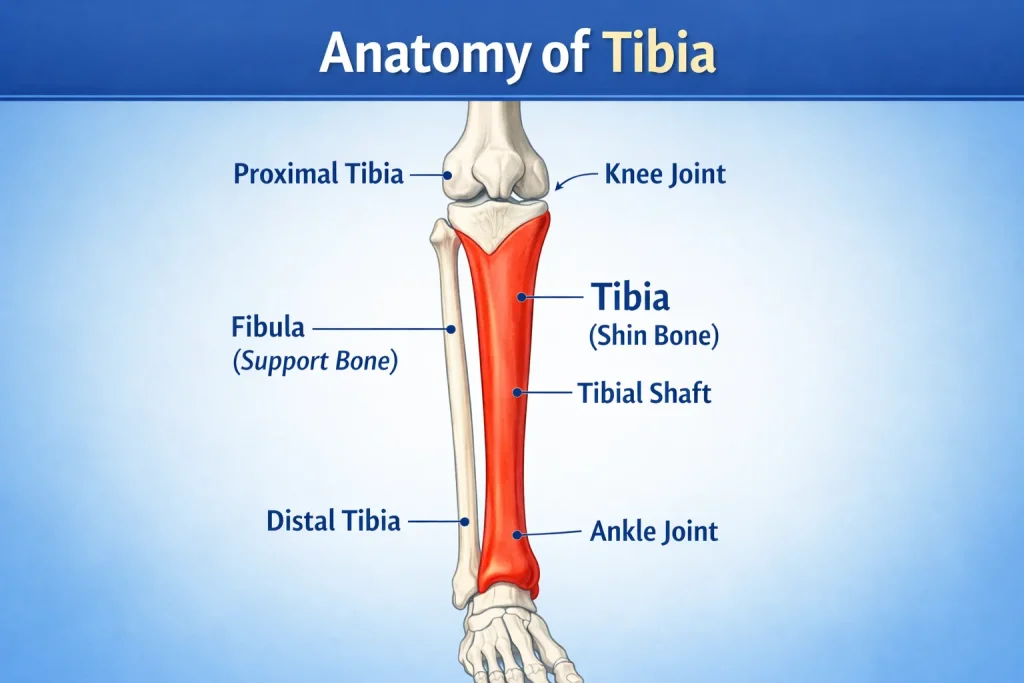
Before discussing fractures, it helps to understand the bone itself. The tibia – also called the shin bone – is the larger and stronger of the two lower leg bones. Located between the ankle and the knee, it forms a critical part of both the knee joint above and the ankle joint below.
The tibia and fibula together make up the bony framework of the lower leg. While the tibia is weight-bearing and structural, the fibula (the thinner bone alongside it) mainly provides stability and anchors muscles. This is why in many tibia fractures, the fibula breaks at the same time.
Key facts about the tibia bone:
- The tibia is the most commonly fractured long bone in the entire human body
- It is the shin body part you can feel by pressing your lower leg – the hard ridge running down the front
- It supports the majority of body weight during standing and walking
- The tibia has three anatomical sections: proximal (upper end), tibial shaft (middle), and distal (lower end of tibia)
- The shin bone, named in medical terminology, is the tibia, derived from Latin, meaning flute, referring to its shape
- The inner ankle bone (medial malleolus) is actually part of the distal end of the tibia
- The bone between the ankle and knee is the tibia – a common question from patients trying to understand their anatomy
The tibial shaft refers specifically to the long middle section of the bone. Tibial shaft fractures occur below the knee and above the ankle, making this the most clinically relevant zone for most patients.
What is a Tibia Fracture?
A tibia fracture means the continuity of the tibia bone has been broken, partially or completely. A tibial shaft fracture is a break occurring along the length of the bone between the knee and ankle joints. These are among the most common leg bone fractures treated in orthopedic hospitals across India and worldwide.
In many cases, the fibula is also broken alongside the tibia. This is called a both-bone leg fracture or a tib-fib fracture. Severity can range from a hairline fracture – a thin crack in the bone – to a compound fracture of the tibia where the bone pierces through the skin.
What is a tibia fracture in simple terms?
It is a break in your shin bone that can happen with varying levels of severity, and it almost always requires professional orthopedic evaluation and treatment.
Types of Tibia Fractures: A Complete Classification

Not all tibia fractures are the same. Orthopedic surgeons classify them based on pattern, location, severity, and whether the skin remains intact. Understanding the type of fracture determines the correct treatment approach.
By Fracture Pattern
- Transverse fracture – A straight, horizontal break across the tibial shaft. Generally clean and often stable.
- Oblique fracture – An angled break across the shaft, typically caused by a diagonal force.
- Spiral fracture tibia – The fracture line spirals around the shaft like a corkscrew. Caused by a twisting force. Common in sports injuries.
- Comminuted fracture tibia – The bone shatters into three or more fragments. Typically caused by high-energy trauma such as road accidents. Comminuted fracture images on X-ray show a bone broken into multiple pieces.
- Segmental tibia fracture – The bone breaks in two separate places, leaving a floating middle segment of bone.
By Skin Integrity
- Closed fracture – The skin remains intact over the fracture site. Lower risk of infection. This is what is referred to as a closed surgery approach in conservative management.
- Open tibia fracture (compound fracture) – Bone fragments break through the skin, or a wound reaches the bone. High risk of infection. Requires emergency surgical treatment. A compound tibia fracture is one of the most serious presentations in orthopedics.
By Location on the Tibia Bone
- Proximal tibia fracture – Near the knee. Can involve the tibial condyle fracture or tibial spine fracture.
- Tibial shaft fracture – The mid-section of the bone. The most common type.
- Distal tibia fracture / Fracture of the lower end of the tibia – Near the ankle, sometimes involving the ankle joint. Also called a lower tibia fracture or fracture of the lower end of the tibia.
- Distal 1/3 tibia fracture – Affects the lower third of the shaft, near the ankle.
- Tibia ankle fracture – When the fracture involves both the lower tibia and the ankle joint, also described as a broken tibia ankle.
Tibial Shaft Fracture Classification
Surgeons use standardized systems – including the AO/OTA Classification and the Gustilo-Anderson Classification for open fractures – to guide treatment. The tibial shaft fracture classification and tibia shaft fracture classification systems help surgeons communicate precisely about fracture severity, location, and the degree of soft tissue involvement.
Causes of Tibia Fractures: How Does the Shinbone Break?
The tibia is a strong bone. It takes significant force to fracture it in a healthy adult. Causes generally fall into three categories.
High-Energy Trauma
- Motor vehicle and motorcycle accidents – the leading cause of tibial shaft fractures in India
- Falls from significant height
- Direct blunt force impact to the lower leg
- These tend to produce comminuted fractures and are more likely to cause open tibia fractures with damage to surrounding muscles, nerves, and blood vessels
Low-Energy and Sports Injuries
- Falls while skiing, playing football, or soccer
- Collision with another player
- Twisting injuries – a very common cause of spiral fracture tibia
- Sports-related fractures are generally less severe but still require proper orthopedic management
Stress Fractures
Tibia stress fracture symptoms develop gradually – unlike sudden traumatic fractures. They result from repetitive loading of the bone without adequate rest. Common in long-distance runners, military recruits, and dancers.
Tibia stress fracture symptoms include:
- Dull aching pain along the shin bone that worsens with physical activity
- Pain that improves with rest but returns when activity resumes
- Tenderness to touch along a specific point on the tibia
- Mild swelling over the shin
Tibia Fracture Symptoms: What Does a Broken Tibia Feel Like?

Recognizing tibia fracture symptoms quickly is critical. Most tibial shaft fractures produce immediate and unmistakable signs.
Primary tibia fracture symptoms include:
- Severe and immediate pain at the fracture site in the lower leg
- Inability to walk or bear weight on the leg
- Visible deformity – the leg may look bent, twisted, shortened, or abnormally angled
- Swelling that develops rapidly at the fracture site, sometimes extending to the foot (called tibia fracture swelling foot)
- Bruising and skin discoloration over the shinbone area
- Bone tenting – where a bone fragment pushes sharply against the skin from the inside
- In open fractures: bone is visibly protruding through broken skin
- Occasional numbness or loss of feeling in the foot (nerve involvement)
- Instability – the leg may feel structurally unsupported
Shin Fracture Swelling – What to Expect
Swelling after a tibia fracture is expected and is often significant in the first 48 to 72 hours. Shin fracture swelling can extend to the ankle and foot. This is why doctors often apply a splint initially rather than a full cast – to allow the leg to swell safely before definitive treatment is applied.
Important Warning: If you experience intense, burning pain inside the lower leg that feels completely out of proportion to the injury – especially if the leg feels extremely tight and swollen – seek emergency care immediately. This may be compartment syndrome, a serious and time-sensitive complication of tibia fractures.
Diagnosing a Tibia Fracture: How Doctors Confirm the Injury
Medical History and Clinical Examination
Your orthopedic surgeon will begin with a detailed history – how the injury happened, the speed of impact, seatbelt use in vehicle accidents, and your overall health, including conditions like diabetes, high blood pressure, or asthma. This context helps determine fracture severity and risk of complications.
A careful physical examination follows, assessing deformity, skin integrity, swelling, bruising, and whether pulses and sensation in the foot are intact.
Imaging Tests
Diagnosis is confirmed with imaging studies.
- Tibia fracture X-ray – The most important first investigation. An X-ray of the leg shows the tibia and fibula clearly, confirming the fracture type and location. A right tibia fracture X-ray, left tibia fracture X-ray, or right leg fracture X-ray typically includes both the knee and ankle to check joint involvement. A leg X-ray is fast, widely available, and highly accurate for fracture diagnosis.
- CT Scan – Used when the tibia fracture X-ray is unclear, or when the fracture involves a joint. CT provides cross-sectional images and reveals subtle fracture lines and bone fragmentation that X-rays may miss.
- MRI – Used mainly for tibia stress fracture symptoms or when soft tissue and ligament injury needs detailed assessment.
Tibia Fracture Treatment: From Splints to Surgery

Treatment depends on fracture type, severity, patient age, overall health, and whether the fracture is open or closed.
Nonsurgical Tibia Fracture Treatment
Not every tibia fracture requires surgery. Nonsurgical leg fracture treatment may be appropriate for:
- Stable, closed fractures with minimal bone displacement
- Patients who are poor surgical candidates due to other medical conditions
- Less active patients who can tolerate minor alignment differences in healing
Nonsurgical treatment steps:
- Initial splinting – A splint is applied first (not a full cast) to provide support while allowing the leg to swell safely. It can be loosened as needed.
- Casting – Once swelling reduces, a full cast is applied to immobilize the fracture while it heals.
- Functional bracing – After several weeks in a cast, a removable plastic brace replaces it. The brace provides protection and support, can be removed for hygiene, and allows gentle movement and physical therapy.
Surgical Tibia Fracture Treatment
Surgery is recommended for:
- Open tibia fractures with wounds needing monitoring and cleaning
- Fractures where the bone is significantly displaced
- Comminuted fractures with multiple bone fragments
- Fractures that fail to heal with nonsurgical treatment
- Certain fracture locations near the knee or ankle joint
Intramedullary Nailing – Tibia Rod Surgery
Intramedullary nailing is the most widely used surgical technique for tibial shaft fractures worldwide. Patients commonly call this tibia rod surgery or tibial nail surgery.
- A titanium metal rod (nail) is inserted inside the hollow medullary canal of the tibia bone
- The rod passes across the fracture, keeping both ends in correct alignment
- Locking screws are placed at both the top and bottom to keep the nail and bone stable
- This internal fixation device provides strong, full-length fixation and allows earlier weight bearing compared to casting
- A tibial nail X-ray or tibial nailing X-ray shows the rod running the full length of the bone – this is one of the most searched images by patients after their surgery
Intramedullary nailing is generally not recommended for children and adolescents because the growth plates in developing bones must be protected.
Plates and Screws – ORIF Tibia (Tibia Plating Surgery)
ORIF tibia (Open Reduction Internal Fixation) involves repositioning the broken bone fragments into their normal alignment and holding them together with metal plates and screws fixed to the outer surface of the bone.
Tibia plating surgery is used when:
- Intramedullary nailing is not suitable
- The fracture extends into the knee joint (proximal tibia fracture) or ankle joint (distal tibia fracture)
- Tibial condyle fractures or distal tibia fracture management situations near joints
External Fixation
In cases of severe open tibia fractures or extensive soft tissue damage, external fixation provides a stabilizing frame outside the skin. Metal pins are inserted into the bone above and below the fracture and connected by a rigid external bar. This stabilizes the bone while wounds are treated and monitored. It may be temporary (before definitive surgery) or permanent in select cases.
Tibia Fracture Healing Time in Adults: What to Realistically Expect
The most common question patients ask is how long a tibia fracture takes to heal. The honest answer depends on the fracture type, treatment used, patient age, and lifestyle factors.
General Healing Timeline
- Most tibial shaft fractures take 4 to 6 months to heal completely in adults
- Simple, stable closed fractures may heal within the lower end of this range
- Comminuted, open, or segmental fractures can take significantly longer
- Tibia bone fracture healing time is extended in tobacco users, people with diabetes, and those with poor nutritional status
Tibial Rod Surgery Recovery Time
Patients who undergo tibia rod surgery (intramedullary nailing) often achieve better functional outcomes earlier than those treated with casting alone. The general tibial rod surgery recovery time follows this pathway:
- Weeks 1–2: Post-surgical pain management, wound care, anti-swelling measures
- Weeks 2–6: Partial weight bearing with crutches begins; physiotherapy starts
- Months 2–3: Progressive weight bearing as tolerated, muscle strengthening exercises
- Months 4–6: Return to normal walking; bone healing is monitored on tibia fracture X-ray
- 6–12 months: Full return to sports or heavy physical activity for younger, active patients
Tibia Fracture After 8 Weeks
Patients often ask what to expect at the tibia fracture after the 8 weeks mark. By this point, early callus (new bone formation) should be visible on X-ray. Pain should be significantly reduced. Partial weight bearing should be comfortable for most patients. If there is no visible healing on imaging at this stage, your doctor will investigate for delayed union.
Shin Fracture Healing Time
Tibia stress fractures heal faster – typically 6 to 12 weeks – with rest and modified activity. Traumatic tibial shaft fractures take considerably longer due to the extent of bone and soft tissue damage involved.
Tibia Fibula Fracture Recovery Time
When both the tibia and fibula are broken together, tibia fibula fracture recovery time follows a similar 4-to-6-month framework, though this can extend further depending on the severity and treatment method used.
Recovery After Tibia Fracture: Pain, Physiotherapy & Walking Again

Pain Management
Pain after a tibia fracture or surgery is expected and manageable. Your orthopedic team will use a combination approach, including:
- Acetaminophen and NSAIDs (anti-inflammatory drugs)
- Gabapentinoids for nerve-related pain
- Muscle relaxants if spasm is significant
- Short-term opioids in severe cases – used carefully and tapered as quickly as possible
- Topical pain medications are applied directly to the skin over the fracture area
Physiotherapy – Tibia Fracture Exercises
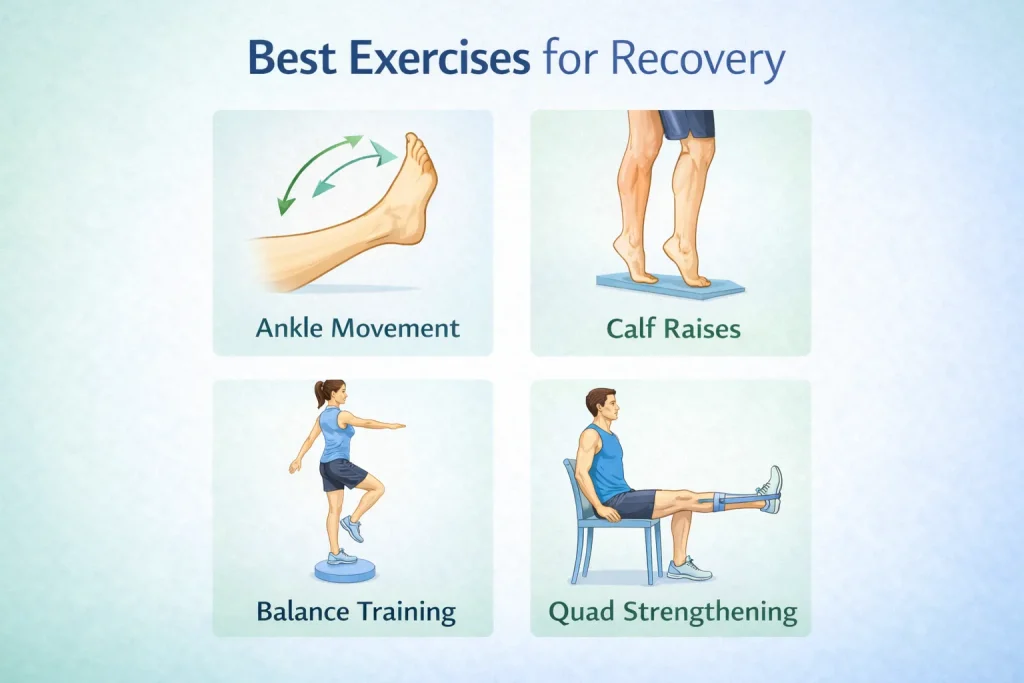
Physiotherapy is essential. Muscles weaken rapidly during immobilization, and joints stiffen. A physiotherapist will guide you through structured tibia fracture exercises:
- Quadriceps strengthening exercises to rebuild knee and thigh support
- Ankle range-of-motion exercises to prevent stiffness
- Progressive weight-bearing and gait re-training
- Balance and proprioception (body awareness) exercises
- Calf stretching and strengthening once healing allows
Walking After Broken Tibia and Fibula
Most patients need crutches or a walker for the first several weeks. Walking after broken tibia and fibula injuries is a gradual, supervised process. Your surgeon will guide weight-bearing decisions based on X-ray evidence of bone healing – not just how the leg feels. Rushing weight-bearing risks re-fracture or hardware failure.
Complications of Tibia Fractures: What Can Go Wrong?
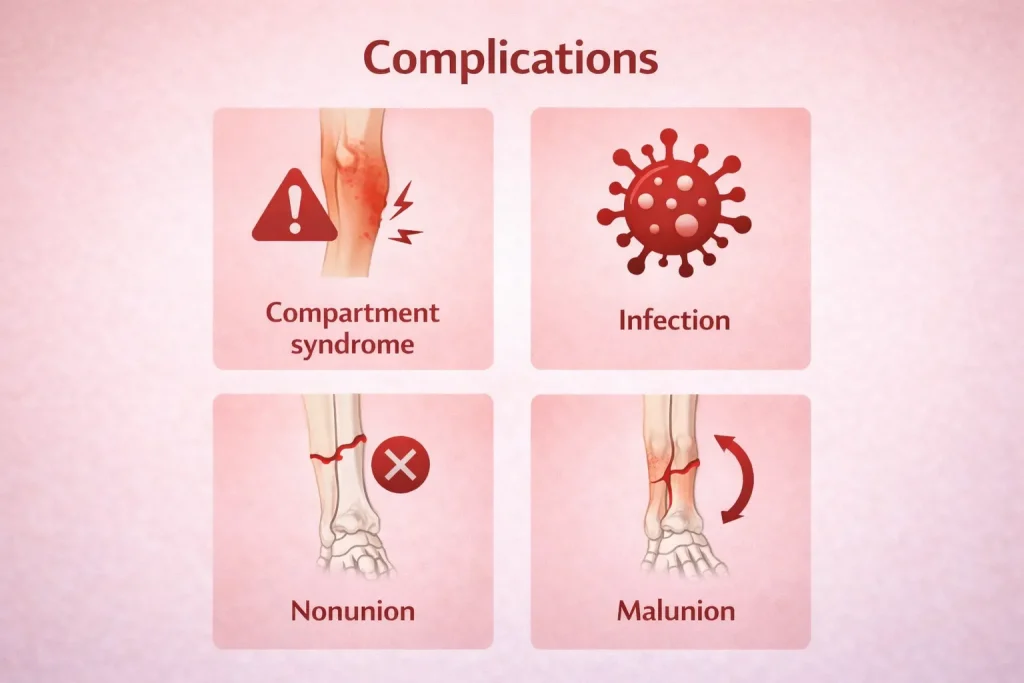
Knowing the potential complications allows patients and caregivers to recognize warning signs early and seek help promptly.
Compartment Syndrome
This is the most dangerous early complication of a tibia fracture. Swelling inside the tight muscle compartments of the lower leg builds pressure to dangerous levels, cutting off blood supply to muscles and nerves.
Symptoms include:
- Severe, burning pain inside the lower leg that feels completely out of proportion to the injury
- A tight, wooden feeling in the leg
- Numbness or tingling in the foot
- Pain that worsens when the toes are passively stretched
This is a surgical emergency. Without immediate fasciotomy (surgical release of the compartment pressure), permanent muscle and nerve damage can result.
Infection
Open tibia fractures and tibia fracture surgery both carry an infection risk. Bone infection (osteomyelitis) is particularly difficult to treat and often requires multiple surgeries and long-term antibiotics.
Nonunion and Delayed Union
If the tibia bone fracture healing time extends far beyond expected timelines without bone healing visible on X-ray, this is called delayed union. If healing stops completely, it is nonunion. Risk factors include smoking, uncontrolled diabetes, poor nutrition, and inadequate fracture fixation.
Malunion
If the bone heals in an incorrect position – with angulation, rotation, or shortening – this is malunion. It can cause limb length differences, knee deformity, or long-term ankle problems affecting walking and joint health.
Other Complications
- Nerve and blood vessel injury from sharp bone fragments at the fracture site
- Deep vein thrombosis (blood clots in leg veins)
- Hardware failure (bent or broken nail or plates)
- Knee and ankle stiffness from prolonged immobilization
Tibia Fracture in the Indian Context
In India, tibia fractures are among the most common reasons for emergency orthopedic admission. Road traffic accidents – particularly motorcycle crashes – account for a large proportion of tibial shaft fractures seen in Indian hospitals. Leg fracture treatment in India has improved significantly over the past two decades, with intramedullary nailing and tibia plating surgery now widely available at major orthopedic centers.
Patients searching for tibia surgery, tibia rod surgery, or tibia fracture treatment in India should look for orthopedic specialists with documented experience in tibial fracture management. Early and technically precise surgery produces far better long-term outcomes than delayed or inadequately fixed fractures.
Modern outcomes for tibial shaft fracture treatment in India, when performed by trained orthopedic surgeons, are comparable to global standards.
Conclusion: Key Takeaways on Tibia Fractures
A tibia fracture is a serious but highly treatable injury when managed with precision and experience. Here is what every patient and caregiver should take away from this guide:
- The tibia bone – your shin bone – is the most commonly fractured long bone in the human body
- Tibial shaft fractures vary enormously, from stable transverse fractures to life-altering open compound fractures
- Tibia fracture symptoms – severe pain, inability to weight bear, visible deformity, and swelling – should never be ignored
- Treatment ranges from functional bracing and casting to intramedullary nailing (tibia rod surgery) and plate fixation, depending on the severity and type of fracture
- Tibia fracture healing time in adults is typically 4 to 6 months – patience and consistent physiotherapy are essential
- Compartment syndrome is a surgical emergency – know the warning signs and act immediately
- Smoking and uncontrolled diabetes significantly slow tibia bone healing time – addressing these factors actively improves outcomes
- Walking after a broken tibia and fibula is achievable with the right treatment, rehabilitation, and expert guidance
If you or someone you know has sustained a tibia or tibial shaft fracture, consult an experienced orthopedic specialist promptly. Early, accurate diagnosis and appropriate treatment are the foundation of a complete recovery.
Explore all our fracture-related blogs
| Topic | Link |
| Cervical Radiculopathy | Click here |
| Distal Radius Fracture | Click here |
| Proximal Humerus Fracture | Click here |
| Lauge-Hansen Classification of Ankle Fractures | Click here |
| Weber Classification of Ankle Fractures | Click here |
| Trimalleolar Fracture | Click here |
| Bimalleolar Ankle Fracture | Click here |
| Lateral Malleolus Fracture | Click here |
| Medial Malleolus Fracture | Click here |
| Complete Guide to Ankle Fractures | Click here |
| Femur Shaft Fractures | Click here |
| Tibia Fracture | Click here |
FAQs
What is a tibia fracture?
A tibia fracture is a break in the shin bone, which is the main weight-bearing bone of the lower leg. It can range from a small crack to a severe break where the bone shifts or pierces the skin.
How long does a tibia fracture take to heal?
Most tibia fractures take around 4 to 6 months to heal completely in adults. Severe fractures or those requiring surgery may take longer, depending on recovery and physiotherapy.
Can you walk with a fractured tibia?
In most cases, walking is not possible due to severe pain and instability in the leg. Doctors usually restrict weight-bearing until the bone shows proper healing.
What are the first signs of a tibia fracture?
Common signs include intense pain, swelling, bruising, and inability to stand or walk. In severe cases, the leg may appear deformed or bent.
Is surgery always required for tibia fractures?
No, not all tibia fractures require surgery. Stable fractures can heal with casting, while severe or displaced fractures often need surgical treatment.