The Weber Classification of Ankle Fracture is one of the most widely used systems to categorize ankle fractures. It classifies distal fibula fractures based on their level relative to the syndesmosis – the ligament complex that connects the tibia and fibula. This simple but powerful system helps doctors determine fracture stability, the need for surgery, and expected recovery time.
In this comprehensive guide, you will learn:
Table of Contents
What is Weber Classification?
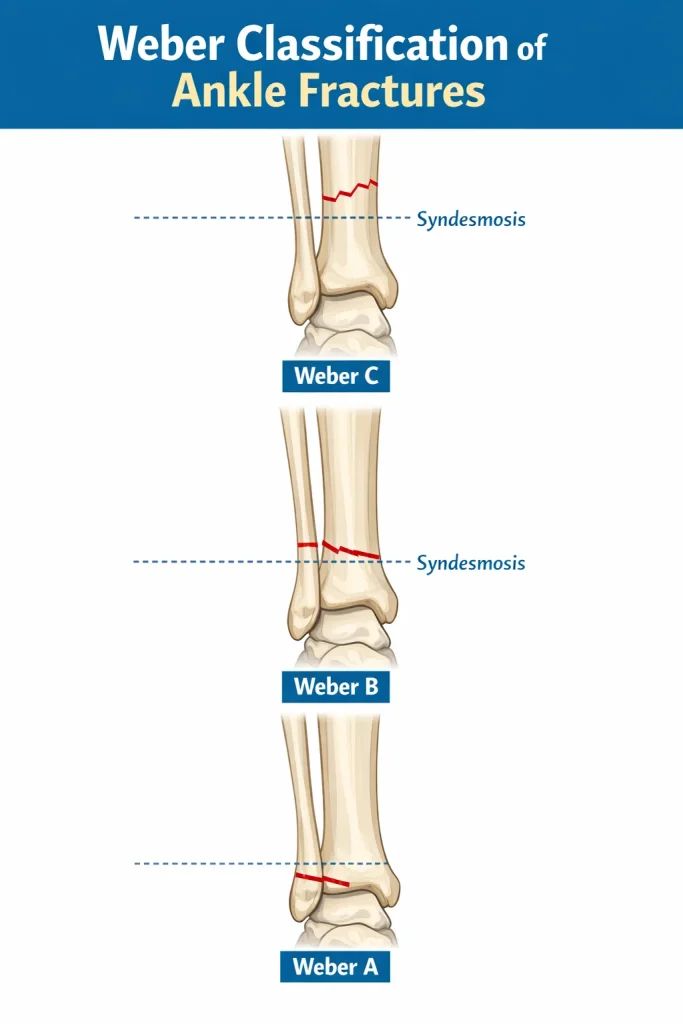
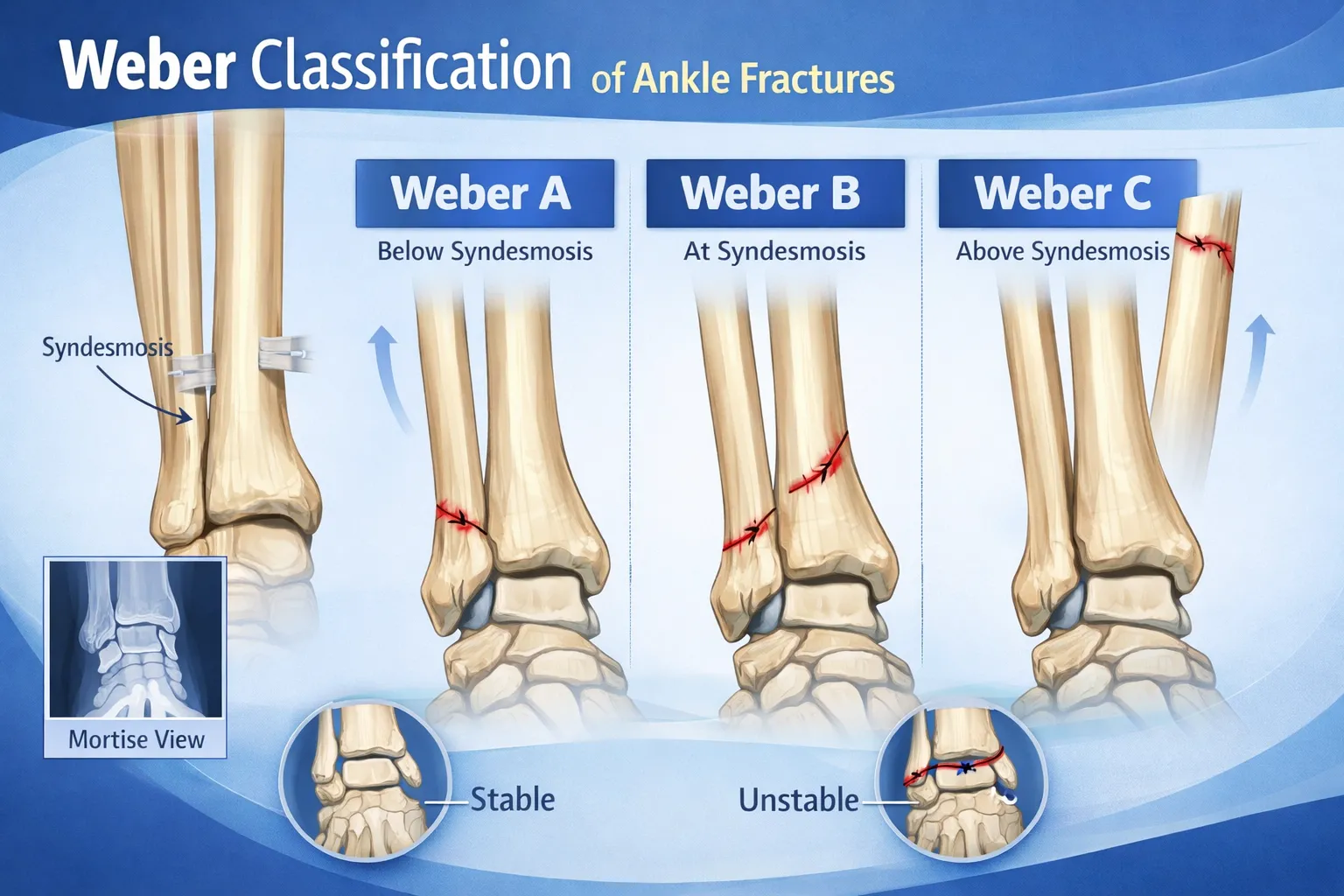
The Weber classification system categorizes ankle fractures based on the location of the fibular fracture relative to the syndesmosis.
It divides fractures into three types:
- Weber A – fracture below the syndesmosis
- Weber B – fracture at the level of the syndesmosis
- Weber C – fracture above the syndesmosis
The higher the fracture, the greater the likelihood of syndesmotic injury and ankle instability.
Key concepts:
- Focuses on the distal fibula fracture
- Assesses stability indirectly
- Guides treatment decisions
- Used globally in orthopedic practice
Because ankle stability determines treatment, the Weber classification remains clinically important worldwide.
Understanding the Syndesmosis
The syndesmosis is a ligament complex that connects the distal tibia and fibula. It maintains alignment of the ankle mortise and prevents separation of the two bones during weight-bearing.
Important structures include:
- Anterior inferior tibiofibular ligament
- Posterior inferior tibiofibular ligament
- Interosseous ligament
Functions of the syndesmosis:
- Stabilizes the ankle joint
- Maintains mortise integrity
- Prevents talar shift
- Supports walking mechanics
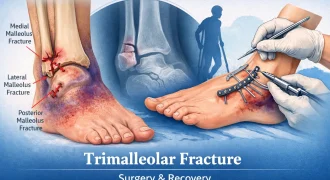
In Weber B and C fractures, syndesmotic injury may occur, leading to instability that often requires surgical fixation.
Weber A Fracture
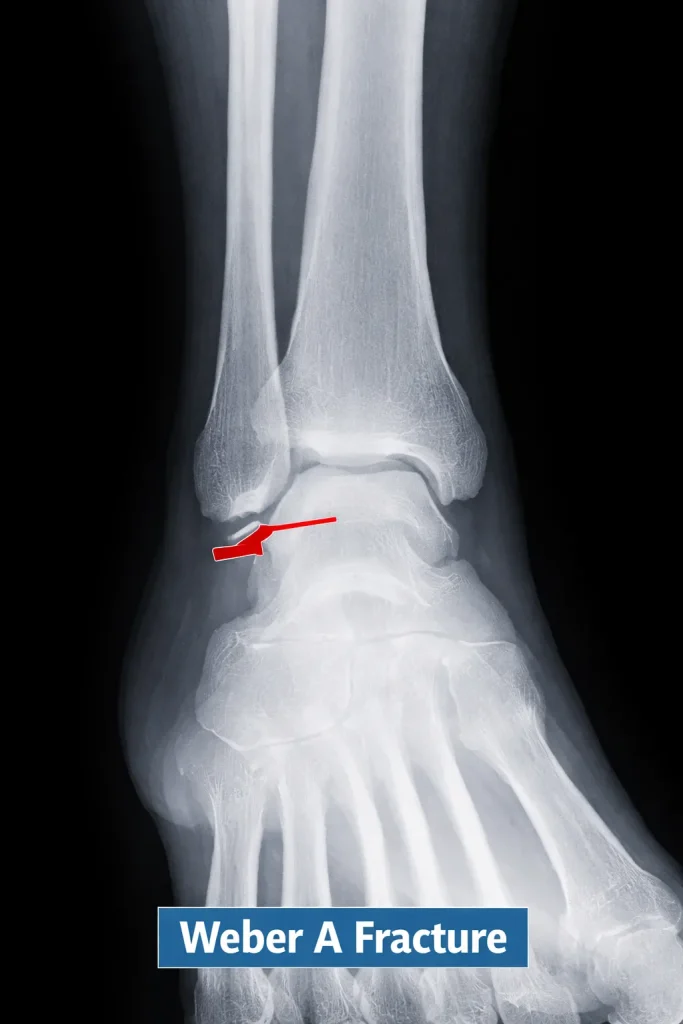
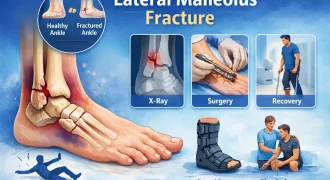
A Weber A fracture occurs below the level of the syndesmosis. These fractures are typically stable because the syndesmotic ligaments remain intact.
Radiology Findings
- Fracture line below the ankle joint
- Syndesmosis intact
- No talar shift
Treatment
- Walking boot or cast
- Rest and elevation
- Pain management
- Gradual weight-bearing
Most Weber A fractures heal without surgery and have good outcomes.
Weber B Fracture
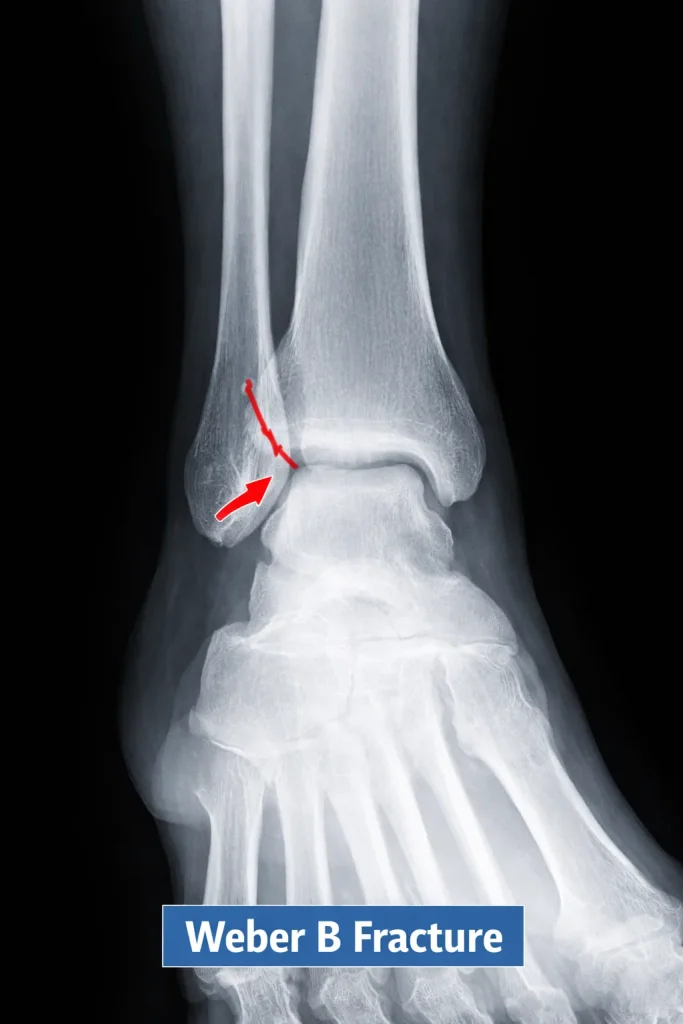
A Weber B fracture occurs at the level of the syndesmosis. This is the most common Weber type. Stability varies depending on ligament involvement.
Radiology Features
- Oblique fracture line
- Fracture at the joint level
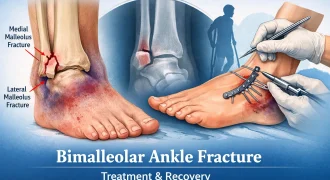
- Possible medial malleolus involvement
When Surgery Is Needed
Surgery may be required if:
- Talar shift is present
- The medial clear space is widened
- Syndesmotic injury exists
- Fracture is displaced
Weber B fractures require careful assessment because some are stable while others are unstable.
Weber C Fracture
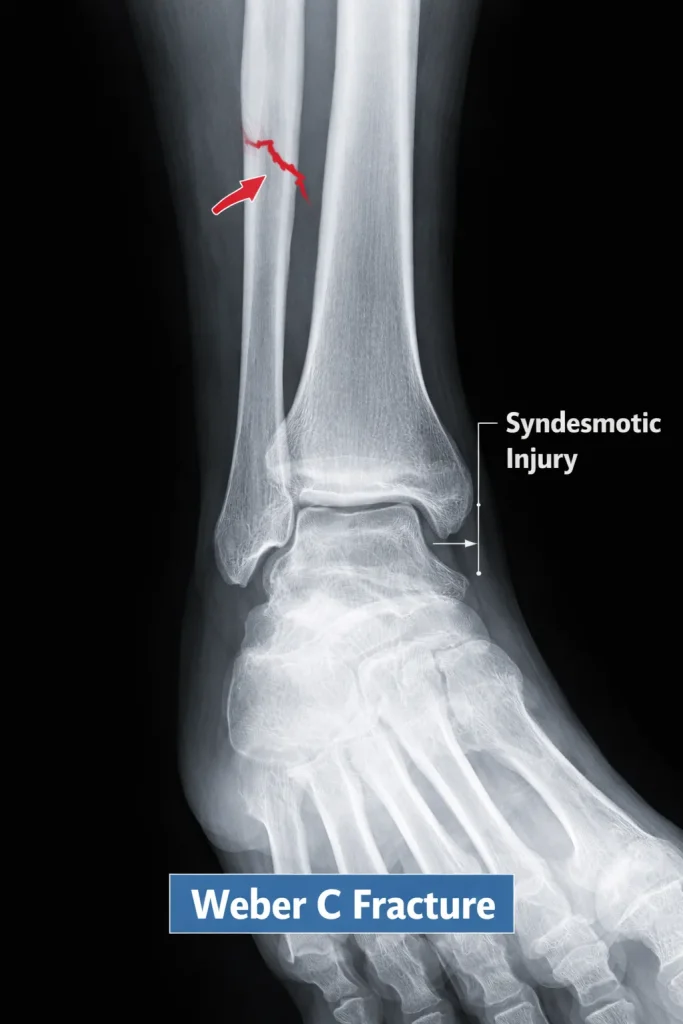
A Weber C fracture occurs above the syndesmosis. These fractures are usually unstable and associated with ligament disruption.
Radiology Features
- High fibular fracture
- Widened ankle mortise
- Syndesmotic separation
Surgical Management
Most Weber C fractures require:
- Plate fixation of the fibula
- Syndesmotic screw or tightrope fixation
- Restoration of ankle alignment
Because the syndesmosis is disrupted, surgical stabilization is commonly required.
Weber Classification Comparison Table
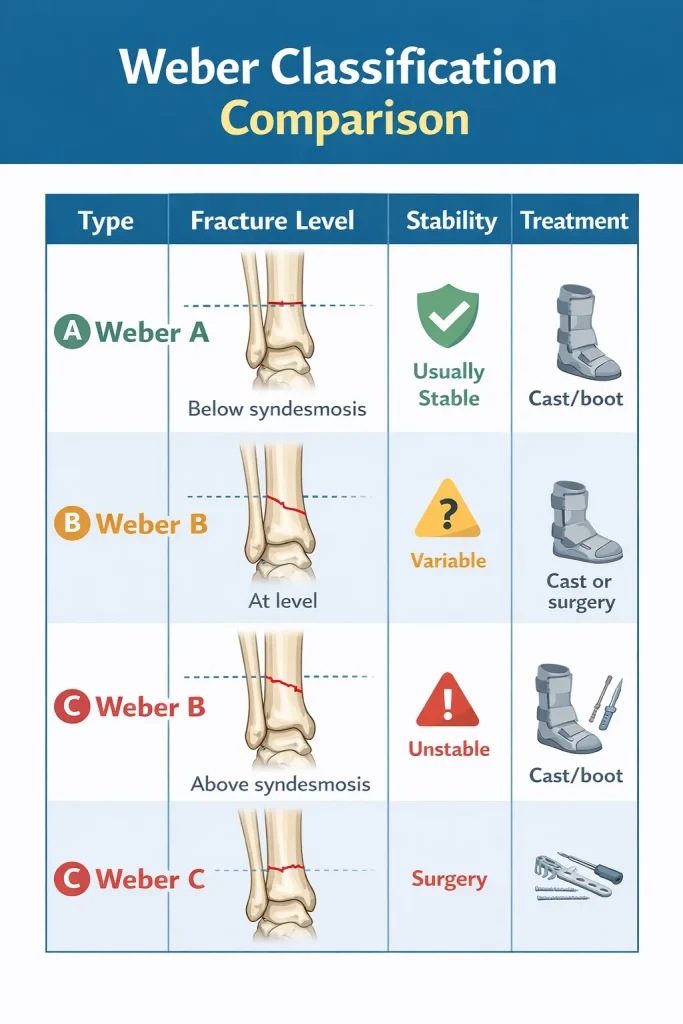
| Type | Fracture Level | Stability | Treatment |
|---|---|---|---|
| Weber A | Below syndesmosis | Usually stable | Cast/boot |
| Weber B | At level | Variable | Cast or surgery |
| Weber C | Above syndesmosis | Unstable | Surgery |
This classification helps guide management and prognosis.
Weber Classification and Ankle Stability
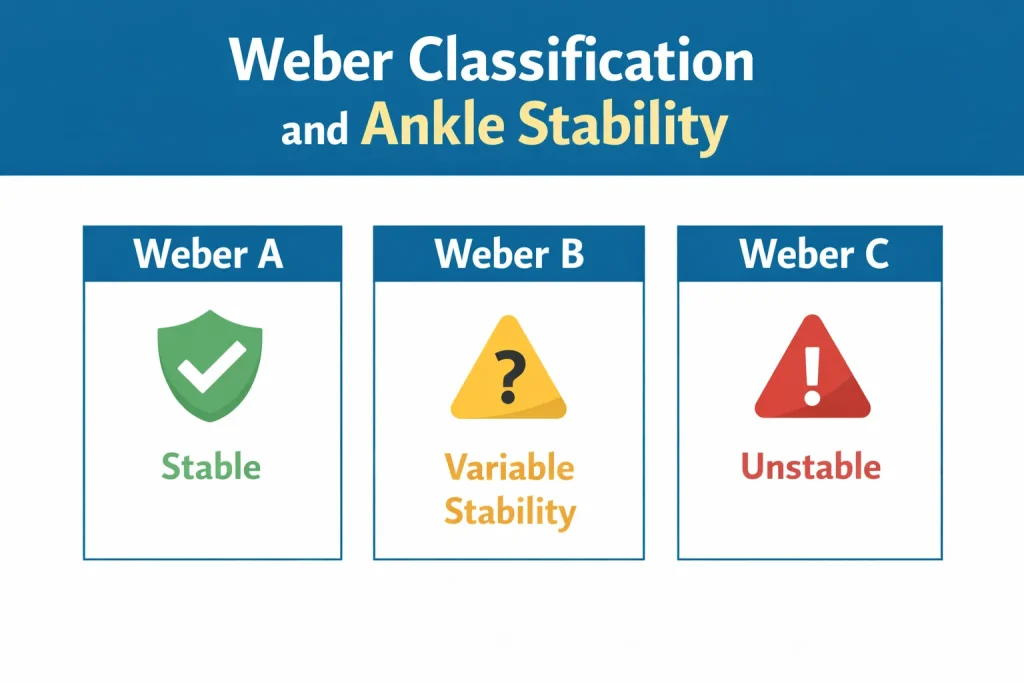
Ankle stability depends on whether the syndesmosis remains intact.
- Weber A – stable because the syndesmosis is intact
- Weber B – may or may not involve syndesmosis
- Weber C – usually unstable due to ligament disruption
Instability increases the risk of arthritis if untreated. Therefore, accurate classification is essential.
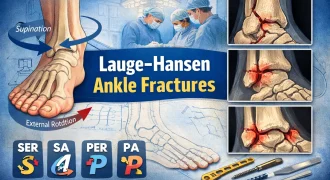
Weber vs Lauge-Hansen Classification
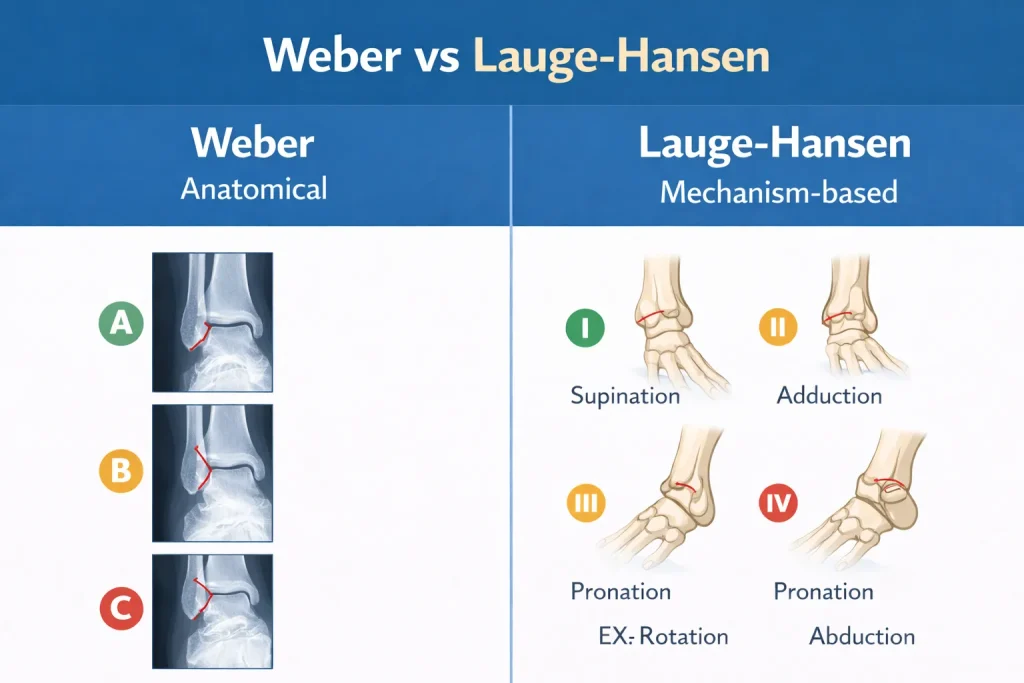
The Weber classification is anatomical, focusing on fracture level.
The Lauge-Hansen classification is mechanism-based, describing how the injury occurred.
Comparison:
- Weber → simple and practical
- Lauge-Hansen → detailed but complex
- Weber is widely used in clinical practice
Both systems are valuable, but Weber remains easier for everyday decision-making.
Weber Classification Radiology Guide
Radiological evaluation is crucial for proper classification.
How to Identify Weber Type on X-ray
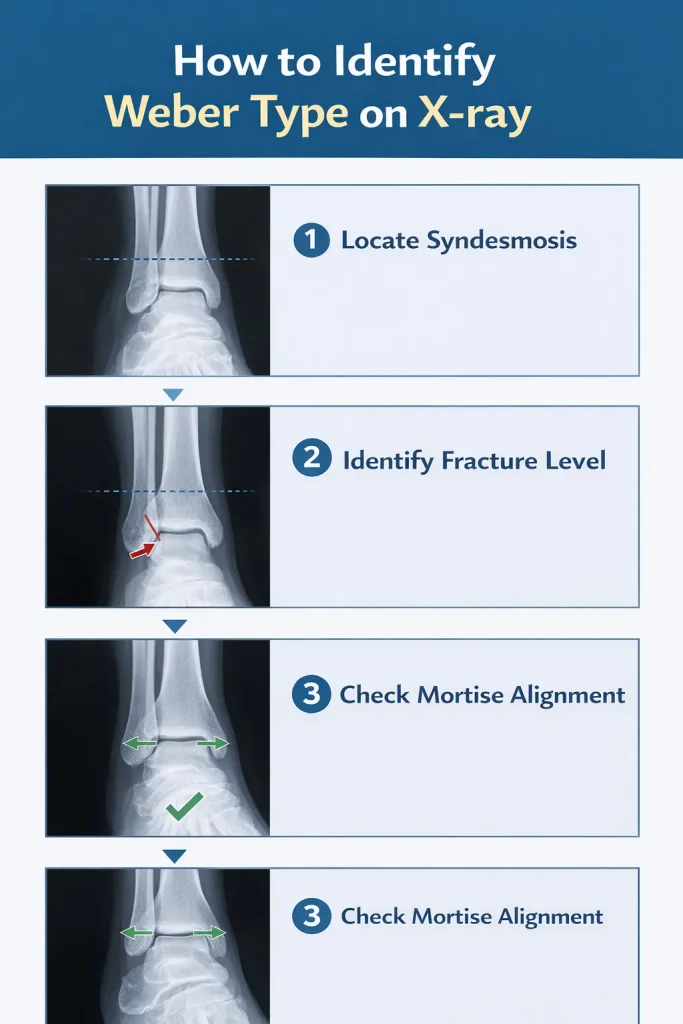
Steps:
- Identify the fibular fracture location
- Assess relationship to syndesmosis
- Check the medial clear space
- Look for talar shift
Importance of Mortise View
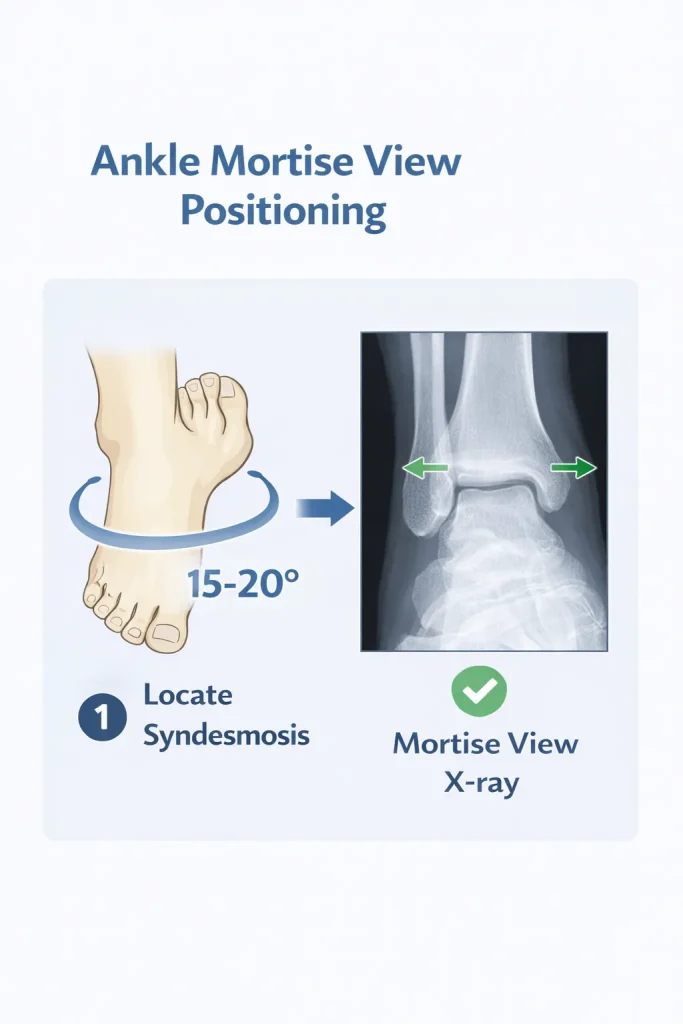
The mortise view allows:
- Assessment of joint alignment
- Evaluation of medial clear space
- Detection of syndesmotic widening
Radiology plays a central role in determining stability and the need for surgery.
Treatment Based on Weber Type
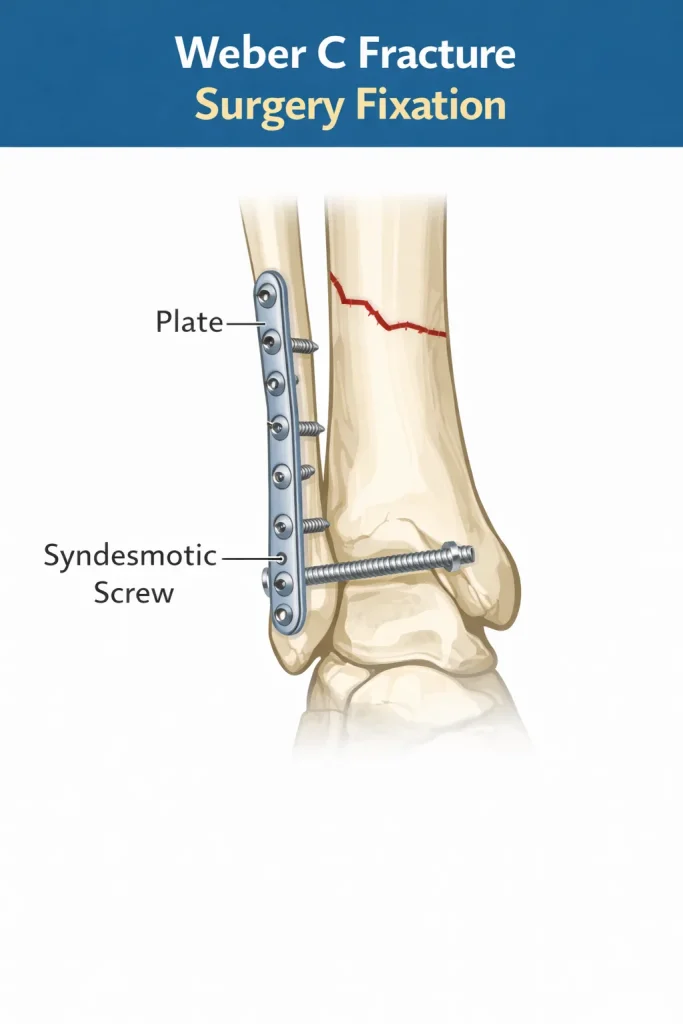
Treatment decisions depend on stability.
- Weber A → Conservative treatment
- Weber B → Conservative or surgical
- Weber C → Usually surgical
Surgical options include:
- Open reduction and internal fixation (ORIF)
- Syndesmotic screw fixation
- Plate fixation
Dr Divya Ahuja specializes in managing complex ankle fractures with emphasis on anatomical restoration and functional recovery.
Recovery Based on Weber Type
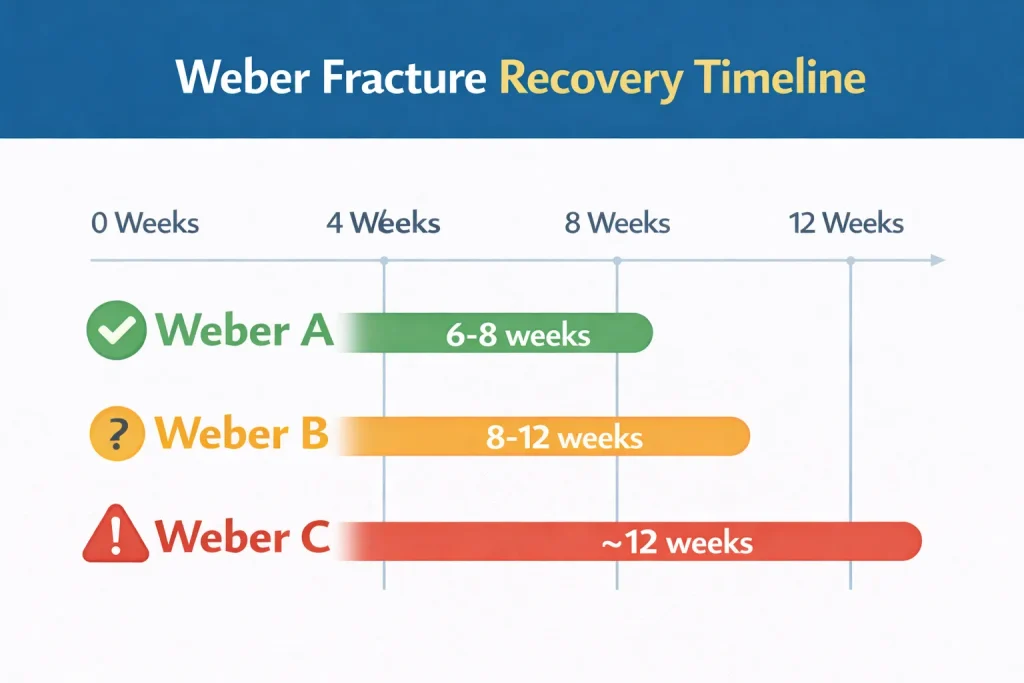
Healing times vary depending on severity.
| Type | Healing Time | Surgery Required |
|---|---|---|
| Weber A | 6–8 weeks | Rare |
| Weber B | 8–12 weeks | Sometimes |
| Weber C | 3–6 months | Common |
Rehabilitation includes:
- Range of motion exercises
- Strengthening
- Balance training
- Gradual return to activity
Swelling may persist for several months.
Complications
Potential complications include:
- Chronic ankle instability
- Post-traumatic arthritis
- Malunion
- Nonunion
- Syndesmotic failure
Early diagnosis and appropriate treatment reduce long-term risks.
When to See an Orthopedic Specialist
Seek medical attention if:
- Severe ankle pain
- Swelling
- Inability to bear weight
- Deformity
- Injury after twisting or falling
Early intervention improves outcomes.
Treatment in India & International Consultation
Many global patients seek ankle fracture treatment in India due to high-quality care and affordability.
Dr Divya Ahuja provides advanced treatment for Weber fractures, including:
- Precise fracture fixation
- Syndesmotic stabilization
- Comprehensive rehabilitation
International patients benefit from:
- Online consultations
- Treatment planning
- Affordable surgical care
- Postoperative support
Conclusion
The Weber classification remains one of the most practical systems for categorizing ankle fractures. Assessing the level of fibular fracture relative to the syndesmosis helps determine stability, treatment approach, and recovery expectations. With timely diagnosis and appropriate management, most patients achieve good functional recovery and return to normal activities.
FAQs
What is Weber’s classification of ankle fractures?
Weber classification is a system used to categorize ankle fractures based on the level of fibular fracture relative to the syndesmosis. It divides fractures into Weber A, B, and C types, helping determine ankle stability and whether surgery is required.
What is a Weber B fracture, and does it need surgery?
A Weber B fracture occurs at the level of the syndesmosis and is the most common ankle fracture type. Surgery is required only if there is ankle instability, talar shift, or ligament injury; stable Weber B fractures can often heal with a cast or boot.
How long does a Weber B fracture take to heal?
A stable Weber B fracture usually heals within 6–8 weeks, but full recovery, including strength and mobility, may take 3–4 months. Surgical cases may require longer rehabilitation depending on fixation and syndesmotic involvement.
What is the difference between Weber B and Weber C fractures?
The main difference is fracture level. Weber B occurs at the syndesmosis level and may be stable or unstable, while Weber C occurs above the syndesmosis and is usually unstable, often requiring surgical fixation and syndesmotic stabilization.
Is Weber A fracture considered stable?
Yes, Weber A fractures occur below the syndesmosis and are generally stable because the ligament complex remains intact. Most Weber A fractures can be treated conservatively with immobilization and gradual weight-bearing.
What are the radiology findings in the Weber classification?
Radiology findings include identifying the fibular fracture level on X-ray relative to the syndesmosis. Mortise view helps assess medial clear space, talar shift, and syndesmotic widening, which determine fracture stability and need for surgery.
Can a Weber fracture heal without surgery?
Many Weber A and some Weber B fractures can heal without surgery if the ankle joint remains stable and aligned. However, Weber C fractures and unstable Weber B fractures typically require surgical fixation for proper healing.
Which Weber fracture type is most serious?
Weber C fractures are generally the most serious because they occur above the syndesmosis and often involve ligament disruption, leading to ankle instability that usually requires surgical fixation.
What is a syndesmotic injury in Weber fractures?
A syndesmotic injury occurs when the ligaments connecting the tibia and fibula are damaged. It is commonly associated with Weber B and Weber C fractures and may require syndesmotic screw or tightrope fixation to restore stability.
How do doctors identify the Weber classification on ankle X-ray?
Doctors identify Weber type by locating the fibular fracture and comparing its level to the syndesmosis on X-ray. Mortise view helps assess joint alignment and detect instability, which guides treatment planning.