
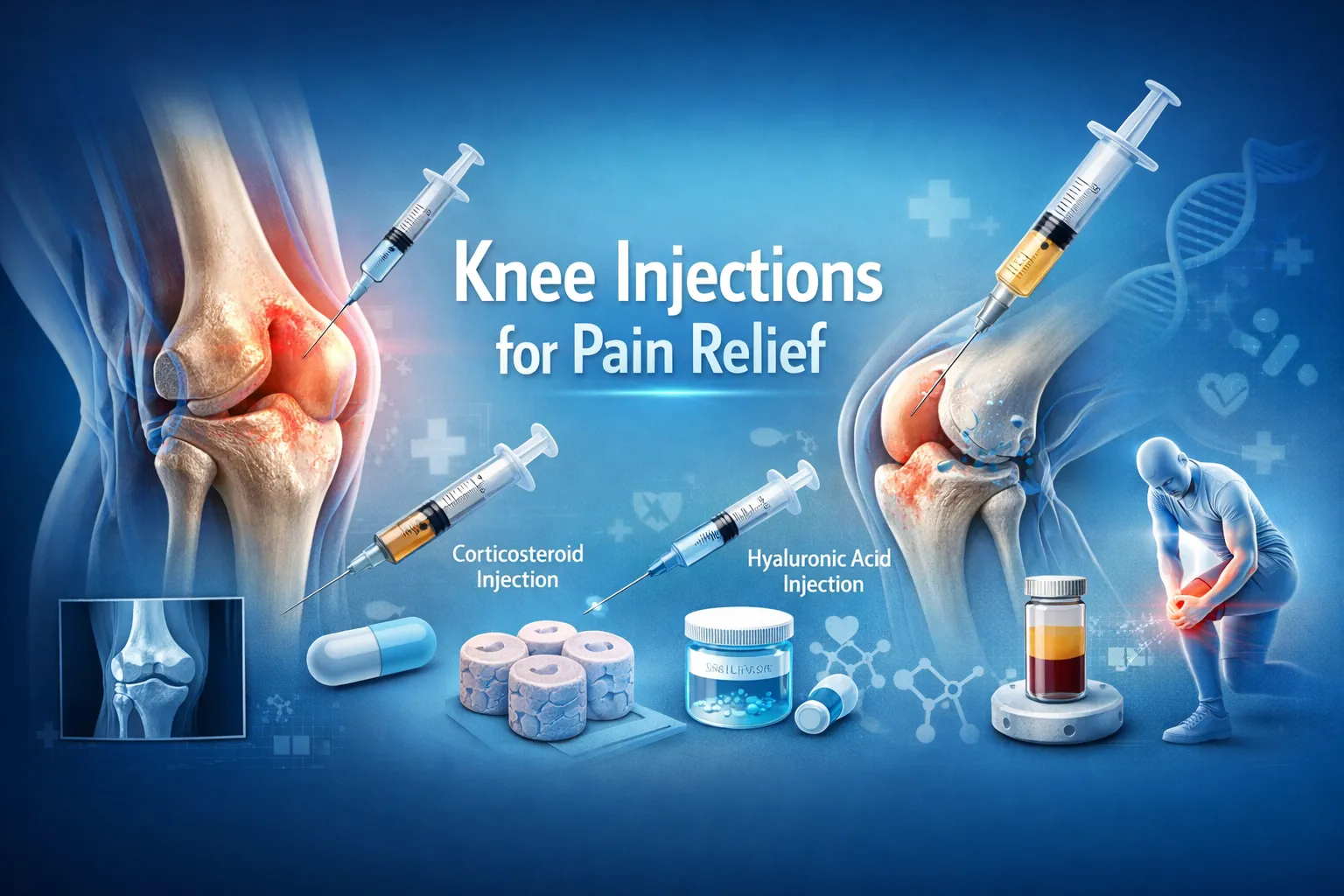
Knee pain can slowly take over your daily life. Walking becomes harder. Stairs feel like a mountain. Even sitting for too long can make the joints stiff. Many people start looking for options that reduce pain without surgery. This is where Knee Injections for Pain Relief come into the picture.
Think of your knee joint like a door hinge. When the hinge is dry, rusty, or swollen, it stops moving smoothly. You can oil it. You can clean it. Sometimes you need to fix the parts inside. Knee injections work similarly. They help reduce swelling, improve lubrication, and ease pain so the joint can move better.
This guide explains everything in simple words. You will learn what knee injections are, the types available, who needs them, and how they help. We will also talk about safety, cost, and what results you can expect.
If you are searching for answers about knee pain injections, this article will help you understand your options clearly.
Table of Contents
What is a Knee Injection
A knee injection is a treatment where medicine is placed directly inside the knee joint using a thin needle. The goal is to reduce pain, swelling, and stiffness. Some injections also help the joint move more smoothly.
Imagine watering a plant at the roots instead of spraying water in the air. The roots get what they need faster. Knee injections work in the same way. Medicine goes straight to the problem area.
Doctors use knee injections for many conditions:
- Arthritis
- Joint swelling
- Cartilage wear
- Tendon inflammation
- Sports injuries
- Chronic knee pain
Because the medicine goes directly into the joint, relief often comes faster than with tablets alone.
Why Many People Choose Knee Injections
Many patients want relief but are not ready for surgery. Some want to delay knee replacement. Others want to avoid strong pain medicines.
Knee injections help because they:
- Reduce inflammation
- Improve joint lubrication
- Ease stiffness
- Help you walk better
- Support healing
For many people, injections are like pressing a pause button on joint damage. They do not always cure the problem, but they can slow it down and make daily life easier.
Common Knee Problems That Need Injections
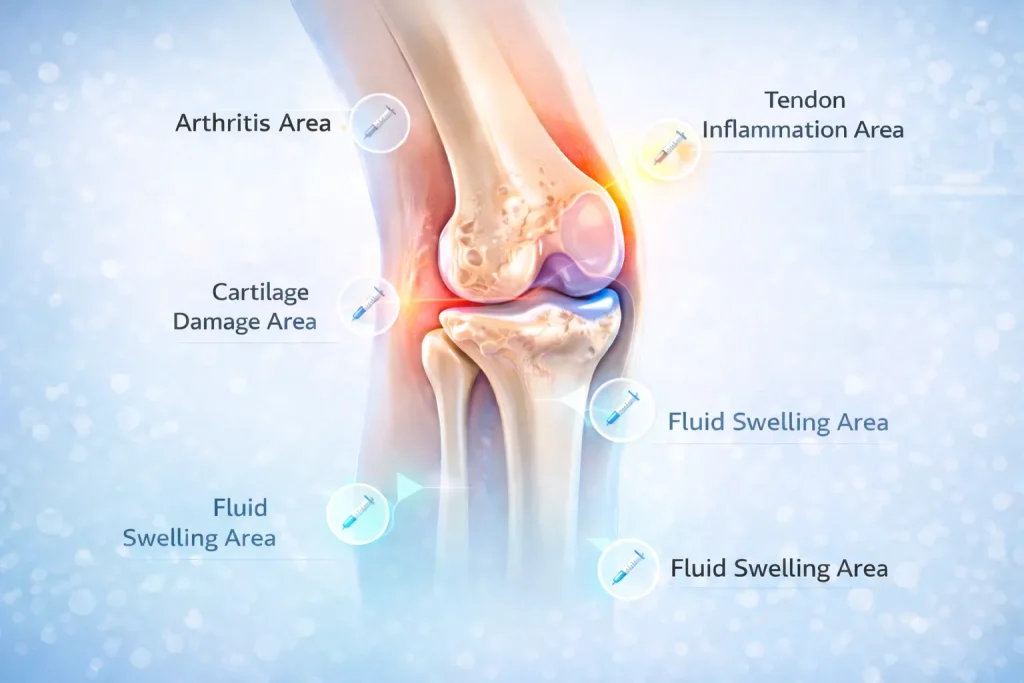
Let us look at some common knee conditions where injections are useful.
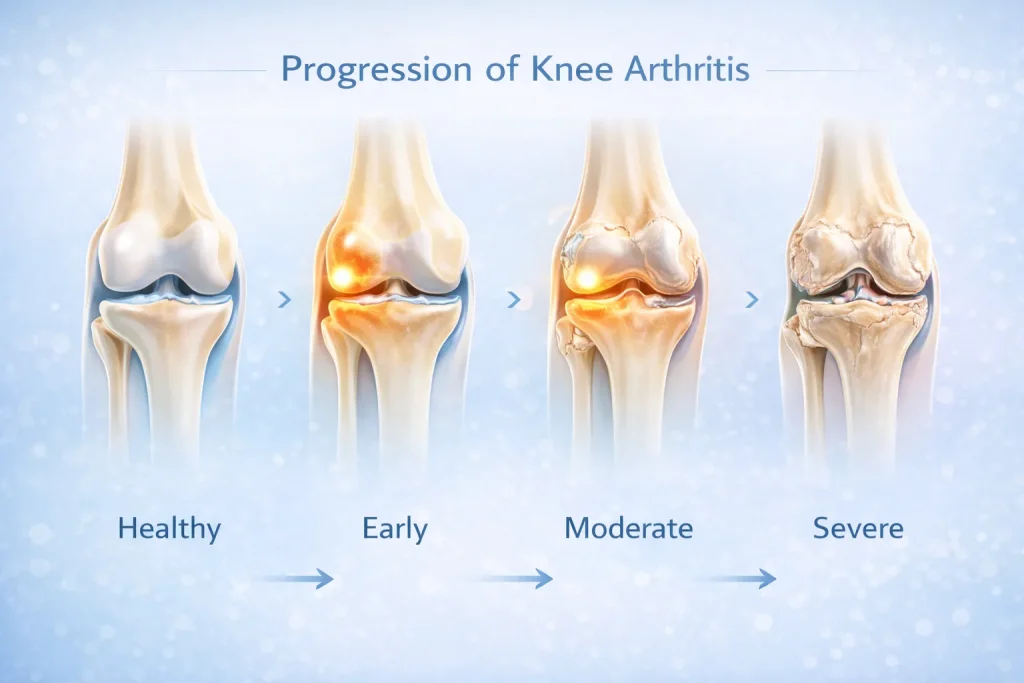
Knee Arthritis
This is one of the biggest reasons people get injections. Arthritis causes cartilage to wear down. The joint becomes painful and stiff.
Injections can reduce swelling and improve movement. Many patients with arthritis use injections to delay surgery.
Knee Swelling and Fluid
Sometimes fluid builds up inside the knee. This causes tightness and pain. Doctors may remove the fluid and then give an injection. This helps reduce pressure and inflammation.
Tendonitis
Tendons connect muscles to bones. When they become inflamed, movement hurts. Injections can calm the inflammation and help with healing.
Cartilage Damage
Cartilage acts like a cushion. When it wears out, bones rub together. Some injections help improve lubrication and reduce friction.
The Three Main Types of Knee Injections
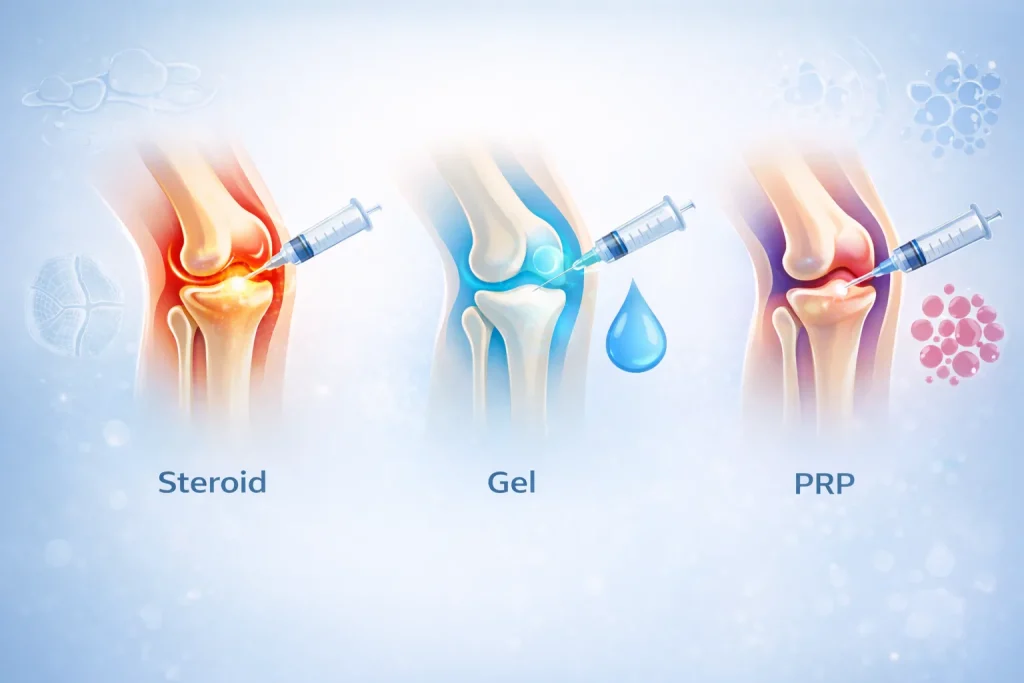
There are three common injections used for knee pain. Each works differently. Choosing the right one depends on your condition.
1. Steroid Injection
Steroid injections reduce inflammation quickly. They are often used when the knee is very swollen and painful.
Think of steroids like a fire extinguisher. When inflammation is high, they calm it down fast.
Best for:
- Arthritis flare-ups
- Severe swelling
- Sudden pain
Benefits:
- Quick relief
- Reduced swelling
- Better movement
Relief may last a few weeks or a few months. Some patients need repeat injections after a gap.
2. Hyaluronic Acid Injection
This is often called a gel injection or knee lubrication injection. The knee joint normally has fluid that helps it move smoothly. In arthritis, this fluid becomes thin.
Hyaluronic acid acts like oil in a machine. It improves lubrication inside the joint.
Best for:
- Osteoarthritis
- Joint stiffness
- Early cartilage wear
Benefits:
- Smoother movement
- Less friction
- Longer relief for some patients
Many people call this a knee grease injection because it helps the joint glide more easily.
3. PRP Injection
PRP stands for platelet-rich plasma. It uses your own blood. The blood is processed to concentrate healing cells. These are then injected into the knee.
Think of PRP like sending repair workers to a damaged building. They help fix small issues and reduce inflammation.
Best for:
- Early arthritis
- Tendon injuries
- Cartilage damage
- Sports injuries
Benefits:
- Supports healing
- Reduces inflammation
- May improve long-term function
PRP is often chosen by people who want a more natural treatment option.
Which Injection is Best for Knee Pain
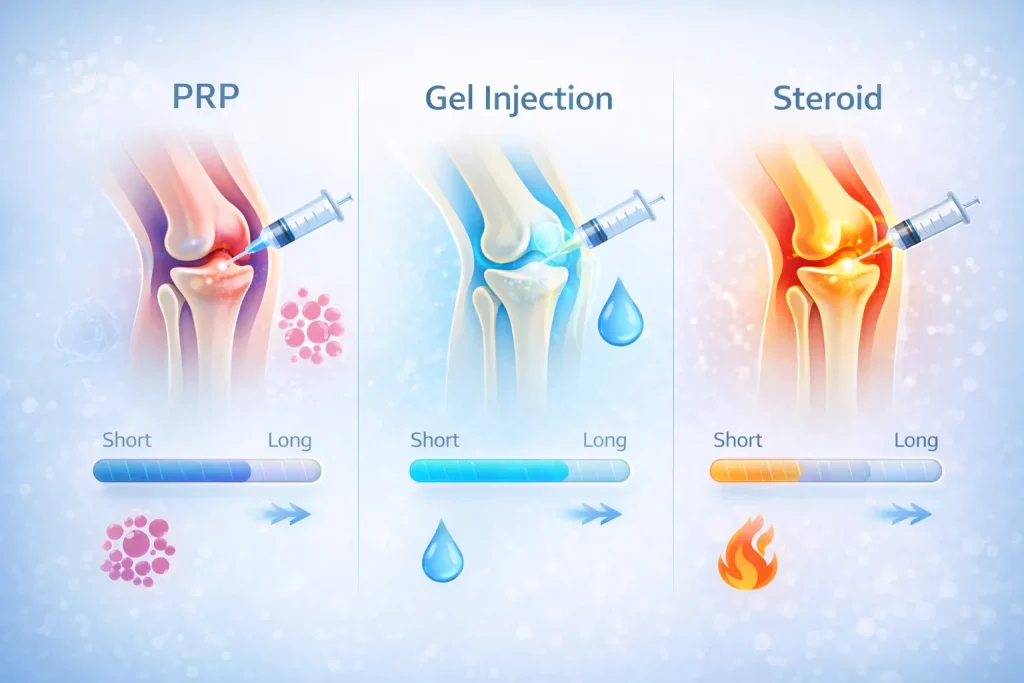
There is no single answer. The best injection depends on your knee condition.
- Severe inflammation may need steroids
- Early arthritis may benefit from gel injections
- Tendon injuries may respond well to PRP
A doctor examines your knee, reviews scans, and suggests the right option. Choosing the wrong injection is like using the wrong key for a lock. It may not work well.
Knee Injections for Arthritis
Arthritis slowly damages the joint. Pain and stiffness increase over time. Injections help manage symptoms.
They can:
- Reduce swelling
- Improve movement
- Delay surgery
- Help with daily activities
Many patients use injections along with exercise and physiotherapy. This combination works better than relying on injections alone.
Knee Fluid Removal and Injection
Some knees fill with fluid. This makes the joint look swollen and feel tight. Doctors may remove the fluid with a needle. This is called aspiration.
After removing fluid, medicine may be injected. This helps reduce inflammation and prevents fluid from coming back quickly.
Patients often feel relief soon after the procedure.
Knee Tendon Inflammation and Injections
Tendonitis causes pain around the kneecap or below it. It often affects runners and athletes. Injections may help when rest and physiotherapy are not enough.
PRP injections are commonly used for tendon issues. They support healing and reduce pain.
Symptoms of knee tendonitis include:
- Pain while climbing stairs
- Swelling near the kneecap
- Pain during sports
- Tenderness
Injections can help calm inflammation and speed recovery.
How the Knee Injection Procedure Is Done
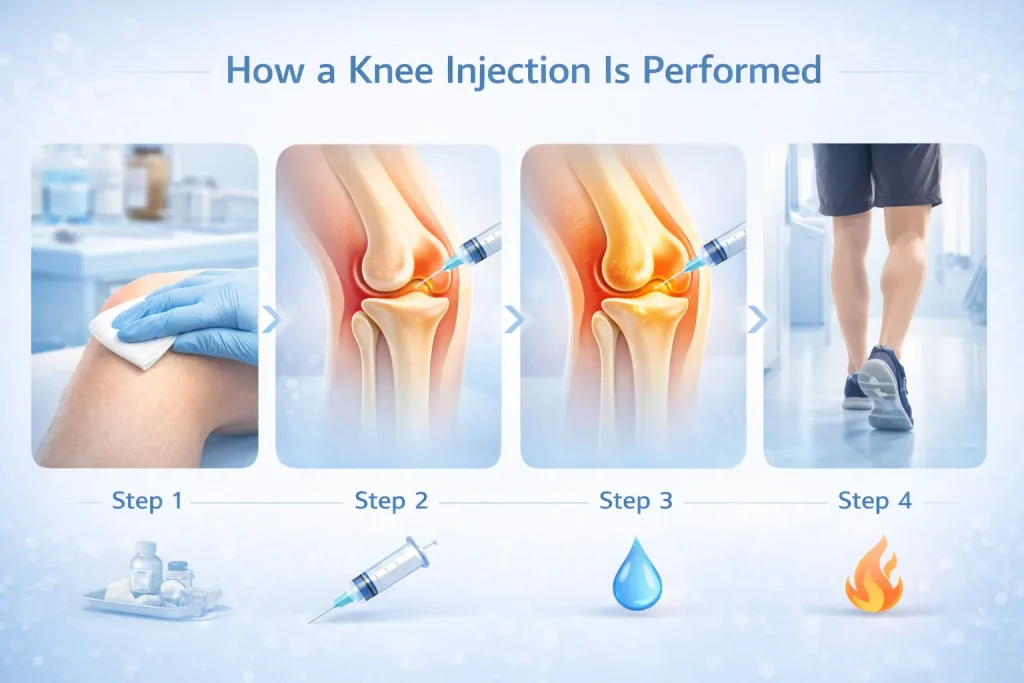
Many patients worry about the procedure. It is usually quick and simple.
Here is what happens:
- The knee is cleaned.
- The doctor may numb the area.
- A thin needle is inserted.
- Medicine is injected into the joint.
- The patient rests briefly.
The whole process often takes less than ten minutes.
Most people walk out of the clinic the same day.
Does a Knee Injection Hurt
Patients often ask this question. The discomfort is usually mild. Some people feel pressure or a small pinch.
It is similar to a blood test needle. The feeling passes quickly.
After the injection, the knee may feel sore for a day or two. Ice and rest help.
Recovery After Knee Injection
Recovery is usually fast.
- Avoid heavy activity for 1 to 2 days
- Use ice if sore
- Follow the doctor’s advice
- Resume normal activity gradually
Some injections work quickly. Others take a few weeks. PRP may take longer because it supports healing.
How Long Do Knee Injections Last
This depends on the type of injection and the knee condition.
- Steroid injections may last weeks or months
- Gel injections may last several months
- PRP may provide longer improvement
Results vary from person to person. Lifestyle and exercise also affect how long the relief lasts.
Cost of Knee Injections
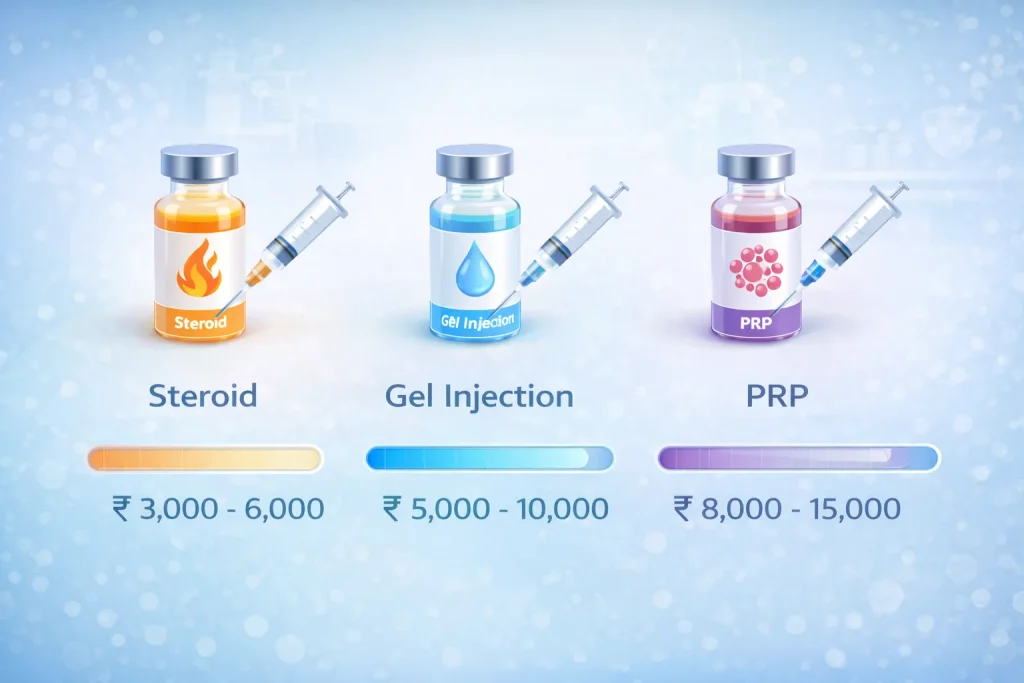
Costs vary depending on the injection type and clinic.
Approximate costs in India:
- Steroid injection: lower cost range
- Gel injection: moderate cost range
- PRP injection: higher cost range
Some patients need more than one injection. The doctor will explain the plan clearly.
For international patients, treatment in India is often more affordable than in many other countries.
Are Knee Injections Safe?
When done by trained specialists, knee injections are generally safe.
Possible minor effects:
- Mild pain
- Temporary swelling
- Stiffness
Serious problems are rare. Following aftercare advice further reduces the risk.
Who Should Consider Knee Injections
You may benefit if you have:
- Chronic knee pain
- Arthritis
- Tendon inflammation
- Cartilage wear
- Sports injury
People who want to delay surgery often try injections first.
When Injections May Not Help
In some cases, injections may not provide enough relief.
This can happen when:
- Arthritis is very advanced
- Joint damage is severe
- Knee alignment is poor
In such situations, surgery may be discussed. Still, injections can be useful before deciding on surgery.
Injections vs Surgery
Think of injections as a repair step. Surgery is a bigger step.
Injections can:
- Reduce pain
- Improve function
- Delay surgery
They do not replace surgery in every case. But they help many patients live comfortably for years.
Simple Ways to Support Knee Health
Injections work best with other steps:
- Maintain a healthy weight
- Do strengthening exercises
- Avoid sudden strain
- Use proper footwear
- Follow physiotherapy
These habits support joint health and improve results.
Conclusion
Knee injections are a useful option for many people with joint pain. They are simple, quick, and often effective. For patients who want relief without surgery, injections can make daily life easier.
Think of them as a way to calm the joint and help it function better. They do not fix every problem, but they can provide meaningful relief and improve movement.
If knee pain is affecting your routine, a proper evaluation can help you understand whether injection therapy is right for you. A clear diagnosis and the right treatment plan make a big difference.
Taking action early can help protect your joints and improve comfort.
Read:
FAQs
What is the best injection for knee pain in arthritis patients?
The best injection for knee pain depends on the condition. Many patients search for the best injection for knee arthritis, which may include steroid, hyaluronic acid gel, or PRP injections to reduce inflammation, improve lubrication, and help delay knee replacement surgery.
How long does a knee gel injection for arthritis last, and when should I repeat it?
A knee gel injection for arthritis can provide relief for several months. Patients often ask how long hyaluronic acid knee injections last and when repeat injections are needed to maintain smoother joint movement and reduce stiffness in osteoarthritis.
What are the three injections for knee pain and which one works fastest?
The three injections for knee pain are steroid injections, hyaluronic acid injections, and PRP injections. Many patients want to know which knee injection works fastest for pain relief and which provides longer-lasting results for arthritis or cartilage damage.
Is a knee grease injection the same as a hyaluronic acid knee injection?
A knee grease injection is a common term for a hyaluronic acid knee injection. It helps lubricate the joint, reduce friction, and improve movement. People often search for this when looking for non-surgical treatment for knee arthritis and joint stiffness.
How much does a knee injection cost in India for arthritis treatment?
The cost of a knee injection in India depends on the type of injection. Patients frequently search for the price of steroid injections, gel injections, or PRP knee injections when comparing non-surgical knee pain treatments before considering knee replacement surgery.
Can knee injections delay or prevent knee replacement surgery?
Many patients ask whether injections for knee arthritis can delay knee replacement. Steroid, gel, and PRP injections can reduce pain and improve function, helping some patients postpone surgery while maintaining mobility and daily activity.
Are knee injections safe for elderly patients with severe knee pain?
Knee injections are often considered safe for elderly patients when performed by experienced orthopedic specialists. People commonly search whether knee injections for seniors with arthritis can reduce pain, improve walking, and provide non-surgical relief.
What is PRP injection for knee pain, and how effective is it for cartilage damage?
PRP injection for knee pain uses the patient’s own blood to support healing. Many people search for whether PRP knee injections help cartilage damage, tendonitis, or early arthritis, and how long PRP treatment takes to show improvement.
Can injections help with knee tendonitis and ligament inflammation?
Patients with patellar tendonitis often search for injections for knee tendon inflammation. PRP or anti-inflammatory injections may help reduce pain, support healing, and improve mobility when rest and physiotherapy alone are not enough.
How do doctors remove fluid from the knee and give an injection for swelling?
When fluid builds up in the knee, doctors may remove it and then give a knee joint injection to reduce inflammation. Many patients search for knee fluid removal and injection treatment to relieve swelling, pressure, and stiffness quickly.