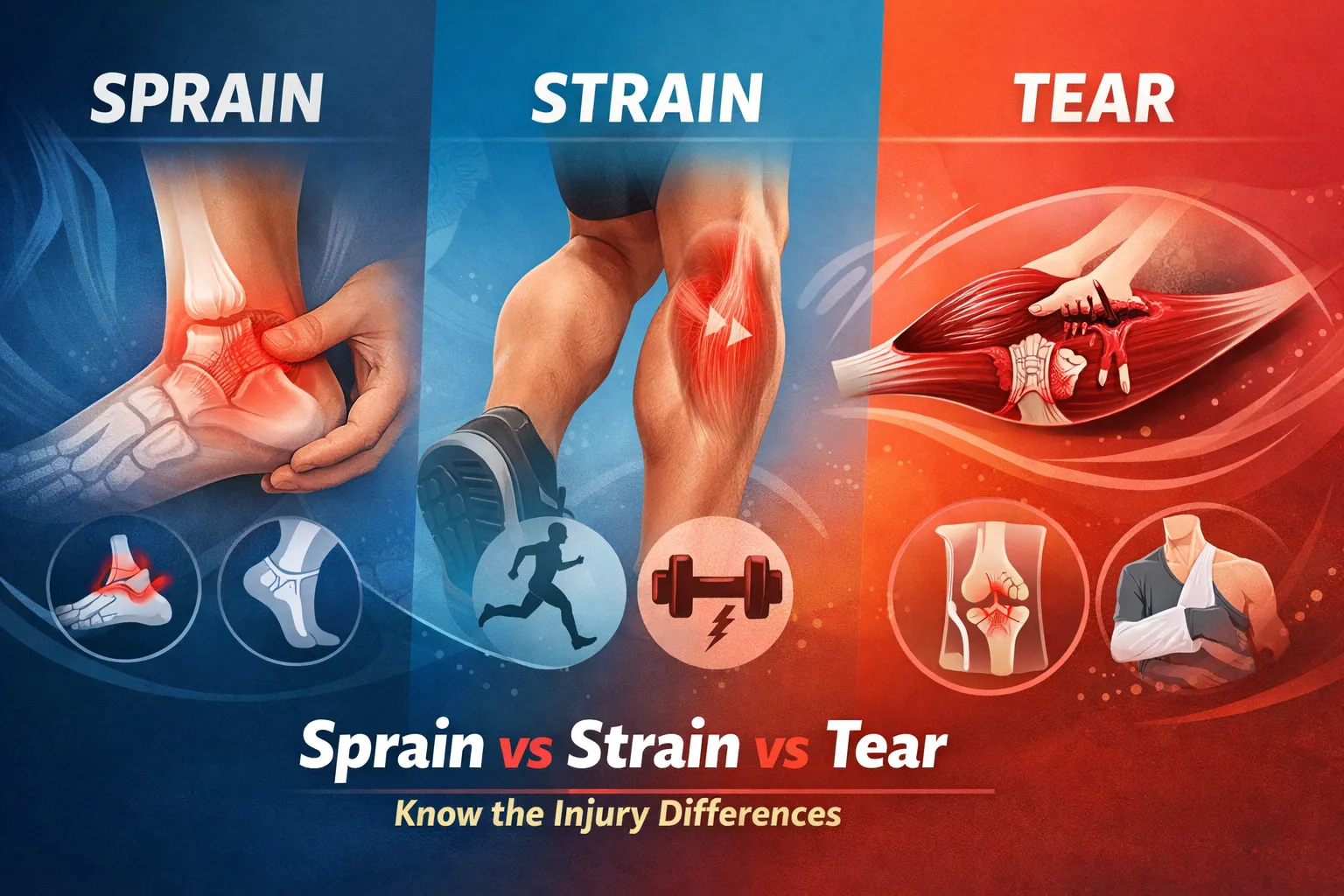
Sprains, strains, and tears are common soft-tissue injuries, yet many people struggle to distinguish between them. A sprain affects ligaments that support joints, a strain involves muscles or tendons, and a tear indicates partial or complete rupture of these tissues. These injuries frequently affect the ankle, knee, foot, arm, and major muscle groups, especially after falls, sports activities, or sudden movements.
Knowing whether you’re dealing with a sprain, strain, or tear is important because treatment, recovery time, and long-term outcomes vary significantly. While mild injuries often heal with rest and rehabilitation, severe ligament or muscle tears may require medical evaluation and advanced care. This guide clearly explains the differences, outlines symptoms to watch for, and helps you understand when professional treatment is necessary.
Table of Contents
Understanding Sprain, Strain, and Tear
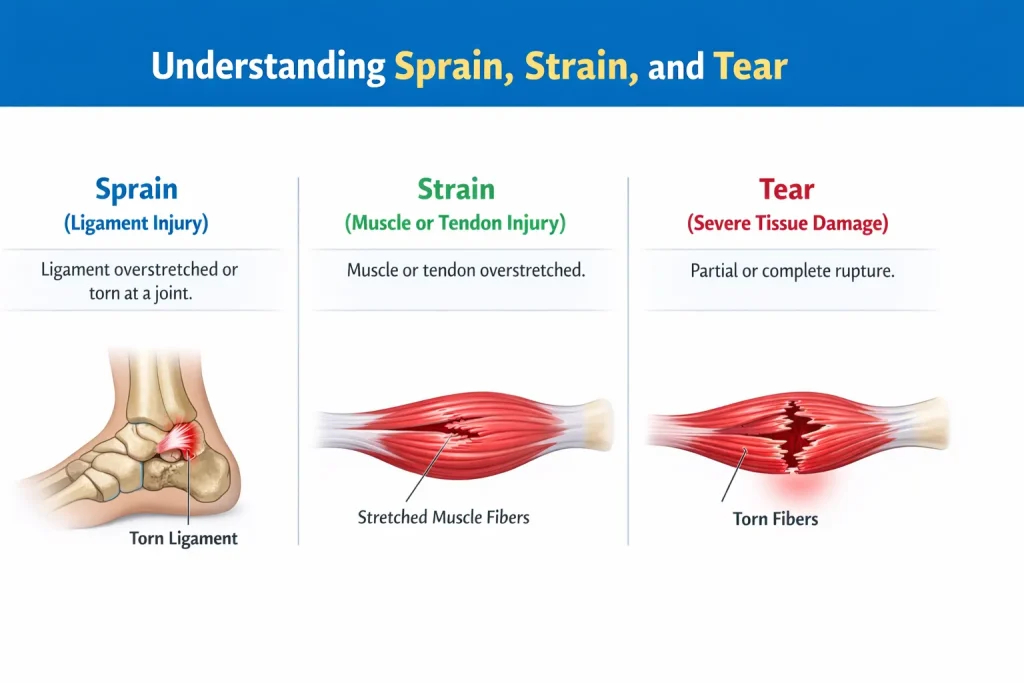
Although these terms are often used interchangeably, they describe different types of tissue damage.
A sprain occurs when a ligament – the tissue connecting one bone to another – is overstretched or torn. Sprains most commonly affect joints like the ankle, knee, wrist, or thumb. Twisting injuries, sudden changes in direction, or awkward landings are frequent causes.
A strain, on the other hand, involves a muscle or tendon. It usually happens due to overuse, poor lifting technique, or sudden forceful movements. Strains are commonly felt in the hamstring, calf, lower back, shoulder, or arm.
A tear refers to actual fiber damage, where the tissue is partially or completely ripped. Tears can occur in ligaments, muscles, or tendons and are considered more severe than simple sprains or strains.
Sprain vs Strain vs Tear: Key Differences at a Glance
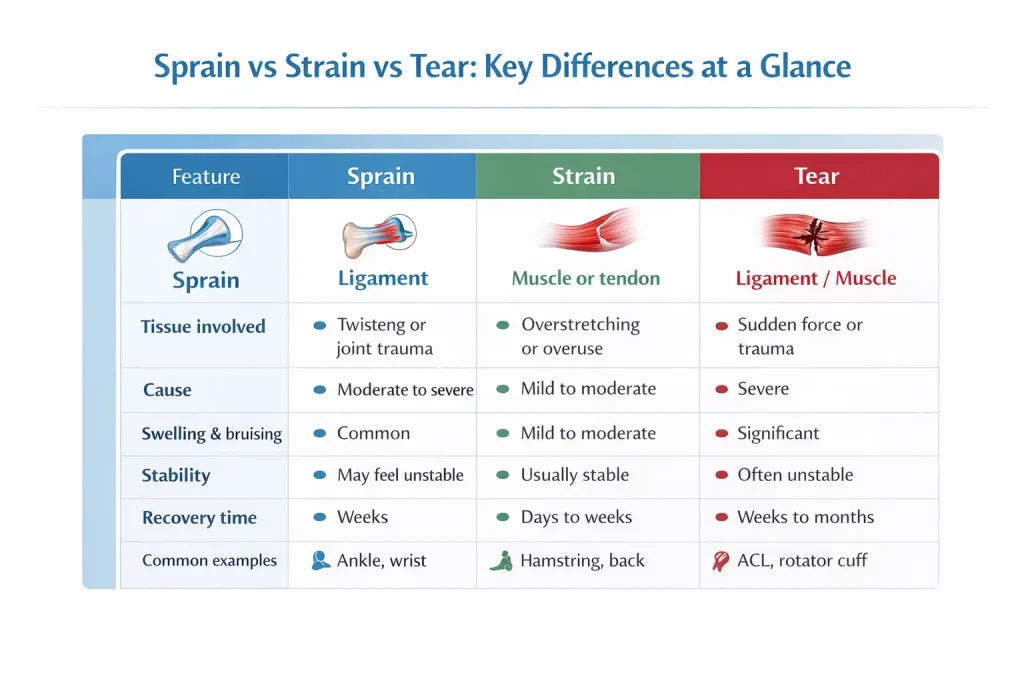
| Feature | Sprain | Strain | Tear |
| Tissue involved | Ligament | Muscle or tendon | Ligament / Muscle |
| Cause | Twisting or joint trauma | Overstretching or overuse | Sudden force or trauma |
| Pain | Moderate to severe | Mild to moderate | Severe |
| Swelling & bruising | Common | Mild to moderate | Significant |
| Stability | May feel unstable | Usually stable | Often unstable |
| Recovery time | Weeks | Days to weeks | Weeks to months |
Common Symptoms You May Notice
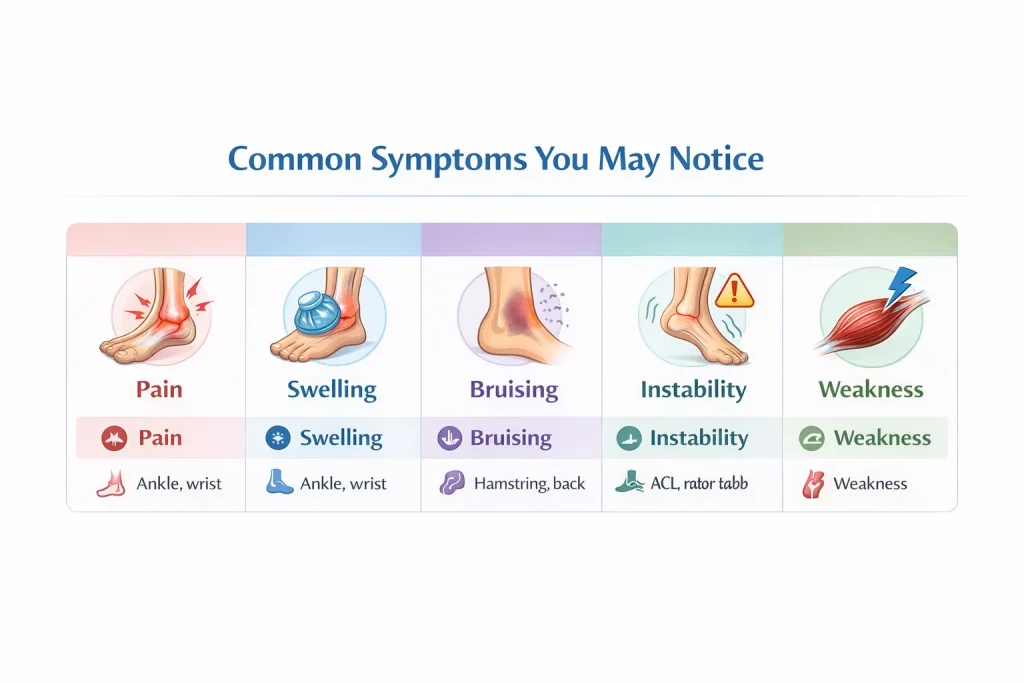
Sprains and strains often share overlapping symptoms, which is why confusion is common. Pain, swelling, stiffness, and difficulty moving the affected area are typical in both.
However, sprains tend to cause more joint-related symptoms, such as instability, difficulty bearing weight, and bruising around the joint.
Strains usually feel deeper within the muscle, causing tightness, soreness, cramping, or weakness, especially when the muscle is contracted.
Symptoms That Suggest a Tear
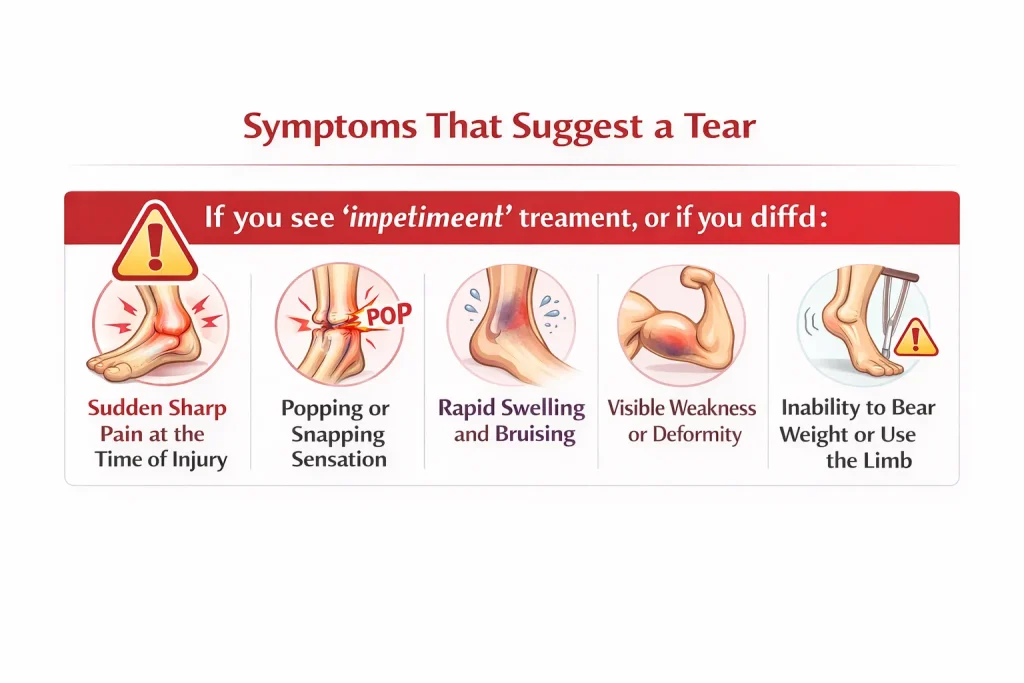
These signs often indicate a more serious injury:
- Sudden sharp pain at the time of injury
- A popping or snapping sensation
- Rapid swelling and bruising
- Visible weakness or deformity
- Inability to bear weight or use the limb
If these symptoms are present, medical evaluation is strongly advised.
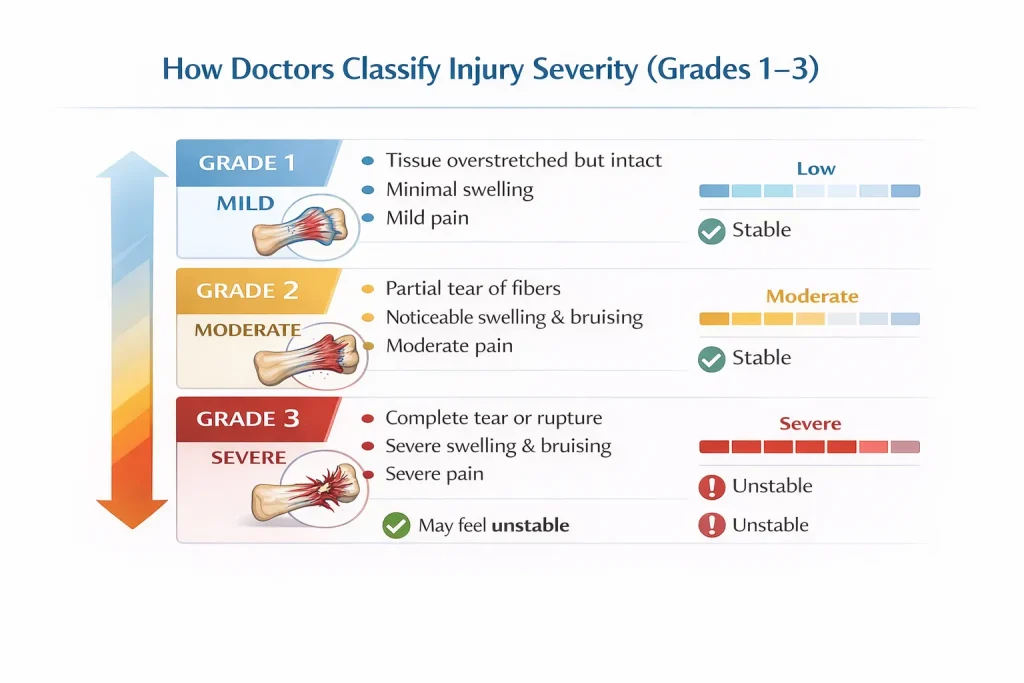
How Doctors Classify Injury Severity (Grades 1–3)
Both sprains and strains are graded based on severity:
Ankle, Knee, Foot, and Muscle Injuries Explained
Ankle Injuries
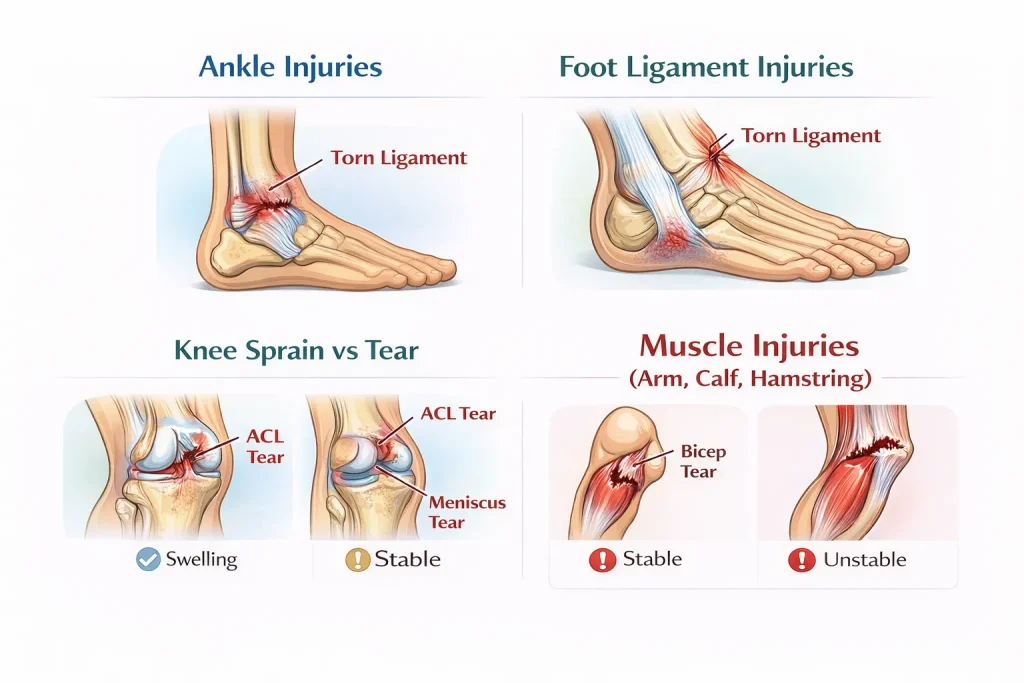
Ankle sprains are among the most common sports and daily-life injuries. Mild ankle sprains heal quickly, but torn ankle ligaments can cause long-term instability if not rehabilitated properly. Persistent swelling, repeated sprains, or a “giving way” sensation suggest ligament damage.
Foot Ligament Injuries
Foot ligament tears may cause pain while pushing off, difficulty walking, or pain in the midfoot or ball of the foot. These injuries are often mistaken for simple strains and can worsen without treatment.
Knee Sprain vs Tear
Knee sprains involve ligaments like the MCL or LCL, while tears often affect the ACL or meniscus. Rapid swelling, locking, or instability usually indicates a tear rather than a mild sprain.
Muscle Injuries (Arm, Calf, Hamstring)
Muscle strains are common during exercise or lifting. A torn muscle typically causes visible bruising, weakness, and sharp pain during movement.
How Are These Injuries Diagnosed?
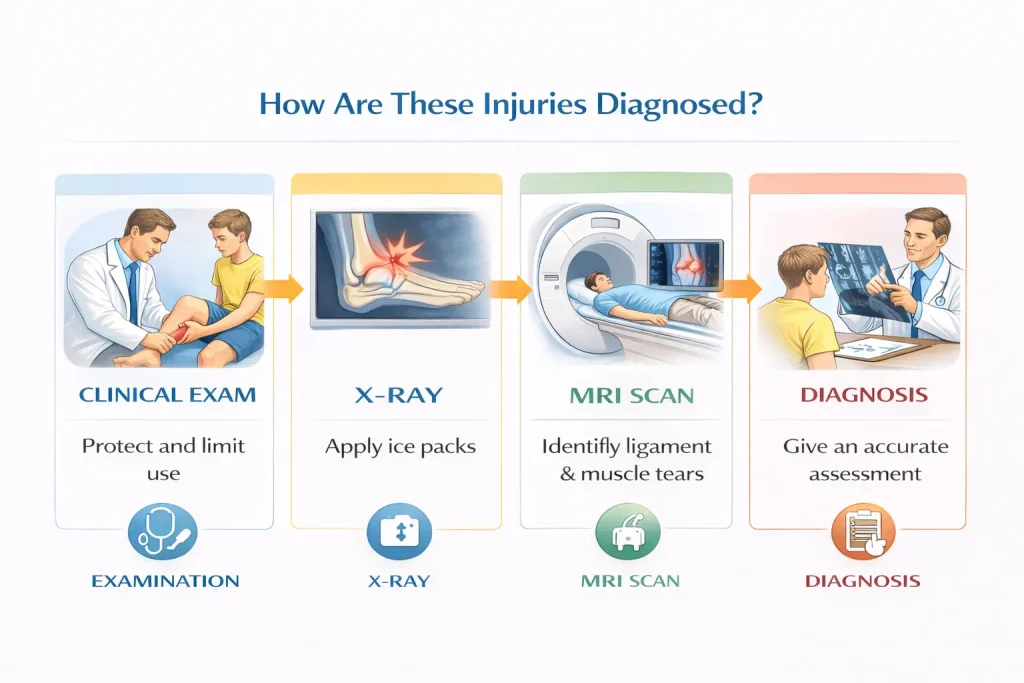
Doctors begin with a clinical examination, assessing pain, movement, strength, and joint stability.
Imaging may be used when:
- Pain or swelling is severe
- Function is limited
- A tear is suspected
X-rays rule out fractures, while MRI scans are the gold standard for identifying ligament and muscle tears.
Immediate Care and Early Treatment
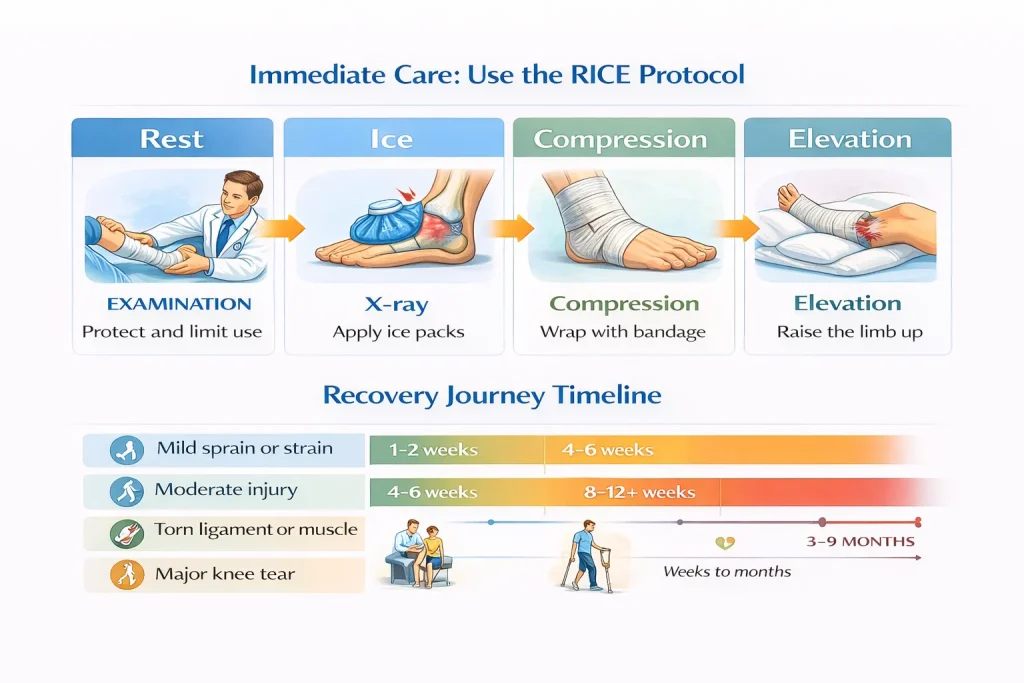
For the first 48 hours, most mild to moderate injuries respond well to RICE:
- Rest the injured area
- Ice to reduce swelling
- Compression with a bandage
- Elevation to limit fluid buildup
Avoid heat, alcohol, or aggressive massage during the early phase.
Treatment Options Based on Severity
Most sprains and strains heal without surgery when treated properly. Treatment may include:
- Bracing or taping
- Anti-inflammatory medication
- Physiotherapy
- Progressive strengthening and mobility exercises
Severe ligament or muscle tears may require:
- Advanced rehabilitation programs
- Injection-based treatments (in select cases)
- Surgical repair if instability or complete rupture is present
Recovery Time: What to Expect
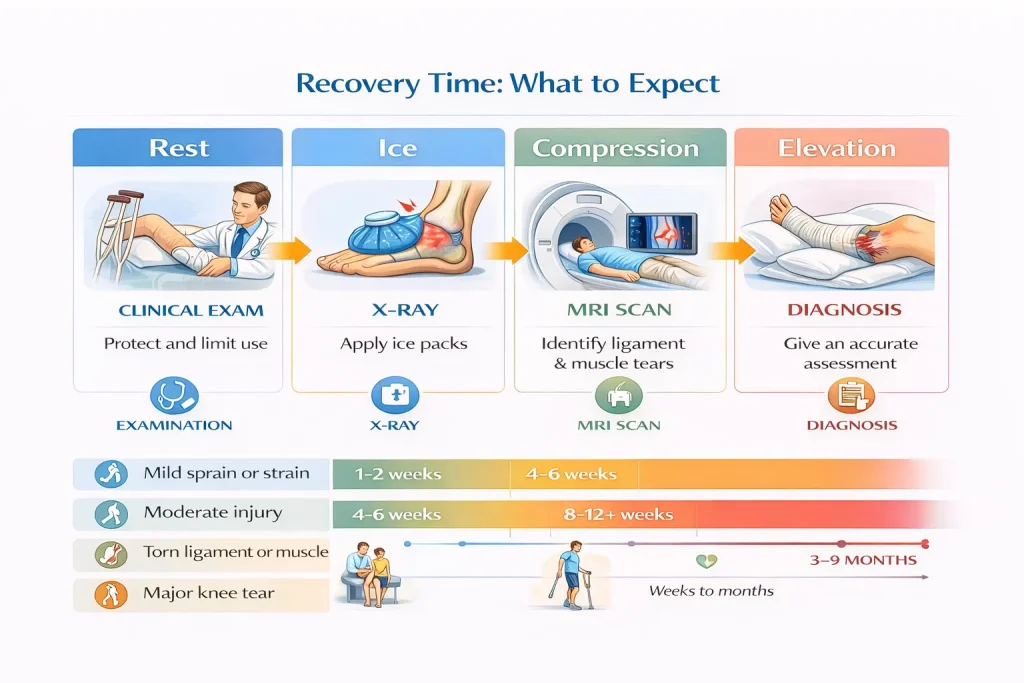
| Injury Type | Average Healing Time |
| Mild sprain or strain | 1–2 weeks |
| Moderate injury | 4–6 weeks |
| Torn ligament or muscle | 8–12+ weeks |
| Major knee ligament tear | 3–9 months |
Recovery depends on injury severity, age, activity level, and rehabilitation quality.
When Should You See a Doctor?
Seek medical attention if:
- Pain is severe or worsening
- Swelling doesn’t reduce after 48 hours
- You cannot bear weight
- The joint feels unstable
- Injuries keep recurring
Early diagnosis prevents chronic pain and long-term joint problems.
Conclusion
Sprains, strains, and tears may appear similar at first, but they involve different tissues, follow different healing timelines, and require different levels of care. While mild sprains and strains often improve with rest, rehabilitation, and gradual return to activity, more serious ligament or muscle tears can lead to ongoing pain, instability, and repeated injuries if left untreated. Recognising warning signs such as persistent swelling, bruising, weakness, or difficulty bearing weight is essential for early diagnosis and proper management.
Prompt evaluation and structured rehabilitation not only speed recovery but also help prevent long-term complications such as chronic joint instability, muscle weakness, and reduced mobility. If symptoms do not improve or worsen over time, seeking professional medical advice is always the safest and most effective way to protect joint health and restore normal function.
Read:
- Bicep and Tricep Muscle and Tendon Injuries: Symptoms, Causes, Treatment, and Recovery
- Sprained Ankle & Twisted Ankle: Recovery Time, Healing Stages, Swelling & Home Treatment
FAQ
1. What is the difference between a sprain and a strain?
A sprain is a ligament injury caused by overstretching or tearing, usually around a joint like the ankle or knee. A strain affects muscles or tendons and is often caused by overuse, lifting, or sudden muscle contraction.
2. What does a torn ligament feel like?
A torn ligament often causes sudden, sharp pain, rapid swelling, bruising, and a feeling of joint instability. Many people report a popping sound at the time of injury and difficulty bearing weight on the affected joint.
3. How can I tell if I tore a muscle or just strained it?
A muscle strain causes soreness and tightness, while a muscle tear usually leads to severe pain, weakness, visible bruising, and limited movement. Tears often occur suddenly, whereas strains may worsen gradually with activity.
4. How long does it take for a sprained ankle to heal?
A mild ankle sprain may heal within one to two weeks, while moderate sprains can take four to six weeks. Severe ligament tears or chronic ankle instability may require several months of rehabilitation for full recovery.
5. Is a ligament tear worse than a sprain?
Yes, a ligament tear is considered a severe form of sprain. While mild sprains involve overstretching, tears involve partial or complete ligament rupture, leading to joint instability and longer recovery times.
6. Can ligament tears heal without surgery?
Many ligament tears heal with structured physiotherapy, bracing, and gradual strengthening. Surgery is usually considered only for complete tears, persistent instability, or high-demand athletes who fail to improve with conservative treatment.
7. What are the common symptoms of a knee sprain versus a knee tear?
Knee sprains cause pain, mild swelling, and stiffness, while ligament tears often lead to rapid swelling, instability, locking, or giving-way sensations. Severe knee injuries usually require imaging, such as an MRI, for confirmation.
8. What happens if a sprain or strain is left untreated?
Untreated sprains or strains can lead to chronic pain, repeated injuries, muscle weakness, and long-term joint instability. Poor healing increases the risk of early arthritis and delayed recovery from future injuries.
9. When should I see a doctor for a ligament or muscle injury?
You should see a doctor if pain is severe, swelling increases, movement is limited, or the joint feels unstable. Difficulty walking, persistent bruising, or symptoms lasting more than a few days also require evaluation.
10. Can physiotherapy help prevent repeat sprains and tears?
Yes, physiotherapy improves strength, flexibility, and joint stability through targeted exercises. Proper rehabilitation reduces the risk of chronic ligament instability, repeat sprains, and muscle tears by restoring normal movement patterns.