

A distal radius fracture is one of the most common bone injuries involving the wrist. It occurs when the radius bone breaks near the wrist joint, typically after a fall on an outstretched hand or a high-impact injury. Because the wrist plays a crucial role in hand movement and weight bearing, fractures in this area can significantly affect daily activities, mobility, and overall quality of life.
Distal radius fractures are particularly common in older adults with osteoporosis and in younger individuals who experience sports injuries or accidents. Early diagnosis and appropriate treatment are essential to restore wrist function, prevent complications, and ensure proper bone healing.
This comprehensive guide explains everything about distal radius fractures, including symptoms, types, diagnosis, treatment options, surgical procedures, and recovery timelines.
Table of Contents
What is a Distal Radius Fracture?
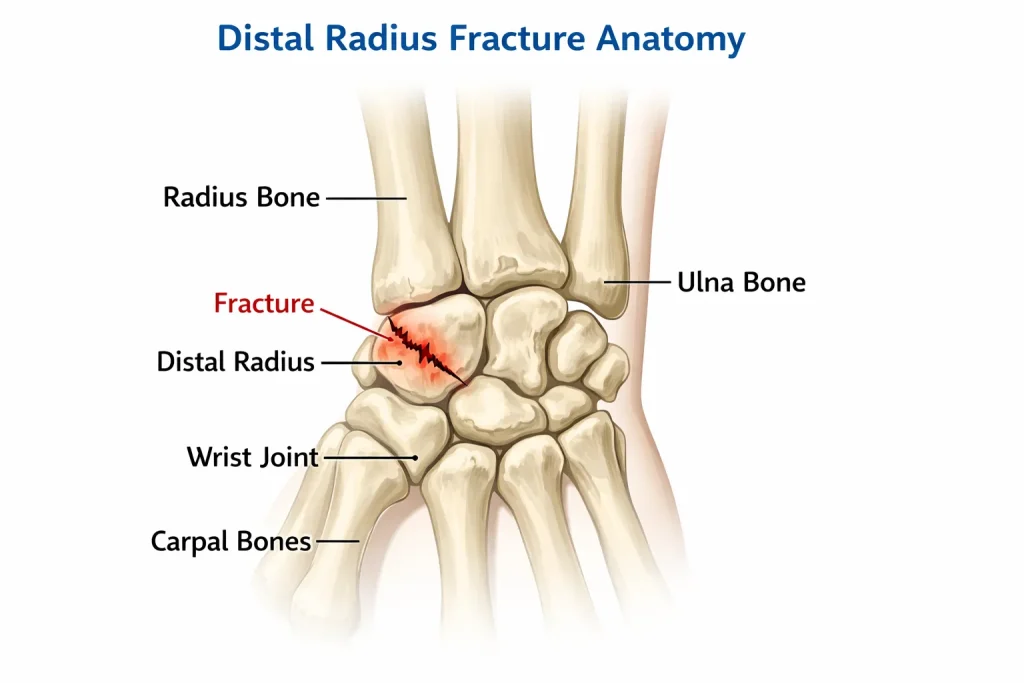
The radius is one of the two bones in the forearm, located on the thumb side. The distal portion of the radius refers to the end of the bone near the wrist joint.
A distal radius fracture occurs when this part of the bone breaks due to trauma, falls, or accidents.
These fractures are among the most common orthopedic injuries worldwide and account for a large percentage of wrist fractures.
Key characteristics include:
- Break near the wrist joint
- Pain and swelling in the wrist
- Difficulty moving the hand
- Visible deformity in severe cases
Distal radius fractures may occur alone or alongside other injuries involving the ulna, wrist ligaments, or carpal bones.
Anatomy of the Distal Radius
Understanding the anatomy of the wrist helps explain how distal radius fractures occur and why they affect wrist movement.
The wrist joint consists of:
- Radius bone
- Ulna bone
- Eight carpal bones
- Ligaments and tendons
The distal radius forms the main articulation with the carpal bones, allowing wrist motion and weight transmission from the hand to the forearm.
Important anatomical structures include:
- Radial styloid
- Distal radioulnar joint (DRUJ)
- Radiocarpal joint
- Ligament attachments
Because the distal radius supports many important structures, fractures in this area can affect wrist stability and motion.
Causes of Distal Radius Fractures
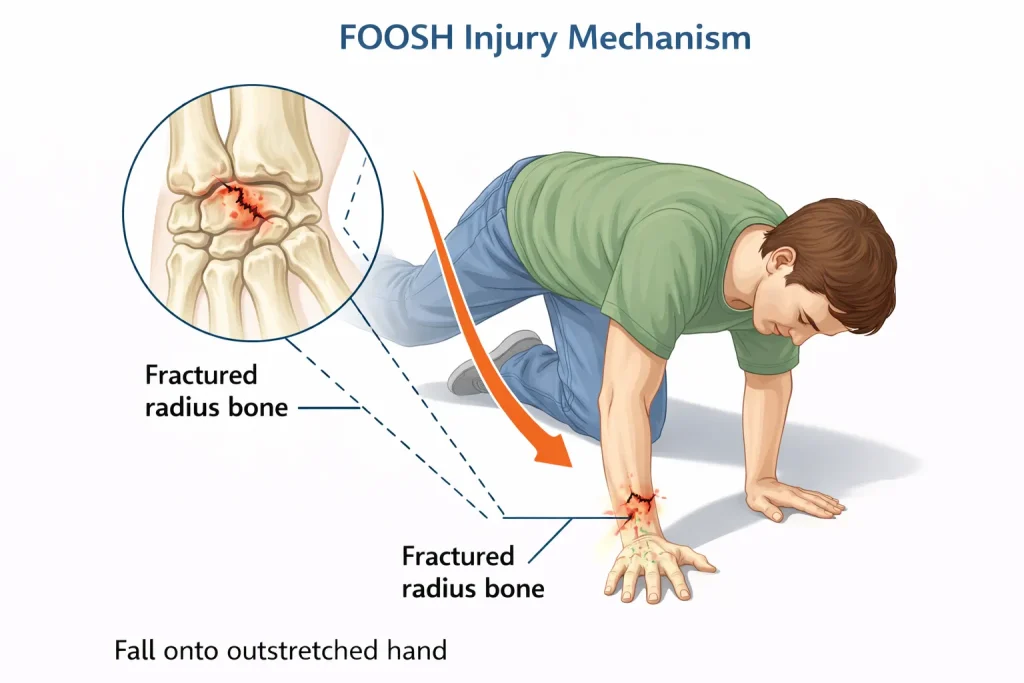
Distal radius fractures usually occur due to trauma or impact on the wrist.
The most common causes include:
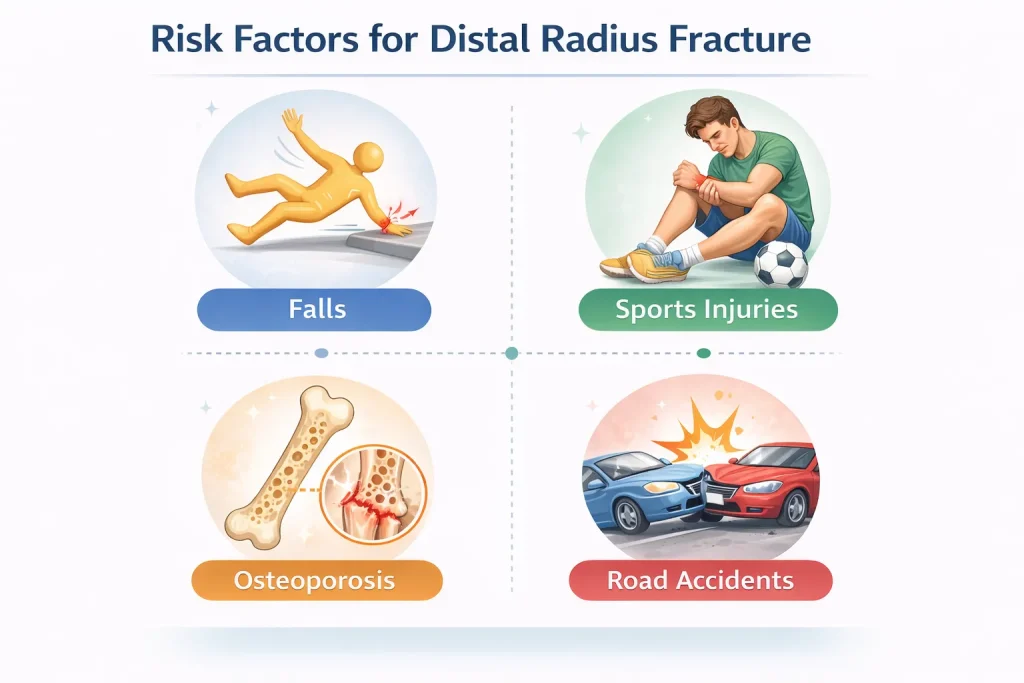
Fall on an Outstretched Hand (FOOSH)
This is the leading cause of distal radius fractures. When someone falls forward, the instinctive reaction is to extend the hands to break the fall, placing stress on the wrist.
Sports Injuries
Athletes involved in sports such as:
- football
- skating
- cycling
- skiing
are at higher risk of wrist fractures.
Road Traffic Accidents
High-energy trauma during accidents can cause complex wrist fractures.
Osteoporosis
Older adults, particularly post-menopausal women, have weakened bones that fracture more easily after minor falls.
Types of Distal Radius Fractures
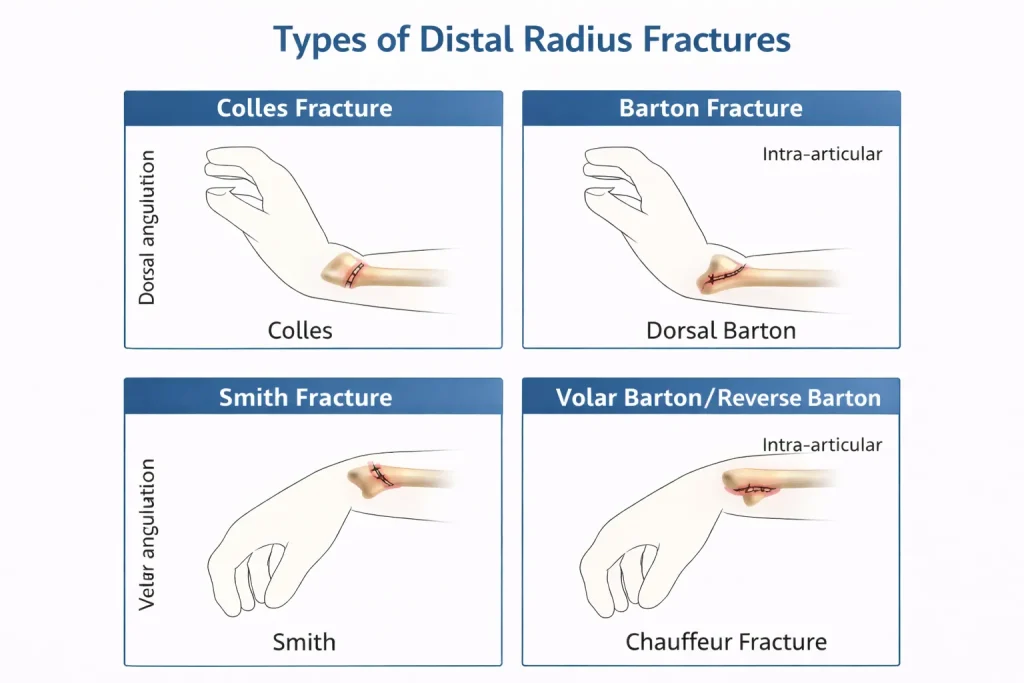
Distal radius fractures can occur in several patterns depending on the mechanism of injury.
Colles Fracture
A Colles fracture occurs when the distal radius breaks with dorsal displacement. This means the fractured bone fragment shifts toward the back of the wrist.
Key features:
- common in elderly patients
- caused by falling on an extended wrist
- characteristic “dinner fork deformity.”
Smith Fracture
A Smith fracture is essentially the opposite of a Colles fracture.
Characteristics include:
- fracture displacement toward the palm
- caused by falling on a flexed wrist
- sometimes called a reverse Colles fracture
Barton Fracture
A Barton fracture involves the wrist joint surface and is considered an intra-articular fracture.
Features include:
- fracture involving the joint surface
- often unstable
- usually requires surgical treatment
Chauffeur Fracture
A Chauffeur fracture affects the radial styloid.
It typically occurs when a direct force is applied to the wrist, often during high-energy trauma.
Classification Systems for Distal Radius Fractures
Orthopedic surgeons use classification systems to describe fracture patterns and determine treatment strategies.
AO Classification
The AO system categorizes fractures based on complexity:
- Type A: extra-articular fractures
- Type B: partial articular fractures
- Type C: complete articular fractures
This classification helps guide surgical decisions.
Frykman Classification
The Frykman system classifies fractures based on involvement of the radiocarpal and distal radioulnar joints.
It includes eight fracture types depending on joint involvement.
Melone Classification
The Melone classification focuses on fractures that involve the wrist joint and divides them into patterns based on fragment displacement.
This system is particularly useful in planning surgical fixation.
Symptoms of a Distal Radius Fracture
Symptoms usually appear immediately after injury.
Common symptoms include:
- severe wrist pain
- swelling around the wrist
- bruising
- limited wrist movement
- tenderness over the radius
- difficulty gripping objects
In severe fractures, the wrist may appear deformed or bent.
Diagnosis of Distal Radius Fractures
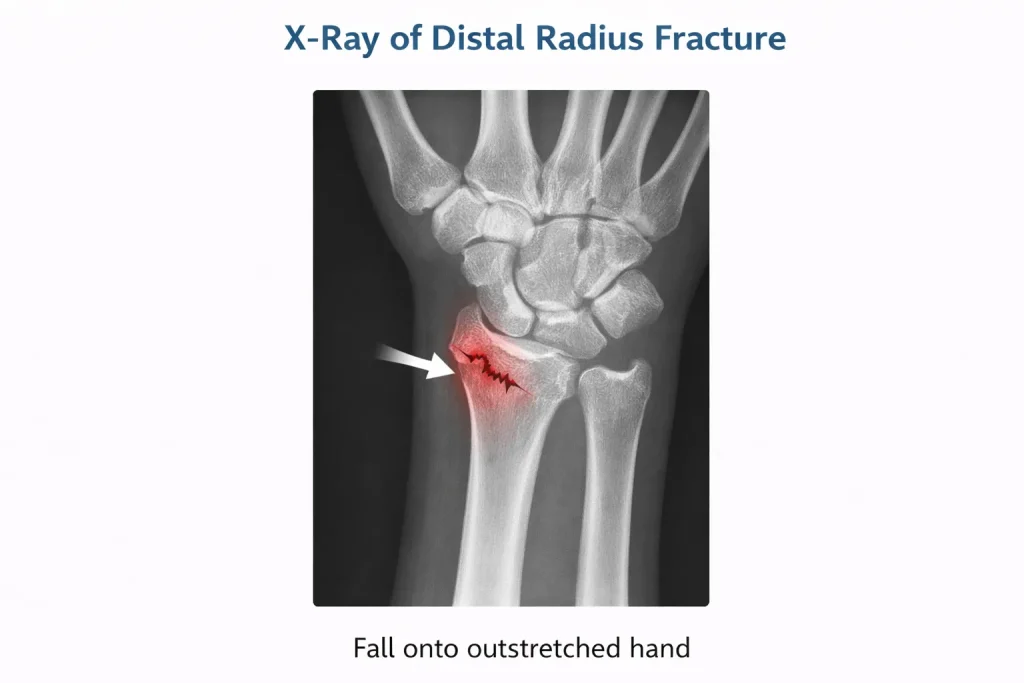
Early diagnosis is essential to determine the severity of the fracture and choose the appropriate treatment.
Physical Examination
Doctors evaluate:
- swelling and bruising
- tenderness
- wrist deformity
- range of motion
- Nerve and blood supply to the hand
X-Ray Imaging
X-rays are the primary diagnostic tool.
Standard wrist X-ray views include:
- AP view
- lateral view
- oblique view
These images reveal fracture patterns, displacement, and joint involvement.
CT Scan
CT scans may be recommended when:
- Fractures involve the joint
- Fracture patterns are complex
- Surgical planning is required
CT imaging provides a detailed 3D visualization of bone fragments.
Treatment of Distal Radius Fractures
Treatment depends on:
- fracture type
- displacement
- patient age
- bone quality
- functional needs
Treatment options include both non-surgical and surgical approaches.
Non-Surgical Treatment
Stable fractures can often be managed without surgery.
Conservative treatment includes:
- immobilization with a cast or splint
- pain management
- elevation and ice therapy
- regular follow-up X-rays
The cast is usually worn for about 4 to 6 weeks until the bone heals.
Surgical Treatment
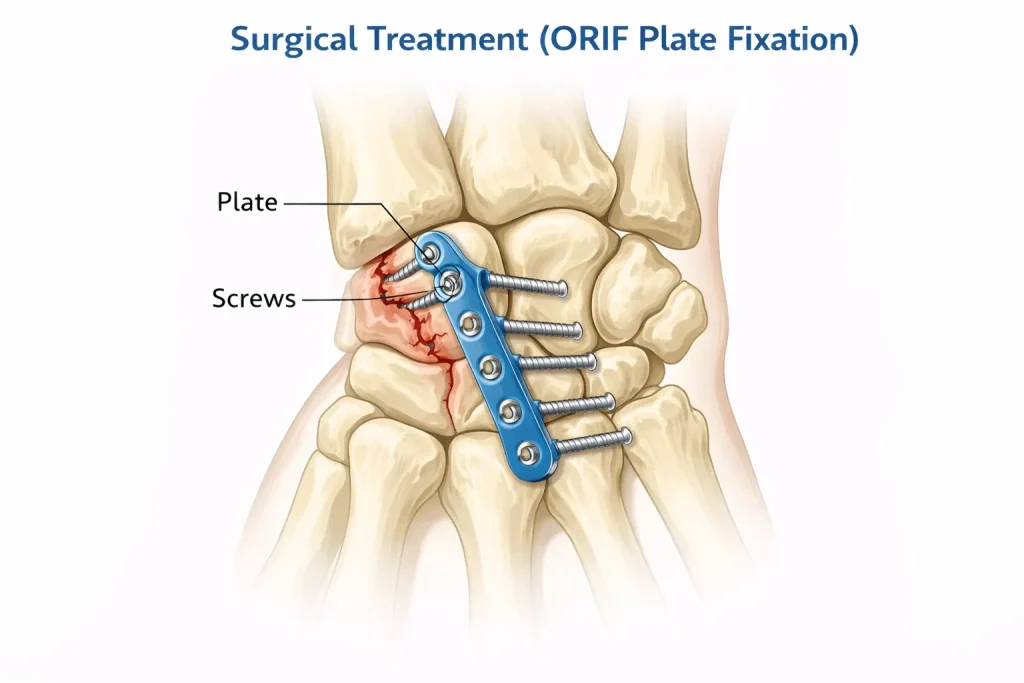
Surgery is recommended when fractures are unstable or displaced.
Common surgical techniques include:
Open Reduction and Internal Fixation (ORIF)
This procedure involves realigning the fractured bone fragments and securing them with plates and screws.
External Fixation
External fixation uses a metal frame outside the body to stabilize the bone.
Percutaneous Pinning
Pins are inserted through the skin to hold bone fragments in place during healing.
Surgical treatment aims to restore normal wrist anatomy and function.
Recovery Timeline After Distal Radius Fracture
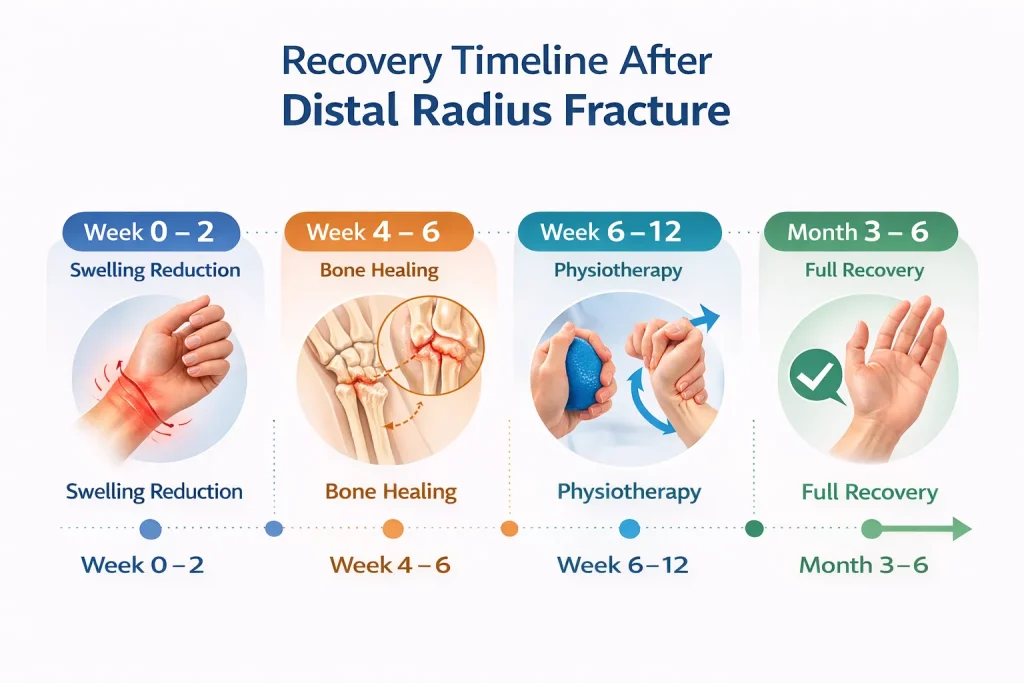
Recovery varies depending on fracture severity and treatment type.
Typical healing timeline:
| Recovery Phase | Time |
|---|---|
| Initial healing | 4–6 weeks |
| Cast removal | 6 weeks |
| Physical therapy | 6–12 weeks |
| Full recovery | 3–6 months |
Some patients may require longer rehabilitation to regain full wrist strength.
Rehabilitation and Physiotherapy
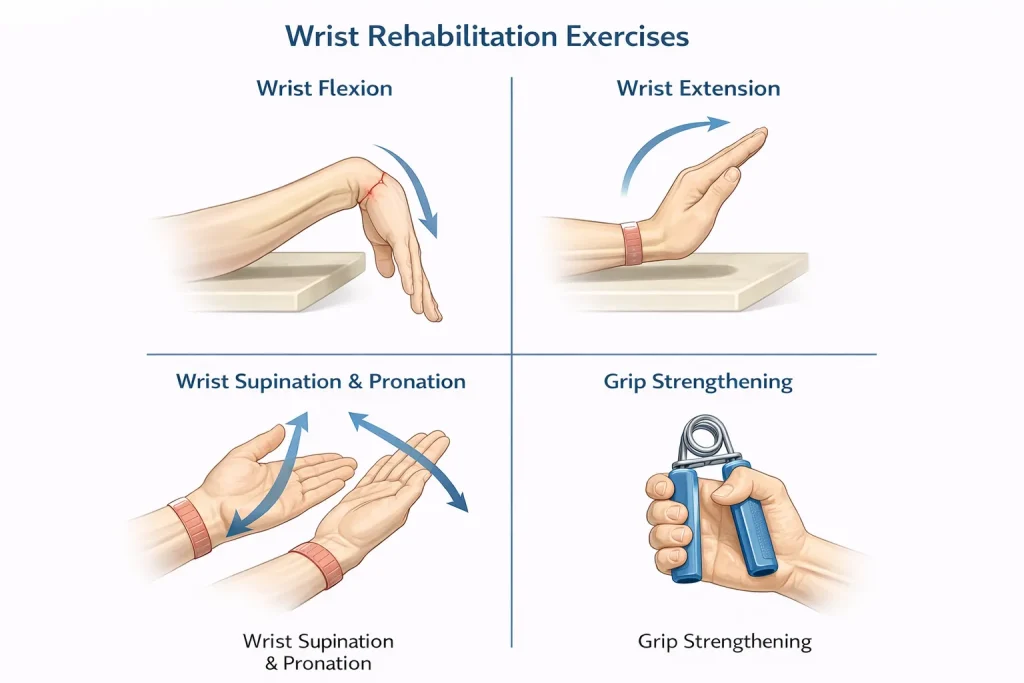
After immobilization, physiotherapy is crucial to restore wrist movement and strength.
Rehabilitation exercises may include:
- wrist range-of-motion exercises
- grip strengthening
- finger mobility exercises
- forearm rotation exercises
Consistent physiotherapy helps prevent stiffness and improve functional recovery.
Complications of Distal Radius Fractures
Although many fractures heal successfully, complications may occur.
Possible complications include:
- malunion (improper bone healing)
- nonunion (bone fails to heal)
- wrist stiffness
- nerve injury
- arthritis
- chronic pain
Early treatment and proper rehabilitation reduce the risk of long-term complications.
Distal Radius Fracture vs Wrist Sprain
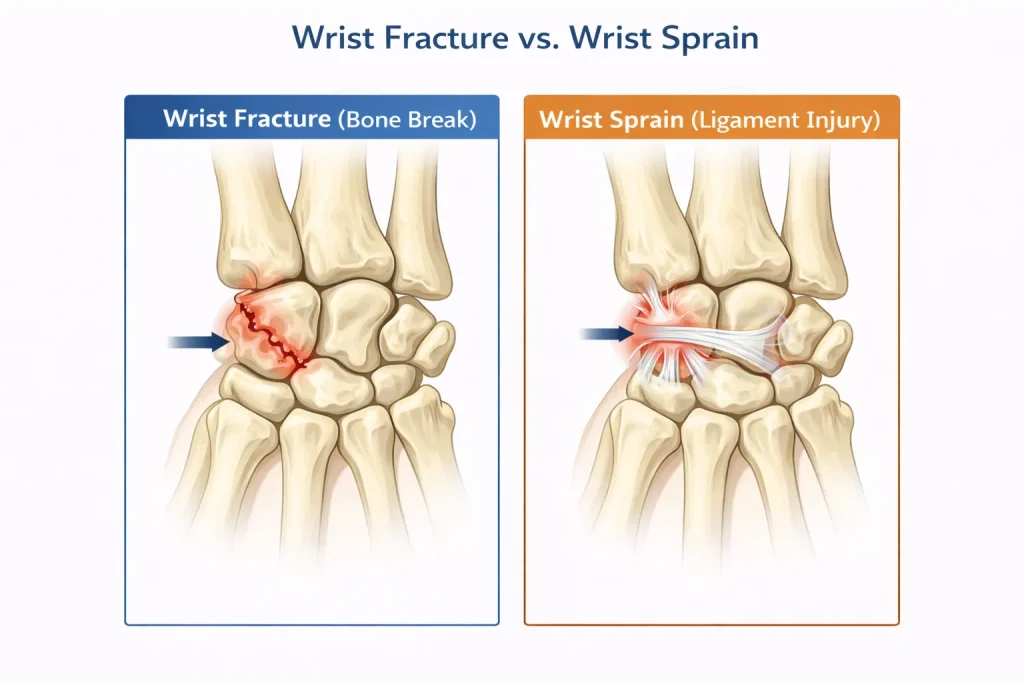
Many people confuse wrist fractures with wrist sprains.
Key differences include:
| Feature | Wrist Fracture | Wrist Sprain |
|---|---|---|
| Bone injury | Yes | No |
| Severe pain | Common | Moderate |
| Deformity | Possible | Rare |
| Treatment | Cast or surgery | Rest and physiotherapy |
Accurate diagnosis requires medical imaging.
When to See a Doctor
You should seek medical attention if you experience:
- severe wrist pain after a fall
- swelling or bruising
- inability to move the wrist
- visible wrist deformity
- numbness in the fingers
Prompt medical evaluation ensures early treatment and prevents complications.
Prevention Tips
While accidents cannot always be avoided, some preventive measures can reduce fracture risk.
Helpful strategies include:
- maintaining strong bones through calcium and vitamin D
- performing weight-bearing exercises
- using protective gear during sports
- improving balance to prevent falls
- Treating osteoporosis early
Conclusion
Distal radius fractures are among the most common orthopedic injuries affecting the wrist. Although these fractures can cause significant pain and functional limitations, timely diagnosis and appropriate treatment often lead to successful recovery.
Treatment options range from simple immobilization for stable fractures to surgical fixation for complex injuries. With proper medical care and rehabilitation, most patients regain wrist mobility and return to their normal daily activities.
Understanding the causes, symptoms, and treatment options for distal radius fractures helps patients seek early care and achieve the best possible outcomes.
Explore all our fracture-related blogs
| Topic | Link |
| Cervical Radiculopathy | Click here |
| Distal Radius Fracture | Click here |
| Proximal Humerus Fracture | Click here |
| Lauge-Hansen Classification of Ankle Fractures | Click here |
| Weber Classification of Ankle Fractures | Click here |
| Trimalleolar Fracture | Click here |
| Bimalleolar Ankle Fracture | Click here |
| Lateral Malleolus Fracture | Click here |
| Medial Malleolus Fracture | Click here |
| Complete Guide to Ankle Fractures | Click here |
| Femur Shaft Fractures | Click here |
| Tibia Fracture | Click here |
FAQs
What is the most common type of distal radius fracture?
The most common distal radius fracture is the Colles fracture, which typically occurs after a fall on an outstretched hand and results in dorsal displacement of the distal radius.
How long does a distal radius fracture take to heal?
Most distal radius fractures heal within 6 weeks, but full functional recovery may take 3 to 6 months, depending on fracture severity and rehabilitation.
Do all distal radius fractures require surgery?
No. Many stable fractures can heal with immobilization using a cast or splint. Surgery is typically required only for unstable or displaced fractures.
Can you move your wrist with a distal radius fracture?
Movement is usually limited due to pain and swelling. Attempting to move the wrist may worsen the injury, so immobilization is recommended until proper evaluation.
What are the long-term complications of distal radius fractures?
Possible long-term complications include arthritis, wrist stiffness, nerve injury, and reduced grip strength if fractures are not treated properly.
What is the recovery time after distal radius fracture surgery?
Recovery after distal radius fracture surgery usually takes around 3 to 6 months, depending on fracture severity, surgical fixation method, and rehabilitation. Bone healing typically occurs within 6–8 weeks, but full wrist strength and mobility return gradually with physiotherapy and regular exercises.
Can a distal radius fracture heal without surgery?
Yes, many distal radius fractures can heal without surgery if the bone fragments remain stable and properly aligned. Treatment usually involves a cast or splint for about 4–6 weeks, followed by physiotherapy to restore wrist strength and range of motion.
What are the symptoms of a distal radius fracture after a fall?
Common symptoms after a fall include severe wrist pain, swelling, bruising, limited wrist movement, and difficulty gripping objects. In some cases, the wrist may appear deformed or bent, which is a strong indicator of a distal radius fracture.
How is a distal radius fracture diagnosed on X-ray?
Doctors diagnose distal radius fractures using wrist X-rays, typically taken in AP and lateral views. These images reveal fracture location, displacement, joint involvement, and bone alignment, helping physicians determine whether the injury requires casting or surgical fixation.
What exercises help with recovery after a distal radius fracture?
Rehabilitation exercises may include wrist flexion and extension movements, forearm rotation exercises, grip strengthening, and finger mobility drills. These exercises help restore wrist flexibility, improve circulation, and rebuild strength after cast removal or surgery.