
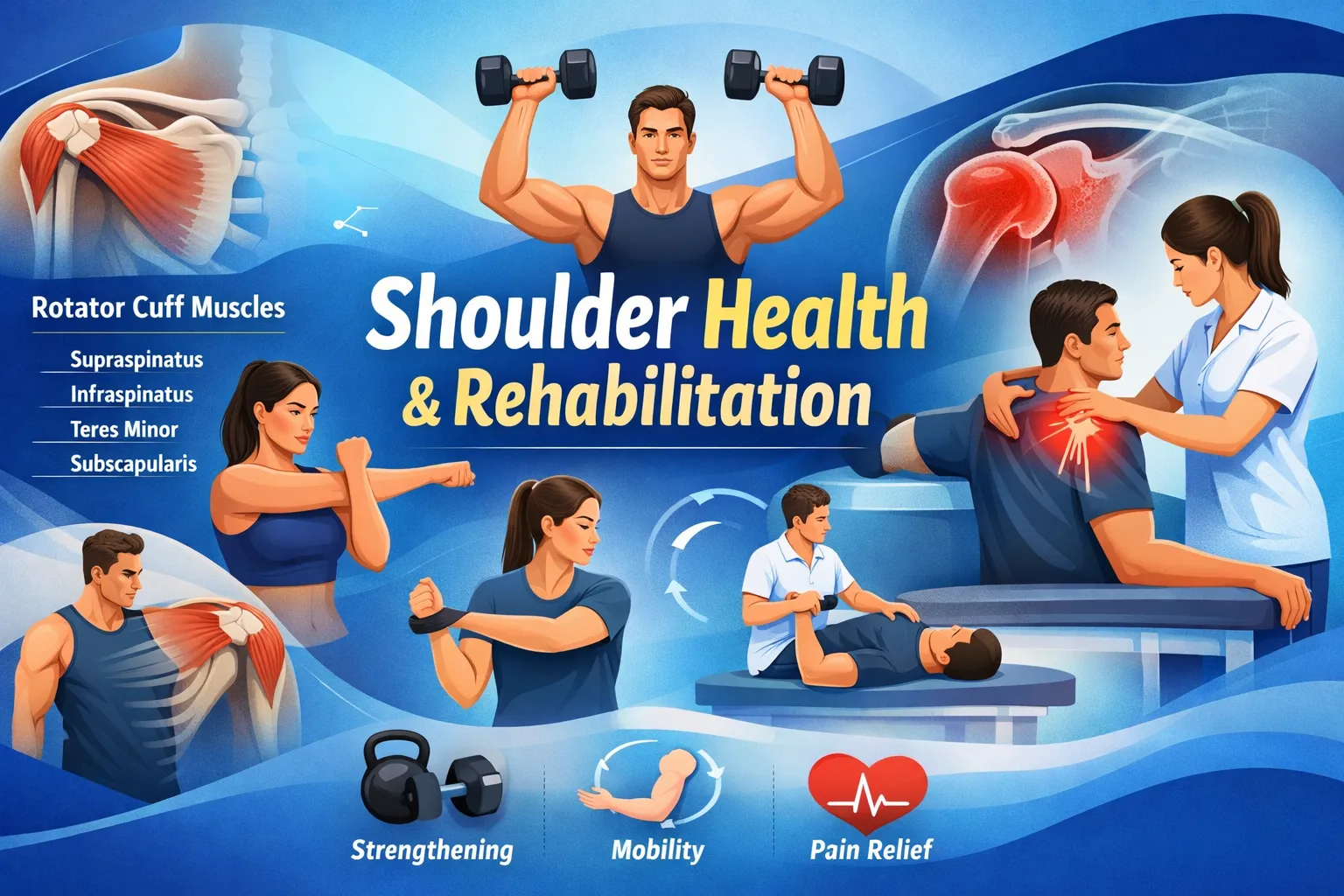
Shoulder pain, stiffness, and limited mobility are common musculoskeletal problems affecting people of all age groups. Whether caused by prolonged desk work, poor posture, sports injuries, aging, or heavy gym workouts, shoulder issues can significantly impact everyday activities such as lifting objects, reaching overhead, or even simple movements like combing hair.
The shoulder joint is one of the most mobile joints in the human body, allowing movement in multiple directions. However, this remarkable flexibility also makes it vulnerable to injuries, muscle strains, and conditions such as rotator cuff tears, shoulder impingement, and frozen shoulder.
Regular shoulder exercises play a crucial role in maintaining joint stability, improving mobility, and strengthening the muscles that support the shoulder complex. A well-designed shoulder workout routine that includes strengthening exercises, mobility drills, and rehabilitation movements can help reduce pain, prevent injuries, and restore normal shoulder function.
In this comprehensive guide of Shoulder Exercises for Strength and Mobility, we will explore shoulder anatomy, the benefits of shoulder training, the best shoulder exercises at home and in the gym, rotator cuff strengthening techniques, physiotherapy exercises for shoulder pain, and rehabilitation programs recommended by orthopedic specialists.
Table of Contents
Understanding Shoulder Anatomy and the Rotator Cuff
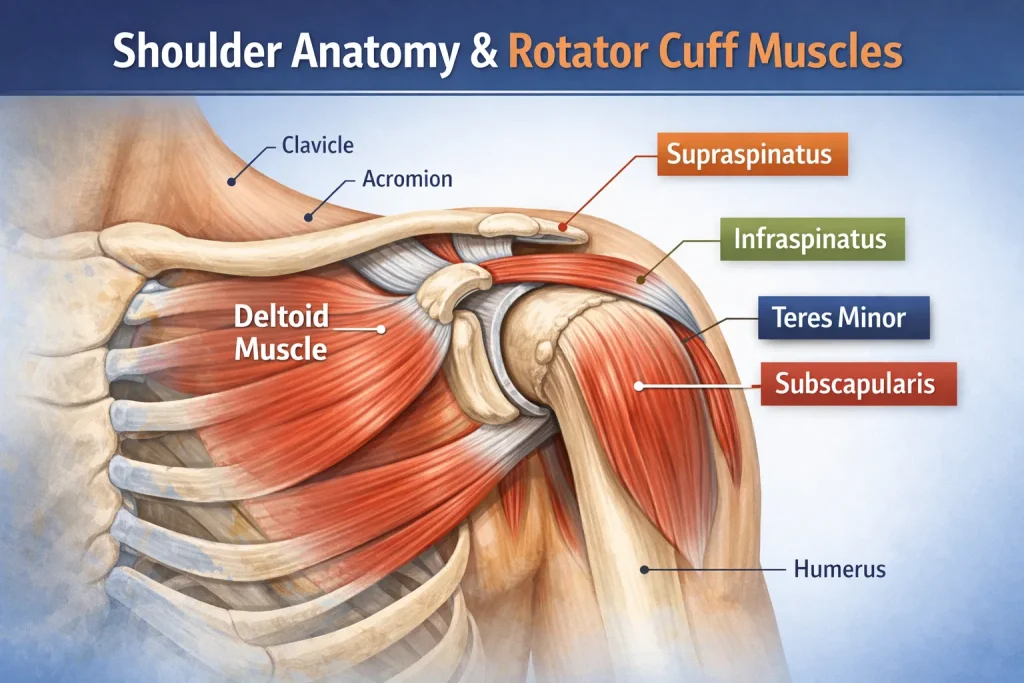
The shoulder joint is a ball-and-socket joint that connects the upper arm bone (humerus) to the shoulder blade (scapula). It works together with the collarbone (clavicle) and several muscles, tendons, and ligaments to allow complex arm movements.
Because of its wide range of motion, the shoulder relies heavily on surrounding muscles for stability.
Read: Proximal Humerus Fracture: Symptoms, Types, Treatment & Recovery Guide
Major Shoulder Muscles
Deltoid Muscle
The deltoid is the primary muscle responsible for lifting and rotating the arm. It consists of three distinct sections:
- Anterior deltoid (front) – assists in lifting the arm forward.
- Lateral deltoid (side) – responsible for lifting the arm sideways.
- Posterior deltoid (rear) – helps move the arm backward.
Exercises such as shoulder presses, lateral raises, and front raises target the deltoid muscles.
Rotator Cuff Muscles
The rotator cuff is a group of four muscles that stabilize the shoulder joint and control arm rotation:
- Supraspinatus
- Infraspinatus
- Teres Minor
- Subscapularis
These muscles keep the head of the humerus firmly positioned in the shoulder socket during movement.
Strong rotator cuff muscles are essential for athletes, weightlifters, and individuals performing overhead activities.
Scapular Stabilizing Muscles
Several muscles around the shoulder blade support proper shoulder movement:
- Trapezius
- Rhomboids
- Serratus anterior
These muscles help maintain shoulder blade stability and proper posture during lifting, pulling, and pushing movements.
Common Causes of Shoulder Pain
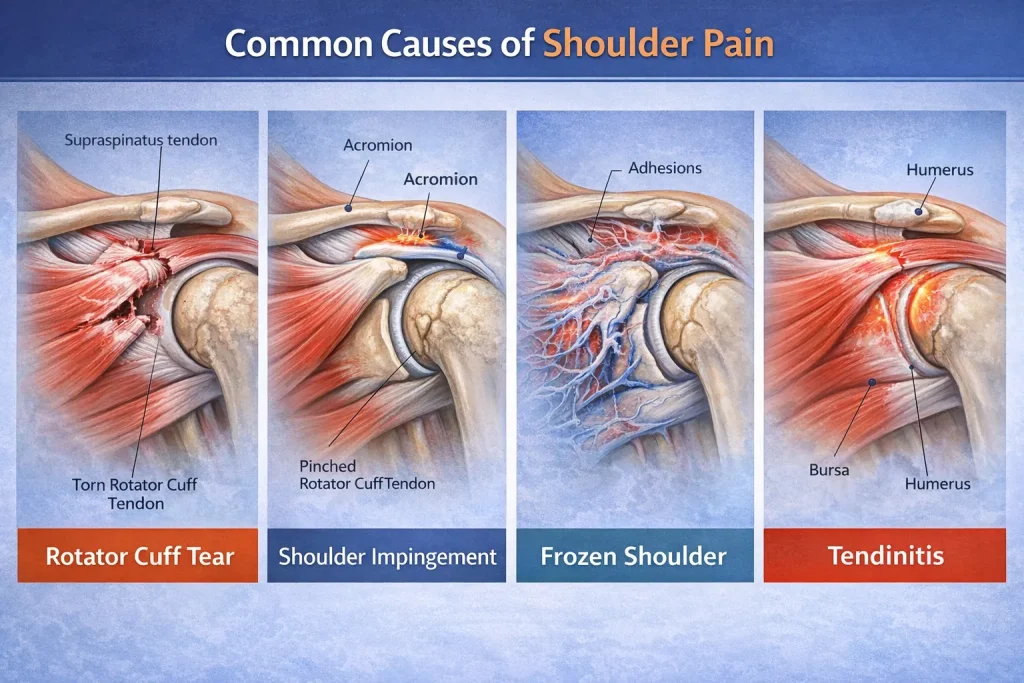
Shoulder discomfort may be caused by various medical conditions or lifestyle habits. Understanding the underlying causes helps guide appropriate treatment and exercise selection.
Rotator Cuff Injury
Rotator cuff tears or inflammation are among the most common causes of shoulder pain. These injuries often occur due to repetitive overhead activities, sports injuries, or age-related degeneration.
Shoulder Impingement Syndrome
Shoulder impingement occurs when the rotator cuff tendons become compressed between the bones of the shoulder. This leads to pain during arm lifting and overhead movements.
Frozen Shoulder (Adhesive Capsulitis)
Frozen shoulder causes stiffness, reduced mobility, and pain in the shoulder joint. It commonly develops after prolonged immobilization or injury.
Tendinitis and Bursitis
Inflammation of the tendons or bursae in the shoulder can lead to pain and swelling, especially during repetitive arm movements.
Poor Posture
Prolonged sitting, slouched posture, and excessive screen time can weaken shoulder muscles and lead to stiffness or discomfort.
Benefits of Shoulder Exercises
Incorporating shoulder exercises into your fitness or rehabilitation routine offers numerous physical and functional benefits.
Improved Shoulder Strength
Strengthening exercises help develop the deltoid, trapezius, and rotator cuff muscles. Stronger muscles provide better support to the shoulder joint and improve upper-body strength.
Increased Mobility and Flexibility
Shoulder mobility exercises improve the joint’s range of motion, making everyday movements easier and more comfortable.
Injury Prevention
Weak shoulder muscles increase the risk of injuries such as rotator cuff tears or shoulder impingement. Regular strengthening exercises help protect the joint.
Better Posture
Exercises that strengthen the scapular muscles improve posture and reduce strain caused by prolonged sitting or computer use.
Support for Rehabilitation
Shoulder exercises are commonly recommended in physiotherapy programs for recovering from injuries or surgery.
Best Shoulder Exercises at Home (No Equipment)
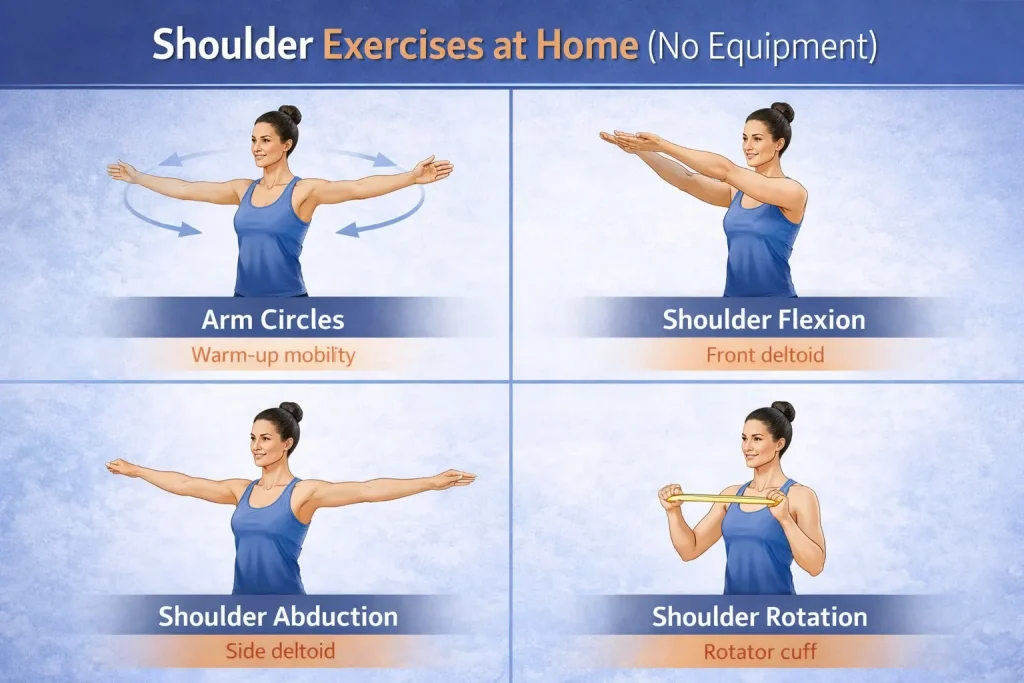
You can strengthen your shoulders effectively even without gym equipment.
Arm Circles
Arm circles are simple warm-up exercises that improve blood circulation and joint mobility.
Stand upright with arms extended sideways and rotate them in small circles. Gradually increase the size of the circles to activate the shoulder muscles.
Shoulder Flexion
Shoulder flexion involves lifting the arms forward until they reach shoulder height or above. This movement primarily activates the anterior deltoid.
Shoulder Abduction
In this exercise, the arms are raised sideways away from the body. It strengthens the lateral deltoid muscles and improves shoulder stability.
Shoulder Rotation
Rotational movements help strengthen the rotator cuff muscles and maintain joint stability.
These exercises are frequently used in physiotherapy programs for shoulder rehabilitation.
Best Shoulder Exercises at the Gym
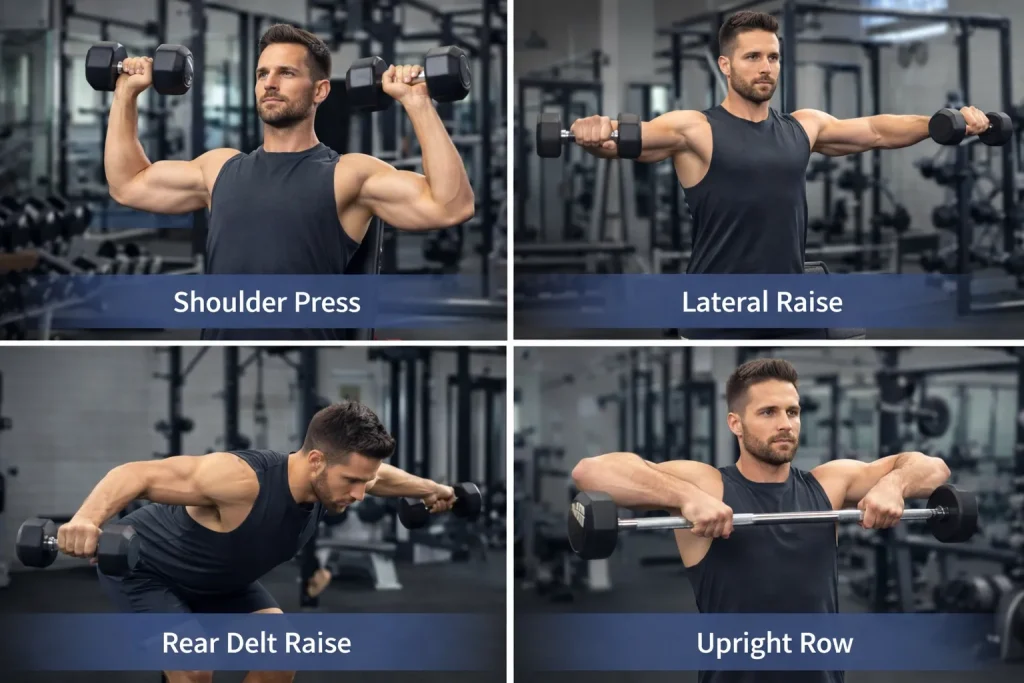
Gym training allows the use of weights and machines to build stronger shoulder muscles.
Shoulder Press
The shoulder press is a compound exercise that targets the deltoids, trapezius, and triceps.
It can be performed with dumbbells, barbells, or resistance machines.
Lateral Raises
Lateral raises isolate the middle deltoid muscles and help develop broader shoulders.
Using controlled movements with light weights helps prevent shoulder strain.
Bent-Over Rear Delt Raises
This exercise targets the posterior deltoid muscles, which are often neglected in workouts.
Strengthening the rear deltoids improves shoulder balance and posture.
Upright Rows
Upright rows strengthen the trapezius and deltoid muscles while improving upper-body strength.
Rotator Cuff Strengthening Exercises
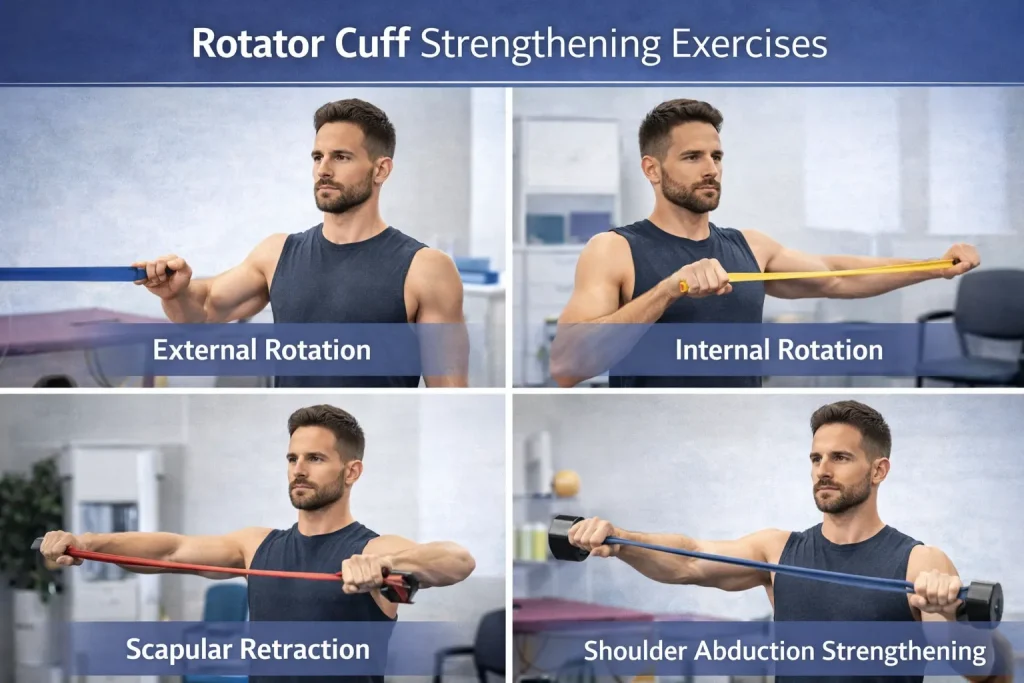
Orthopedic specialists often recommend rotator cuff strengthening exercises to stabilize the shoulder joint and prevent injuries.
External Rotation Exercise
External rotation strengthens the infraspinatus and teres minor muscles.
This exercise is typically performed with resistance bands or light dumbbells.
Internal Rotation Exercise
Internal rotation targets the subscapularis muscle and improves shoulder control during pushing movements.
Scapular Retraction
Scapular retraction strengthens the rhomboids and trapezius muscles, improving shoulder blade stability.
Shoulder Abduction Strengthening
Raising the arm sideways against resistance helps strengthen the deltoid and supraspinatus muscles.
Shoulder Rehabilitation Program (Orthopedic Approach)
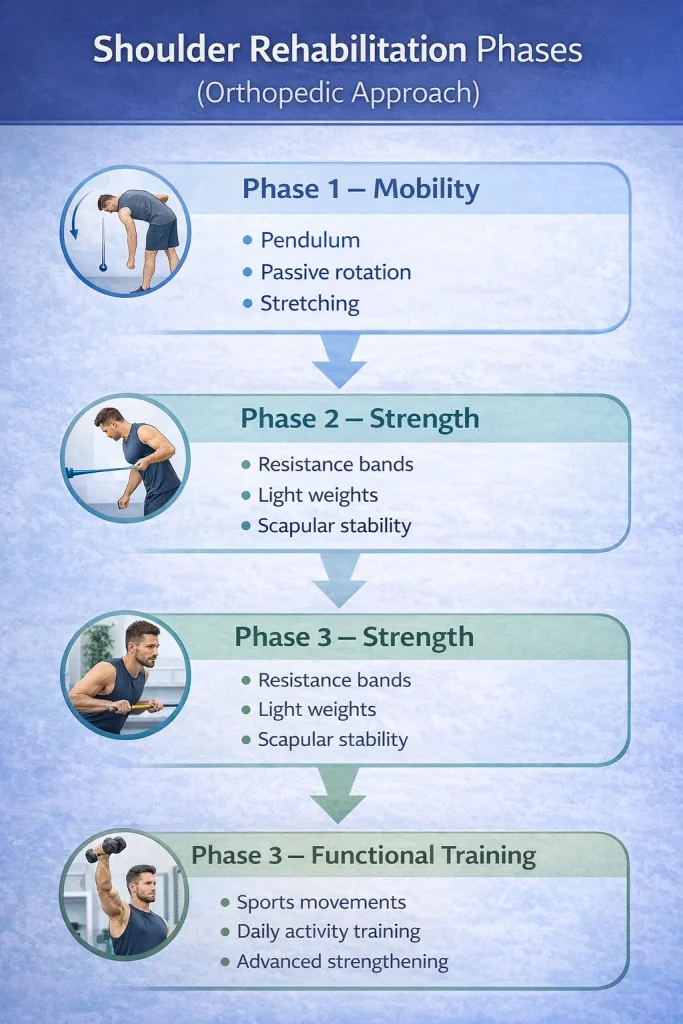
Orthopedic rehabilitation programs typically follow a structured progression designed to restore shoulder function safely.
Phase 1: Mobility and Flexibility
The first stage focuses on restoring joint movement through gentle stretching and range-of-motion exercises.
Common exercises include:
- pendulum movements
- passive shoulder rotation
- assisted stretching
Phase 2: Strengthening
Once mobility improves, strengthening exercises are introduced to rebuild muscle support around the shoulder joint.
Exercises include:
- resistance band rotations
- light dumbbell exercises
- scapular stabilization drills
Phase 3: Functional Training
The final stage focuses on improving strength, endurance, and coordination for daily activities and sports performance.
Shoulder Stretches for Flexibility
Stretching exercises help reduce muscle tightness and improve shoulder mobility.
Sleeper Stretch
The sleeper stretch targets the rotator cuff muscles and improves internal rotation.
It is particularly helpful for individuals experiencing shoulder tightness.
Cross-Body Shoulder Stretch
This stretch targets the posterior shoulder muscles and improves flexibility.
Pendulum Exercise
Pendulum exercises are commonly used in early rehabilitation stages.
They allow gentle shoulder movement without placing excessive stress on the joint.
Physiotherapy Exercises for Shoulder Pain
Physiotherapy exercises are designed to strengthen the shoulder while reducing pain and inflammation.
Common physiotherapy exercises include:
- shoulder impingement exercises
- rotator cuff rehabilitation exercises
- shoulder range-of-motion exercises
- shoulder stabilization exercises
These exercises gradually restore strength and improve shoulder function.
Shoulder Workout Routine (Beginner to Advanced)
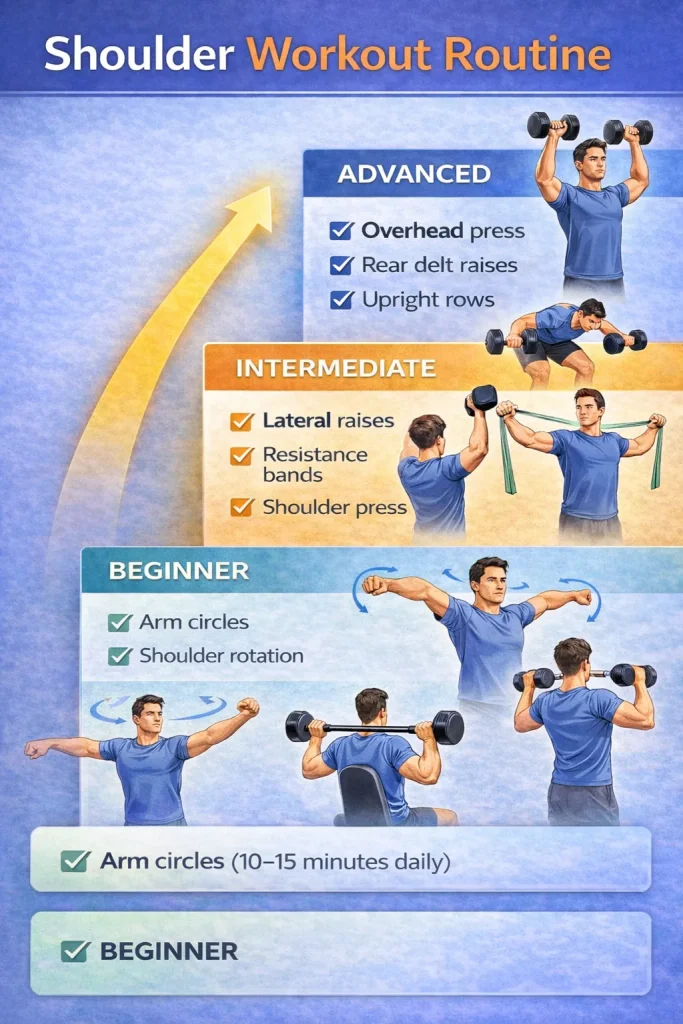
A balanced shoulder training program should include mobility, strengthening, and stretching exercises.
Beginner Shoulder Routine
Beginners should start with simple exercises such as:
- arm circles
- shoulder flexion
- shoulder rotations
These exercises improve mobility and prepare the muscles for more challenging workouts.
Intermediate Shoulder Routine
Intermediate workouts can include:
- lateral raises
- shoulder presses
- resistance band exercises
These movements help build muscle strength and improve shoulder stability.
Advanced Shoulder Routine
Advanced workouts may include:
- overhead presses
- upright rows
- rear delt raises
- resistance training
These exercises promote muscle growth and endurance.
Expert Tips for Safe Shoulder Training
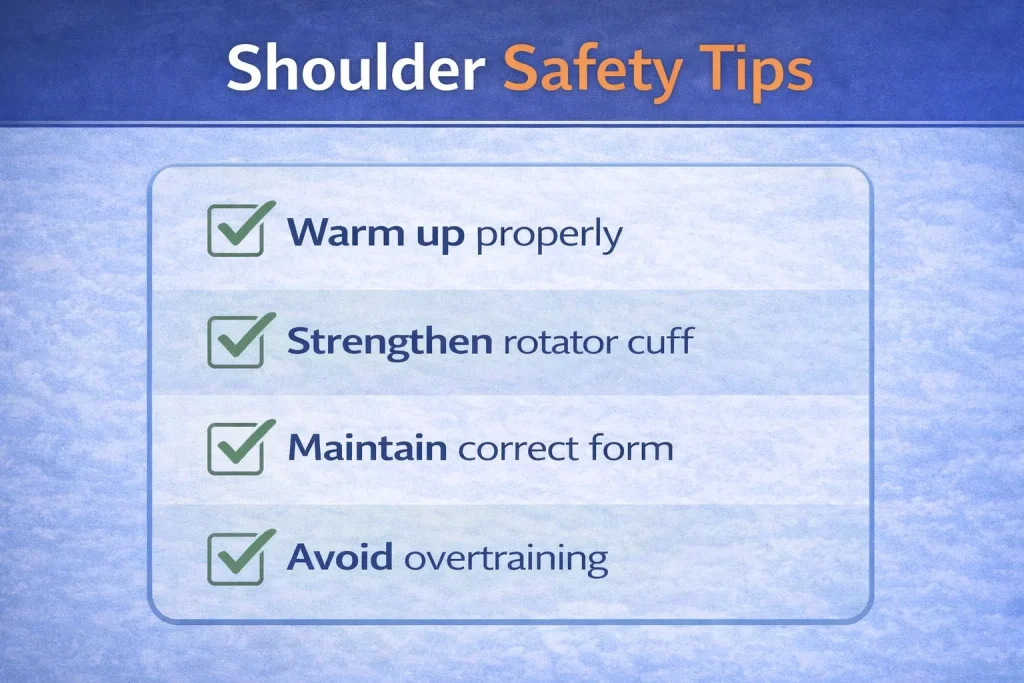
Warm Up Properly
Always start with mobility exercises and light stretches to prepare the shoulder muscles.
Strengthen the Rotator Cuff
Strong rotator cuff muscles stabilize the shoulder joint and reduce injury risk.
Maintain Proper Form
Incorrect technique during shoulder exercises can increase strain on the joint.
Avoid Overtraining
Shoulder muscles are involved in many upper-body exercises, so adequate rest between workouts is essential.
When to See an Orthopedic Specialist
While exercises help maintain shoulder health, medical attention may be necessary if symptoms persist.
Consult an orthopedic specialist if you experience:
- persistent shoulder pain
- limited arm movement
- swelling or inflammation
- shoulder weakness
- pain lasting longer than two weeks
Early diagnosis and treatment help prevent complications and long-term damage.
Conclusion
Shoulder exercises play a vital role in maintaining strength, mobility, and joint stability. A well-balanced program that includes strengthening movements, stretching exercises, and rehabilitation techniques can significantly improve shoulder function and reduce the risk of injury.
Whether performed at home, in the gym, or as part of physiotherapy treatment, consistent shoulder training supports long-term joint health and overall physical performance.
By strengthening the rotator cuff muscles, improving mobility, and maintaining proper exercise technique, individuals can build stronger and healthier shoulders while minimizing the risk of injury.
Explore all our fracture-related blogs
| Topic | Link |
| Cervical Radiculopathy | Click here |
| Distal Radius Fracture | Click here |
| Proximal Humerus Fracture | Click here |
| Lauge-Hansen Classification of Ankle Fractures | Click here |
| Weber Classification of Ankle Fractures | Click here |
| Trimalleolar Fracture | Click here |
| Bimalleolar Ankle Fracture | Click here |
| Lateral Malleolus Fracture | Click here |
| Medial Malleolus Fracture | Click here |
| Complete Guide to Ankle Fractures | Click here |
FAQs
What are the best shoulder exercises for strength?
The best shoulder strengthening exercises include shoulder presses, lateral raises, upright rows, and rear delt raises. These exercises target the deltoid muscles and improve overall shoulder stability.
Can I perform shoulder exercises at home?
Yes. Exercises such as arm circles, shoulder flexion, shoulder abduction, and shoulder rotations can be performed at home without equipment and still improve shoulder strength and mobility.
What exercises strengthen the rotator cuff?
Rotator cuff strengthening exercises include internal rotation, external rotation, resistance band exercises, and scapular stabilization movements.
What stretches improve shoulder flexibility?
Sleeper stretches, cross-body shoulder stretches, and pendulum exercises are effective for improving shoulder flexibility and reducing stiffness.
How often should I train shoulders?
Most individuals can safely train their shoulders two to three times per week, depending on fitness level and recovery time.
What exercises help relieve shoulder pain?
Physiotherapy exercises such as shoulder mobility exercises, rotator cuff strengthening exercises, and range-of-motion exercises can help relieve shoulder pain and restore movement.