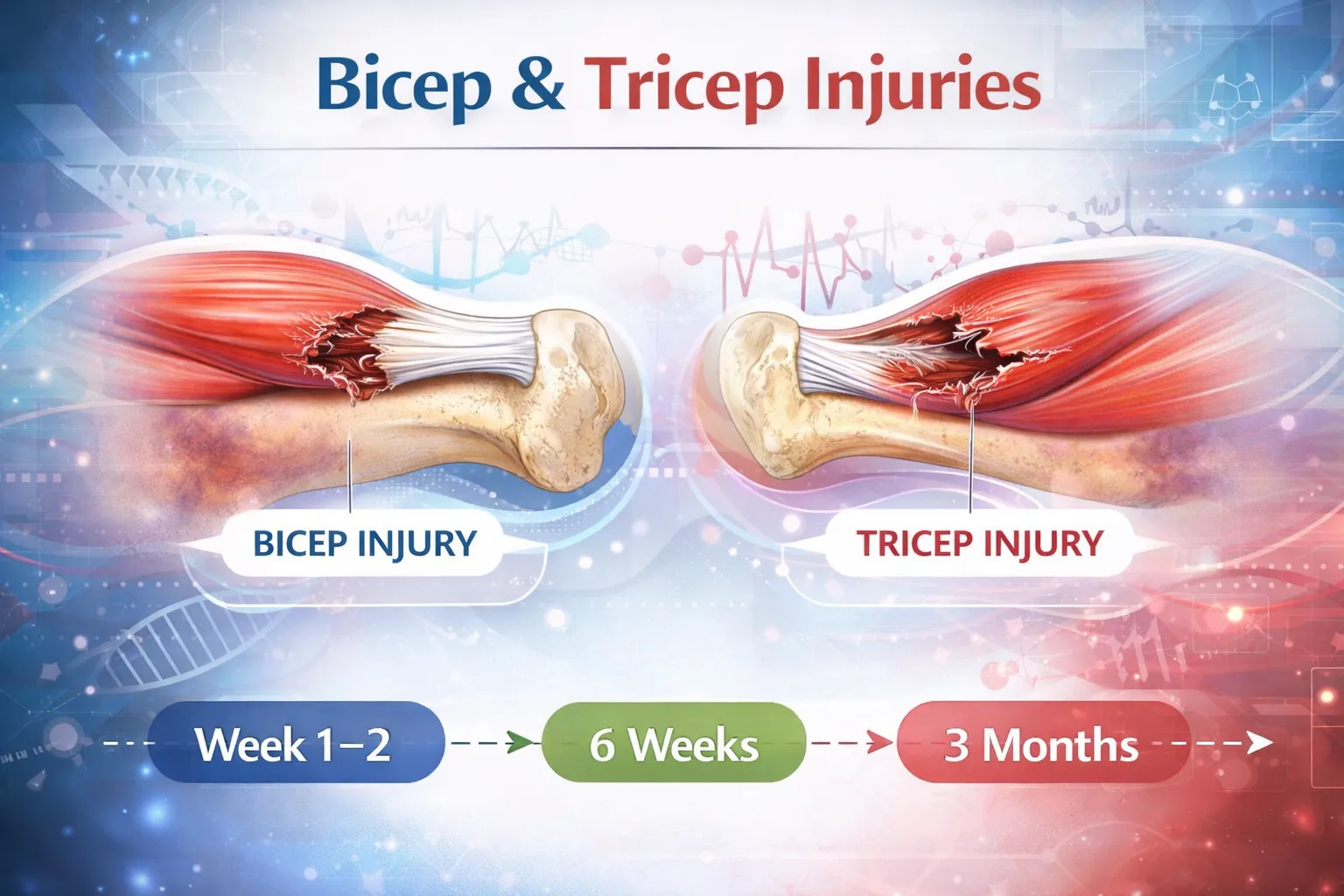
Injuries to the upper arm can change everyday life very quickly. Simple actions like lifting a bag, pushing a door, or bending the elbow can suddenly become painful or impossible. A bicep injury, bicep muscle tear, bicep tendon tear, or torn tricep muscle is more common than people think, especially among active adults, gym-goers, and those who do physical work. These injuries range from mild strains to serious conditions like a distal biceps rupture or a ruptured tendon in the elbow.
This guide explains bicep & tricep tendon tears and muscle injuries in clear language. You will learn how these injuries happen, what symptoms to watch for, how doctors diagnose them, and what recovery really looks like.
Table of Contents
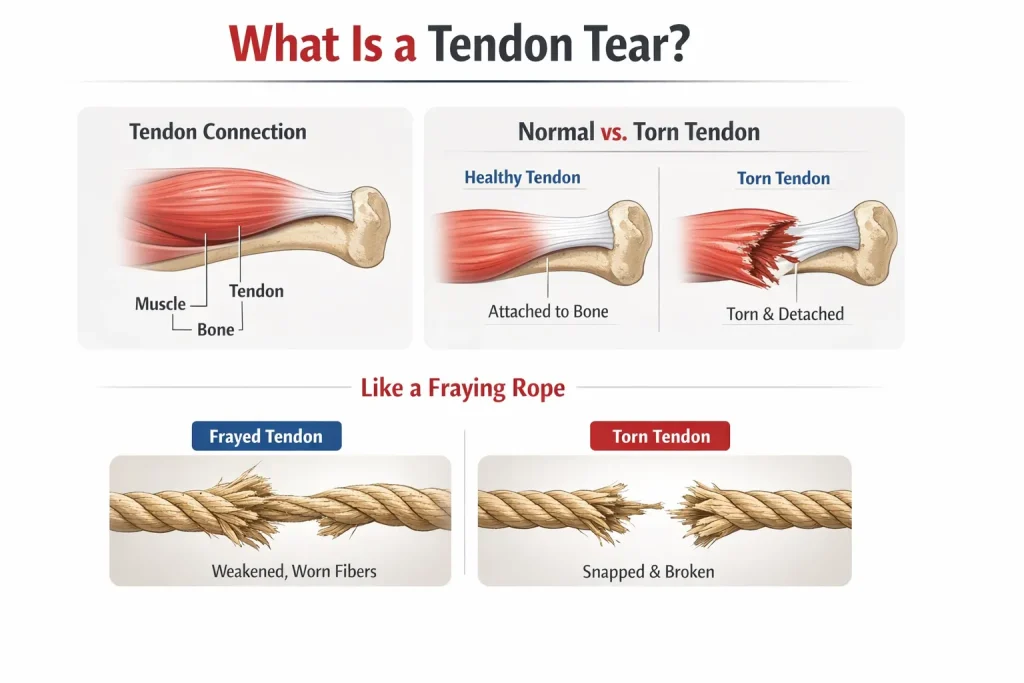
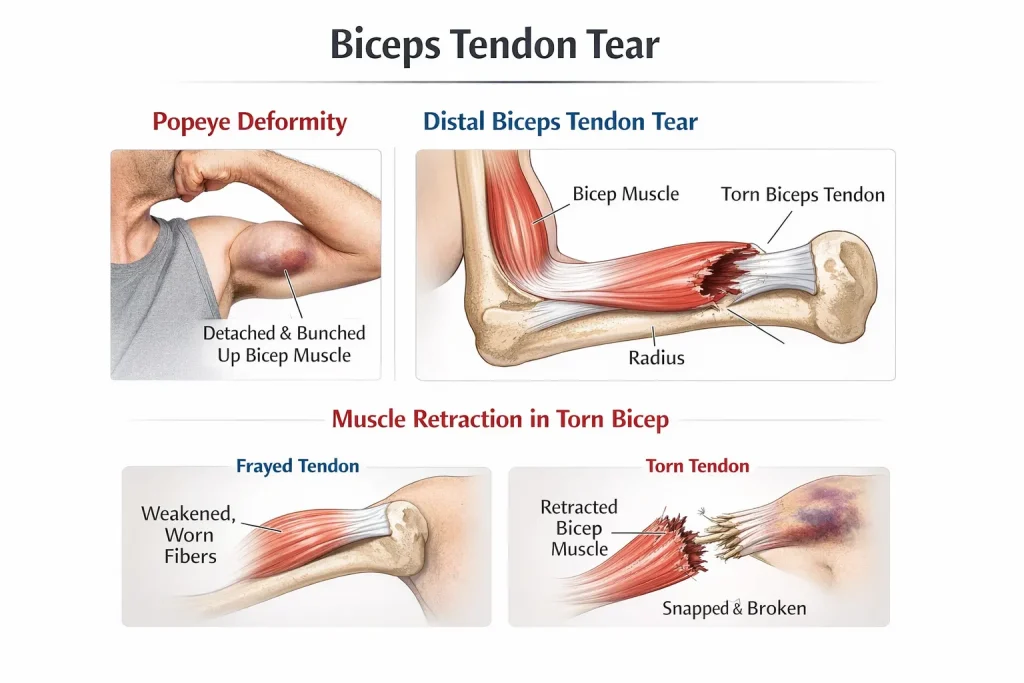
A bicep or tricep tendon tear happens when the strong cord that connects muscle to bone gets damaged or breaks, much like a rope that frays over time or snaps under sudden force. Some people feel it during heavy lifting, others during sports, and some during simple daily tasks. A loud pop, sudden pain, swelling, and weakness are common warning signs. In biceps injuries, the muscle may bunch up, creating what doctors call a Popeye deformity, often seen with a detached bicep muscle or ruptured bicep. Triceps injuries usually cause pain at the back of the elbow and make it hard to straighten the arm. Not every tendon tear needs surgery, but ignoring symptoms can lead to long-term strength loss. Early diagnosis, proper rest, and the right treatment plan make recovery smoother and more complete. Think of a tendon like a bridge cable. Small damage can sometimes be repaired with care, but a full break often needs professional repair to restore strength and function.
Understanding the Biceps and Triceps Muscles
The biceps brachii is the muscle on the front of your upper arm. It helps bend the elbow and rotate the forearm. The triceps muscle sits at the back of the upper arm and straightens the elbow.
This difference matters. Many people search for triceps vs biceps because symptoms and treatment are not the same. A bicep tear usually affects lifting and twisting. A triceps injury affects pushing and straightening.
What is a Biceps Tendon Tear
A biceps tendon tear means the tendon connecting the biceps muscle to the shoulder or elbow has partially or completely torn. This injury often occurs near the shoulder or at the elbow.
Think of the tendon as a thick cable. When it stretches too much or wears down over time, it can fail.
Common Types of Biceps Injuries
- Bicep muscle tear
- Torn bicep muscle
- Torn bicep tendon
- Bicep tendon injury
- Distal biceps tendon tear
- Distal biceps rupture
A distal bicep tear happens near the elbow and often causes more strength loss than shoulder-level injuries.
Causes of Biceps Tendon Tears
1. Acute Injury
A sudden force can tear the tendon. This may happen while lifting something heavy or during a fall.
2. Overuse
Repeated overhead movements or heavy weight training can weaken the tendon slowly. Over time, it becomes easier to tear.
3. Age-Related Degeneration
As we age, tendons lose flexibility. This makes a bicep injury more likely, even with normal activity.
Symptoms of a Biceps Tear
Common bicep tear symptoms include:
- Sudden pain in the upper arm or elbow
- A popping sound during injury
- Swelling and bruising
- Weakness when bending the arm
- Torn bicep symptoms, like reduced grip strength
- A visible bulge in the arm, often linked to a detached bicep muscle
- Biceps brachii tear symptoms, such as fatigue with simple movements
What is a Triceps Tendon Tear
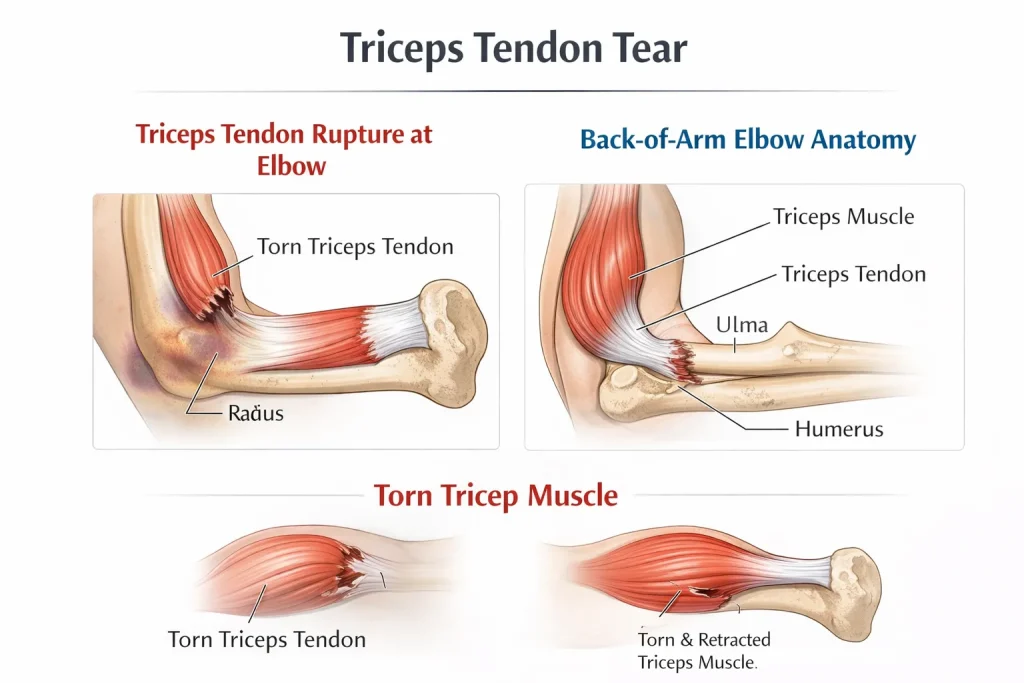
A triceps tendon tear affects the tendon that attaches the triceps muscle to the elbow. This injury makes it hard to straighten the arm.
People often describe it as a pulled tricep muscle, ripped tricep muscle, or torn tricep muscle.
Causes of Triceps Tendon Tears
1. Sudden Trauma
A fall on an outstretched hand or a direct hit to the elbow can tear the tendon.
2. Overuse
Activities that involve forceful elbow extension, like bench pressing or throwing, increase risk.
3. Degeneration
With age, the tendon weakens, increasing the chance of a torn tendon.
Symptoms of a Triceps Tear
Common torn tricep symptoms include:
- Sharp pain in the back of the elbow
- Swelling and tenderness
- Trouble straightening the arm
- Weakness when pushing
- Longer torn tricep recovery time if not treated early
Bicep Tear vs Strain and Tricep Strain vs Tear
A strain is like overstretching a rubber band. A tear is when the band snaps.
A bicep tear vs strain comparison matters because tears often need medical care, while strains usually heal with rest.
The same applies to tricep strain vs tear.
Diagnosis of Tendon and Muscle Tears
Doctors diagnose injuries through:
- Physical examination
- Strength testing
- Imaging tests
An MRI or ultrasound helps confirm a tendon tear, snapped tendon in the elbow, or ruptured tendon in the elbow.

Treatment Options for Biceps and Triceps Injuries

Non-Surgical Treatment
Used for partial tears and mild injuries:
- Rest and activity modification
- Ice and pain relief medication
- Physical therapy
- Gradual strengthening
This approach works well for many cases of tendon injury in arm.
Surgical Treatment
Surgery may be recommended for:
- Complete tears
- Severe weakness
- Active individuals
Procedures like bicep tear surgery or tricep tear surgery involve reattaching the tendon to the bone. This is common in distal biceps rupture cases.
Recovery and Rehabilitation
Biceps Recovery
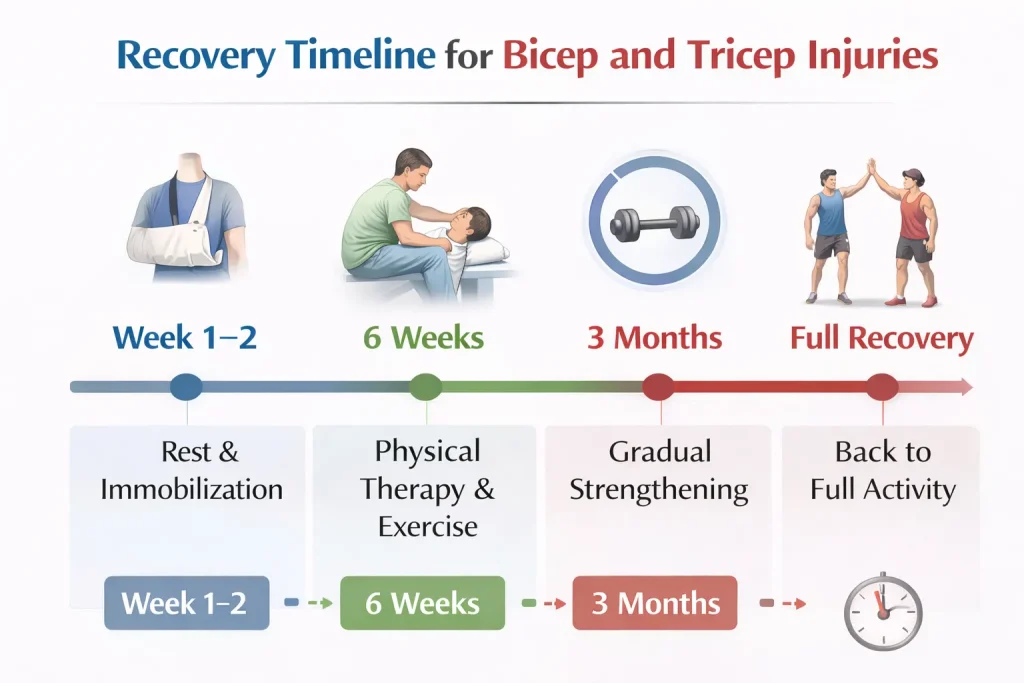
Bicep muscle tear recovery depends on severity. Mild cases heal in weeks. Surgical cases may take months. Understanding bicep tear recovery time helps manage expectations.
Triceps Recovery
Torn tricep recovery time varies. Physical therapy is key to regaining strength and motion.
Recovery is like rebuilding a bridge. Rushing can cause failure again.
Biceps vs Triceps Injuries: Key Differences
| Feature | Biceps Injury | Triceps Injury |
| Location | Front of arm | Back of arm |
| Main problem | Bending weakness | Straightening weakness |
| Common sign | Popeye bulge | Elbow pain |
| Search intent | biceps vs triceps injury | bicep vs tricep tear |

When to See a Doctor
You should seek care if you notice:
- Severe pain
- Arm deformity
- Loss of strength
- Ongoing swelling
- Signs of a ruptured bicep or torn tendon
Early care prevents long-term damage.
Conclusion
Biceps and triceps tendon injuries are serious but treatable. Whether it is a bicep muscle tear, bicep tendon tear, torn tricep muscle, or ruptured tendon in the elbow, early diagnosis and proper care make a major difference.
Listen to your body. Pain is not something to push through when tendons are involved. With the right treatment and patience, most people return to full strength and daily activity.
FAQs
What is the difference between a bicep muscle tear and a bicep tendon tear?
A bicep muscle tear affects the muscle fibers in the upper arm, while a bicep tendon tear involves the cord that connects the muscle to the shoulder or elbow bone. Tendon tears usually cause more weakness and may require surgery for full recovery.
What are the most common symptoms of a torn bicep tendon?
Common torn bicep tendon symptoms include sudden arm or elbow pain, a popping sound, swelling, bruising, and weakness when lifting or rotating the forearm. Some people also notice a visible bulge in the upper arm called a Popeye deformity.
How serious is a distal biceps tendon tear?
A distal biceps tendon tear is considered serious because it affects elbow strength and forearm rotation. Without proper treatment, it can lead to long-term weakness. Many active individuals need surgery to restore strength and normal arm function.
Can a torn bicep muscle heal without surgery?
A torn bicep muscle can sometimes heal without surgery if the tear is partial and the strength loss is mild. Rest, physical therapy, and gradual strengthening are often effective. Complete tears or ongoing weakness may need surgical repair for the best results.
What does a triceps tendon tear feel like?
A triceps tendon tear often causes sudden pain at the back of the elbow, swelling, and weakness when trying to straighten the arm. Some people feel a pop at the time of injury and notice difficulty pushing objects or supporting body weight.
How long is the recovery time for a torn tricep muscle?
Torn tricep recovery time depends on injury severity. Mild tears may heal in six to eight weeks with therapy. Complete tears that require surgery can take several months before full strength and elbow function safely return.
What causes a ruptured tendon in the elbow?
A ruptured tendon in the elbow is usually caused by sudden force, heavy lifting, falls, or long-term overuse. Age-related tendon weakening, smoking, and repetitive strain increase the risk of a tendon snapping during everyday or athletic activities.
How can you tell the difference between a tricep strain and a tricep tear?
A tricep strain causes mild pain and tightness but usually improves with rest. A tricep tear leads to sharp pain, swelling, weakness, and trouble straightening the arm. Imaging tests help confirm whether the tendon or muscle is torn.
Is surgery always required for a ruptured bicep tendon?
Surgery is not always required for a ruptured bicep, especially in older or less active individuals. However, complete tears in the dominant arm often need surgery to restore strength, prevent muscle deformity, and improve long-term arm function.
When should I see a doctor for a bicep or tricep injury?
You should see a doctor if you experience severe arm pain, swelling, bruising, weakness, or a visible muscle bulge. Early evaluation of a bicep injury, tendon tear, or snapped tendon in elbow helps prevent permanent strength loss.