Hip pain can be confusing. One day, you feel fine. The next day, your hip clicks, feels stuck, or hurts while sitting. Many people describe it like this: “It feels like something is catching inside my hip.” If that sounds familiar, you might be dealing with a hip labral tear.
A hip labral tear can affect daily life in small but annoying ways. You may struggle to sit comfortably. You may avoid walking too much. You may stop doing sports or gym. And naturally, the first question that comes to mind is simple:
How long does a hip labral tear take to heal?
This blog gives you a clear and practical answer. It covers the hip labral tear recovery timeline without surgery and also recovery after hip labrum surgery. You’ll learn what happens in each phase, how soon you can walk, and what habits make recovery smoother.
Table of Contents
How Long Does a Hip Labral Tear Take to Heal?
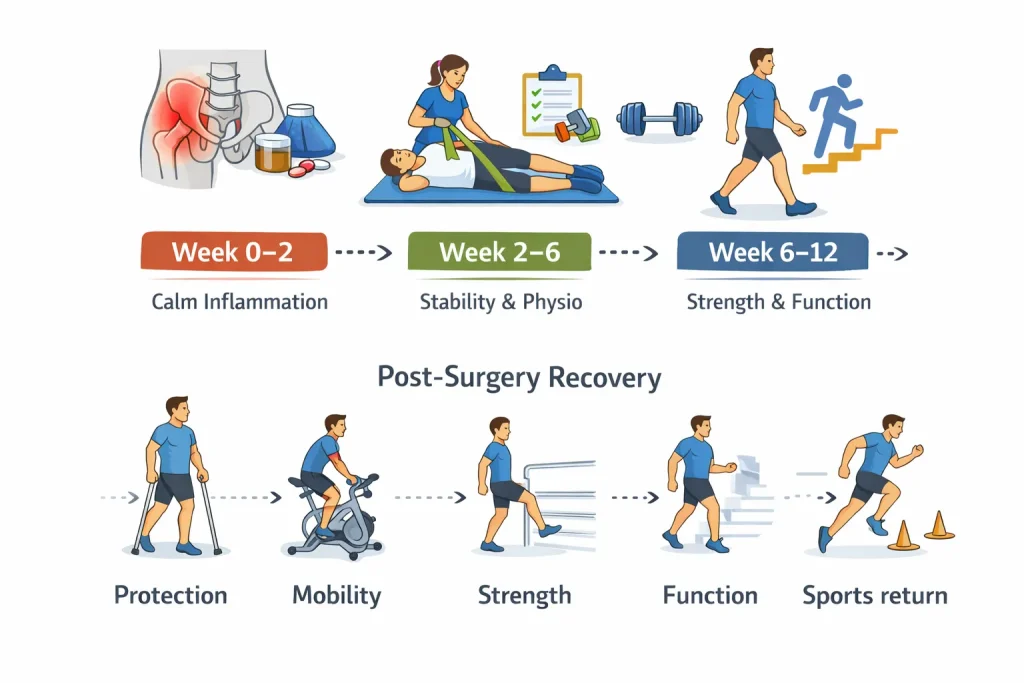
A hip labral tear recovery time depends on the tear type, your daily activity, and whether you need surgery. Many people feel improvement with rest and physiotherapy in 6 to 12 weeks. If symptoms continue, surgery may be advised. Hip labrum surgery recovery time usually takes 3 to 6 months for normal activities, and longer for sports.
Think of it like a cracked phone screen. A small crack might not bother you much, and you can still use the phone. But a bigger crack can spread, and then you need repair. Hip labrum tears are similar. Some heal well with care. Some need surgical repair.
What is the Hip Labrum and Why Does It Matter?
To understand a labral tear, let’s first understand the labrum in simple words.
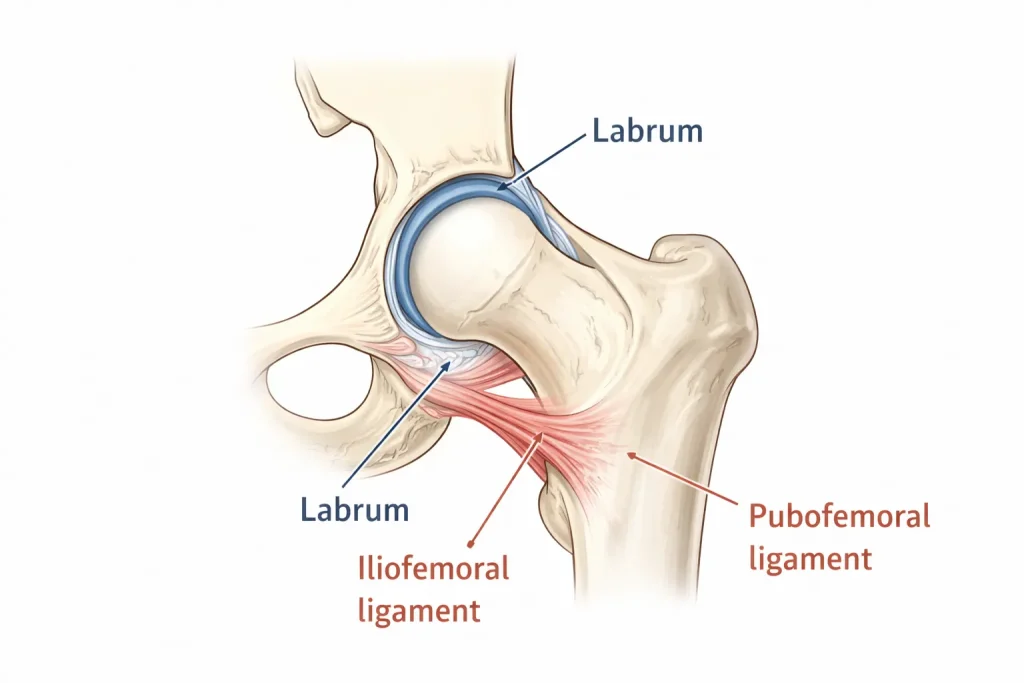
The hip is a “ball and socket” joint. The ball is at the top of your thigh bone. The socket is part of your pelvis.
The labrum is a ring of cartilage around the socket. It acts like a soft rim or seal.
Here’s an easy example.
Imagine a bottle with a tight rubber seal on the cap. That seal helps prevent leakage and keeps the cap stable. The hip labrum works similarly. It helps:
- Keep the hip stable
- reduce friction during movement
- improve the “fit” of the joint
- support smooth walking, running, and twisting
When the labrum tears, the seal becomes weak. That can create pain and strange sensations like clicking.
Many people search for terms like labral, labrum tear hip, or even “hip labrum tear.” All of these point to the same issue: a tear in that cartilage ring.
Hip Labrum Tear vs Hip Ligament Injury: What’s the Difference?
This part is important because many patients mix up the words labrum, ligament, and tendon.
Let’s keep it simple.
A hip labrum tear means:
- Damage to the cartilage rim around the hip socket
- This often causes clicking, catching, and groin pain
A hip ligament injury means:
- A stretch or tear in the strong bands that hold the joint stable
- This often causes deep pain and instability
People commonly search:
- ligaments in the hip
- torn ligament in the hip
- pulled ligament in the hip
- hip ligament injury
- torn hip ligament
So, what are the ligaments in the hip?
The main hip ligaments include:
- Iliofemoral ligament
- Pubofemoral ligament
- Ischiofemoral ligament
You can think of ligaments like strong ropes. They hold the joint in place. The labrum is more like a soft rubber ring that improves the joint’s fit.
Both problems can cause pain. But treatment and recovery can be different. A doctor can help confirm what is going on with an exam and imaging.
Symptoms of a Hip Labral Tear
Not all hip pain is a labral tear. But labral tears have some common patterns.
Common signs people notice
- Pain in the groin or front of the hip
- Pain while sitting for long
- Pain while walking long distances
- Clicking or popping in the hip
- Catching or locking feeling
- Stiffness when you stand up after sitting
- Pain during twisting movements
Many people say the pain feels sharp during certain actions. Like turning quickly. Or getting out of a car.
A good way to picture it is this.
Imagine a door that does not close smoothly because a small piece of the rubber lining is damaged. The door may still close, but it may catch and make noise. A torn labrum can make the hip feel like that.
How Doctors Confirm a Hip Labral Tear
Before we talk more about labral tear hip recovery time, it helps to know how this injury is diagnosed. Because correct diagnosis leads to correct recovery planning.
1) Clinical examination
A doctor checks:
- Your walking pattern
- hip range of motion
- areas of pain
- Strength of hip muscles
- special tests that stress the hip joint
2) Imaging tests
A hip labral tear is often confirmed with:
- MRI
- MR arthrogram (a special MRI with dye for clearer labrum view)
- X-ray (to check bone shape and hip impingement)
Why an X-ray?
Many labral tears occur due to bone shape abnormalities, such as hip impingement. If this is not treated, recovery can become slower, or symptoms may return.
Hip Labral Tear Recovery Without Surgery: Timeline
| Procedure | What is done | Recovery speed |
|---|---|---|
| Labral repair | Labrum stitched | Slower, stronger |
| Debridement | Torn edge cleaned | Faster early |
| Reconstruction | New labrum | Longest |
Not everyone needs surgery. Many people improve with non-surgical treatment, especially if the tear is small and the hip joint is stable.
This is also called conservative care. It includes rest, physiotherapy, and careful return to activity.
Let’s look at a simple labral tear recovery timeline without surgery.
Week 0 to 2: Calm down the hip
This is the “settling phase.” Pain and irritation are usually high in the beginning.
What you may feel
- Sharp pain with certain movements
- discomfort while sitting
- clicking or tightness
- stiffness in the morning
What helps during this phase
- Reducing long walks
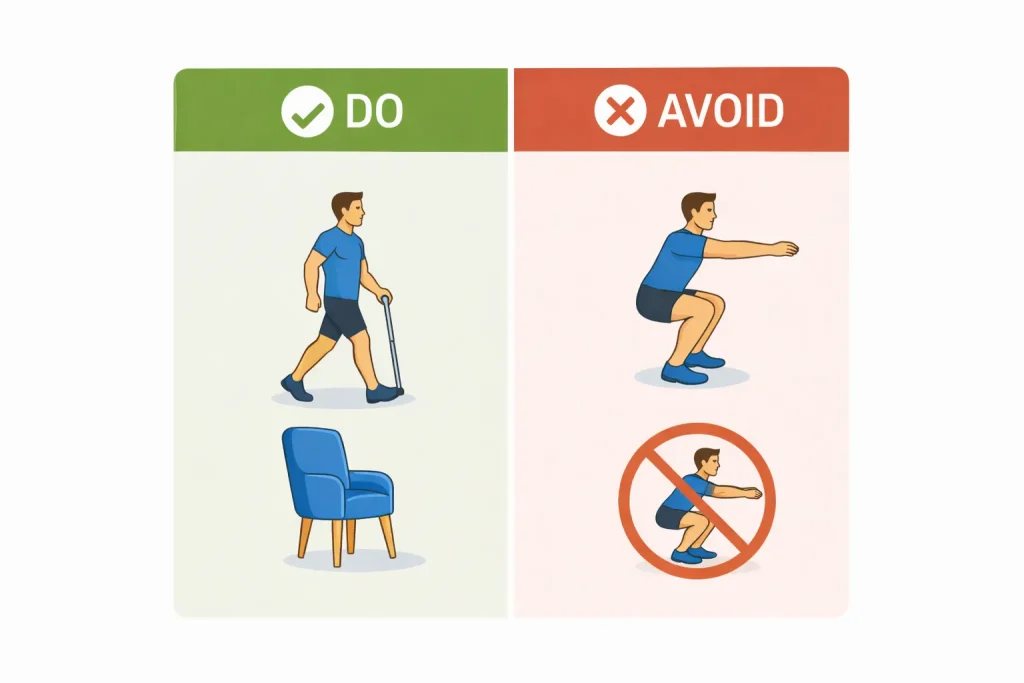
- avoiding deep squats
- avoiding twisting on one leg
- using ice if advised
- Taking medicines only if prescribed
This phase is like giving a twisted ankle some rest. If you keep jumping on it, it won’t calm down. Your hip needs the same respect.
Week 2 to 6: Start guided physiotherapy
Once pain settles, physiotherapy becomes important. It is not about heavy workouts. It is about controlled movement.
Focus of physio
- improving hip stability
- strengthening glute muscles
- improving core control
- gentle mobility exercises
You may still avoid:
- high-impact activities like running
- deep lunges or heavy leg press
- sudden side movements
Think of this stage like fixing a weak chair. You don’t sit and jump on it immediately. First, you tighten the screws slowly. Then the chair becomes stable.
Week 6 to 12: Build strength and return to normal walking
This stage is where most people start feeling more confident.
What usually improves
- less pain during sitting
- fewer clicking sensations
- better walking comfort
- improved hip strength
What the rehab may include
- strengthening exercises for hips and thighs
- better balance and posture work
- careful increase in activity
Many people ask:
How long does a torn hip labrum take to heal without surgery?
A common answer is 6 to 12 weeks for noticeable improvement, but full recovery can take longer depending on activity level.
When is Hip Labral Tear Surgery Recommended?
Hip surgery is not the first option for everyone. But it becomes useful when symptoms do not settle with conservative care.
Your doctor may suggest surgery if:
- Pain continues after several weeks of physiotherapy
- Hip catching and locking remain strong
- Daily life becomes difficult
- Sports activity is not possible
- Hip impingement needs correction along with labrum repair
Common surgery-related searches include:
- hip labral tear surgery
- acetabular labral tear surgery
- labrum tear in hip surgery
- How to repair a torn hip labrum
Most hip labrum surgeries are done using hip arthroscopy. That is a minimally invasive technique. Small cuts are made, and tiny instruments are used to repair the labrum.
Pros and Cons of Hip Labral Tear Surgery
Before surgery, it helps to understand both sides. People often search pros and cons of hip labral tear surgery, and it’s a fair question.
Pros
- Reduces catching and locking sensations
- Improves joint stability
- Helps return to daily activity with less pain
- Can treat the cause if the bone impingement is corrected too
Cons
- Recovery takes time and patience
- Physiotherapy is needed for months
- There are movement restrictions early on
- Some people may still feel stiffness for a while
It’s like repairing a damaged zipper in your jacket. Repair helps. But you still need time to stitch it properly and let it settle. If you pull too hard too soon, it can tear again.
Recovery After Hip Labrum Surgery: Timeline Overview
Now let’s talk about the main topic: recovery after hip labrum surgery.
People search for this in many ways:
- labrum surgery hip recovery
- hip labrum surgery recovery timeline
- hip labrum tear surgery recovery
- Recovery time for hip labrum surgery
- torn labrum hip surgery recovery time
- hip labral tear surgery recovery time
The goal is the same. They want a clear timeline.
Remember one thing. Recovery is not like flipping a switch. It’s more like cooking rice. You cannot rush it. If you do, it stays hard inside.
Phase 1: First 1 to 2 Weeks After Surgery
This phase is all about protecting the repair.
What you might feel
- soreness in the hip
- swelling around the joint
- tightness while moving
- tiredness and sleep issues
Some people also feel mild bruising. That can be normal after surgery.
What recovery usually involves
- crutches (often needed)
- limited weight bearing as advised
- Basic exercises given by the physiotherapist
- wound care and pain control
How soon can you walk after hip labrum surgery?
Most patients can walk with support early. But usually with crutches and limited weight. Walking normally without a limp takes time. It depends on the repair type and doctor’s instructions.
The key here is control. Not speed.
Phase 2: Weeks 2 to 6 (Early Rehab Phase)
This is the stage where rehab becomes more active, but still careful.
Main goals
- improve hip movement safely
- reduce stiffness
- start gentle strengthening
- improve walking pattern
What you may do during this stage
- light stationary cycling (if allowed)
- gentle range-of-motion exercises
- glute strengthening with safe movements
- core stability training
What you should avoid
- deep squats
- sudden twisting
- heavy lifting
- sitting cross-legged (in most cases early)
This phase is like learning to write again after a hand injury. You start slow. The goal is smooth movement. Not speed or force.
Phase 3: Weeks 6 to 12 (Strength and Control Phase)
This is the stage where many patients feel they are “finally getting better.” Pain is usually lower. Walking becomes smoother.
Focus areas
- stronger hip muscles
- better balance
- better posture
- improving endurance
What may improve
- sitting comfort
- walking longer without pain
- climbing stairs with less discomfort
- Daily activities are becoming easier
This is an important part of the hip labrum surgery recovery timeline because the hip starts trusting itself again. But you still need to respect healing time.
Phase 4: 3 to 6 Months (Return to Normal Function)
This is where people return to most regular activities.
What you can usually do
- longer walks
- light gym work with correct form
- basic cardio activities
- controlled strengthening
What still needs care
- running too early
- fast twisting sports
- deep lunges with a heavy weight
Think of this phase like upgrading from a bicycle to a motorbike. You are faster now. But you still need to learn control.
Phase 5: 6 to 9+ Months (Sports Return Phase)
For athletes, recovery takes longer. Some sports need sudden movements, jumping, and twisting. That loads the hip more.
This phase may include:
- running drills (slowly)
- sport-specific movements
- agility and balance training
- strength testing
This phase relates to searches like:
- Hip labral tear recovery time with surgery
- Recovery time for labral hip tear surgery
- hip labral tear surgery recovery timeline
Walking, Driving, Sitting, and Work: Common Questions
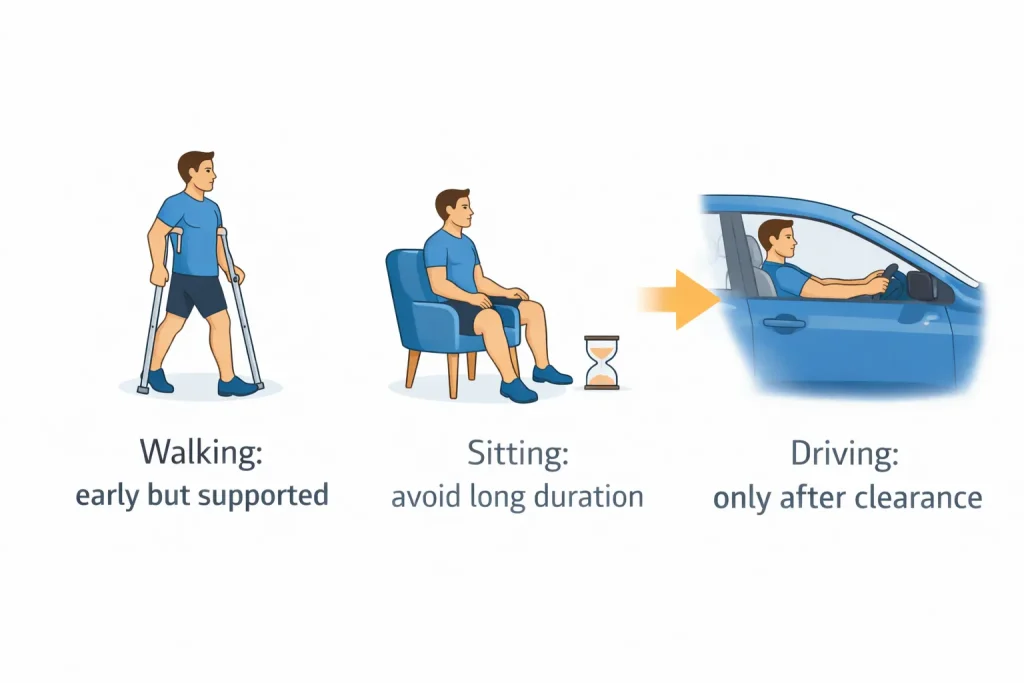
Recovery is not only about healing. It’s also about daily life.
Walking after surgery
Most people walk with crutches early. Then slowly progress to normal walking.
If you rush walking without support, it can irritate the hip.
Driving after hip surgery
Driving depends on:
- Which side of the surgery was done
- pain control
- reaction time
- doctor approval
Office work
Many people can return to desk work earlier than heavy manual work. But long sitting can still be uncomfortable in the early weeks. Small breaks matter.
Stairs
Stairs can feel difficult early on. It improves with strength and balance training.
Hip Labral Repair Recovery vs Other Procedures
Not all hip labrum surgeries are the same. That changes recovery speed.
Labral repair
The labrum is stitched back. Recovery can take longer because the labrum needs to heal properly.
Labral debridement
The torn edges are cleaned. Recovery may be slightly faster in some cases.
Labral reconstruction
A new labrum is used if the original is badly damaged. Recovery can be longer and needs strict rehab.
Many people search:
- labral hip repair recovery
- labral repair surgery recovery
- labrum hip repair surgery
Your doctor will tell you what procedure was done and how rehab should be planned.
Hip Labrum Surgery Recovery Tips That Actually Help
This section can make recovery smoother. These are practical tips.
1) Follow weight-bearing instructions
If your doctor says to follow partial weight-bearing, do so. It protects healing tissues.
2) Don’t skip physiotherapy
Physiotherapy is like the steering wheel of recovery. Without it, you may heal but still move wrongly.
3) Avoid sitting for long in the early weeks
Long sitting can increase hip stiffness. Short walks and breaks help.
4) Use ice and rest as advised
Swelling control improves comfort.
5) Focus on glute and core strength
These muscles support hip stability. Weak glutes can make the hip overwork.
6) Sleep with support pillows
Many patients sleep better with a pillow between their knees. It reduces pulling sensation.
These tips support overall labrum surgery recovery and help avoid unnecessary setbacks.
Warning Signs During Hip Labral Tear Recovery
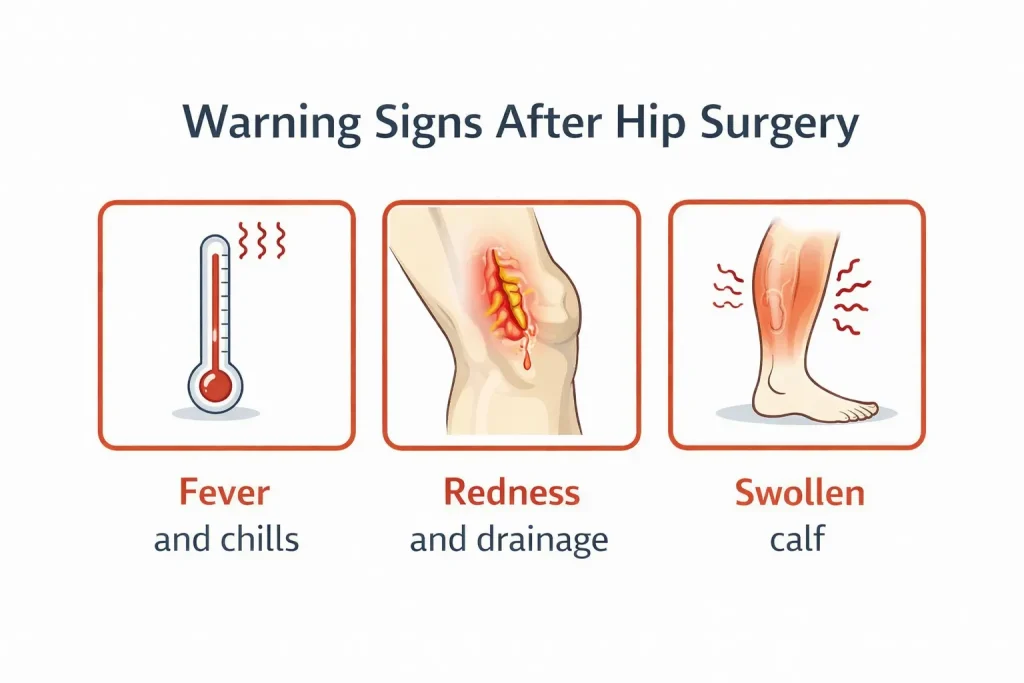
Most people recover well. But it’s important to know red flags.
Contact your doctor if you notice:
- fever and chills
- severe redness or drainage from the wound
- sudden increase in pain
- calf swelling or calf pain
- breathing difficulty
- numbness or weakness that is worsening
These signs need medical attention. It’s always better to ask early instead of waiting.
When to Consult Dr. Divya Ahuja (Mumbai, Thane, Navi Mumbai)
If your hip pain is not improving, it’s better to get a proper evaluation. A labral tear can sometimes stay mild. But in some cases, it can lead to ongoing pain and movement limits.
You should consider a consultation if you have:
- hip pain while sitting or walking
- clicking, catching, or locking sensation
- pain that returns again and again
- difficulty returning to sports
- Symptoms not improving with physiotherapy
Dr. Divya Ahuja evaluates hip labral tears and recovery planning for patients across Mumbai, Thane, and Navi Mumbai, with a focus on safe movement, joint protection, and long-term function.
Conclusion
A hip labral tear can feel frustrating, but recovery is possible. The timeline depends on your injury and the treatment plan.
Some people improve with physiotherapy and lifestyle changes within a few months. Others need surgery for better stability and long-term relief. In both cases, the key is patience. Also consistency.
If you respect the healing process and follow rehabilitation properly, the hip usually becomes stronger and more reliable over time.
And if you ever feel confused about your symptoms, remember this simple rule: getting the right diagnosis is the first step to the right recovery.
FAQs
1) How long does a hip labral tear take to heal without surgery?
Many people improve within 6 to 12 weeks using rest and physiotherapy. Recovery depends on tear size, activity level, and hip stability. Some take longer, especially if the hip joint has bone impingement or repeated twisting movements.
2) What is the recovery time for hip labrum surgery?
Hip labrum surgery recovery time is usually around 3 to 6 months for normal daily activity. Full recovery for sports may take 6 to 9 months or longer. Following physiotherapy and avoiding early running helps prevent re-injury.
3) How soon can you walk after hip labrum surgery?
Most patients can walk with crutches early after surgery, depending on the surgeon’s advice. Walking without support takes time and happens step by step. The goal is stable, pain-free walking, not fast walking, in the first few weeks.
4) What is the typical labrum tear surgery recovery timeline?
Most recovery timelines have phases: first 2 weeks for protection, 2 to 6 weeks for gentle movement, 6 to 12 weeks for strength building, and 3 to 6 months for full daily function. Sports return can take longer.
5) What is hip labral repair recovery like compared to debridement?
Hip labral repair recovery may take longer because the labrum is stitched and needs healing time. Debridement can feel quicker in some cases since torn edges are cleaned. Your surgeon’s rehab plan depends on the exact procedure done.
6) How long does a torn hip labrum take to heal after surgery?
A torn hip labrum takes months to heal after surgery. Pain often improves gradually. Hip strength and walking comfort return step by step. Full recovery depends on rehab quality, muscle control, and whether hip impingement was corrected.
7) What causes slow recovery after hip labral tear surgery?
Slow recovery can happen due to weak hip muscles, poor physiotherapy routine, early overactivity, or stiffness buildup. Sometimes, untreated hip impingement or cartilage damage can affect outcomes. Following rehab instructions strictly helps improve progress safely.
8) Can a pulled ligament in the hip feel like a labrum tear?
Yes, a pulled ligament in the hip can feel similar because both cause deep hip pain and discomfort while walking. But labrum tears often cause clicking and catching. A doctor can differentiate them using examination and imaging tests.
9) What are the pros and cons of hip labral tear surgery?
Pros include reduced catching pain and improved hip stability. Cons include long rehab time and temporary restrictions. Surgery is usually suggested when physiotherapy does not help enough, or when bone impingement needs correction for better long-term results.
10) Is the shoulder labrum surgery recovery timeline similar to the hip labrum recovery?
Not exactly. Shoulder and hip joints work differently, so recovery timelines differ. Shoulder labral tear recovery time depends on arm movement and lifting restrictions. Hip labrum surgery recovery focuses more on walking, weight bearing, and hip stability training.