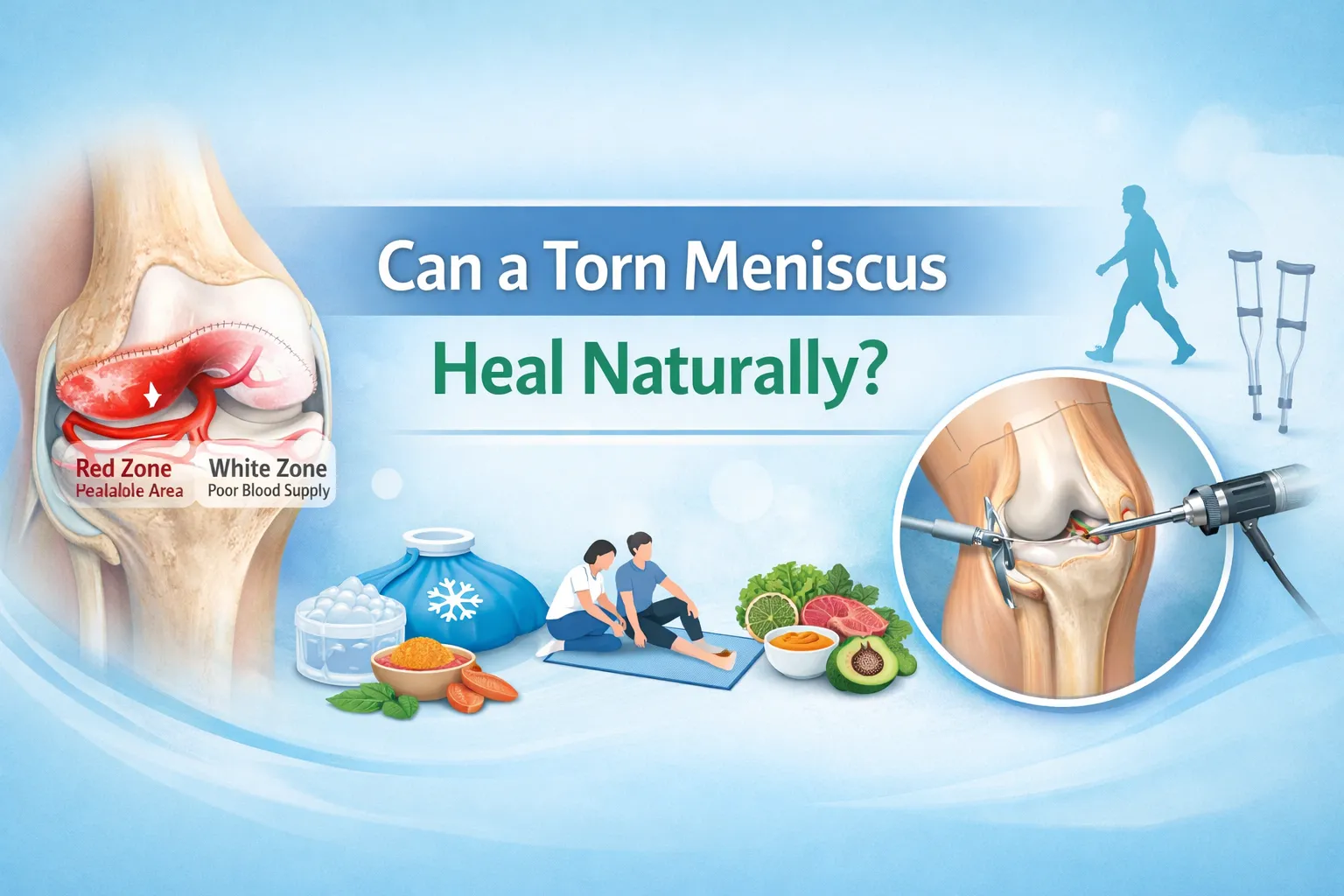
A meniscus tear is one of the most common causes of knee pain in active adults and older individuals. Many patients search online for natural remedies for a meniscus tear, hoping to avoid surgery and recover safely at home. But can a torn meniscus truly heal on its own? And if so, how long does it take?
As a knee preservation and joint specialist in Mumbai, Dr Divya Ahuja often evaluates patients who want to explore healing a torn meniscus without surgery before considering any procedure. This detailed guide explains what is medically possible, what works at home, and when expert intervention becomes necessary.
Table of Contents
Understanding the Meniscus: Why It Matters
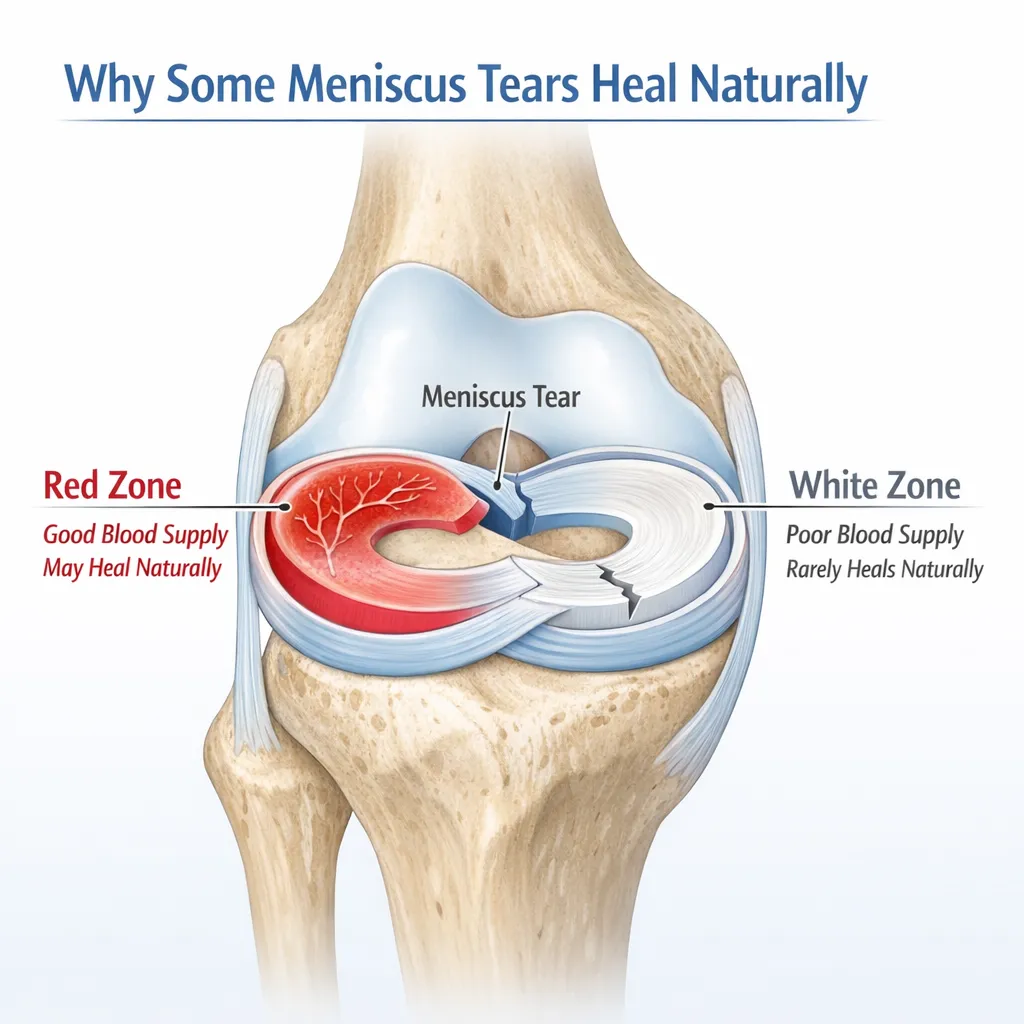
The meniscus is a C-shaped cartilage structure inside your knee joint that acts as a shock absorber. Each knee has two menisci:
- Medial meniscus (inner side)
- Lateral meniscus (outer side)
It helps distribute weight, stabilise the joint, and reduce friction between bones. When torn due to sports injury, twisting movements, or age-related degeneration, symptoms may include:
- Pain while bending or squatting
- Swelling
- Clicking or catching sensation
- Knee stiffness
- Occasional locking
Whether you can heal a meniscus naturally depends largely on the type and location of the tear.
Can a Torn Meniscus Heal Naturally?
This is the most searched question: how to heal a torn meniscus naturally?
The answer depends on the blood supply.
The meniscus has two zones:
- Red zone – Outer portion with good blood supply
- White zone – Inner portion with minimal blood supply
Small tears in the red zone may recover with conservative care. However, tears in the white zone rarely heal completely because the area lacks circulation.
Therefore, while some people can pursue meniscus tear treatment at home, not all tears are suitable for natural healing.
Healing a Torn Meniscus Naturally: What Actually Works
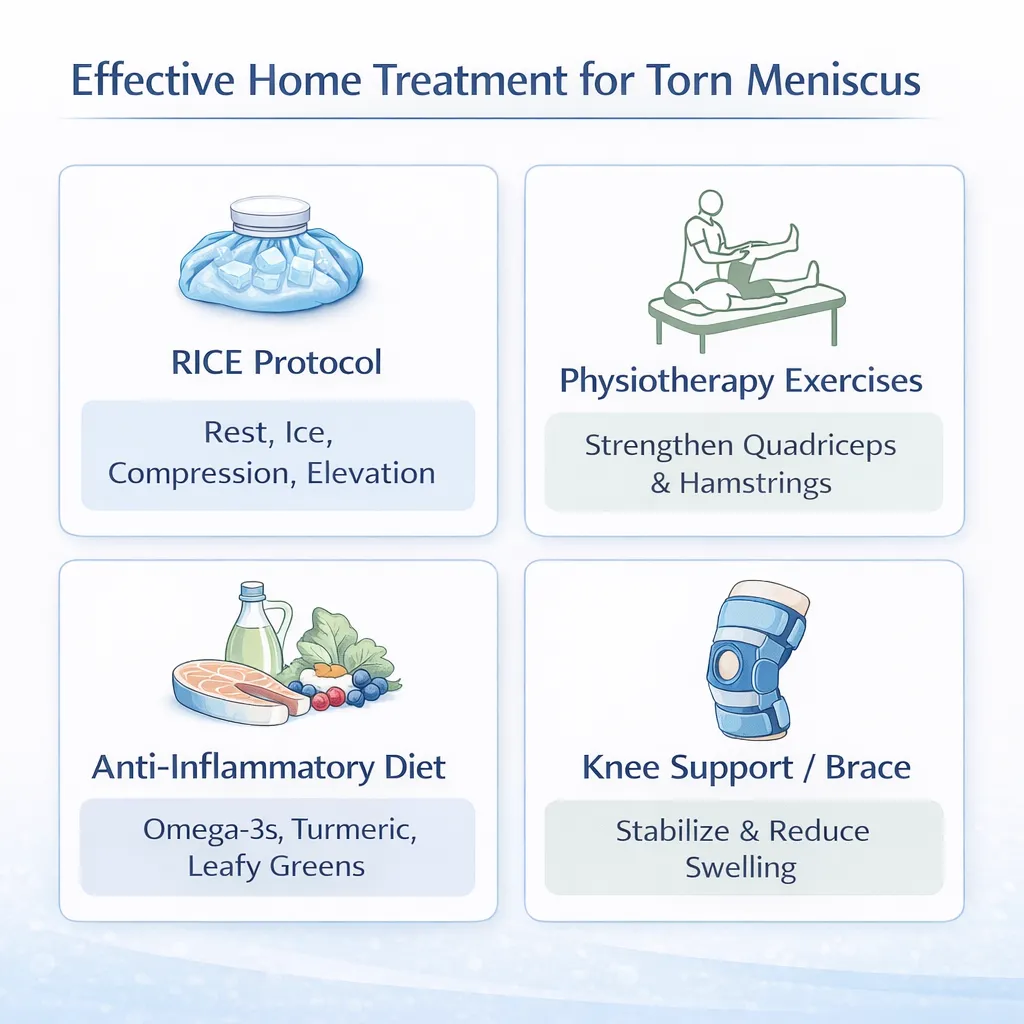
If your tear is stable and not causing mechanical locking, structured conservative care may help.
1. R.I.C.E Protocol (First 2–3 Weeks)
This is the foundation of torn meniscus home treatment.
- Rest: Avoid deep squats and pivoting
- Ice: 15–20 minutes, 3–4 times daily
- Compression: Knee brace or elastic bandage
- Elevation: Keep leg raised to reduce swelling
This reduces inflammation and protects the joint.
2. Controlled Physiotherapy
One of the most effective ways to heal the meniscus naturally is guided strengthening.
Exercises may include:
- Quadriceps sets
- Straight leg raises
- Hamstring strengthening
- Closed-chain knee exercises
- Balance training
Strengthening surrounding muscles reduces load on the torn cartilage.
Patients in Mumbai consulting Dr. Divya Ahuja are often prescribed structured rehabilitation programs tailored to tear severity.
3. Anti-Inflammatory Diet
While diet cannot repair cartilage directly, it may support healing.
Foods that help:
- Omega-3-rich foods (fish, flaxseed)
- Turmeric (curcumin)
- Ginger
- Leafy greens
- Berries
This is commonly searched under natural cures for meniscus tears, but it should be understood as supportive, not curative.
4. Weight Management
Excess body weight increases knee pressure. Even a 5–7 kg reduction significantly reduces stress on the joint.
For patients asking about home remedies for a meniscus tear, lifestyle correction is often more impactful than herbal treatments.
5. Activity Modification
Avoid:
- Deep knee bends
- Running on uneven surfaces
- Jumping sports
- Sudden twisting
Low-impact activities such as swimming or cycling are safer alternatives during recovery.
How to Naturally Heal a Torn Meniscus: Realistic Timeline
Many patients expect a quick recovery. However, cartilage healing is slow.
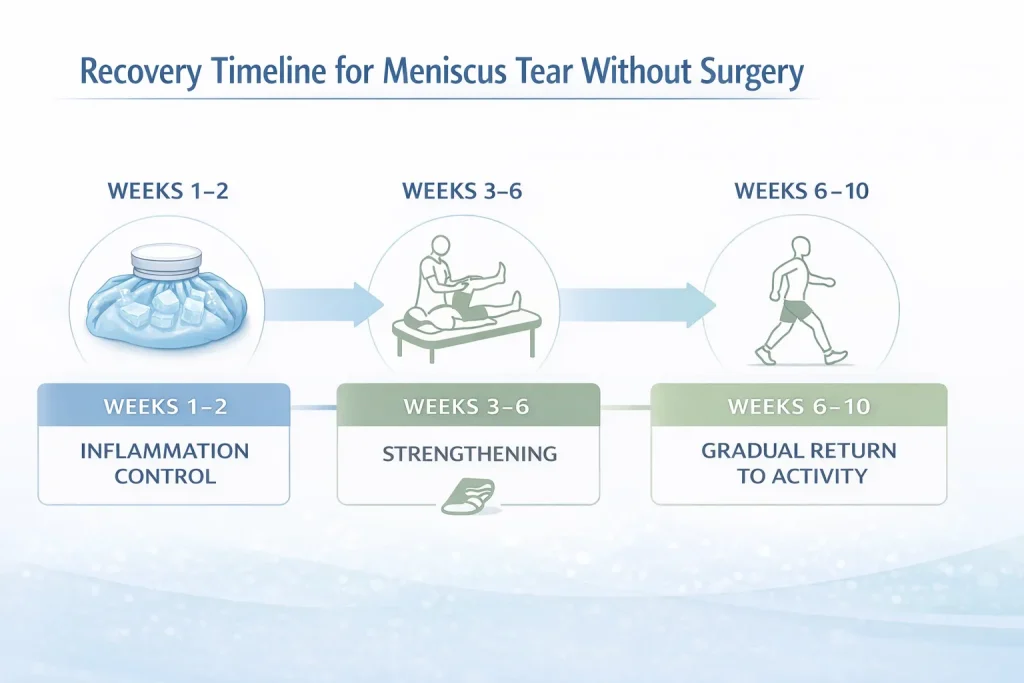
Approximate timeline for non-surgical recovery:
| Condition | Estimated Recovery Time |
|---|---|
| Minor strain | 4–6 weeks |
| Small stable tear | 6–10 weeks |
| Degenerative tear | 8–12 weeks |
Improvement should be gradual. If pain persists beyond 8–10 weeks, further evaluation is necessary.
Home Treatment for Torn Meniscus: What to Avoid
While researching how to heal a torn meniscus naturally, many people try aggressive self-treatment.
Avoid:
- Deep squats during pain
- Forceful knee manipulation
- Unsupervised heavy gym workouts
- Ignoring swelling
Improper loading can worsen the tear.
Can Supplements Heal a Meniscus?
Glucosamine, chondroitin, collagen peptides, and vitamin D are often promoted under natural remedies for torn meniscus searches.
Evidence suggests:
- They may support joint health
- They do not repair torn cartilage
- Results vary among individuals
Consulting a specialist ensures safe supplementation.
When Healing a Torn Meniscus Without Surgery Is Possible
You may be a candidate for conservative treatment if:
- Tear is small
- No knee locking
- Pain is mild to moderate
- Knee remains stable
- MRI shows a peripheral tear
In such cases, many patients successfully pursue meniscus tear treatment at home under supervision.
Signs Natural Treatment Is Not Enough
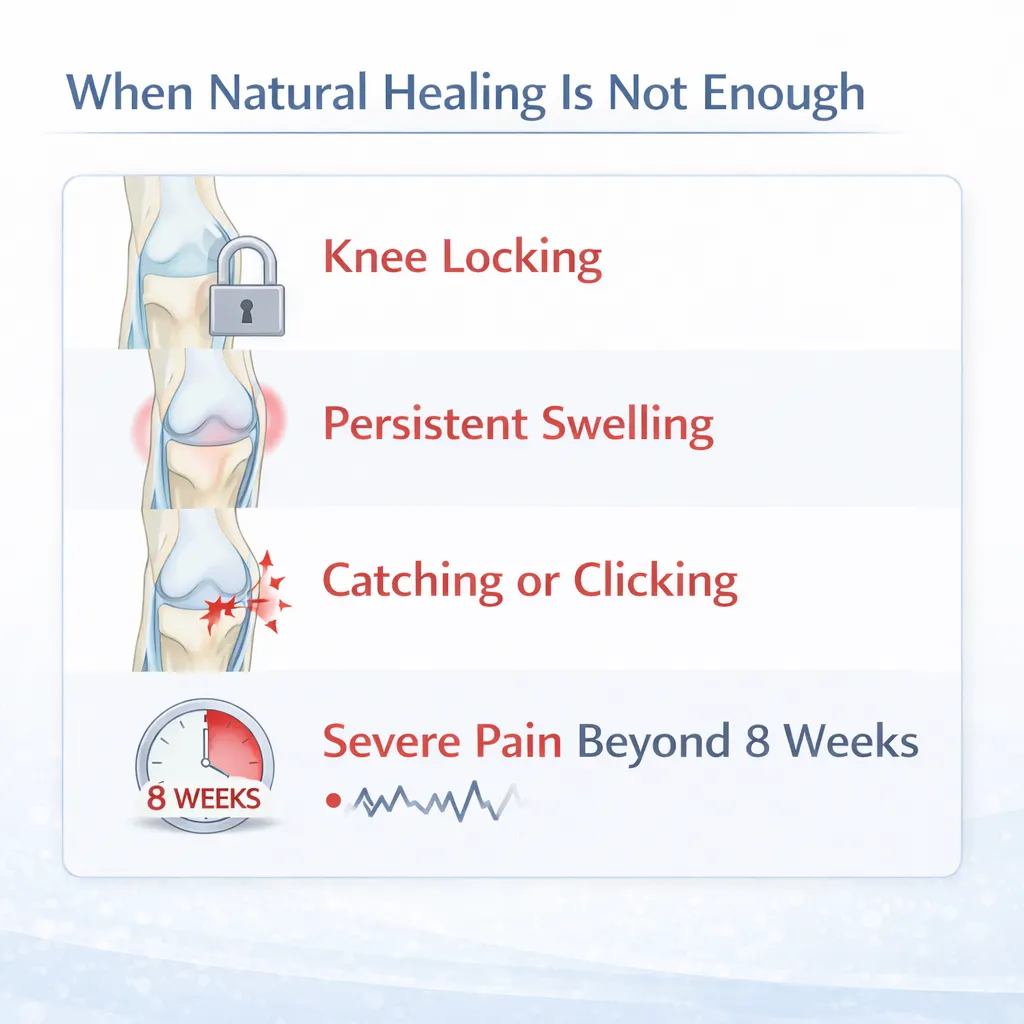
Not all cases improve naturally. Seek evaluation if you experience:
- Knee locking
- Persistent swelling
- Sharp catching pain
- Instability
- Difficulty walking
- Pain beyond 10–12 weeks
These symptoms may indicate a displaced or bucket-handle tear requiring intervention.
Dr. Divya Ahuja, practising in Mumbai, Navi Mumbai, and the Thane region, emphasises early diagnosis to prevent long-term cartilage damage.
Surgical Option: Is It Always Major?
One reason people search for healing a torn meniscus naturally is the fear of surgery.
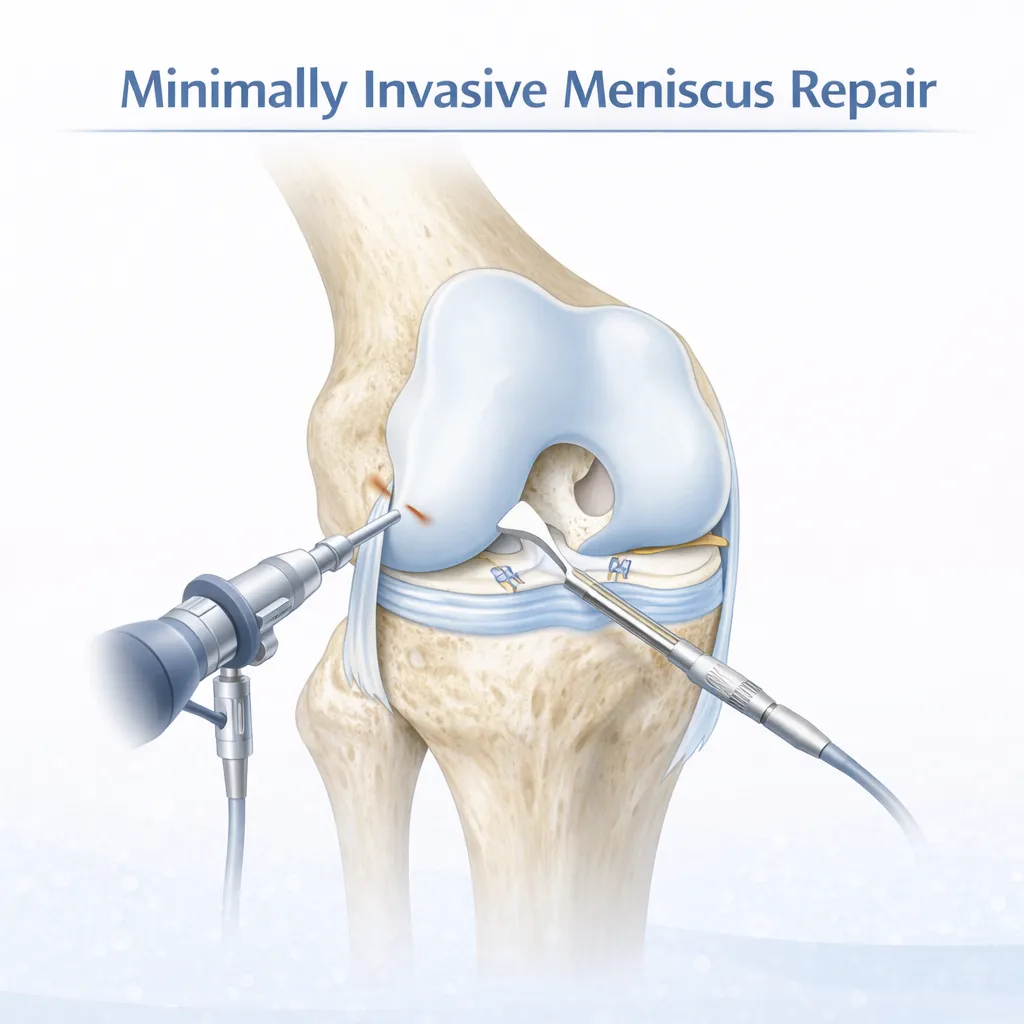
Modern arthroscopy is:
- Minimally invasive
- Performed through small incisions
- Usually daycare procedure
- Faster recovery compared to open surgery
In suitable cases, meniscus repair preserves cartilage and prevents early arthritis.
The goal is always preservation first, surgery only when necessary.
Long-Term Knee Protection
If you successfully heal the meniscus naturally, protecting your knee is essential.
Tips:
- Continue strengthening exercises
- Avoid repetitive deep squats
- Maintain a healthy BMI
- Use proper sports technique
- Warm up before the activity
Degenerative tears are common after 40. Preventive muscle conditioning reduces risk.
The Balanced Truth About Natural Healing
Search trends show rising interest in:
- Home remedies for a torn meniscus
- torn meniscus home treatment
- How to heal a meniscus tear naturally
- natural remedies for a meniscus tear
However, medical reality requires nuance.
Some tears improve with conservative care. Others require timely repair to prevent arthritis.
Blindly delaying evaluation may worsen cartilage damage.
A personalised MRI-based assessment remains the safest approach.
Why Expert Evaluation Matters
Self-diagnosis from internet research can be misleading. Knee pain may arise from:
- Ligament injury
- Cartilage damage
- Early arthritis
- Patellar problems
- Tendonitis
Accurate diagnosis ensures a correct treatment pathway.
Dr. Divya Ahuja specialises in joint preservation and minimally invasive knee procedures, offering patient-centred evaluation across the Mumbai region.
Conclusion
If you are wondering how to heal a torn meniscus naturally, remember:
- Small peripheral tears may improve
- Structured physiotherapy is key
- Lifestyle correction matters
- Supplements are supportive, not curative
- Persistent symptoms require evaluation
Natural healing is possible in selected cases – but not guaranteed.
Early consultation helps you avoid unnecessary surgery and prevent long-term joint damage.
FAQs
Can a torn meniscus heal naturally without surgery?
Yes, small tears in the outer “red zone” of the meniscus may heal naturally because that area has better blood supply. However, larger or inner-zone tears usually do not heal completely without medical intervention. Recovery depends on tear type, age, and activity level.
How long does it take for a meniscus tear to heal naturally?
Minor meniscus tears may improve within 4–6 weeks with proper rest and physiotherapy. Moderate tears may take 8–10 weeks. If symptoms persist beyond three months, medical evaluation is recommended to prevent long-term joint damage.
What are the best natural remedies for meniscus tear?
Natural approaches include the RICE method (rest, ice, compression, elevation), physiotherapy exercises, anti-inflammatory diet, and weight management. These methods reduce swelling and improve stability but do not regenerate torn cartilage.
What is the fastest way to heal a torn meniscus at home?
The safest way to promote healing is controlled rehabilitation under guidance, avoiding deep knee bending and high-impact activities. Ice therapy in the early phase and progressive muscle strengthening provide better outcomes than complete immobilization.
Can walking make a meniscus tear worse?
Short, flat-surface walking is generally safe if pain is mild. However, long walks, uneven terrain, or twisting movements can aggravate the tear. Persistent pain during walking suggests the need for specialist evaluation.
How do I know if my meniscus tear requires surgery?
Surgery may be necessary if there is knee locking, catching, persistent swelling, or instability. Tears that fail to improve after 8–12 weeks of conservative care or complex tears seen on MRI often require arthroscopic repair.
Is physiotherapy enough to heal a torn meniscus?
Physiotherapy can significantly improve symptoms by strengthening surrounding muscles and improving joint mechanics. It is often effective for small, stable tears but may not repair large displaced tears.
Can supplements like collagen or glucosamine repair a torn meniscus?
Supplements may support joint health and reduce inflammation, but they do not rebuild torn cartilage. They can be used as supportive therapy but should not replace proper diagnosis and rehabilitation.
What activities should be avoided with a torn meniscus?
Avoid deep squats, lunges, running, jumping, sudden pivoting, and heavy lifting during recovery. These movements increase pressure on the meniscus and may worsen the tear.
Does a meniscus tear always lead to arthritis?
Untreated or large tears may increase the risk of early knee arthritis over time. Proper diagnosis, rehabilitation, and timely treatment help protect long-term joint health.