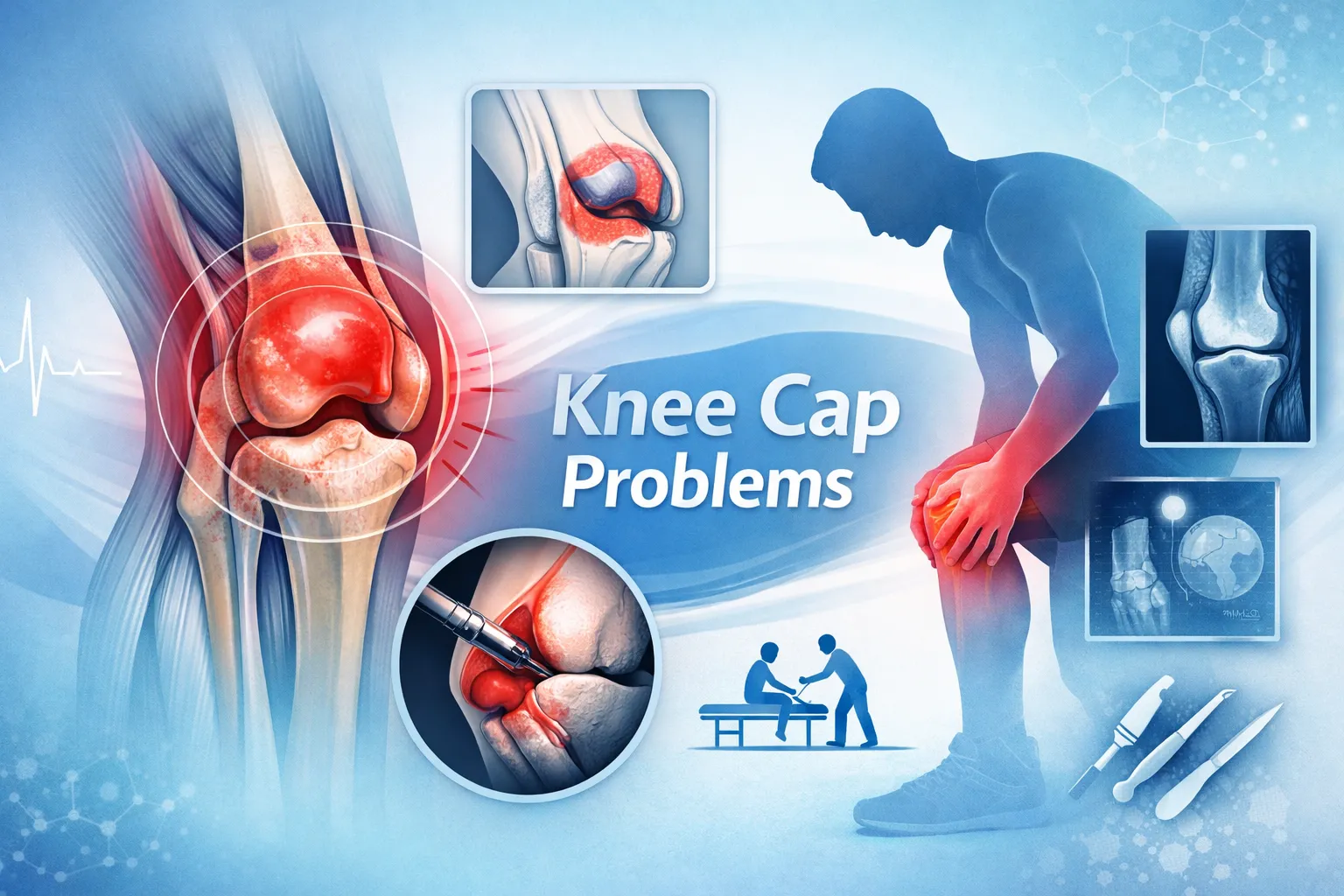
Pain in the front of the knee is one of the most common musculoskeletal complaints across all age groups. Many people describe it as pain over the knee cap, tenderness when pressing the kneecap, or a feeling that the knee cap moves around.
The knee cap, medically called the patella, plays an essential role in knee stability and movement. When it becomes inflamed, unstable, misaligned, or injured, everyday activities such as climbing stairs, squatting, running, or even sitting for long periods can become uncomfortable.
This article explains everything you need to know about knee cap (patella) problems, including causes, symptoms, diagnosis, and treatment options.
Table of Contents
What Are Knee Caps? Understanding the Patella
The Knee Cap (Patella) is a small triangular bone located at the front of the knee joint. It sits within the quadriceps tendon and forms part of the patellofemoral joint, where it glides over the femur (thigh bone).
What is Patellar?
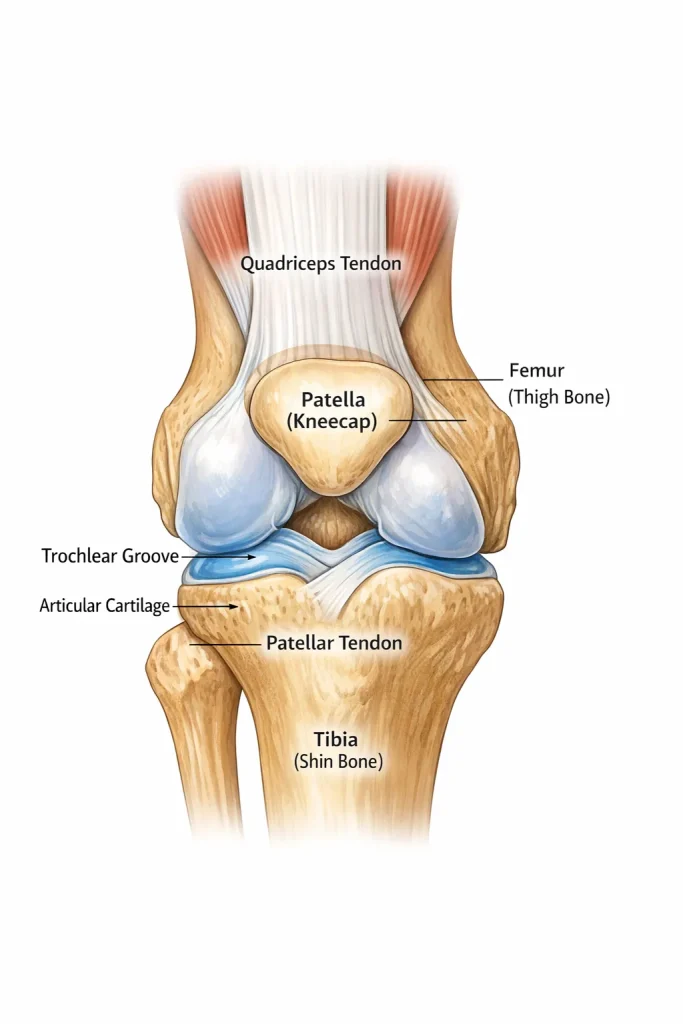
The term patellar refers to structures related to the patella. For example:
- Patellar tendon
- Patellar instability
- Patellofemoral pain syndrome
Function of the Kneecap
The patella has several important roles:
- Improves the mechanical efficiency of the quadriceps muscle
- Assists in straightening (extension) of the knee
- Protects the knee joint from direct trauma
- Helps distribute forces across the knee
Without proper patellar function, knee movement becomes inefficient and painful.
Common Knee Cap (Patella) Problems
Kneecap disorders can range from mild inflammation to structural instability.
1. Patellofemoral Pain Syndrome (Anterior Knee Pain)
This is one of the most common causes of pain in front of the knee, especially in young adults and athletes.
Symptoms:
- Pain while climbing stairs
- Pain after sitting for long periods
- Tenderness on Knee Cap (Patella)
- Grinding or clicking sensation
- Hurts to straighten the knee
It often occurs due to improper tracking of the patella within the femoral groove.
2. Patellar Instability
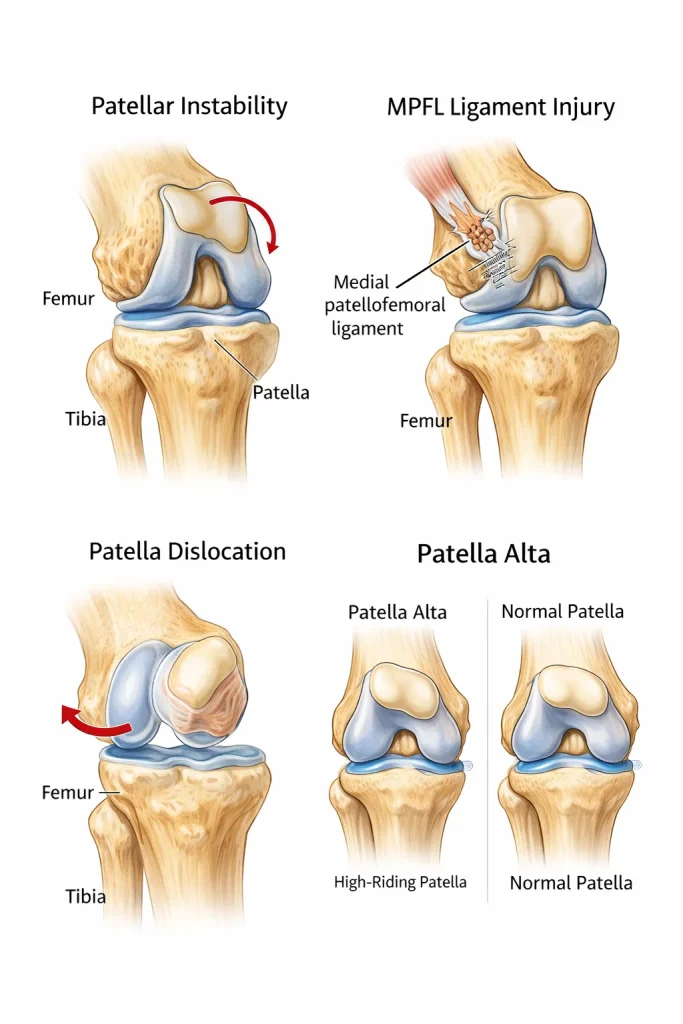
Some people report that their knee cap moves or feels unstable. This condition is called patellar instability.
Why Does the Knee Cap Move Around?
Common causes include:
- Weak thigh muscles (especially the VMO muscle)
- Torn medial patellofemoral ligament (MPFL)
- Shallow trochlear groove
- Ligament laxity
- Patella alta (high-riding patella)
Recurrent instability may lead to cartilage damage over time.
3. Patellar Dislocation and Subluxation
A patellar dislocation occurs when the kneecap completely slips out of its groove. Subluxation refers to partial displacement.
Symptoms:
- Sudden severe pain
- Visible deformity
- Rapid swelling
- Difficulty straightening the knee
This is more common in young athletes and individuals with anatomical variations.
4. Patella Alta and Patella Baja
Is Patella Alta Serious?
Patella alta means the kneecap sits higher than normal. It increases the risk of instability and recurrent dislocation.
Patella baja refers to a low-lying patella and may cause stiffness and restricted movement.
Both conditions require proper assessment if symptomatic.
5. Patellar Tendinitis (Inflammation of the Knee Cap)
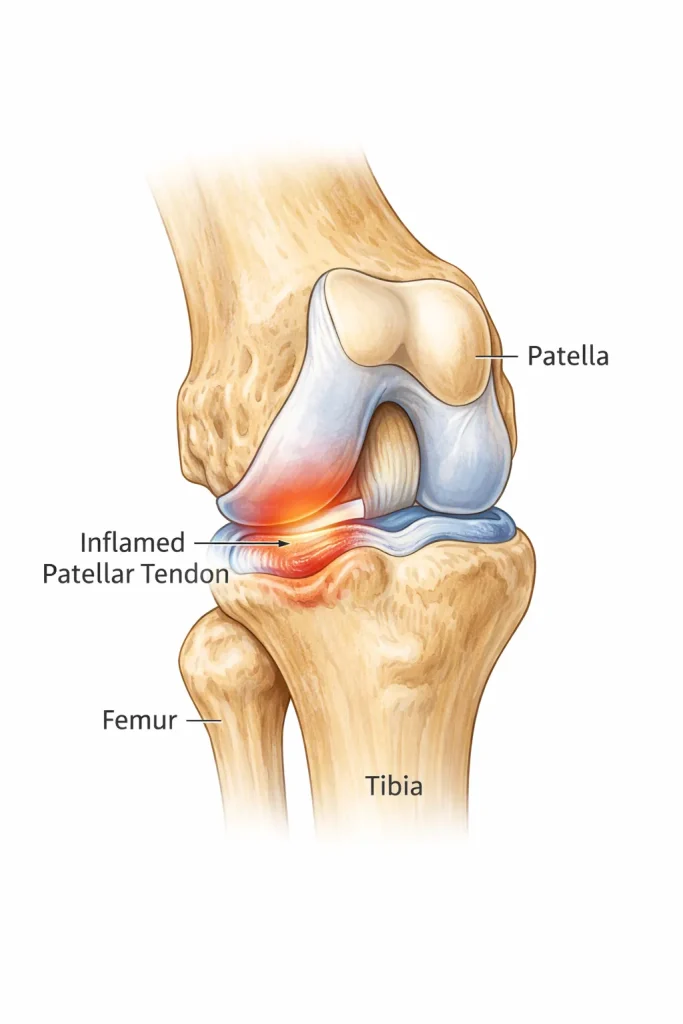
Often called jumper’s knee, this condition involves inflammation of the patellar tendon.
Common symptoms:
- Pain below the kneecap
- Tenderness when pressing the lower patella
- Pain during jumping or running
6. Patella Fracture (Injured Knee Cap)
A direct fall or trauma can cause a fractured kneecap.
Signs include:
- Severe swelling
- Inability to lift the leg straight
- Intense tenderness
- Bruising
Some fractures heal with immobilization, while others require surgery.
Symptoms of Knee Cap Disorders
Kneecap issues may present with:
- Pain knee cap
- Tenderness on knee cap when pressed
- Swelling over the kneecap
- Clicking or grinding sensation
- Knee stiffness
- Difficulty straightening the knee
- Feeling of instability
- Pain while squatting or climbing stairs
Persistent symptoms should not be ignored, as untreated patella problems may lead to cartilage damage.
Causes of Patella Problems
Several factors can contribute to knee cap issues:
- Sports injuries
- Direct trauma
- Muscle imbalance
- Overuse
- Obesity
- Congenital abnormalities
- Flat knee caps or abnormal shape
Biomechanical misalignment plays a significant role in many cases.
Diagnosis of Knee Cap (Patella) Disorders
A thorough evaluation includes:
Clinical Examination
- Assessment of alignment
- Patella tracking test
- Stability evaluation
- Range of motion testing
Imaging Studies
- X-ray (front view of knee)
- MRI to evaluate cartilage and ligaments
- CT scan for alignment analysis
Early diagnosis improves long-term outcomes.
Treatment for Knee Cap Problems
Treatment depends on the severity and underlying cause.
Non-Surgical Treatment
Many patella problems can be managed conservatively.
Options include:
- Knee cap support brace
- Physiotherapy focusing on quadriceps strengthening
- VMO strengthening exercises
- Activity modification
- Anti-inflammatory medications
Structured rehabilitation improves patellar tracking and reduces inflammation.
Surgical Treatment
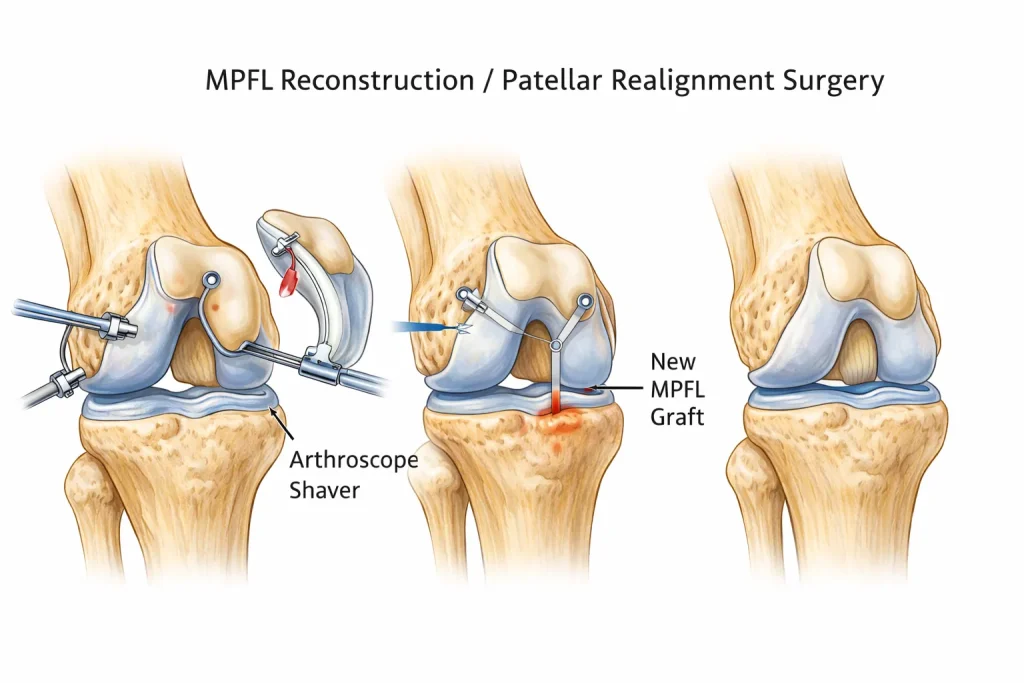
Surgery may be considered when:
- There is recurrent instability
- Structural abnormality exists
- Conservative treatment fails
- Patella fracture is displaced
Procedures may include:
- MPFL reconstruction
- Patellar realignment surgery
- Tibial tubercle transfer
- Arthroscopic procedures
- Fracture fixation
The choice of procedure depends on the specific diagnosis.
Cost of Patella Surgery in Mumbai
The cost varies depending on hospital setting and complexity.
| Procedure | Estimated Cost (INR) |
| MPFL Reconstruction | ₹1,50,000 – ₹2,50,000 |
| Patella Fracture Surgery | ₹1,20,000 – ₹2,00,000 |
| Arthroscopic Realignment | ₹1,80,000 – ₹3,00,000 |
A detailed evaluation is necessary to determine the exact treatment plan.
When Should You Seek Medical Attention?
Consult a specialist if:
- The kneecap frequently moves out of place
- Pain persists beyond a few weeks
- There is significant swelling
- The knee locks or gives way
- You are unable to straighten your knee
Early treatment helps prevent long-term complications.
Why Choose Dr. Divya Ahuja for Knee Cap Treatment in Mumbai?
Management of patellar disorders requires accurate diagnosis and individualized treatment planning. Dr. Divya Ahuja is an orthopedic surgeon experienced in evaluating and treating patellofemoral conditions, including instability, cartilage disorders, and traumatic injuries.
His clinical approach focuses on:
- Detailed biomechanical assessment
- Evidence-based treatment strategies
- Structured rehabilitation guidance
- Advanced surgical techniques, when required
Patients from Mumbai, Navi Mumbai, and Thane seek consultation for comprehensive evaluation of knee cap disorders and long-term joint preservation strategies.
Book a Consultation for Knee Cap Treatment in Mumbai
If you are experiencing ongoing knee cap pain, instability, or inflammation, a detailed orthopedic evaluation can help determine the underlying cause and appropriate management plan.
For assessment and treatment options related to patella disorders, appointments can be scheduled with Dr. Divya Ahuja in Mumbai.
Frequently Asked Questions
What are knee caps?
Knee caps, or patella bones, are small triangular bones at the front of the knee. They help improve the strength of the quadriceps muscle and protect the knee joint during movement.
Why does my knee cap move around?
This may indicate patellar instability due to ligament injury, weak muscles, or anatomical variations such as patella alta.
Is patella alta dangerous?
Patella alta increases the risk of instability and dislocation. If symptomatic, medical evaluation is recommended.
Why does it hurt to straighten my knee?
Pain while straightening may be caused by patellofemoral pain syndrome, tendon inflammation, or cartilage irritation.
What causes tenderness on the knee cap?
Tenderness may result from overuse, inflammation, tendinitis, or cartilage damage.
Can kneecap instability heal without surgery?
Mild cases may improve with physiotherapy and strengthening exercises. Severe cases may require surgical stabilization.
What is the recovery time after patella surgery?
Recovery generally takes 3–6 months, depending on the procedure and rehabilitation program.
Do flat knee caps cause problems?
Abnormal patellar shape can affect tracking and lead to pain or instability.
Is knee cap support helpful?
Bracing can provide temporary stability and pain relief, especially during rehabilitation.
When should I consult a doctor?
Persistent pain, instability, swelling, or difficulty straightening the knee should be evaluated promptly.