
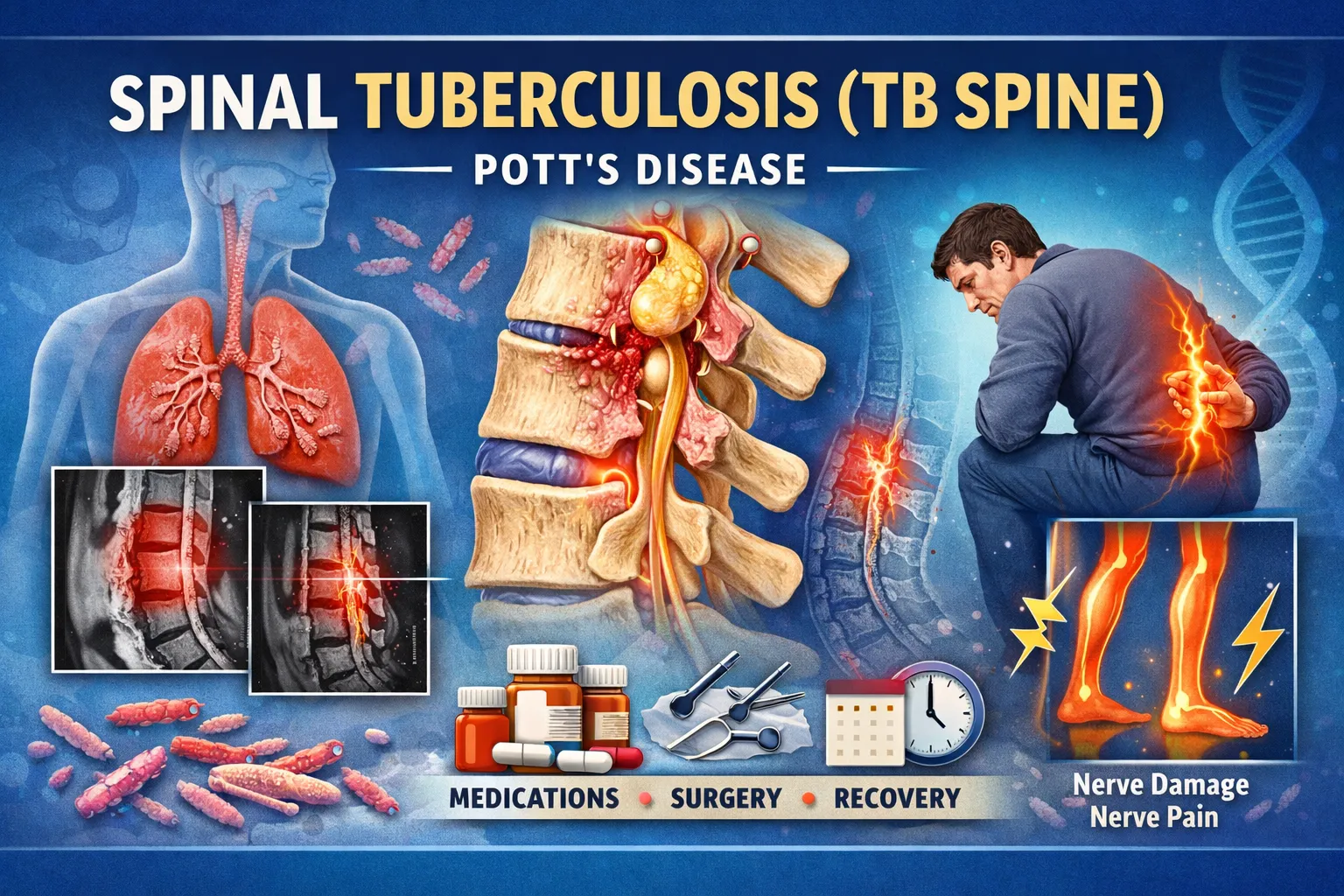
Back pain is common. Almost everyone gets it at some point. But sometimes, back pain is not “just back pain.” Sometimes it is a warning sign of something deeper happening inside the spine. One of the most serious causes is Spinal Tuberculosis, also known as TB Spine or Pott’s Disease. Spinal TB is not as rare as people think, especially in countries where tuberculosis is common. And the tricky part is this: it can start slowly, like mild back pain and tiredness. Many people ignore it for weeks or months. So in this blog, we will cover everything you need to know about Spinal Tuberculosis (TB Spine):
Table of Contents
What is Spinal Tuberculosis (TB Spine)?
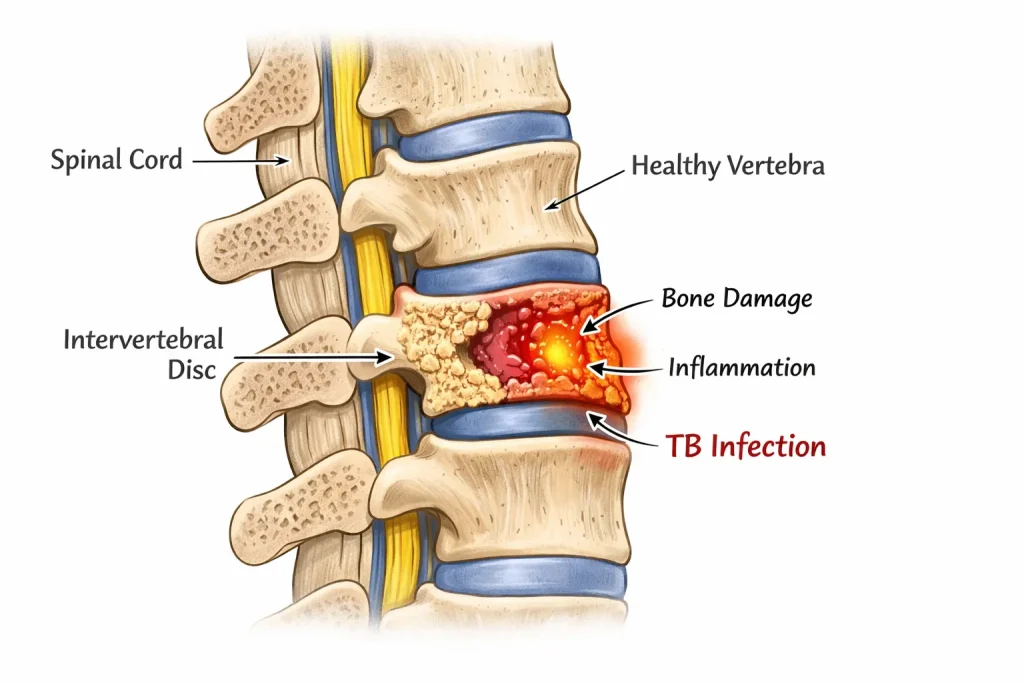
Spinal Tuberculosis is a type of tuberculosis that affects the bones of the spine (vertebrae).
Most people think TB only affects the lungs. That is true in many cases. But TB can also attack other parts of the body, like:
- lymph nodes
- brain
- kidneys
- joints and bones
- spine
When TB affects the spine, it is called TB Spine or Spinal TB.
Why is it also called Pott’s Disease?
Spinal TB is often called Pott’s Disease because a doctor named Percivall Pott described it long ago.
What makes TB spine serious?
Because the spine is not just bones. It also protects your spinal cord.
Your spinal cord is like a main electric cable. It carries signals from your brain to your hands and legs. If TB damages the spine and presses the spinal cord, it can cause:
- numbness
- weakness
- walking problems
- even paralysis in severe cases
Think of it like this:
Your spine is the hard pipe, and your spinal cord is the soft wire inside it. If the pipe breaks and bends, the wire gets crushed. That is why spinal TB should never be ignored.
How Does Spinal TB Happen? (Causes and Spread)
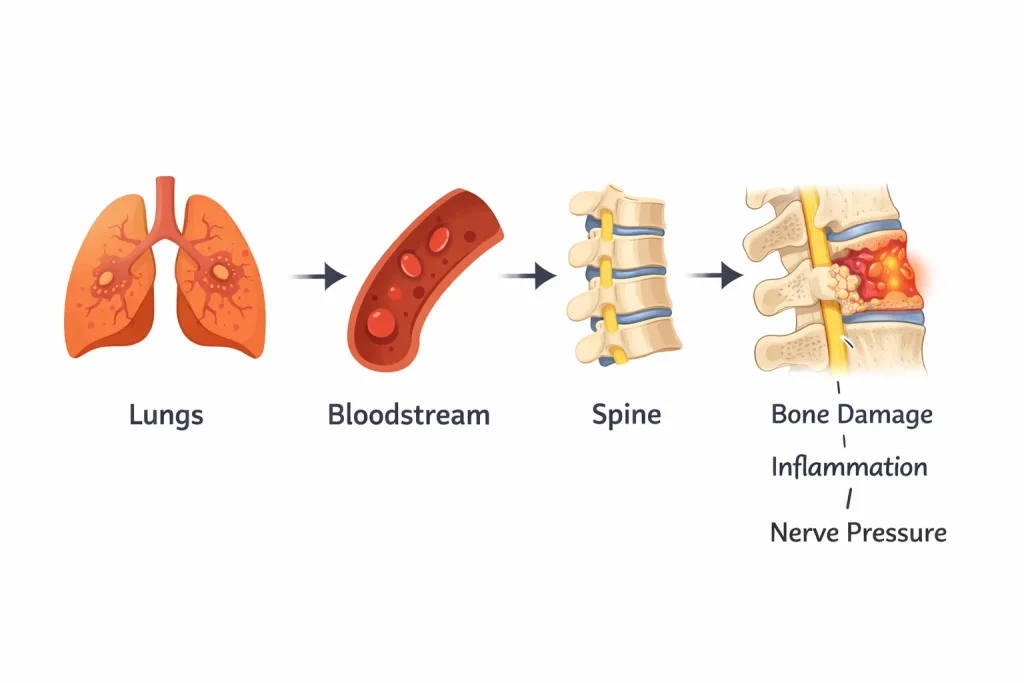
Spinal TB is caused by the bacteria Mycobacterium tuberculosis. But here’s the important part:
Most of the time, TB does not start in the spine directly. It usually starts somewhere else, often in the lungs, and then spreads.
How does it spread to the spine?
TB spreads through the bloodstream. The bacteria can travel like passengers in a train and settle in the bones of the spine. This is called hematogenous spread, which means spread through the blood.
Can spinal TB happen without lung symptoms?
Yes, and this is a common reason why people get confused.
Many spinal TB patients:
- do not have a cough
- do not have breathing problems
- do not feel “like TB.”
So even if someone does not look like a TB patient, spinal TB is still possible.
Which Part of the Spine is Most Affected?
Spinal TB can affect any part of the spine, but it most commonly affects:
- Thoracic spine (middle back)
- Lumbar spine (lower back)
Less commonly, it may affect:
- cervical spine (neck area)
- sacral spine (lower-most part)
TB often attacks the front part of the vertebra. Over time, the bone becomes weak.
This weakness can cause:
- spine collapse
- bending forward
- visible hump (kyphosis)
Who Is at Higher Risk of Spinal TB?
Spinal TB can happen to anyone. But some people have a higher risk.
Common risk factors include:
- weak immunity
- diabetes
- HIV infection
- long-term steroid use
- cancer or chemotherapy
- poor nutrition
- alcohol or substance misuse
- close contact with a TB patient
- overcrowded living conditions
Here’s a simple example:
A healthy body is like a strong security guard. It can stop germs quickly.
A weak immune system is like a sleepy guard. The bacteria get in easily.
Symptoms of Spinal Tuberculosis
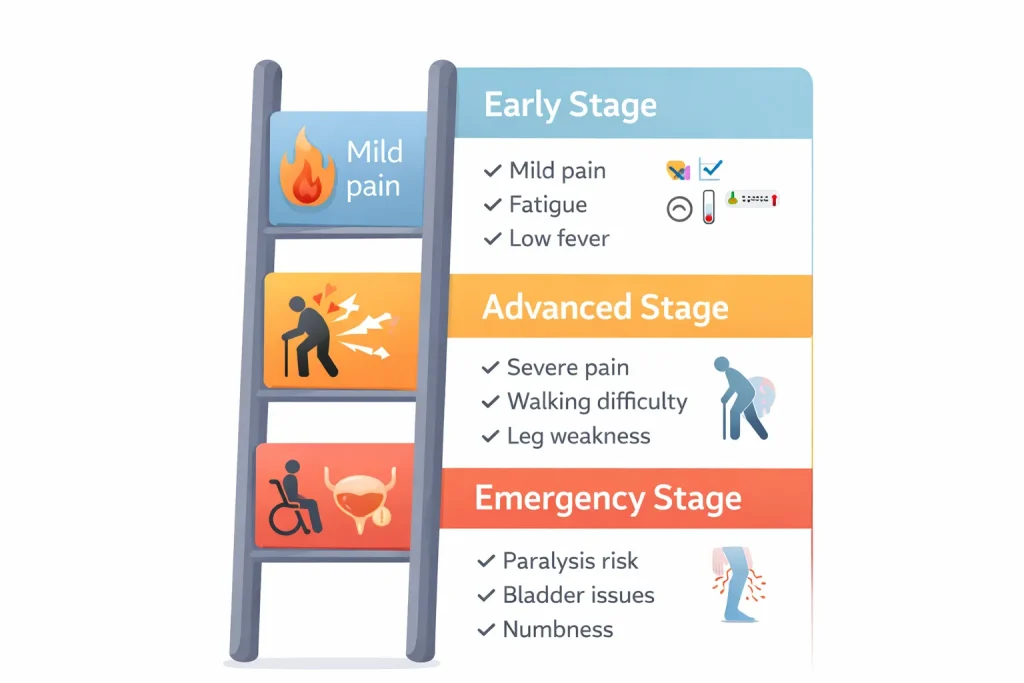
Spinal TB symptoms can be confusing because they start slowly. Many people think, “I slept wrong.”
“I lifted something heavy.”
“It will go away.”
But TB pain usually does not go away easily. Let’s break it down.
Early Symptoms of TB Spine (Mild Stage)
In the beginning, symptoms may look normal.
Common early symptoms:
- mild but constant back pain
- back stiffness
- tiredness or weakness
- loss of appetite
- low-grade fever (often in evening)
- weight loss
- feeling unwell without a clear reason
The pain usually:
- increases slowly over weeks
- feels deep inside
- worsens with activity
- may disturb sleep
Late Symptoms (Advanced Stage)
If spinal TB continues without treatment, it starts damaging the vertebrae.
Advanced symptoms include:
- severe back pain
- difficulty walking
- weakness in the legs
- tingling or numbness
- muscle spasms
- visible spine bending or hump
- difficulty standing straight
Sometimes, a patient may develop swelling because TB can form a “cold abscess” near the spine.
Emergency Symptoms (Red Flags)
Some symptoms need urgent medical attention.
If you notice any of these, do not delay:
- sudden leg weakness
- difficulty walking
- loss of bladder control
- loss of bowel control
- numbness in the private parts
- severe nerve pain shooting down the leg
These can mean spinal cord pressure. Think of it like stepping on a garden hose. If you press it too hard, the water flow stops. In the same way, pressure on the spinal cord can stop nerve signals.
Spinal TB vs Slip Disc vs Regular Back Pain\
| Feature | Normal Back Pain | Slip Disc | Spinal TB |
|---|---|---|---|
| Pain duration | Short-term | Sudden | Long-lasting |
| Fever | No | No | Yes |
| Weight loss | No | No | Common |
| Night pain | Rare | Sometimes | Common |
| Bone damage | No | No | Yes |
| Weakness | No | Sometimes | Common (late) |
This is one of the biggest confusions.
Let’s compare simply.
Regular Back Pain
Usually happens because of:
- poor posture
- muscle strain
- long sitting
- gym injury
It improves with rest, stretching, and time.
Slip Disc (Herniated Disc)
Often causes:
- pain in the legs
- numbness
- pain after lifting heavy weights
- pain when bending
Spinal TB
Pain is different because it has infection and bone damage.
Spinal TB often includes:
- long-lasting pain
- fever and weight loss
- night pain
- weakness in legs (later stage)
A good way to understand: A slipped disc is like a rubber cushion bulging out. Spinal TB is like termites eating a wooden pillar. It weakens the structure.
How is Spinal Tuberculosis Diagnosed?
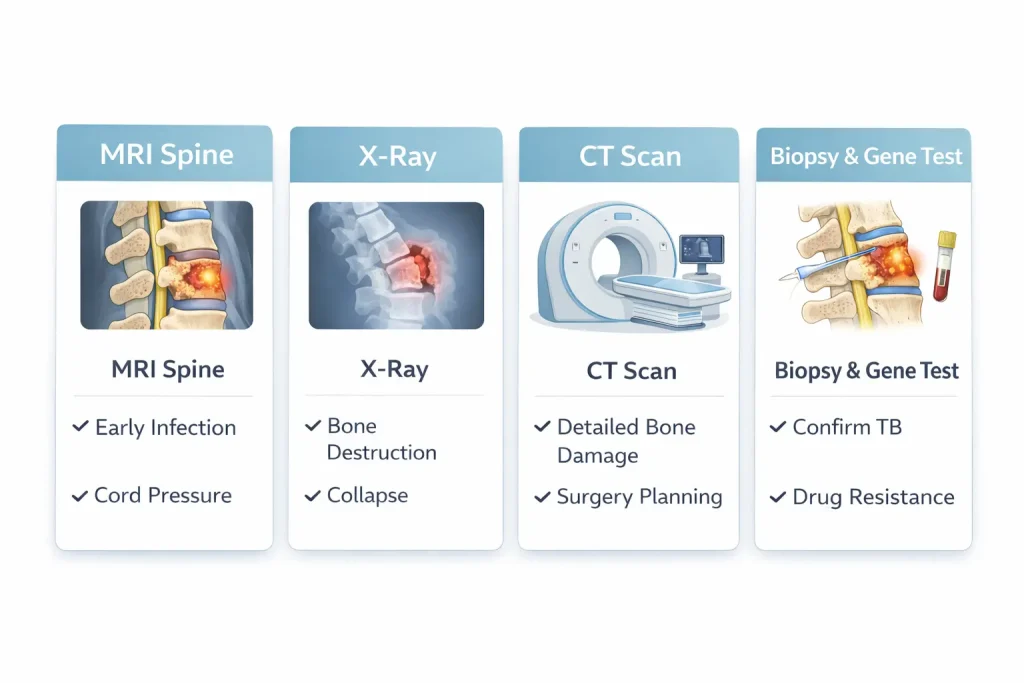
Spinal TB diagnosis is a mix of:
- medical history
- physical exam
- imaging tests
- lab tests
- sometimes biopsy
Doctors must confirm the diagnosis properly because the treatment is long-term.
1) Medical History and Physical Examination
Doctors ask questions like:
- How long has pain been there?
- Is it getting worse?
- Fever or weight loss?
- Any TB history in the family?
- Any weakness or numbness?
They also check:
- spinal tenderness
- spine movement
- leg strength
- reflexes
- walking style
2) MRI Spine (Most Important Test)
MRI is the best test for spinal TB.
It shows:
- early infection in bones
- abscess formation
- disc involvement
- spinal cord compression
- soft tissue spread
MRI is like a high-quality camera for the inside of your body.
It can catch TB early, even when the X-ray looks normal.
3) X-Ray (Useful but Not Enough)
X-ray helps, but changes appear late.
It may show:
- bone destruction
- Reduced disc space
- collapse of a vertebra
- kyphosis
So X-ray is useful, but MRI is much stronger for early detection.
4) CT Scan
CT scan shows the bone structure clearly. It helps in:
- Understanding bone damage
- planning surgery
- seeing the collapse in detail
5) Blood Tests (Supportive Tests)
Common blood tests:
- ESR (often high)
- CRP (often high)
- CBC (may show anemia)
These tests show inflammation in the body, but they do not confirm TB alone.
6) TB Testing
Doctors may use:
- Mantoux test (TST)
- IGRA blood tests
These show TB infection exposure. But again, not final proof for spine TB.
7) Biopsy and Gene Tests (Confirmation)
To confirm TB spine, doctors may take a small tissue sample. This is called a biopsy.
Modern tests like CBNAAT (GeneXpert) can detect:
- TB bacteria
- drug resistance (like rifampicin resistance)
This is very important, especially if drug-resistant TB is suspected.
Treatment of Spinal Tuberculosis
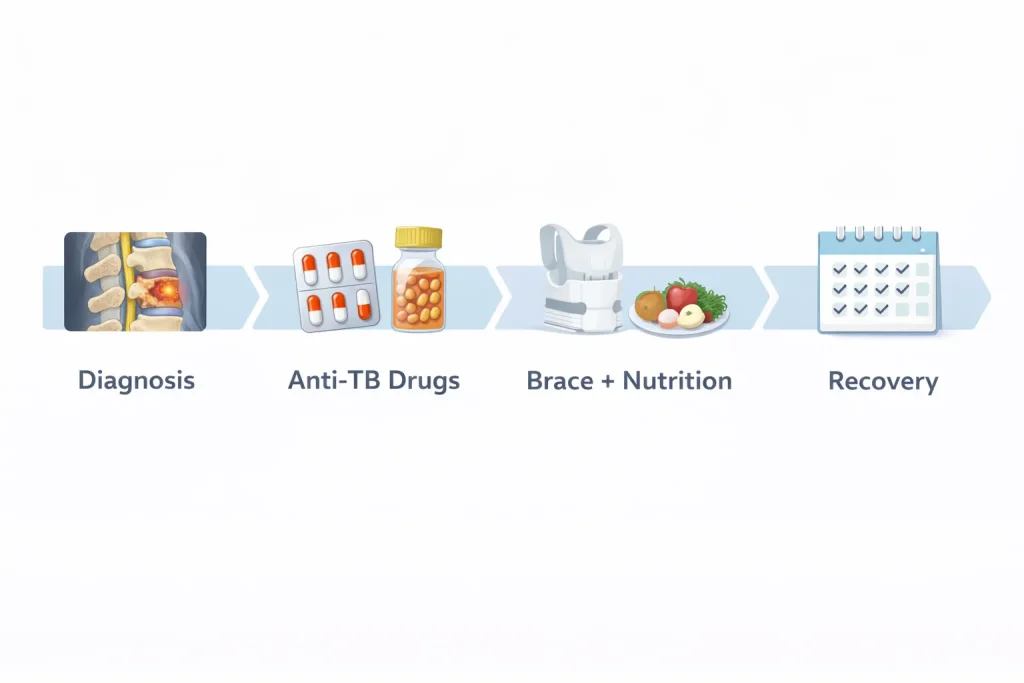
The good news is: Spinal TB is treatable. Most patients recover well if diagnosed early and treated properly.
Treatment includes:
- Anti-TB medicines
- Supportive care
- Sometimes surgery
- Rehabilitation
1) Anti-TB Medicines (Main Treatment)
| Phase | Duration | Purpose |
|---|---|---|
| Intensive phase | 2–3 months | Kill active bacteria |
| Continuation phase | 6–9 months | Prevent relapse |
| Rehab phase | Parallel | Restore strength |
Anti-TB treatment is the foundation. It kills TB bacteria and stops damage.
How long does spinal TB treatment take?
Spinal TB treatment usually lasts longer than lung TB.
Often:
- 9 to 12 months
- Some cases may need longer based on:
- severity
- abscess size
- spinal cord involvement
- drug resistance
- patient response
Common anti-TB medicines include:
- Isoniazid
- Rifampicin
- Pyrazinamide
- Ethambutol
Doctors decide the final plan based on the case.
Important point: Stopping treatment early is like stopping a full pest control job after killing only half the termites. The remaining ones come back stronger. So TB medicines must be taken exactly as prescribed.
Side Effects of Anti-TB Medicines
Many patients worry about side effects. Some are manageable, but need monitoring.
Possible side effects:
- nausea
- loss of appetite
- liver problems
- vision changes (rare but important)
- tingling in hands/feet
- skin rash
Doctors may advise:
- Liver function tests
- eye checkups
- vitamin B6 supplementation
Never stop TB medicines on your own. Always report symptoms to the doctor.
2) Pain Control and Supportive Treatment
Pain is common, especially in the early stages.
Supportive care may include:
- pain relief medicines (as advised)
- rest for a limited period
- brace or spinal support belt
- posture correction
- careful movements
Rest helps, but too much rest can weaken muscles. So doctors balance rest with movement.
3) Nutrition and Immunity Support
TB can cause weight loss and weakness.
Good nutrition helps recovery faster.
What foods help in TB spine recovery?
Focus on:
- protein foods (dal, paneer, eggs, fish, chicken)
- nuts and seeds
- milk and curd
- fruits and vegetables
- enough water
Think of it like repairing a damaged wall. Medicines stop the damage. Nutrition gives the body bricks and cement to rebuild.
4) Physiotherapy and Rehabilitation
Once pain reduces and stability improves, physiotherapy becomes important.
It helps:
- improve mobility
- restore strength
- prevent stiffness
- improve walking
Rehabilitation is like rebuilding fitness after a long illness. Slow and steady works best.
When is Surgery Needed for Spinal TB?
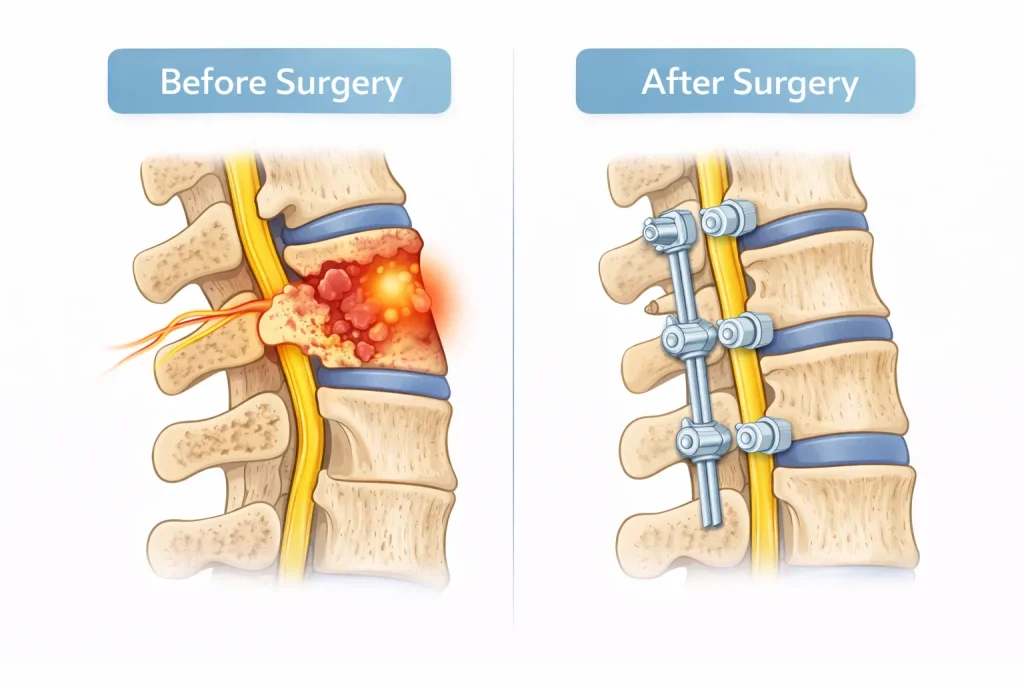
Not everyone needs surgery. Many patients recover with medicines alone. But surgery may be needed in certain cases.
Surgery is considered when:
- Spinal cord compression causes weakness/paralysis
- severe spine instability
- large abscess pressing nerves
- severe deformity (kyphosis)
- No improvement with medicines
- unclear diagnosis needing tissue sample
What does surgery do?
Surgery may involve:
- removing infected tissue
- draining abscess
- decompressing the spinal cord
- stabilizing the spine using rods and screws
A simple way to imagine: Medicines kill the infection. Surgery repairs the broken support structure and frees trapped nerves.
Recovery From Spinal Tuberculosis: What to Expect
Recovery depends on:
- early detection
- severity
- spinal cord involvement
- age and immunity
- treatment regularity
But most patients improve well.
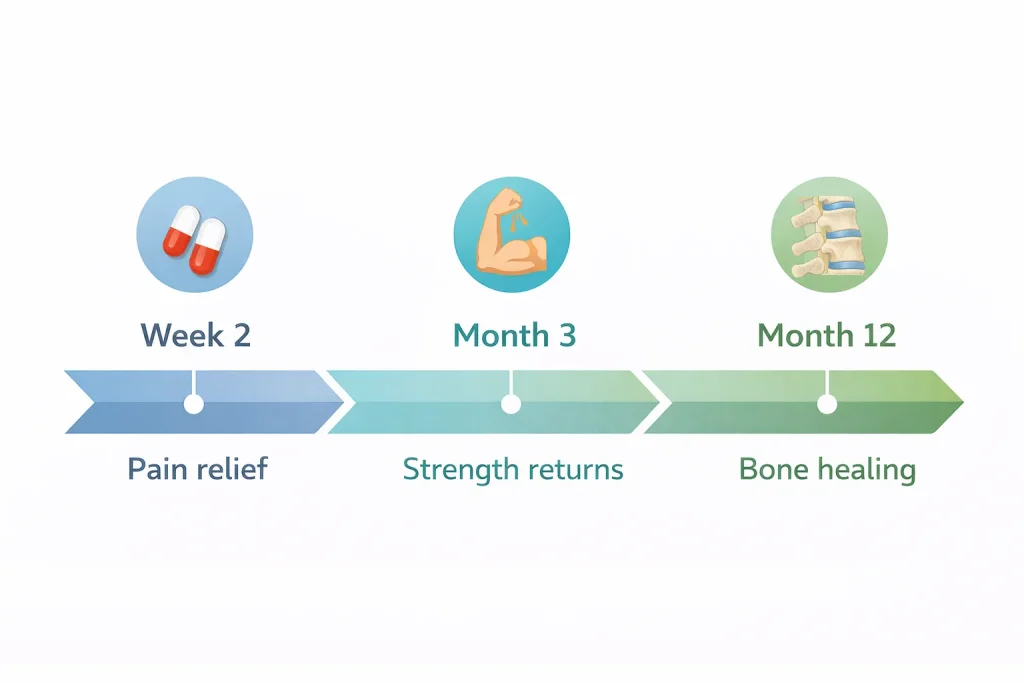
Typical recovery timeline
This can vary, but the general pattern:
- 2 to 6 weeks: pain starts improving
- 2 to 3 months: strength improves (if nerves were affected)
- 6 to 12 months: bone healing and full spine recovery
- 1 year or more: deformity recovery may take longer
If nerve weakness was present, recovery can take time because nerves heal slowly. Nerves are like internet cables. If they get compressed for long, they take longer to repair, even after pressure is removed.
What to Do During TB Spine Treatment (Practical Tips)
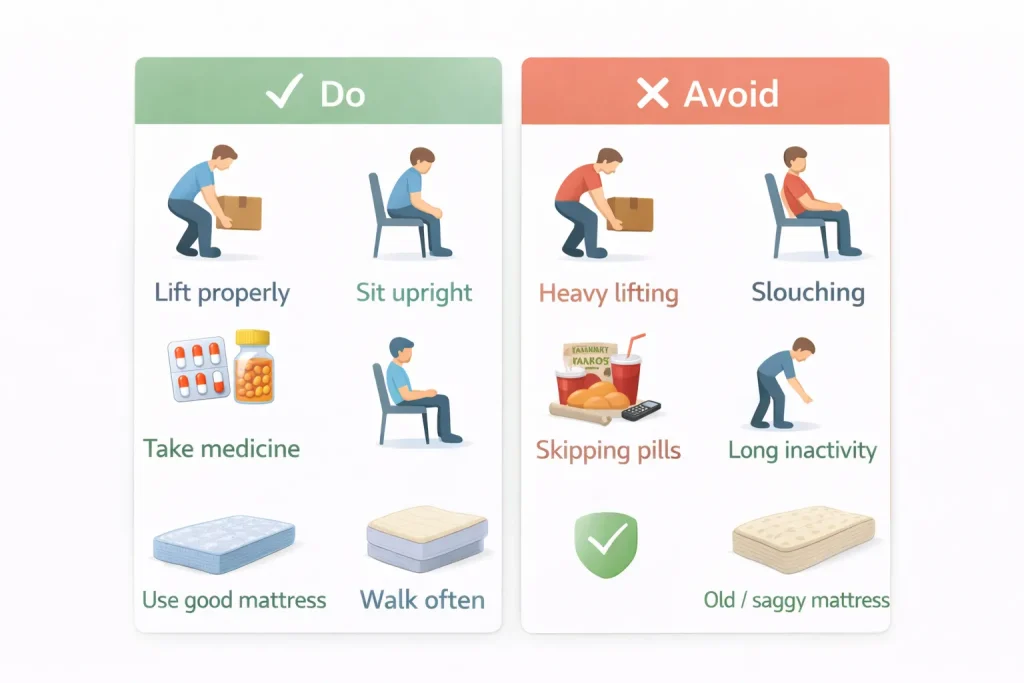
Here are practical steps to support healing.
Do these:
- Take medicines daily without missing doses
- attend follow-ups regularly
- maintain correct posture
- use brace if advised
- Sleep on a firm mattress
- eat protein-rich foods
- walk slowly as advised
- do physiotherapy exercises
Avoid these:
- heavy lifting
- bending repeatedly
- sitting in poor posture for a long time
- stopping medicines because the pain reduced
- self-medication
- ignoring fever or weight loss
Complications of Spinal Tuberculosis (If Untreated or Delayed)
Spinal TB can become dangerous without treatment.
Major complications include:
spinal deformity (hunchback)
- chronic back pain
- permanent nerve damage
- weakness in the legs
- paralysis
- bowel/bladder problems
- recurrence of infection
- drug-resistant TB
Drug-resistant TB is harder to treat and needs special medicines.
This is why early diagnosis is so important.
Is Spinal TB Contagious?
This is a common question. Spinal TB itself is not usually spread directly from one person to another like the cold or the flu. But the bacteria causing TB can spread through the air when someone has active lung TB and coughs. So if a person has:
- spinal TB only, without lung TB
Then the risk of spreading is low. Still, doctors may check for lung TB to be safe.
Can Spinal Tuberculosis Come Back?
Yes, but it is less likely if:
- The full medicine course is completed
- Drug resistance is addressed
- nutrition and immunity improve
Recurrence can happen if:
- Medicines are stopped early
- TB bacteria are drug-resistant
- immunity becomes weak again
Prevention of Spinal Tuberculosis
Prevention mainly means preventing TB infection and catching it early.
Simple prevention steps
- treat lung TB early
- complete TB treatment fully
- improve nutrition
- control diabetes
- avoid overcrowded and poorly ventilated places (when possible)
- screening and checkups if TB contact history exists
Conclusion
Spinal Tuberculosis is serious, but it is also treatable.
The biggest problem is that it often starts slowly, like normal back pain. People delay diagnosis. That delay can lead to nerve compression and spine damage.
If you or someone you know has:
- long-lasting back pain
- fever or weight loss
- weakness or numbness
- difficulty walking
Then it is important to consult a doctor and do proper tests, like an MRI. Think of spinal TB like a crack in the foundation of a building. Small cracks can be repaired early. But if ignored, the structure becomes unsafe. Early care makes recovery faster, safer, and smoother.
FAQs
1) What are the early symptoms of spinal tuberculosis (TB spine) in adults?
Early TB spine symptoms in adults often include persistent back pain, stiffness, fatigue, low-grade fever (especially in the evening), and unexplained weight loss. Unlike normal back strain, the pain usually grows slowly and does not improve fully with rest.
2) How is spinal tuberculosis different from slip disc and spondylitis?
Spinal TB usually causes slow, continuous back pain along with fever, weakness, and weight loss. Slip disc mainly causes nerve pain down the leg. Spondylitis can be inflammatory, but MRI findings and TB tests help confirm TB spine clearly.
3) Which test is best for diagnosing spinal tuberculosis: MRI, CT scan, or X-ray?
MRI is considered the best test for diagnosing TB spine because it detects early infection, abscess, and spinal cord pressure. X-ray often shows changes late, and CT scan is better for detailed bone damage and surgical planning.
4) Can spinal tuberculosis happen without cough or lung TB symptoms?
Yes, TB spine can occur even without cough or lung symptoms. Many patients have normal chest symptoms but still develop spinal TB due to spread through the bloodstream. That’s why back pain with fever, weight loss, or weakness needs proper evaluation.
5) How long does spinal tuberculosis treatment take and when does pain reduce?
Spinal tuberculosis treatment usually takes 9 to 12 months, depending on severity. Many patients start noticing pain reduction within 2 to 6 weeks after starting anti-TB medicines. Regular follow-ups and completing the full course are essential for healing.
6) Is spinal tuberculosis curable without surgery, and when is surgery needed?
Most cases of TB spine can be cured with anti-TB medicines and rest. Surgery is needed when there is spinal cord compression, leg weakness, severe deformity, unstable spine, large abscess, or poor response to medicines despite proper treatment.
7) Can TB spine cause paralysis or permanent nerve damage if untreated?
Yes, untreated spinal tuberculosis can damage vertebrae and compress the spinal cord, leading to leg weakness, numbness, walking difficulty, and paralysis. Early diagnosis with MRI and timely treatment can prevent permanent nerve damage and serious disability.
8) What is a cold abscess in spinal tuberculosis and is it dangerous?
A cold abscess in spinal tuberculosis is a pus collection that forms without typical signs like redness or heat. It can spread near the spine and press nerves, causing pain or weakness. Doctors evaluate it through MRI and sometimes drainage.
9) What are the common side effects of anti-TB medicines used in TB spine treatment?
Anti-TB medicines may cause nausea, reduced appetite, liver issues, skin rashes, tingling in hands or feet, or vision changes in some cases. Regular blood tests and doctor monitoring help manage side effects safely without stopping treatment suddenly.
10) What precautions should I follow during spinal tuberculosis recovery to avoid relapse?
During TB spine recovery, avoid heavy lifting, bending repeatedly, and sitting with poor posture for long hours. Take medicines daily without missing doses, eat protein-rich food, use braces if advised, and attend follow-ups to prevent relapse or complications.