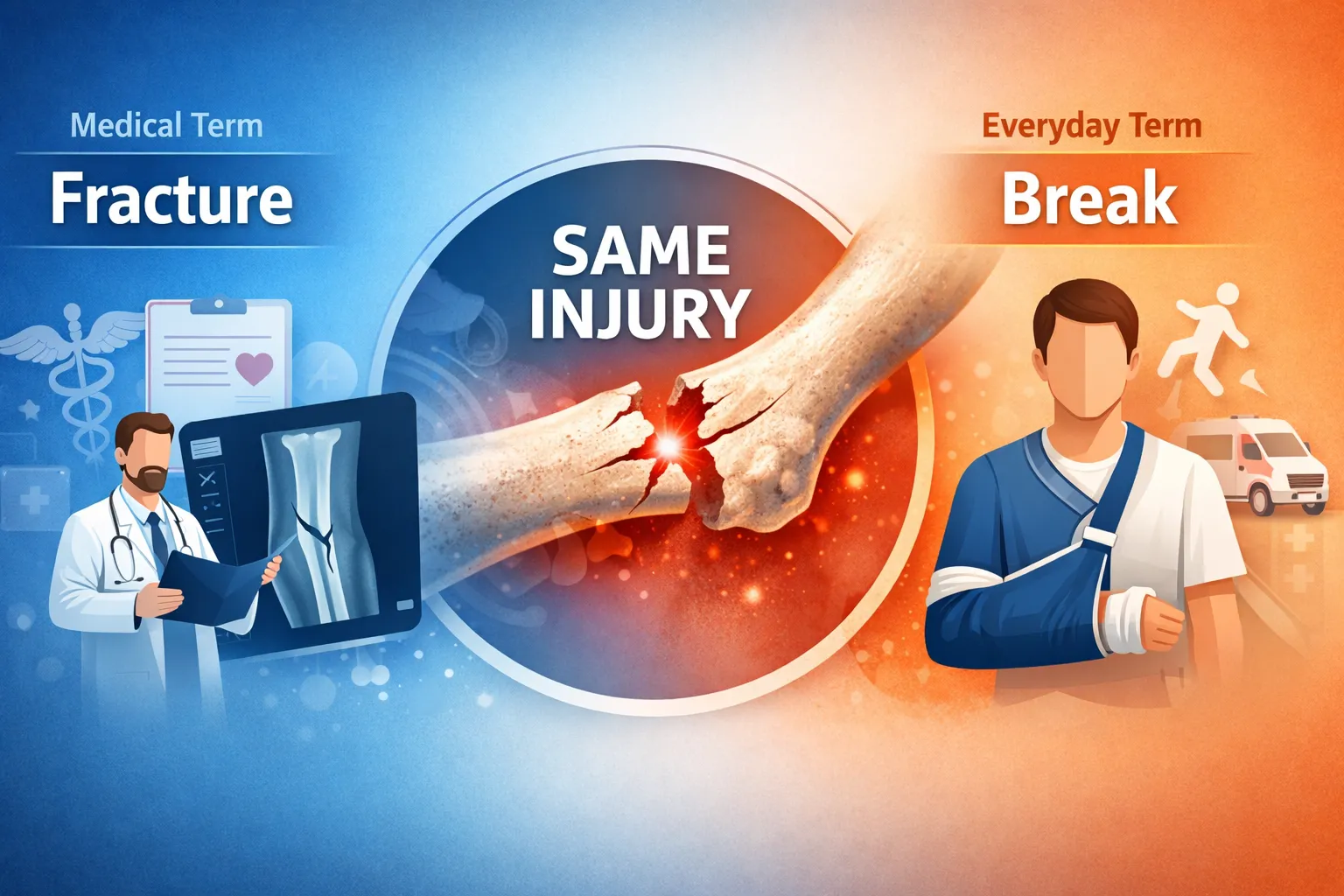
Many people believe a bone fracture and a bone break are different injuries. Some think a fracture is minor, while a break sounds more serious. In reality, they mean the same thing. Both describe a bone that has cracked or broken due to injury. The confusion comes from everyday language, not medical science. Doctors use the word fracture, while most people say broken bone.
Understanding Bone Fracture vs Break is important because bone healing depends on the type of fracture, not the word used. Some fractures heal on their own with rest and support. Others need casts or surgery. Bones can repair themselves, but healing takes time, care, and proper treatment. This guide explains fractures in simple terms, so you know what is happening inside your body, what to expect during recovery, and when medical help is necessary.
Table of Contents
What is a Bone Fracture?
A bone fracture is a medical term used when a bone develops a crack or breaks into pieces. The damage can be small, like a thin crack, or severe, where the bone separates into two or more parts.
Think of a bone like a wooden stick. If the stick bends and cracks slightly, that is still damage. It does not have to snap in half to be broken. In the same way, any crack in a bone is called a fracture.
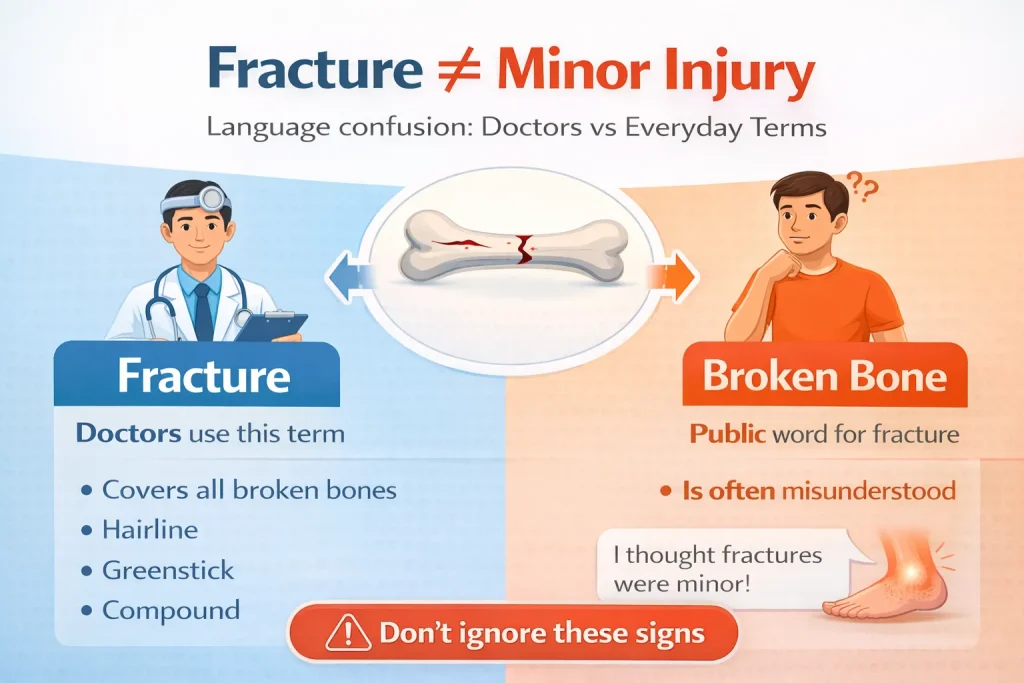
Doctors use the word fracture because it covers all types of bone injuries. It includes small cracks, full breaks, and complex injuries. This helps doctors describe the injury clearly and decide the right treatment.
A fracture can happen due to:
- A fall
- A road accident
- Sports injuries
- Heavy impact
- Repeated stress over time
What Does It Mean When a Bone is Broken?
When people say they have a broken bone, they are usually describing the same thing doctors call a fracture. The phrase broken bone is informal and commonly used in daily conversation.
Many people assume a broken bone means the bone is completely snapped. That is not always true. A bone can be broken even if it stays in one piece.
Here is a simple way to understand it:
- Fracture is the medical word
- Break is the everyday word
Both describe the same injury.
So when someone asks, “Is a fracture worse than a break?” the honest answer is no. The seriousness depends on how badly the bone is damaged, not the term used.
Is a Fracture and a Break the Same Thing?
Yes. A fracture and a break are the same thing.
The difference exists only in language, not in medicine.
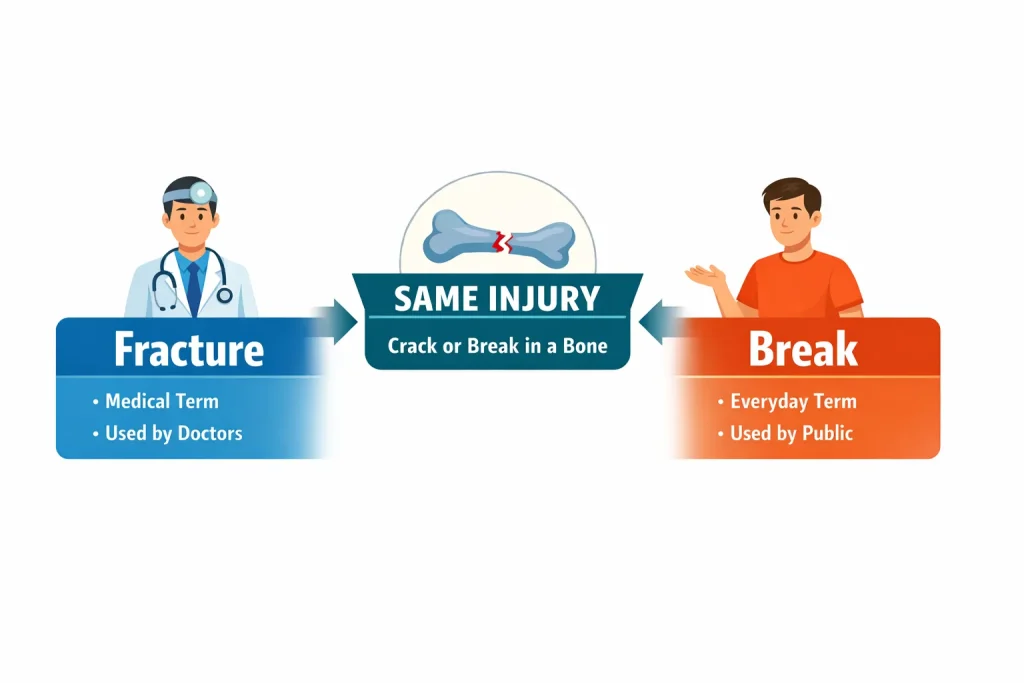
| Term | Who Uses It | Meaning |
|---|---|---|
| Fracture | Doctors | Any crack or break in a bone |
| Break | General public | Same injury, informal word |
If a doctor tells you that you have a fracture, it does not mean your injury is smaller or bigger than a break. It simply means the bone is damaged and needs time to heal.
Types of Bone Fractures
Bone fractures can vary widely in severity. Some are small cracks that heal with rest, while others involve serious breaks that need medical treatment. Doctors classify fractures based on how the bone breaks, whether it stays aligned, and if the skin is affected. Knowing the type of fracture helps explain pain levels, treatment options, and recovery time.
Hairline Fracture
A hairline fracture is a small crack in the bone. The bone remains in place, and symptoms may be mild initially. Because pain is not always severe, these fractures are sometimes ignored.
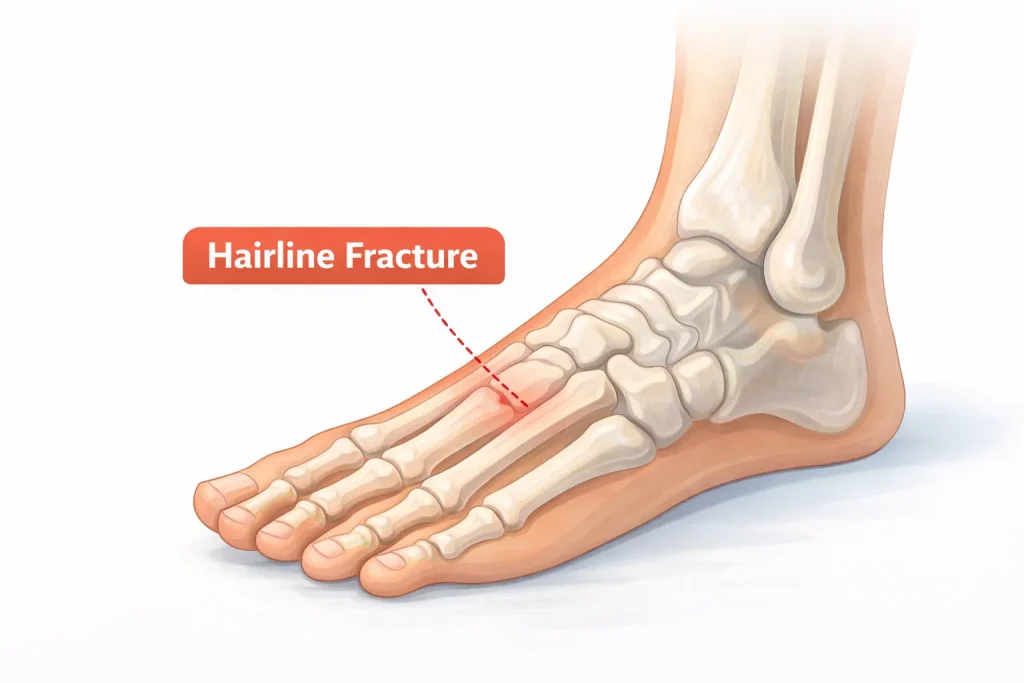
Key points:
- Bone alignment remains normal
- Pain worsens with activity
- Common in feet and wrists
Stress Fracture
A stress fracture develops slowly due to repeated pressure on the bone. It often affects athletes or individuals who suddenly increase their activity.
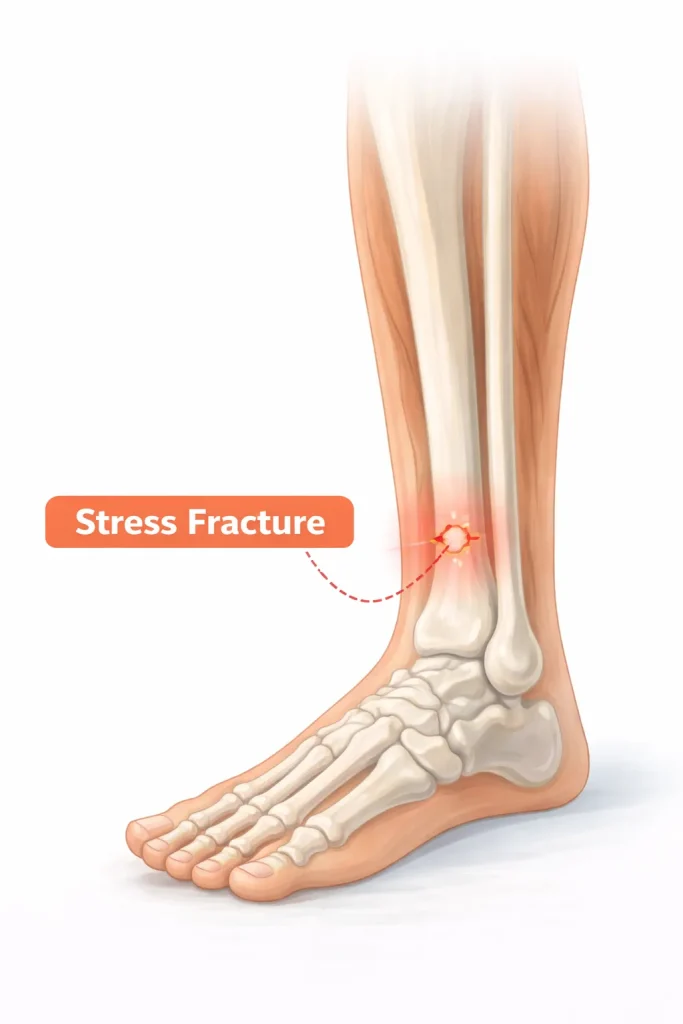
Key points:
- Pain builds gradually
- Improves with rest
- Common in feet and lower legs
Greenstick Fracture
A greenstick fracture usually occurs in children. The bone bends and cracks on one side without breaking completely.
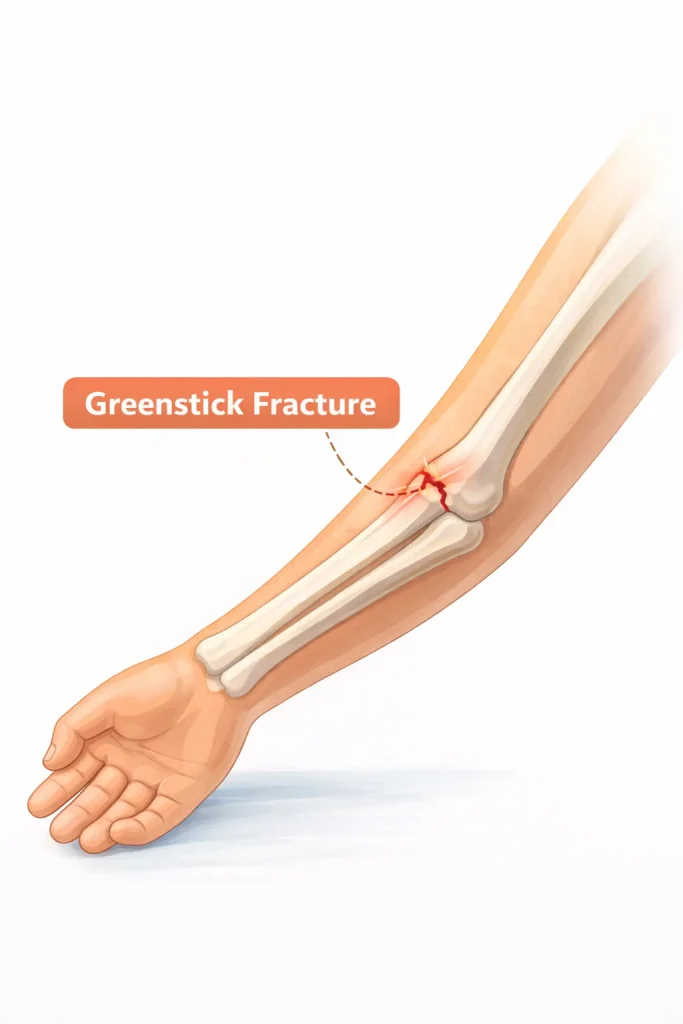
Key points:
- Seen in children
- Bone bends rather than snaps
- Heals well with casting
Simple Fracture
A simple fracture means the bone breaks but does not break through the skin. Infection risk is lower compared to open fractures.
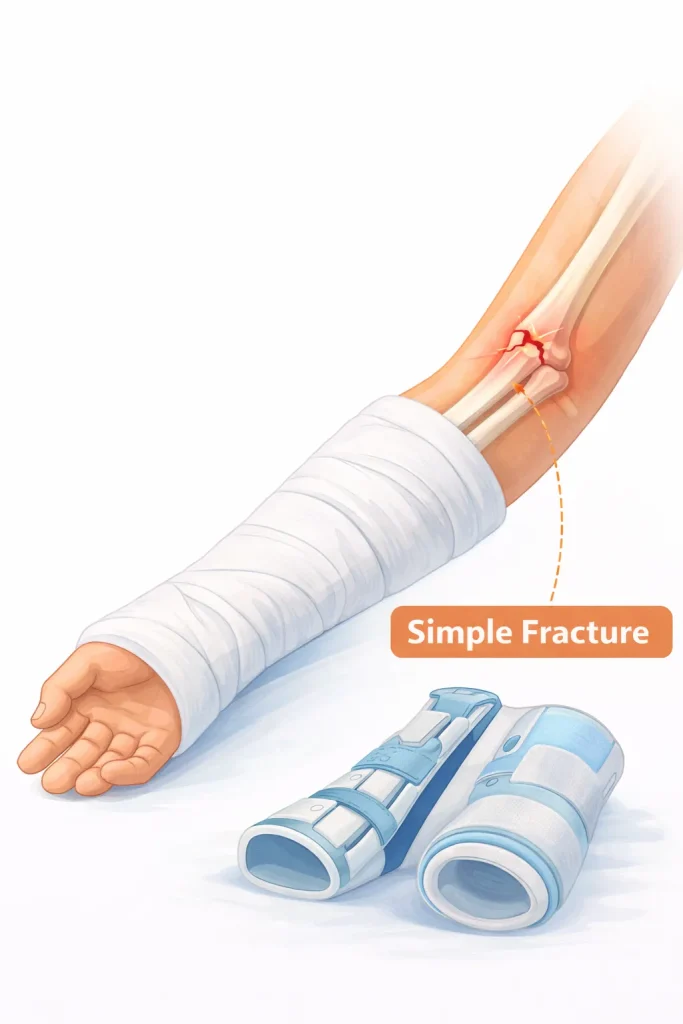
Key points:
- Skin remains intact
- Treated with casts or splints
- Healing takes several weeks
Compound Fracture
A compound fracture occurs when the broken bone pierces the skin. This is a serious injury that needs urgent care.
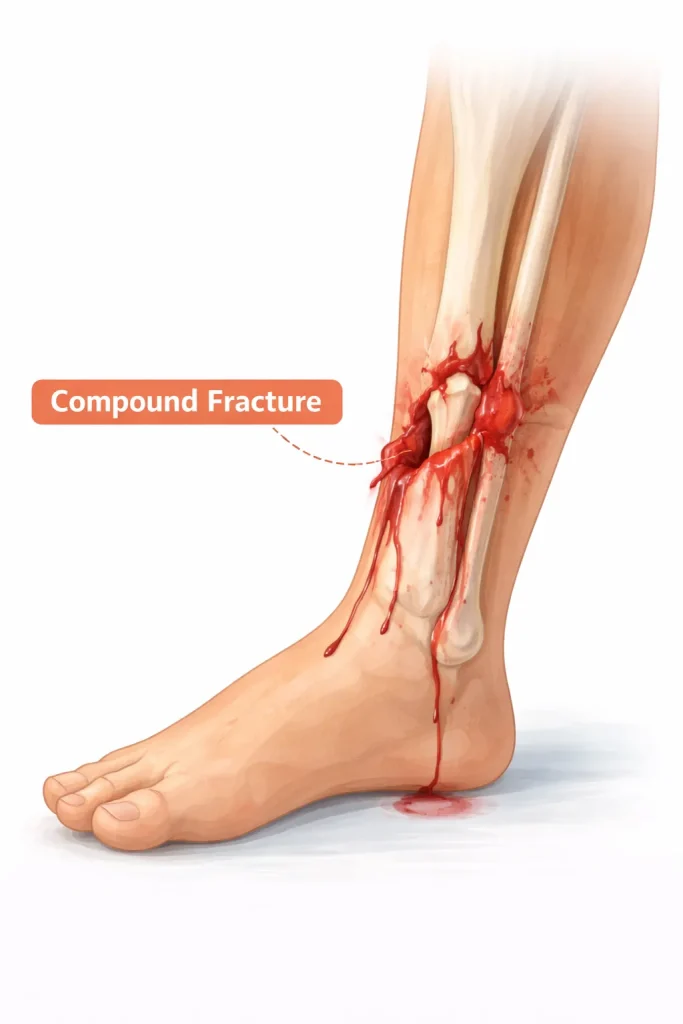
Key points:
- Bone is exposed
- High infection risk
- Surgery often required
Displaced Fracture
In a displaced fracture, the broken bone moves out of position. Proper alignment is needed for healing.
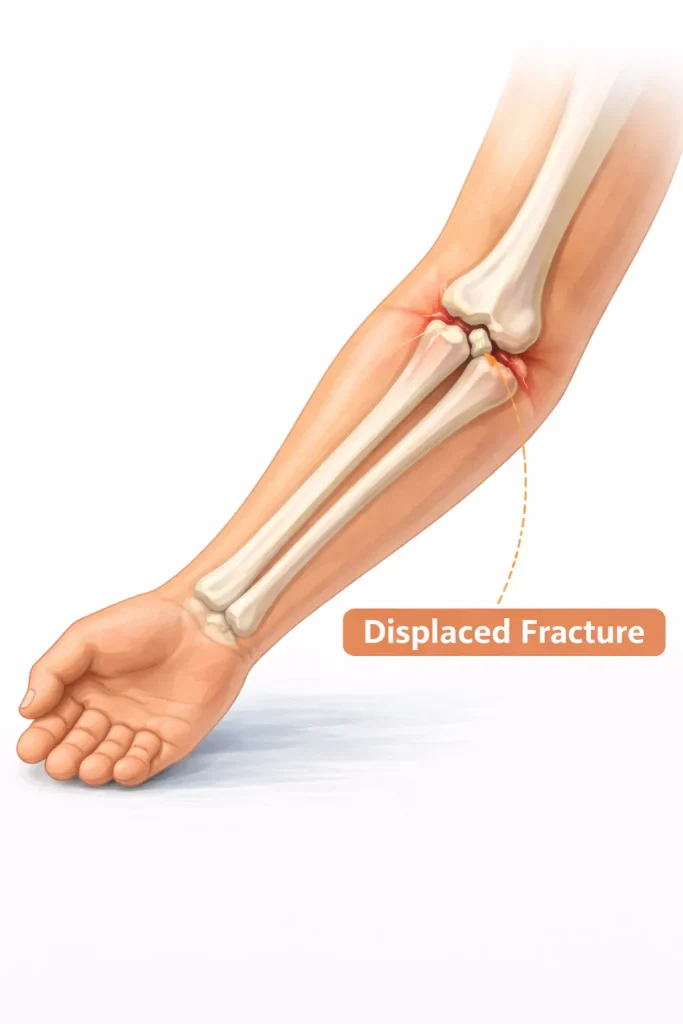
Key points:
- Bone ends are misaligned
- Visible deformity possible
- Often needs realignment
Non-Displaced Fracture
A non-displaced fracture means the bone cracks but stays aligned. These fractures usually heal more easily.
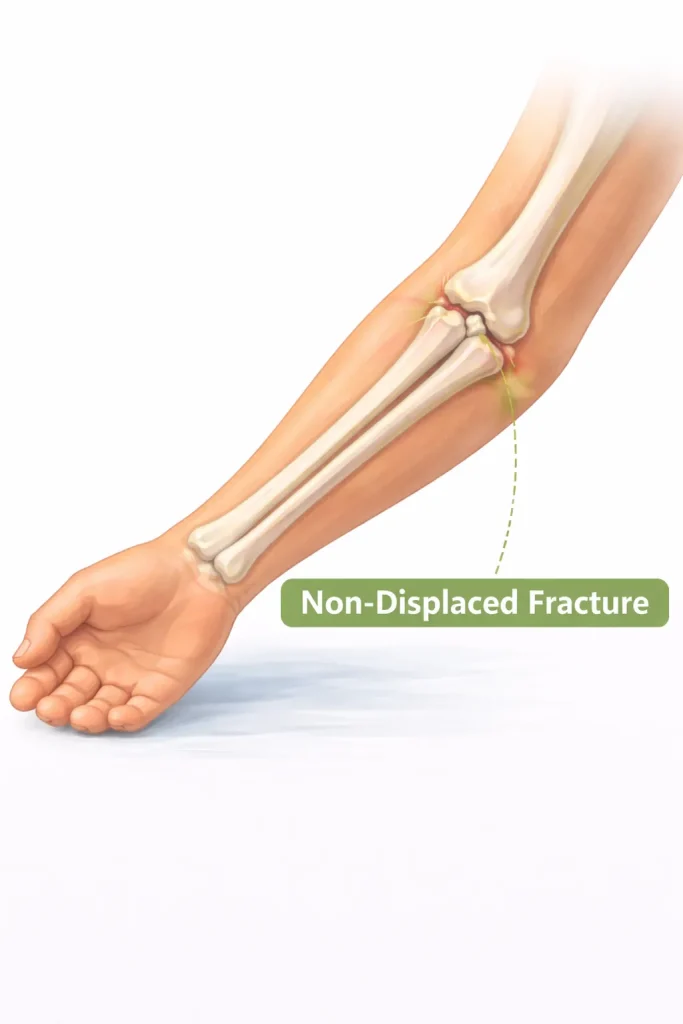
Key points:
- Bone position remains normal
- Surgery rarely needed
- Follow-up is important
Comminuted Fracture
A comminuted fracture occurs when the bone breaks into several pieces. It usually results from high-impact injuries.
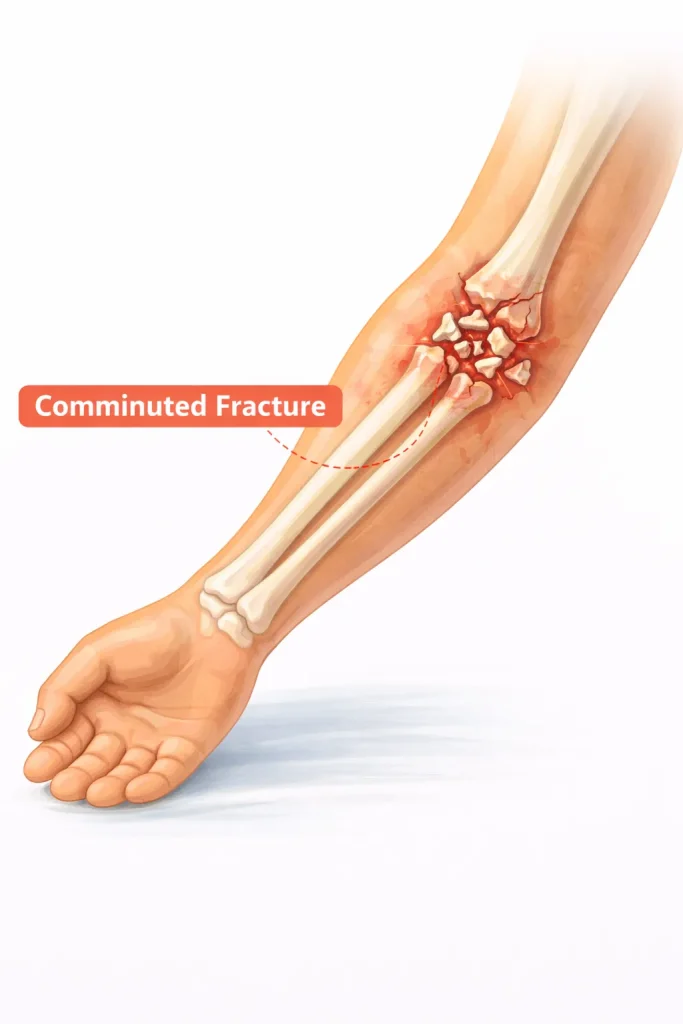
Key points:
- Bone breaks into many fragments
- Often caused by accidents
- Healing takes longer
Compression Fracture
Compression fractures mainly affect the spine. The bone collapses due to pressure and weakened bone strength.
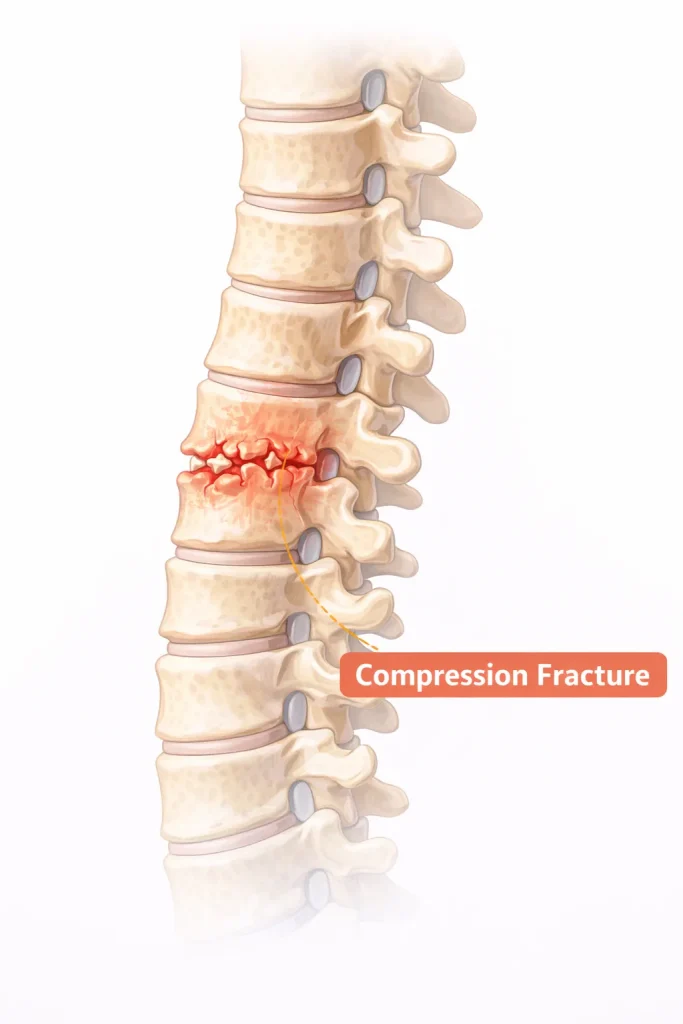
Key points:
- Common in older adults
- Causes back pain
- Often linked to osteoporosis
Avulsion Fracture
An avulsion fracture happens when a tendon or ligament pulls off a small piece of bone during sudden movement.
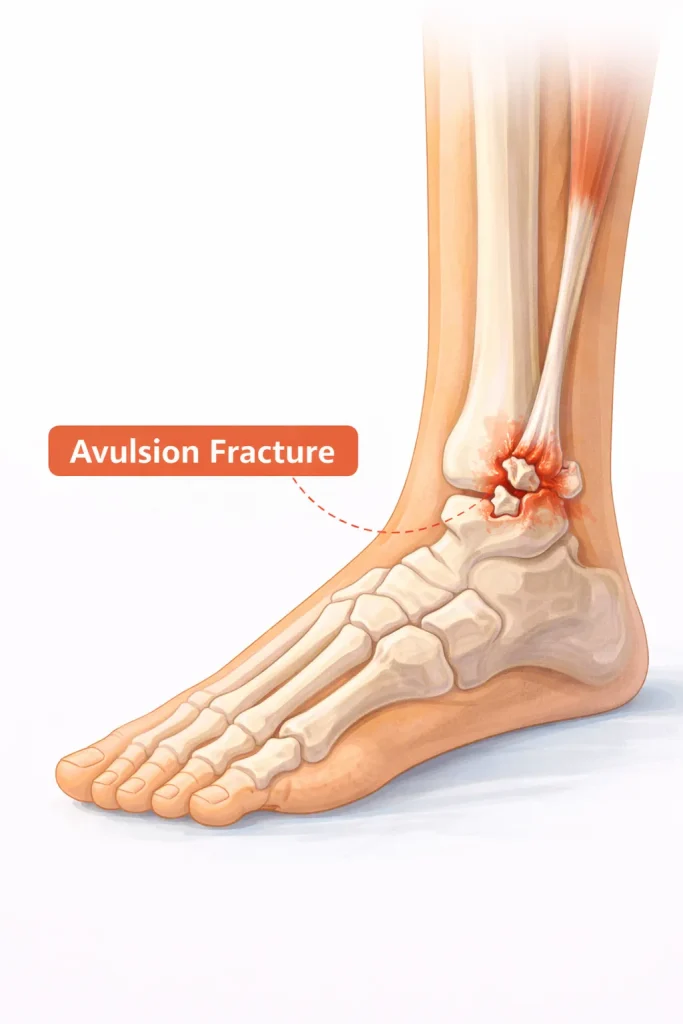
Key points:
- Caused by sudden force
- Common near joints
- Pain occurs with movement
Pathological Fracture
A pathological fracture occurs in bones weakened by disease rather than injury.
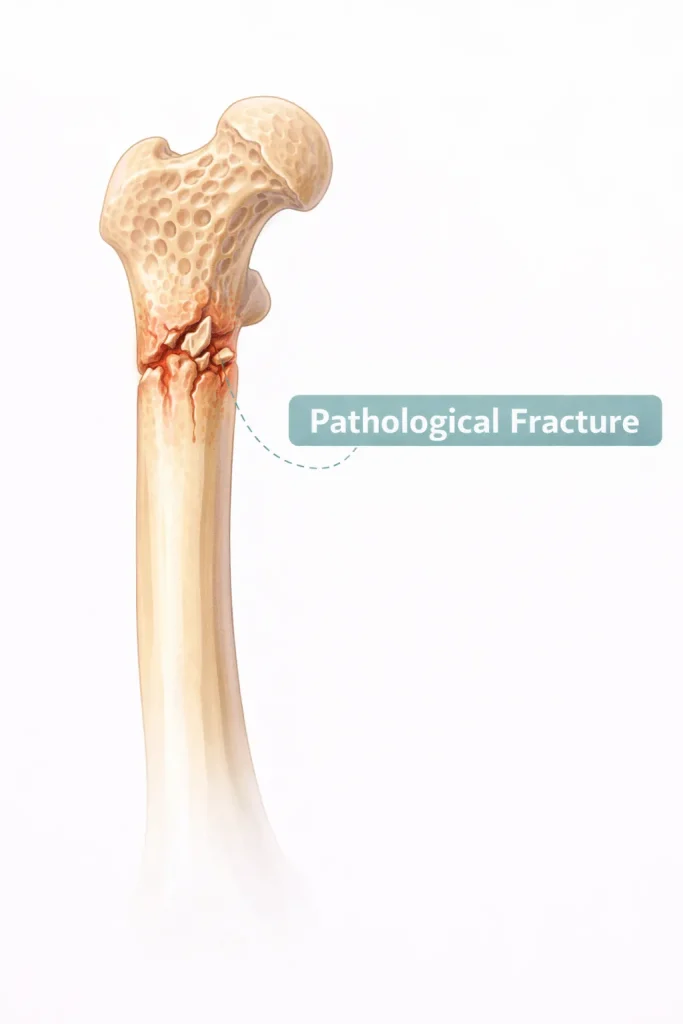
Key points:
- Caused by weak bones
- May happen with minor stress
- Treatment addresses the cause
Common Symptoms of a Broken or Fractured Bone
The symptoms depend on the fracture type, but most people notice some common signs.
Pain is usually the first symptom. It may feel sharp at first and then become dull. Swelling often appears within hours. Bruising may develop as blood leaks into nearby tissue.
Other signs include:
- Trouble moving in the area
- Pain when touching the bone
- Visible bending or deformity
- Weakness or inability to use the limb
Imagine trying to walk on a cracked chair leg. It may hold weight for a moment, but it feels unstable. That is similar to how a fractured bone behaves.
Can Bones Grow Back After a Fracture?
Bones do not grow back like skin, but they especially repair themselves.
When a bone fractures, the body forms a soft material around the break called a callus. This acts like glue, holding the pieces together. Over time, this callus hardens and turns into new bone.
Think of it like fixing a crack in a wall. First, you fill it with soft cement. Later, it dries and becomes strong again.
So yes, bones regenerate, but they do not grow longer or completely new. They rebuild what was damaged.
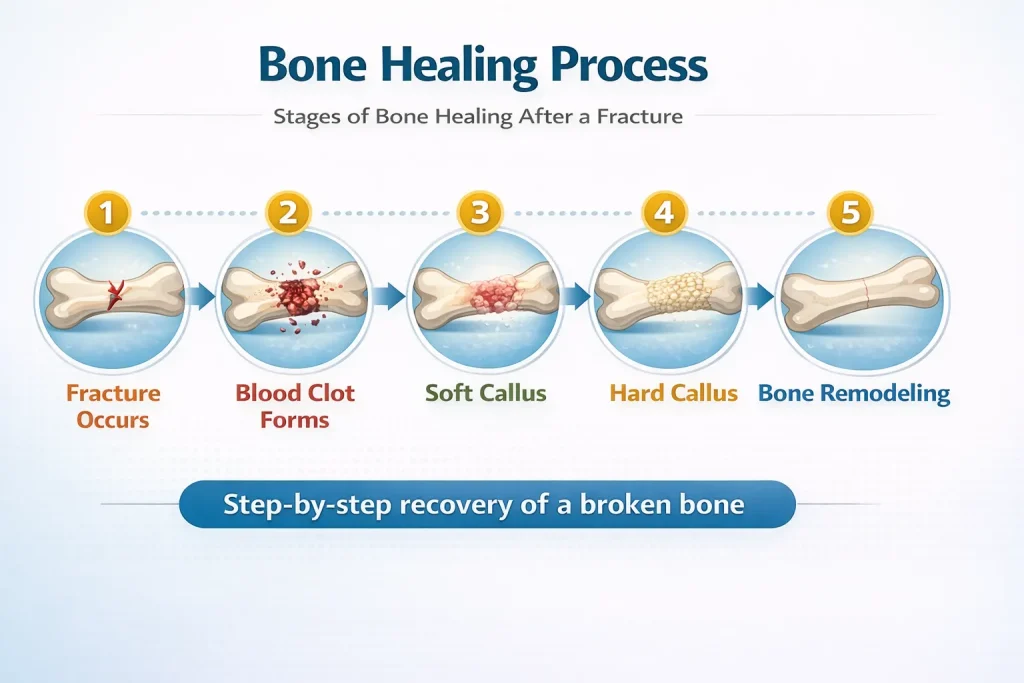
This process needs:
- Good blood supply
- Proper alignment
- Rest and support
- Adequate nutrition
Do Broken Bones Heal Stronger? Myth vs Reality
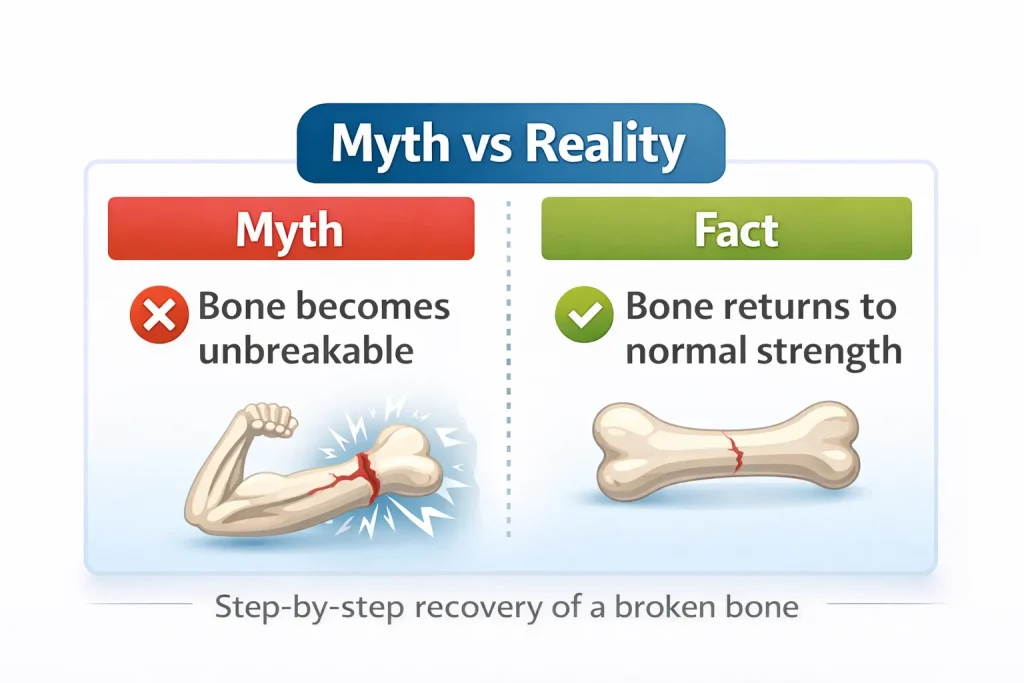
You may hear people say, “That bone will be stronger now.” This is partly true but often misunderstood.
During healing, the fracture site becomes thicker for some time. This extra bone makes the area feel stronger. However, once healing is complete, the bone slowly reshapes itself.
In the long run, the healed bone is about as strong as it was before, not stronger. The surrounding muscles may still be weak if rehabilitation is poor.
So while the bone heals well, it does not become unbreakable. Proper recovery matters more than the idea of extra strength.
Will Fractures Heal on Their Own?
Some fractures can heal without surgery. Others cannot.
Small, stable fractures may heal with:
- Rest
- Splints or casts
- Limited movement
But unstable fractures need medical treatment. Without care, bones can heal in the wrong position. This can cause long-term pain, deformity, or limited movement.
It is like fixing a bent fence post. If you let it dry in the wrong position, it stays crooked forever.
So while bones have natural healing power, guidance and support are often needed.
How Long Does a Broken Bone Take to Heal?
Healing time depends on age, health, fracture type, and location.

| Fracture Type | Average Healing Time |
|---|---|
| Hairline fracture | 4–6 weeks |
| Simple fracture | 6–8 weeks |
| Severe fracture | 3–6 months |
| Stress fracture | 6–10 weeks |
Children heal faster. Older adults take longer. Smoking and poor nutrition slow healing.
How Doctors Diagnose a Fracture

Doctors begin by asking how the injury happened. They examine swelling, pain, and movement.
An X-ray is the most common test. It shows cracks or breaks clearly. If the fracture is complex, a CT scan or MRI may be used.
These tests help doctors decide whether a cast, brace, or surgery is needed.
Treatment Options for Broken and Fractured Bones
Treatment depends on the fracture type.
Simple fractures are treated with casts or splints. These keep the bone still while it heals.
More serious fractures may need:
- Metal plates or screws
- Rods inside the bone
- Surgical realignment
After healing, physiotherapy helps restore strength and movement. Skipping rehab is like fixing a car engine but never changing the oil later.
What Happens If a Fracture Is Left Untreated?
Ignoring a fracture can lead to serious problems.
The bone may heal in the wrong position. This is called malunion. Pain may become chronic. Movement may stay limited.
In joints, untreated fractures can lead to early arthritis. Muscles around the area may weaken over time.
Early care prevents these issues and improves long-term outcomes.
When Should You See a Doctor for a Broken Bone?

You should seek medical help if:
- Pain is severe or increasing
- The limb looks deformed
- You cannot move or bear weight
- Swelling does not reduce
- Numbness or color change appears
When in doubt, it is safer to get checked.
Conclusion
A fracture and a break are two words for the same bone injury. What truly matters is the type of fracture, how it is treated, and how well it is allowed to heal. Bones have a remarkable ability to repair themselves, but they need time, support, and sometimes medical help. Ignoring symptoms or delaying care can lead to long-term problems that are harder to fix later. Understanding how fractures heal, what signs to watch for, and when to seek help empowers you to protect your bone health. When pain, swelling, or movement problems persist, professional evaluation remains the safest and most reliable path to full recovery.
Read –
- Bicep and Tricep Muscle and Tendon Injuries: Symptoms, Causes, Treatment, and Recovery
- Sprained Ankle & Twisted Ankle: Recovery Time, Healing Stages, Swelling & Home Treatment
- Joints in the Human Body: Anatomy, Types, Functions, Structure, and Examples
Frequently Asked Questions
Is a bone fracture the same as a broken bone?
Yes, a bone fracture and a broken bone mean the same thing medically. A fracture is simply the clinical term doctors use for any crack or break in a bone, whether small or severe.
Is a fracture worse than a break in a bone?
No, a fracture is not worse than a break. Both terms describe the same injury. The seriousness depends on the fracture type, bone alignment, and whether the injury affects nearby joints or soft tissues.
Can bones grow back after a fracture heals?
Bones do not grow back like skin, but they repair themselves through a process called bone regeneration. New bone forms at the fracture site and slowly hardens, restoring the bone’s original structure.
Do broken bones heal stronger than before?
Broken bones may feel stronger at the healing site initially due to extra bone formation. Over time, the bone remodels and returns to normal strength, meaning it is not permanently stronger than before.
Will fractures heal on their own without treatment?
Some minor fractures can heal on their own with rest and limited movement. However, many fractures require casts, braces, or medical supervision to prevent improper healing and long-term complications.
How long does a broken bone usually take to heal completely?
Healing time for a broken bone depends on the fracture type, age, and overall health. Most simple fractures heal in six to eight weeks, while severe fractures may take several months.
What are the early symptoms of a hairline or stress fracture?
Early symptoms of a hairline or stress fracture include mild pain that worsens with activity, slight swelling, and tenderness at the injury site. Pain often improves with rest but returns when movement resumes.
Can a fractured bone heal incorrectly if left untreated?
Yes, an untreated fractured bone may heal in the wrong position, a condition called malunion. This can cause long-term pain, limited movement, and joint problems that may require corrective treatment later.
When should I see a doctor for a suspected bone fracture?
You should see a doctor if pain is severe, swelling increases, movement is difficult, or the limb looks deformed. Persistent pain after a fall or injury also requires medical evaluation.
Can a healed fracture break again in the future?
Yes, a healed fracture can break again if enough force is applied. Once healing is complete, the bone behaves like normal bone and is not permanently protected from future injuries.